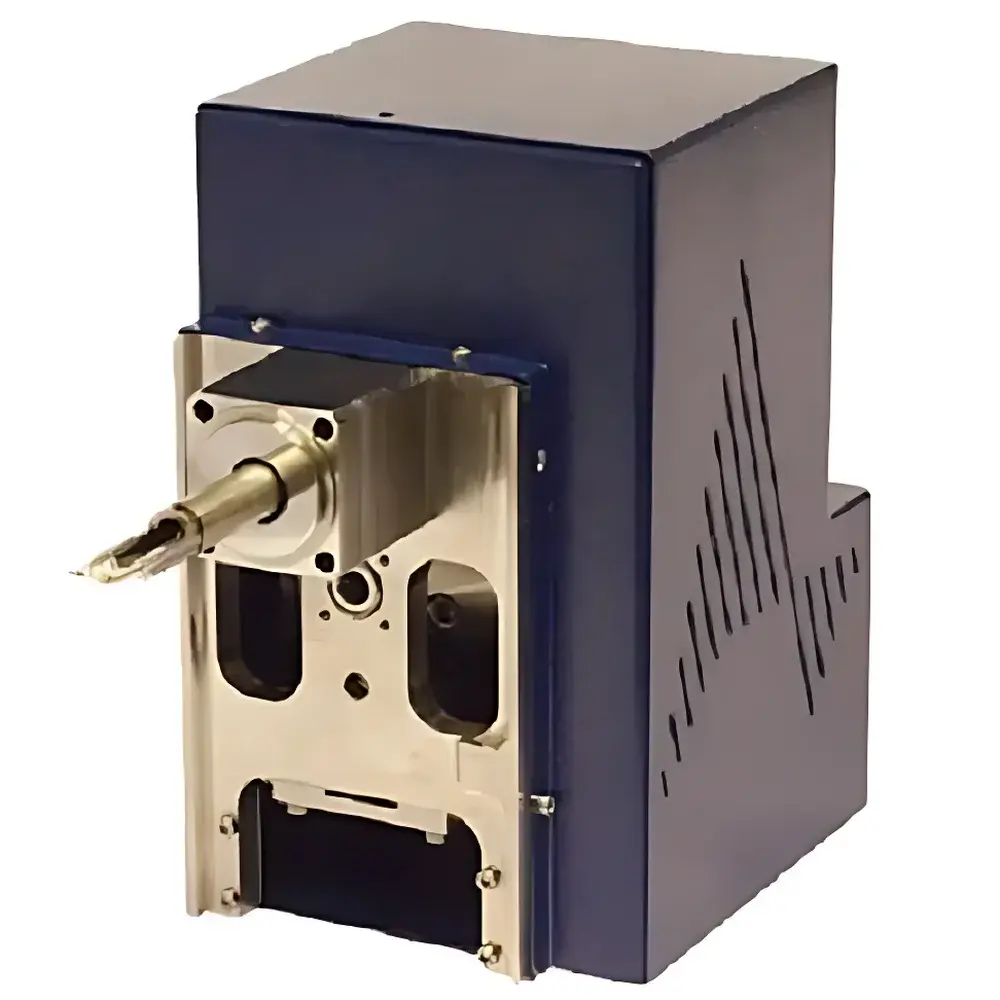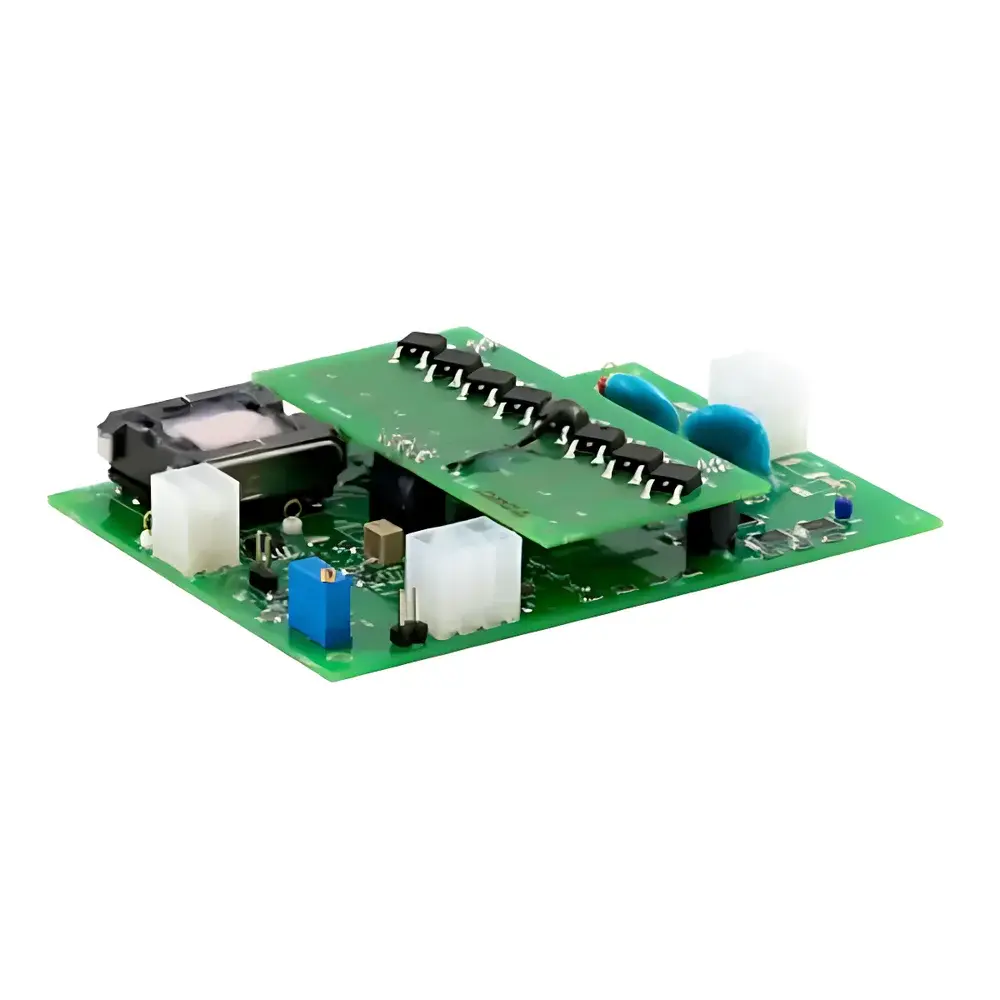
Auniontech Q-Switch / Pockels Cell Driver
| Brand | Auniontech |
|---|---|
| Origin | Shanghai, China |
| Manufacturer Type | Authorized Distributor |
| Product Category | Domestic |
| Model | Electro-Optic Modulator Driver |
| Pricing | Upon Request |
Overview
The Auniontech Q-Switch / Pockels Cell Driver is a high-voltage, precision electro-optic (EO) pulse generator engineered for stable, low-jitter control of Pockels cells based on nonlinear optical crystals such as KTP, KD*P, and BBO. Operating on the principle of linear electro-optic effect (Pockels effect), these drivers apply precisely timed high-voltage electric fields across the crystal to induce controlled birefringence—thereby enabling dynamic manipulation of light polarization state, phase retardation, or optical path difference. This capability underpins critical functions in pulsed laser systems, including Q-switching, cavity dumping, pulse picking, regenerative amplifier seeding, and high-speed optical gating. Designed for integration into both OEM laser platforms and laboratory-grade ultrafast systems, the driver series supports both DC-biased and fully pulsed operation modes, with output voltage ranges up to 10 kV and rise times as fast as 1–3 ns—ensuring sub-nanosecond temporal fidelity required for picosecond and femtosecond laser synchronization.
Key Features
- Ultra-fast switching performance: Rise times down to 1–3 ns (QBD-o, QBU-o variants), enabling precise timing control in ultrafast laser cavities
- High-voltage output capability: Programmable or fixed-output models spanning 4 kV to 10 kV maximum, compatible with standard and custom Pockels cell geometries
- Flexible packaging options: PCB-mount modules (24 V DC input) for embedded OEM integration, and benchtop units (100–240 V AC input) with front-panel controls and status indicators
- Adjustable pulse parameters: Selectable repetition rates (1 Hz to 100 kHz), pulse widths (10 ns to continuous DC bias), and amplitude modulation (in QBU-series with analog/digital interface)
- Crystal longevity optimization: Active pre-pulse and post-pulse voltage management in QBU-series minimizes residual field stress on EO crystals, extending operational lifetime under high-duty-cycle conditions
- Robust thermal and electrical architecture: Fully isolated high-voltage stages, low-noise power regulation, and EMI-suppressed layout compliant with IEC 61000-4 immunity standards
Sample Compatibility & Compliance
The driver series is validated for use with industry-standard transverse- and longitudinal-field Pockels cells utilizing KTP, KD*P, BBO, LiNbO₃, and RTP crystals. All units comply with CE marking requirements for electromagnetic compatibility (EMC Directive 2014/30/EU) and low-voltage safety (LVD Directive 2014/35/EU). Benchtop models include safety interlocks, HV discharge indicators, and key-lock enable switches—meeting Class I laser system auxiliary equipment requirements per IEC 60825-1. For regulated environments (e.g., medical laser manufacturing or defense R&D), optional firmware logging and timestamped event records support GLP/GMP traceability; analog voltage monitoring outputs facilitate external data acquisition and real-time feedback integration.
Software & Data Management
QBU-series drivers feature RS-232, USB-C, and TTL-compatible digital interfaces for remote parameter configuration via ASCII command protocol. Optional LabVIEW™, Python, and MATLAB® SDKs enable automated calibration routines, pulse sequence scripting, and synchronized triggering with oscilloscopes or pulse delay generators. All drivers support non-volatile storage of up to 8 user-defined operating profiles—including voltage setpoint, repetition rate, pulse width, and edge delay—accessible via front-panel navigation or host software. Audit trails (timestamped configuration changes, fault logs, thermal warnings) are retained for ≥30 days and exportable as CSV for quality assurance documentation. Firmware updates are performed securely over USB without hardware rework.
Applications
- Active Q-switching in Nd:YAG, Nd:YVO₄, and Ti:Sapphire lasers—enabling high-peak-power nanosecond pulses with jitter < 500 ps RMS
- Pulse picking from mode-locked oscillators at MHz repetition rates, with selectable pulse train duty cycles for amplifier seeding
- Regenerative amplifier control, where precise HV gate timing governs injection/ejection of single pulses into the cavity
- LIDAR beam gating in eye-safe 1.5 µm systems using battery-powered QBD-mini or QBY-4050 variants
- Optical isolation and polarization switching in quantum optics experiments requiring sub-ns polarization rotation synchronization
- Time-resolved spectroscopy setups demanding synchronized shuttering of probe beams with pump laser triggers
FAQ
What is the maximum safe operating voltage for the QBD-o model?
The QBD-o delivers up to 5 kV with a fixed 0.7 µs pulse width; its avalanche transistor topology ensures stable output up to 80% of rated voltage under continuous 10 kHz operation.
Can the QBU-series drive both longitudinal and transverse Pockels cells?
Yes—QBU drivers support adjustable DC bias superposition and bipolar pulse modes, making them suitable for both longitudinal (low-capacitance) and transverse (higher-capacitance) electrode configurations.
Is remote triggering supported with TTL or LVDS levels?
All models accept 5 V TTL-compatible external trigger inputs with programmable trigger delay (0–10 µs, 1 ns resolution) and polarity selection.
Do these drivers meet FDA 21 CFR Part 11 requirements for electronic records?
While not certified as standalone Part 11-compliant devices, QBU-series firmware provides full audit trail logging, user authentication (via password-protected access levels), and electronic signature-ready export formats—enabling integration into validated systems under site-specific SOPs.
What thermal management provisions exist for continuous high-repetition-rate operation?
Benchtop units integrate forced-air cooling with thermal shutdown at 75 °C; PCB-mount versions specify derating curves in datasheets—e.g., QBD-mini maintains full 4 kV output up to 50 kHz only with ≥200 LFM airflow.