
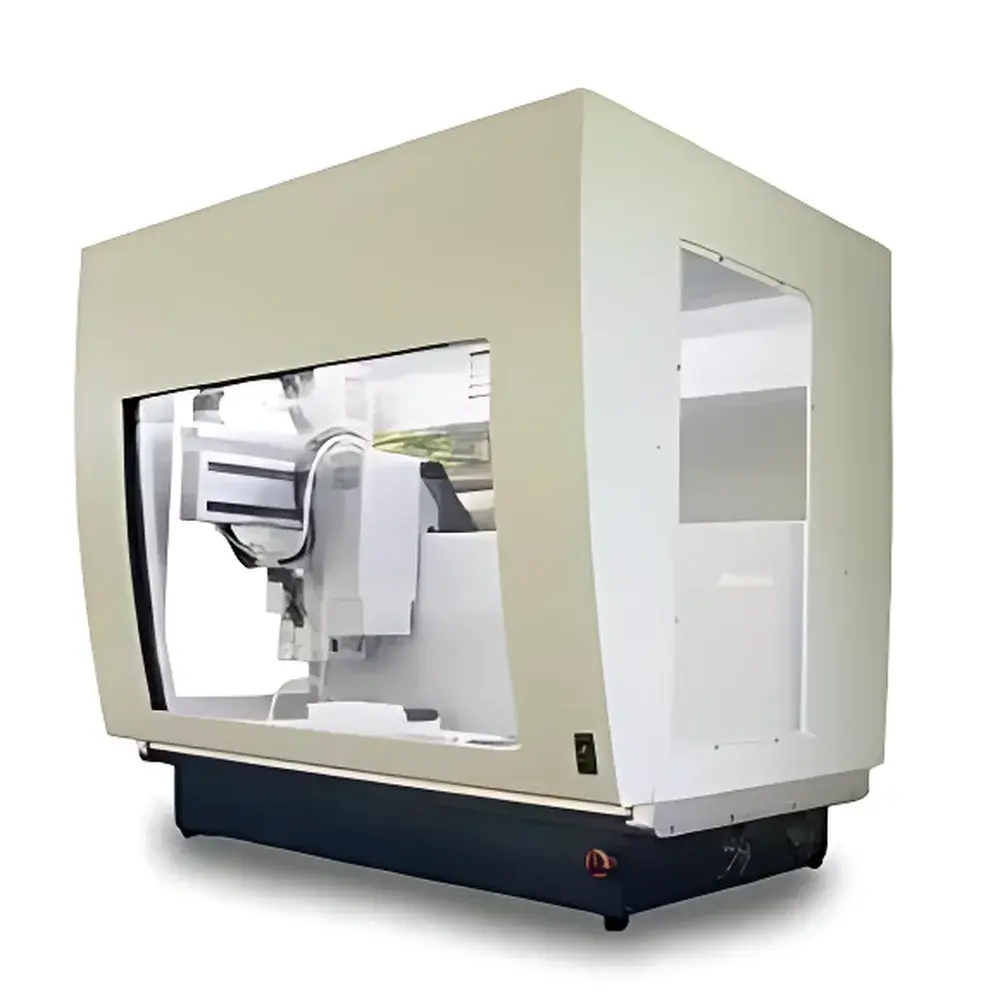
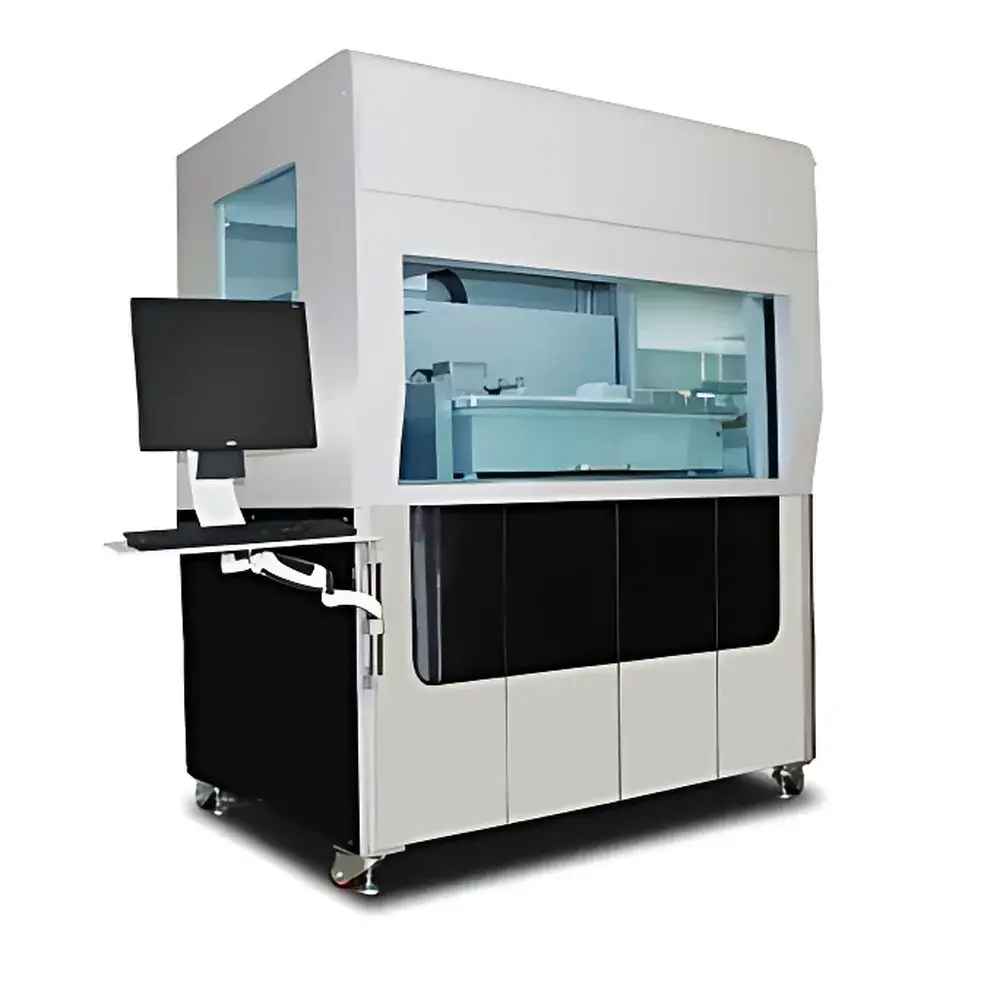
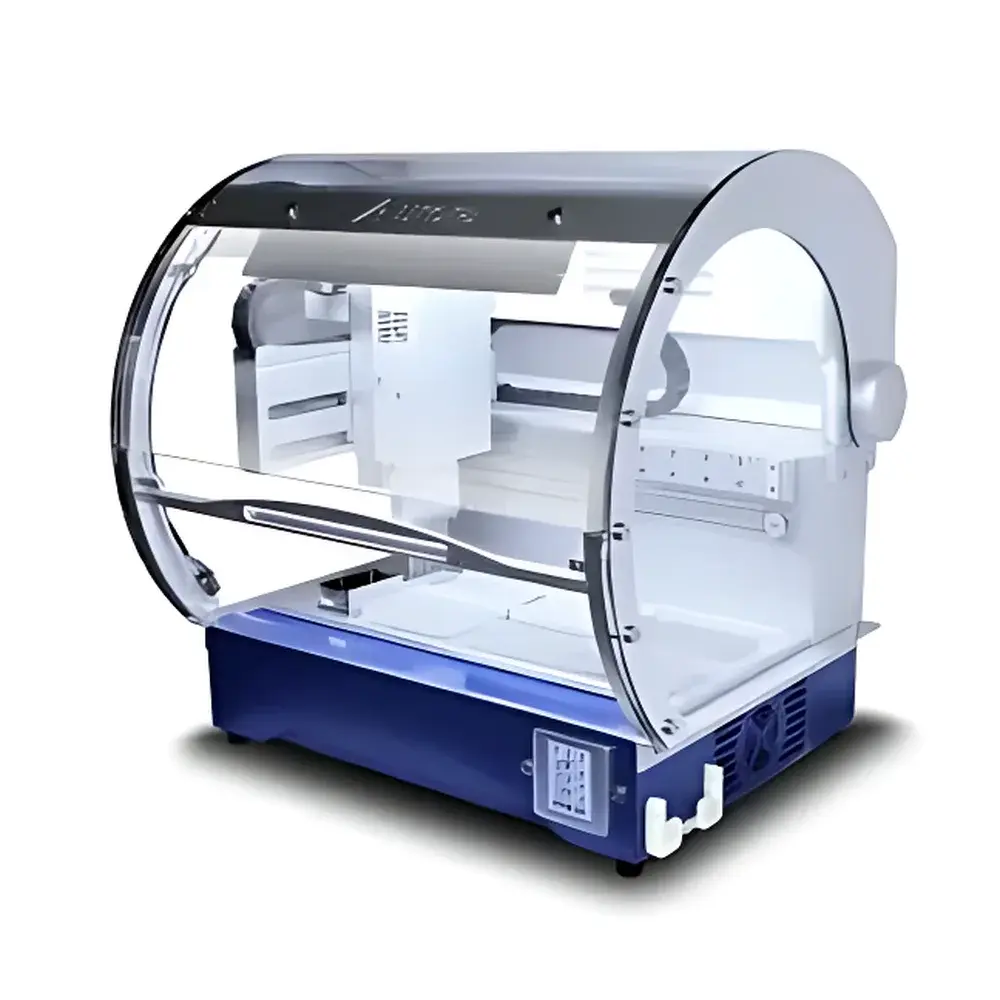
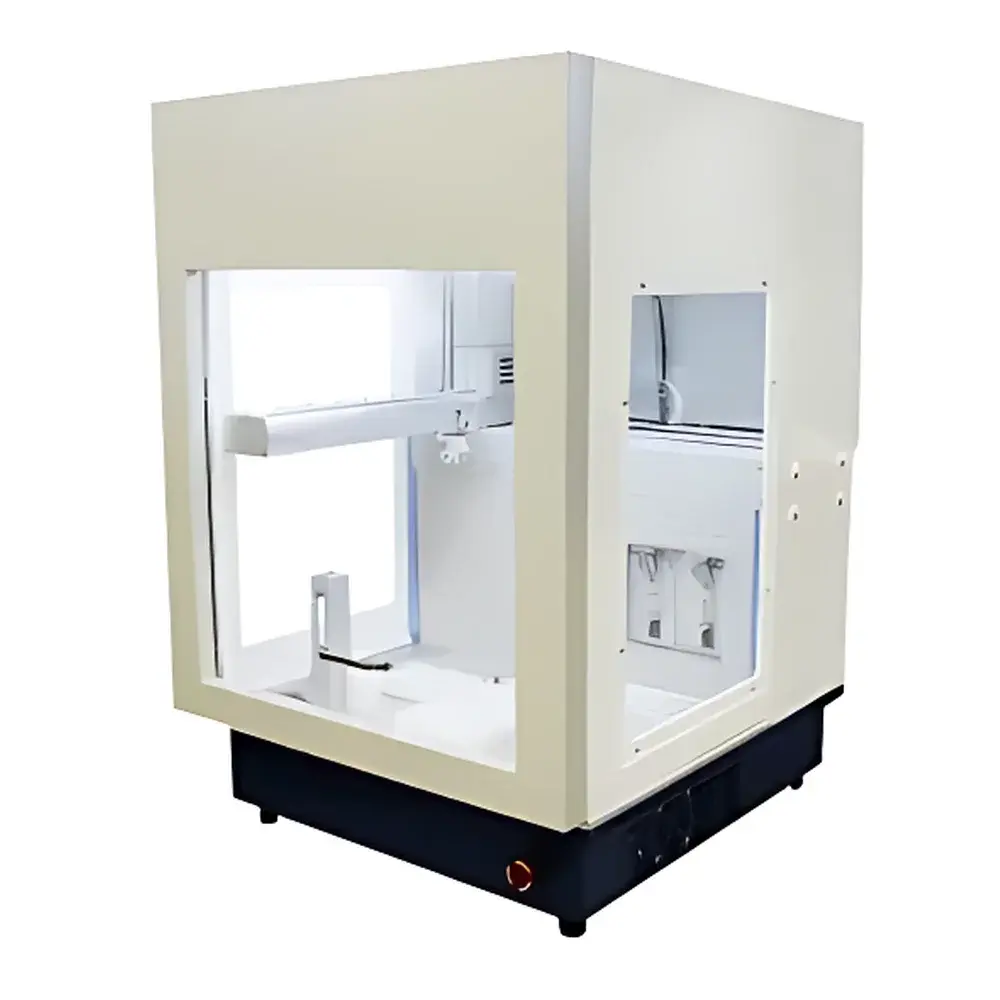
Aurora VERSA 110 Automated Liquid Handling Workstation
| Brand | Aurora |
|---|---|
| Origin | Canada |
| Model | VERSA 110 |
| Plate Positions | 8 |
| Pipetting Precision | CV <5% at 1 µL |
| Pipetting Range | 30 nL – 1000 µL |
| Channel Configuration | Single-channel |
| Dimensions (W×D×H) | 45 × 57 × 54 cm |
Overview
The Aurora VERSA 110 Automated Liquid Handling Workstation is an engineered solution for precision liquid handling in molecular biology, diagnostics, and translational research laboratories. Built on a robust XYZ robotic motion architecture with dual-pump positive displacement pipetting technology, the VERSA 110 delivers high reproducibility across an exceptionally wide dynamic volume range—from 30 nanoliters to 1000 microliters—without requiring tip changes or recalibration. Unlike air-displacement systems limited by evaporation and humidity sensitivity, the dual-pump design ensures consistent aspiration and dispensing of viscous, volatile, or low-surface-tension liquids—including DMSO, glycerol, ethanol, and PCR master mixes—while minimizing carryover and cross-contamination. Its compact footprint (45 × 57 × 54 cm) enables seamless integration into biosafety cabinets, laminar flow hoods, or standard benchtop environments without compromising ergonomic workflow or spatial efficiency.
Key Features
- Single-channel, dual-pump positive displacement pipetting engine optimized for accuracy and repeatability at sub-microliter volumes
- Modular 8-position deck with configurable mounting slots for third-party accessories (e.g., tube racks, deep-well plates, custom carriers)
- ReagentDrop™ bulk dispensing module (up to 4 units optional) enabling reagent pre-aliquoting with ≤2% volume variability and reduced tip consumption
- On-deck incubation option (4–45 °C) for temperature-sensitive reactions such as enzyme digestion, ligation, or RT-PCR setup
- HEPA/UV/LED laminar airflow enclosure (optional) compliant with ISO 14644-1 Class 5 cleanroom requirements for contamination-sensitive workflows
- Open-system architecture supporting user-defined labware definitions, proprietary assay kits, and legacy protocols—no vendor lock-in
- Intuitive software interface with drag-and-drop protocol builder, audit trail logging, and exportable SOP templates compatible with GLP/GMP documentation standards
Sample Compatibility & Compliance
The VERSA 110 accommodates diverse sample formats including 96- and 384-well microplates, PCR strips, conical tubes (0.5–50 mL), vials, cartridges, and custom labware via programmable deck coordinates. It supports ANSI/SLAS-compliant plate footprints and integrates with common barcode readers for full traceability. The system meets essential regulatory expectations for analytical instrument qualification: it supports 21 CFR Part 11-compliant electronic signatures when paired with validated software configurations, provides timestamped audit logs for all pipetting events, and allows configuration-controlled method versioning. While not certified as a medical device, its performance characteristics align with ASTM E2879-21 (Standard Guide for Validation of Automated Liquid Handlers) and ISO 8655-6 (Piston-operated volumetric apparatus — Calibration procedures).
Software & Data Management
VERSA Control Software (v5.x) is a Windows-based application offering protocol development, execution monitoring, and data export capabilities. Protocols are stored as XML files with embedded metadata (user ID, timestamp, instrument serial number, calibration status). All liquid handling actions—including aspirate/dispense coordinates, speeds, delays, and wash cycles—are recorded in immutable audit trails. Raw log files support CSV and Excel export for downstream statistical analysis (e.g., CV calculation per volume point). Optional LIMS connectivity via RESTful API enables bidirectional sample tracking and result synchronization. Software validation packages—including IQ/OQ documentation, test scripts, and URS alignment reports—are available upon request for regulated environments.
Applications
The VERSA 110 serves as a foundational automation platform for applications demanding volumetric fidelity and format flexibility. It is routinely deployed in qPCR and RT-qPCR reaction setup where precise low-volume master mix dispensing directly impacts assay sensitivity and inter-run consistency. In nucleic acid purification workflows, it automates binding, washing, and elution steps across magnetic bead-based kits—reducing hands-on time while preserving yield and purity. For cell-based assays, its gentle aspiration/dispense profiles minimize shear stress during media exchange or compound dilution series preparation. Additional validated use cases include small-volume LC-MS sample preparation, liquid–liquid extraction (LLE) for metabolomics, vial filling for biobanking, and microarray spotting with controlled droplet placement. Its compatibility with non-standard labware also supports emerging modalities such as CRISPR guide RNA complex assembly and mRNA-LNP formulation intermediates.
FAQ
What is the minimum dispensable volume with guaranteed accuracy?
The VERSA 110 achieves CV <5% at 1 µL using its dual-pump system; performance down to 30 nL is supported but requires protocol optimization and gravimetric verification per ISO 8655-6.
Can the VERSA 110 integrate with existing LIMS or ELN systems?
Yes—via configurable REST API endpoints and CSV-based import/export functions; full HL7/FHIR integration requires custom middleware development.
Is on-deck heating or cooling available as a factory-installed option?
An on-deck Peltier-based incubation module (4–45 °C) is offered as an optional accessory with ±0.5 °C stability and programmable ramp rates.
Does the system require regular maintenance beyond tip replacement and cleaning?
No consumable pumps or valves are used; routine maintenance consists of weekly external surface disinfection and quarterly calibration verification using NIST-traceable gravimetric standards.
How does the ReagentDrop module reduce reagent waste compared to conventional multichannel dispensing?
ReagentDrop operates independently of the pipetting head, delivering consistent bulk reagent volumes directly into wells or tubes—eliminating repeated tip loading/unloading and reducing dead volume loss by up to 70% versus air-displacement methods.



