
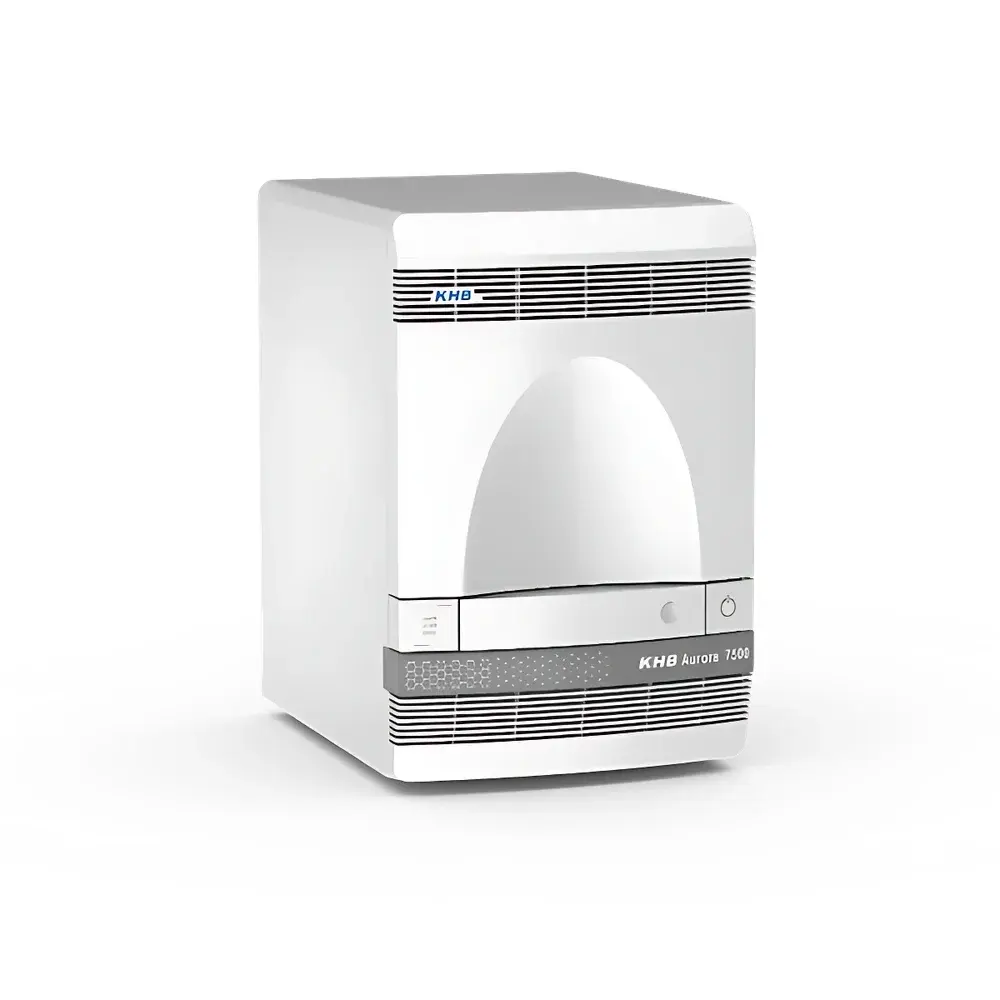
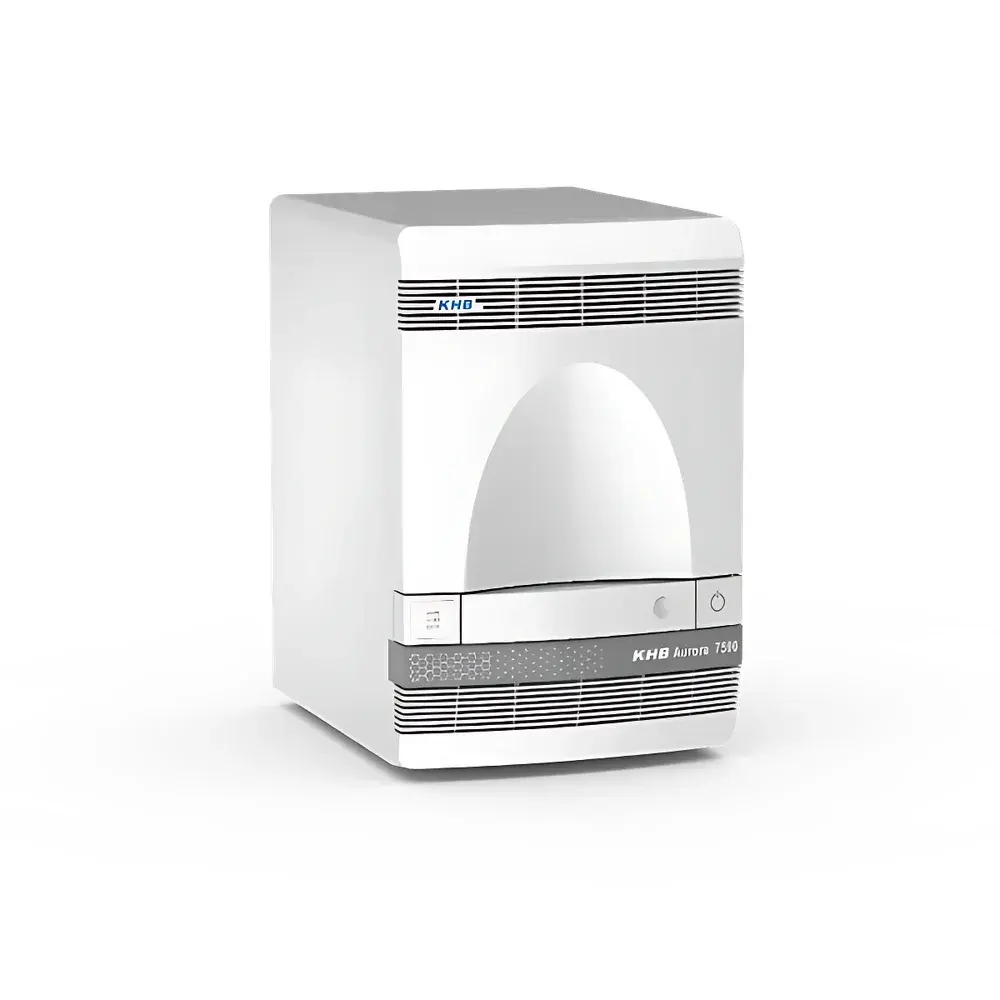
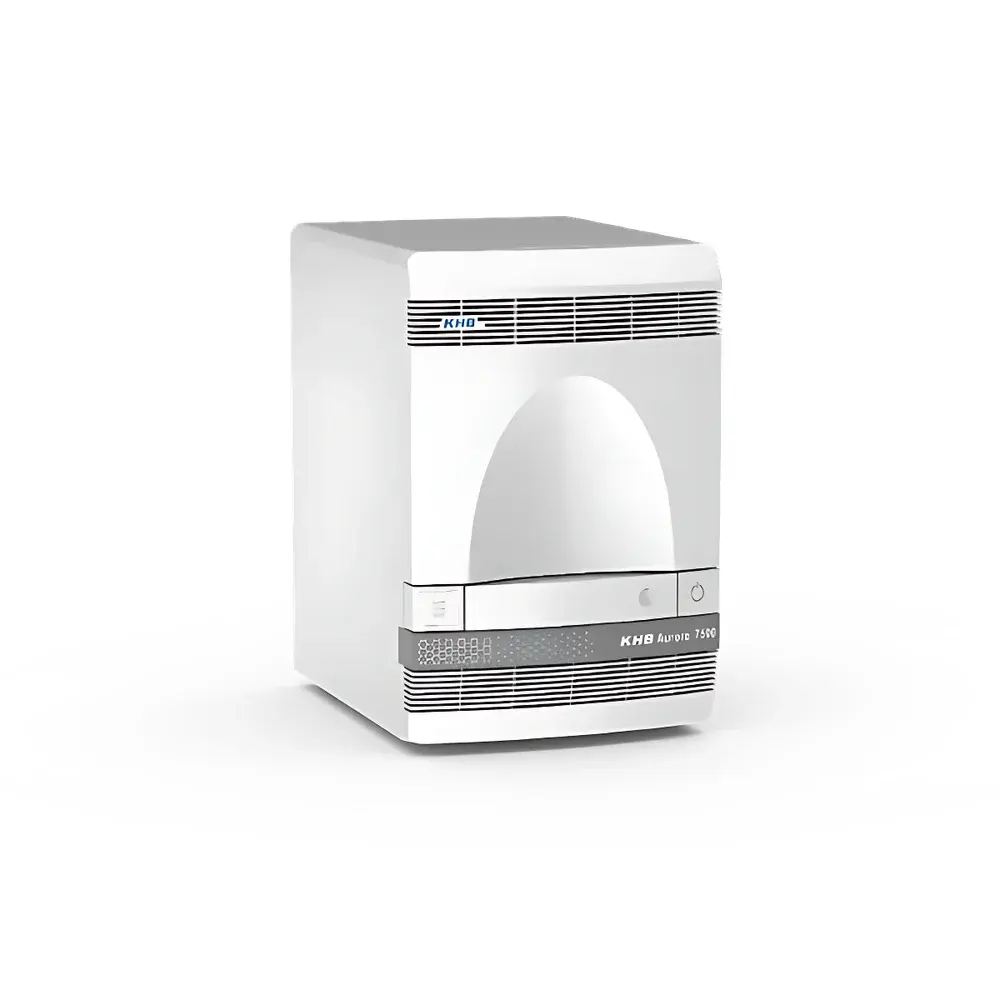
Aurora7500 Real-Time Fluorescent Quantitative PCR System
| Brand | KHB |
|---|---|
| Origin | Shanghai, China |
| Manufacturer Type | Authorized Distributor |
| Instrument Type | Real-Time Fluorescent Quantitative PCR System |
| Model | Aurora7500 |
| Sample Throughput | 96-well format |
| Temperature Accuracy | ±0.2 °C |
Overview
The Aurora7500 Real-Time Fluorescent Quantitative PCR System is a high-performance, thermally stable platform engineered for precise nucleic acid quantification and detection via real-time polymerase chain reaction (qPCR). It operates on the principle of sequence-specific amplification coupled with fluorescent probe or intercalating dye signal generation, enabling kinetic monitoring of DNA synthesis across up to 96 samples per run. Designed for routine clinical diagnostics, academic research, and quality control laboratories, the system integrates a precision Peltier-based thermal cycling module with an optical detection subsystem optimized for multi-channel excitation and emission filtering (typically spanning FAM, HEX/VIC, ROX, Cy5, and similar fluorophore spectra). Its architecture supports absolute and relative quantification, melt curve analysis, and endpoint genotyping—providing full compliance with ISO 13485–aligned manufacturing practices and supporting method validation in accordance with CLSI EP17-A2 and ISO/IEC 17025 requirements.
Key Features
- 96-well sample capacity compatible with standard skirted, semi-skirted, and unskirted qPCR plates and tubes—ensuring interoperability with widely adopted consumables.
- High-fidelity thermal control system delivering ±0.2 °C temperature accuracy across the full operating range (typically 4–99 °C), minimizing inter-run variability and supporting stringent assay reproducibility.
- Optimized optical path with LED excitation sources and cooled CCD or PMT-based detection, enabling low-background, high-sensitivity fluorescence acquisition across five spectral channels.
- Robust mechanical design featuring vibration-dampened optics mount and sealed thermal chamber—reducing signal drift during prolonged ramping cycles and enhancing long-term measurement stability.
- Integrated onboard touchscreen interface with intuitive workflow navigation, pre-loaded assay templates, and real-time amplification plot visualization—supporting standalone operation without external PC dependency.
Sample Compatibility & Compliance
The Aurora7500 accommodates a broad range of biological sample types—including purified genomic DNA, cDNA, RNA (post-reverse transcription), and crude lysates—when used with validated master mixes and primer-probe sets. It supports both hydrolysis (TaqMan®-type) and hybridization probe chemistries, as well as SYBR Green I-based assays. All thermal profiles and optical settings are programmable to meet assay-specific requirements, including fast-cycling protocols (<40 min for 40 cycles) and high-resolution melt (HRM) analysis. The instrument complies with electromagnetic compatibility (EMC) standards IEC 61326-1 and safety standard IEC 61010-1. For regulated environments, audit trail functionality, user access levels, and electronic signature support can be enabled to align with FDA 21 CFR Part 11 and GLP/GMP documentation expectations.
Software & Data Management
The Aurora7500 is operated via KHB’s proprietary qPCR Analysis Suite, a Windows-based application offering comprehensive data acquisition, baseline correction, threshold setting, Cq calculation, efficiency estimation, and statistical comparison tools. Raw fluorescence data (.eds or .rdml formats) are exportable for third-party analysis (e.g., LinRegPCR, qBase+, or R/Bioconductor pipelines). Software features include multi-instrument project consolidation, plate layout customization, QC flagging (e.g., outlier detection, no-template control failure), and automated report generation compliant with ISO/IEC 17025 reporting clauses. Version-controlled software updates are delivered through secure authenticated channels, with full change logs maintained for regulatory traceability.
Applications
- Clinical pathogen detection and viral load monitoring (e.g., SARS-CoV-2, HBV, HIV, HPV)
- Gene expression profiling in oncology and immunology research
- SNP genotyping and copy number variation (CNV) analysis
- Food safety testing (e.g., detection of Salmonella, Listeria, GMO screening)
- Environmental microbiology and water quality assessment
- Biopharmaceutical process monitoring (e.g., residual host cell DNA quantification)
FAQ
Is the Aurora7500 compatible with third-party reagents and consumables?
Yes—the system accepts all industry-standard 96-well qPCR plates and tubes, and has been functionally verified with major commercial master mixes (including Thermo Fisher, Bio-Rad, Qiagen, and Takara formulations).
Does the instrument support high-resolution melt (HRM) analysis?
Yes—its thermal ramping precision and continuous fluorescence acquisition mode enable HRM with ≤0.02 °C resolution, suitable for SNP discrimination and methylation-sensitive assays.
What regulatory documentation is available for validation purposes?
KHB provides Instrument Qualification (IQ/OQ/PQ) protocols, calibration certificates traceable to NIST standards, and a full Technical File summarizing design history, risk analysis (ISO 14971), and software verification reports.
Can the Aurora7500 be integrated into a LIMS environment?
Yes—it supports HL7 and ASTM E1384-compliant data export, and offers optional OPC UA or REST API interfaces for bidirectional communication with laboratory information management systems.



