
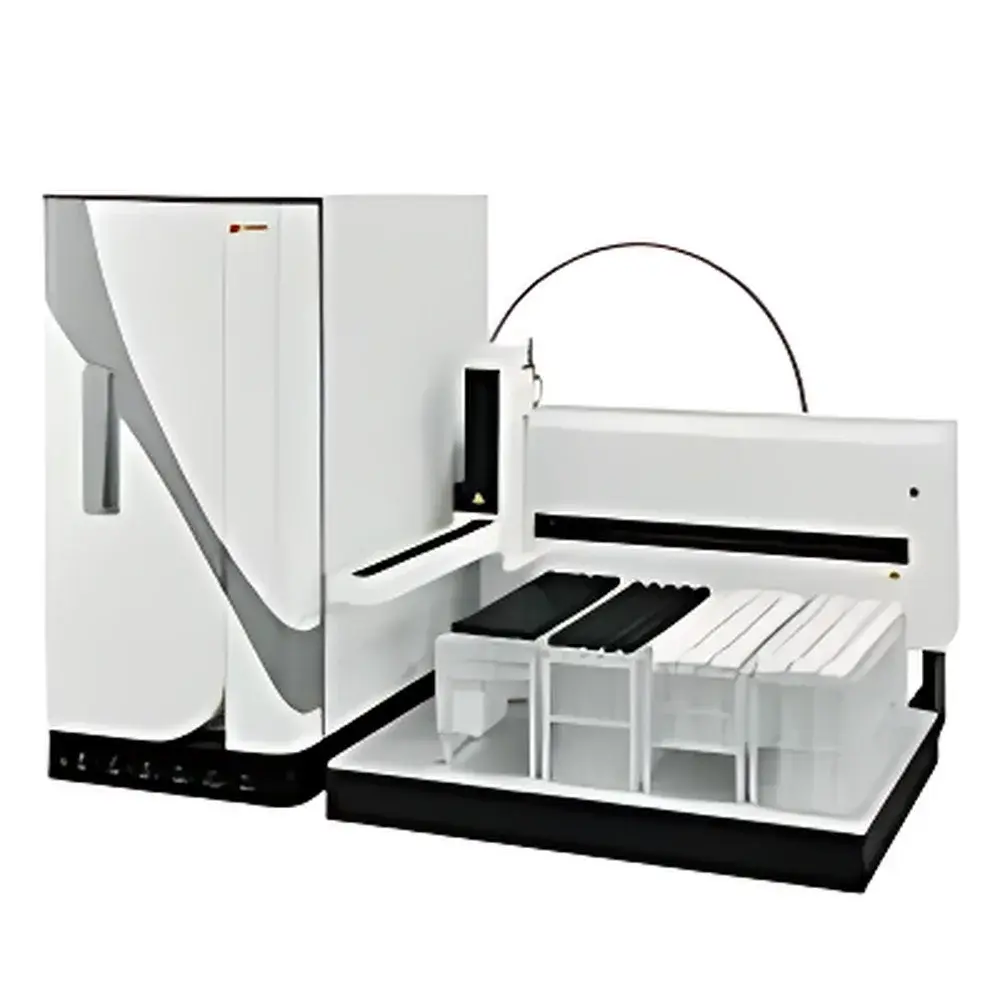
AutoClean Fully Automated Gel Permeation Chromatography (GPC) System
| Brand | LabTech |
|---|---|
| Origin | USA |
| Manufacturer | LabTech |
| Product Type | Imported Instrument |
| Model | AutoClean |
| Flow Rate | Available upon Request |
| Maximum Pressure | Available upon Request |
| Flow Stability | Available upon Request |
| Automated Sample Injection Volume | Available upon Request |
| Sample Capacity (Auto-sampler) | Available upon Request |
Overview
The AutoClean Fully Automated Gel Permeation Chromatography (GPC) System is an engineered solution for high-throughput, reproducible sample cleanup in trace and ultra-trace analytical workflows. Based on size-exclusion chromatography (SEC) principles, the system separates analytes from complex matrices—such as lipids, triglycerides, pigments, and polymeric interferences—by molecular hydrodynamic volume rather than chemical affinity. This orthogonal separation mechanism enables selective retention of low-molecular-weight target compounds (e.g., pesticides, PCBs, PAHs, pharmaceutical residues) while eluting high-molecular-weight matrix components earlier. Designed to meet U.S. EPA Method 3640A requirements for gel permeation chromatography cleanup, the AutoClean system delivers consistent fractionation performance across diverse sample types encountered in food safety, environmental monitoring, agricultural residue analysis, and life sciences research laboratories.
Key Features
- Fully automated operation including sample injection, column elution, fraction collection, and system rinse—minimizing manual intervention and operator variability.
- Stainless-steel GPC columns pre-packed with cross-linked polystyrene-divinylbenzene (PS-DVB) gel media; no user packing required, ensuring batch-to-batch consistency and eliminating column preparation time.
- Dual-piston precision solvent delivery pump with integrated pulse dampener for stable, pulsation-free flow across variable mobile phase compositions and viscosities.
- Variable-wavelength UV detector (190–400 nm) enabling real-time monitoring of eluent absorbance profiles during method development and routine runs.
- Complete-loop injection mode supporting full introduction of samples up to 10 mL without dilution or splitting—critical for maximizing recovery of trace analytes.
- Real-time pressure monitoring with programmable over-pressure alarm and automatic pressure relief protocol to safeguard column integrity and system safety.
- High-precision XYZ robotic platform with septum-piercing autosampler probe, preventing solvent evaporation during repeated injections and ensuring volumetric accuracy over extended unattended operation.
Sample Compatibility & Compliance
The AutoClean system accommodates a broad range of sample matrices—including homogenized fruits/vegetables, animal tissues, soil extracts, sediment slurries, edible oils, and biological fluids—following appropriate solvent extraction (e.g., acetonitrile, ethyl acetate, hexane/isopropanol). Its robust architecture supports both normal-phase and reversed-phase compatible GPC solvents (e.g., tetrahydrofuran, chloroform, dichloromethane). The system complies with U.S. EPA Method 3640A for gel permeation chromatographic cleanup and is routinely validated in laboratories operating under ISO/IEC 17025, AOAC INTERNATIONAL, and FDA-regulated environments. All hardware and software components support audit trail generation and electronic signature functionality aligned with 21 CFR Part 11 requirements when integrated with compliant LIMS or data management platforms.
Software & Data Management
Controlled via LabTech’s dedicated AutoClean Workstation Software, the system provides intuitive method setup, sequence scheduling, real-time status visualization, and event logging. Each run generates timestamped metadata—including pressure profiles, UV chromatograms, fraction trigger points, and mechanical positioning logs—for full traceability. Raw data files are stored in vendor-neutral formats (e.g., .csv, .txt) and support import into third-party chromatography data systems (CDS) such as OpenLab CDS or Chromeleon. Optional integration modules enable bidirectional communication with quantitative concentration systems (e.g., TurboVap®) and solid-phase extraction (SPE) workstations, allowing seamless expansion into multi-step automated sample preparation workflows.
Applications
- Removal of lipid and triglyceride interferences from pesticide residue extracts prior to GC-MS or LC-MS/MS analysis in food testing laboratories.
- Cleanup of sediment and biota samples for persistent organic pollutant (POP) quantification in environmental compliance monitoring (e.g., Stockholm Convention reporting).
- Isolation of low-MW metabolites from plasma or urine digests in preclinical ADME studies.
- Reduction of matrix-induced signal suppression in LC-MS-based targeted proteomics workflows.
- Preparative-scale isolation of small-molecule drug candidates from fermentation broths or synthetic reaction mixtures.
FAQ
What regulatory methods does the AutoClean system support?
The system is validated for U.S. EPA Method 3640A and widely applied in protocols aligned with EN 15662, AOAC 2007.01, and ISO 17025-accredited testing procedures.
Can the AutoClean system be integrated with other sample preparation instruments?
Yes—it supports modular expansion into hybrid platforms, including automated quantitative concentration (e.g., nitrogen blow-down), SPE, and derivatization modules via standardized communication interfaces (RS-232, Ethernet TCP/IP).
Is column regeneration or cleaning supported within the system?
The stainless-steel columns are designed for long-term reuse; regeneration protocols using strong solvents (e.g., THF, DCM) can be programmed directly into method sequences.
Does the system provide electronic records suitable for GLP/GMP audits?
When operated with compliant software configuration and network authentication, all operational events, method parameters, and raw detector outputs are captured with time-stamped, non-erasable audit trails meeting GLP and 21 CFR Part 11 documentation standards.
What maintenance is required for sustained performance?
Routine maintenance includes pump seal inspection every 6 months, UV lamp replacement per manufacturer-recommended intervals (typically 2,000 hours), and periodic calibration of the autosampler’s volumetric accuracy using certified gravimetric standards.



