
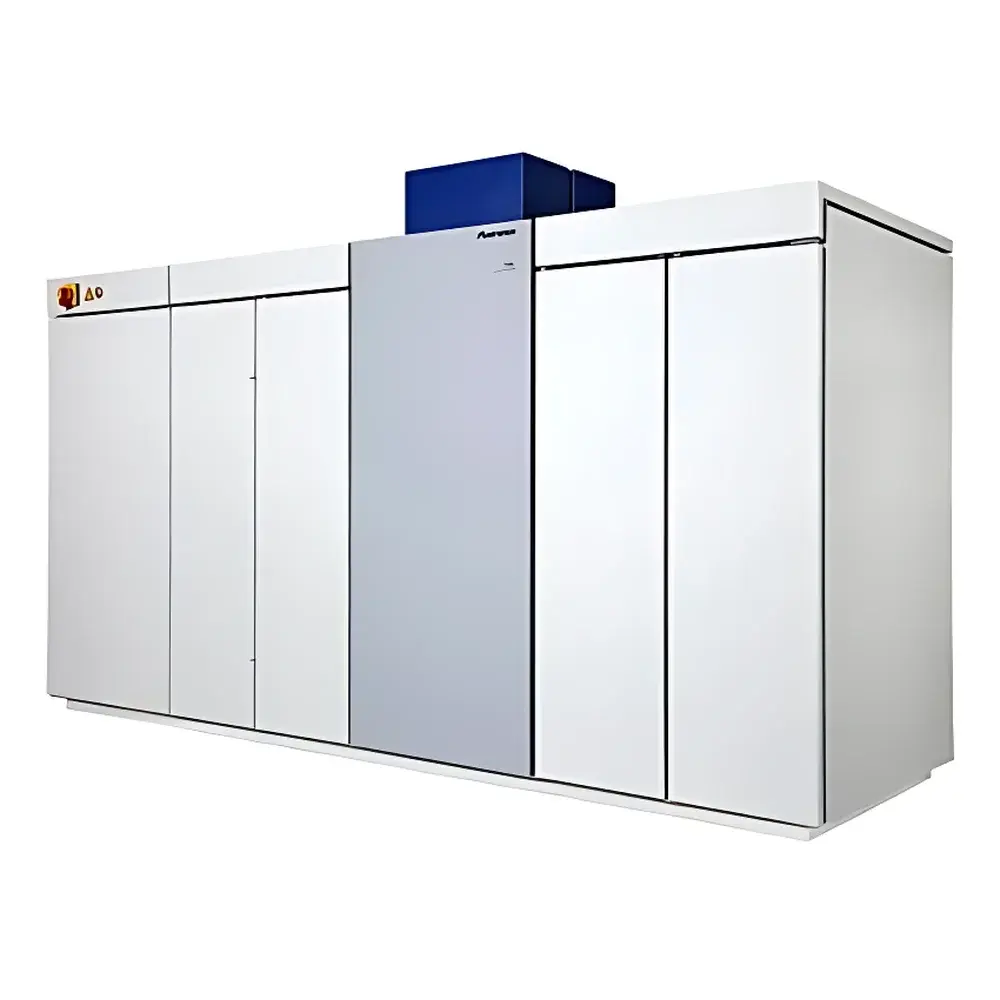
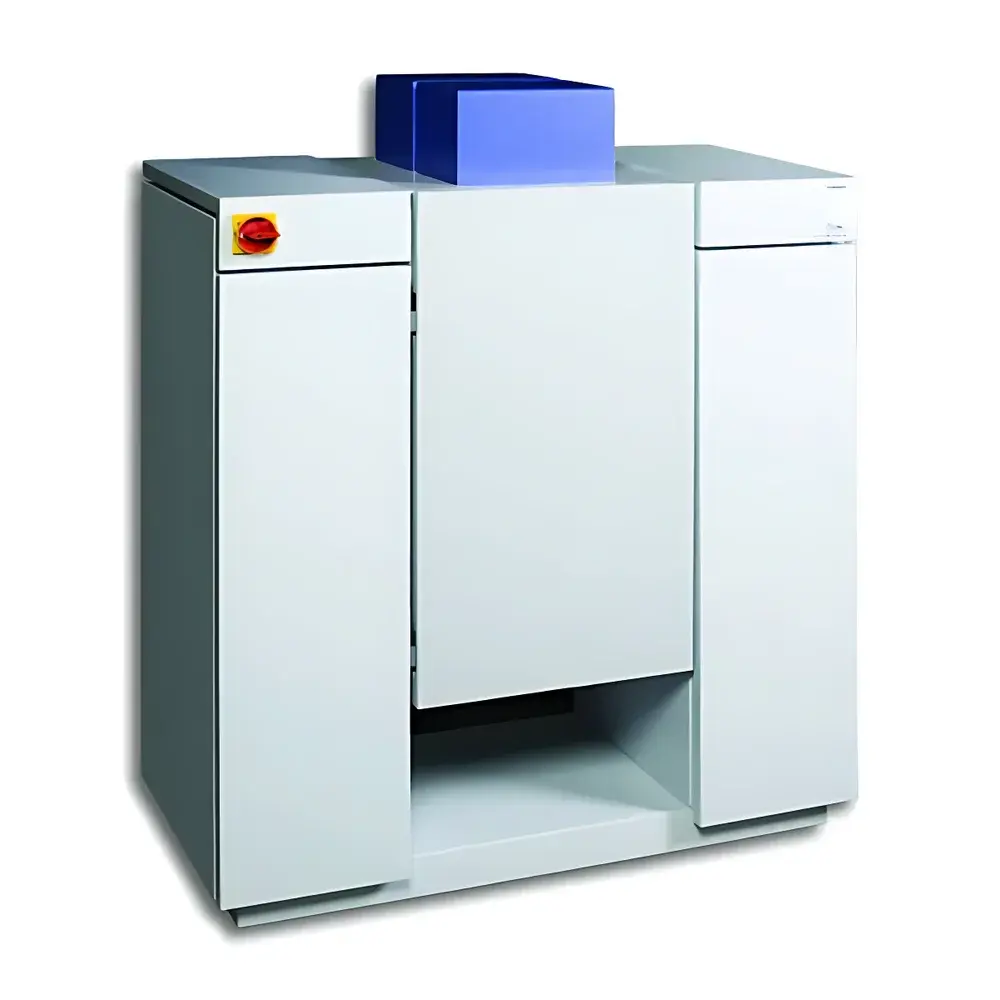
Avantium Flowrence® High-Throughput Fixed-Bed Reactor System
| Brand | Avantium |
|---|---|
| Origin | Netherlands |
| Model | Flowrence® |
| Maximum Operating Pressure | 200 bar |
| Maximum Operating Temperature | 850 °C |
| Catalyst Bed Volume | 25–1000 µL |
| Number of Parallel Reactors | 16 (4 modules × 4 reactors) |
| Reactor Inner Diameter | 2.0–2.6 mm |
| Isothermal Zone Length | 5–15 cm (standard), up to 50 cm (custom) |
| Feed Configuration | Up to 5 gases + 2 liquids |
| Catalyst Form | Extrudates (intact or crushed) |
| Downstream Phase Separation | Capillary-free gas–liquid separation |
| Automated Liquid Sampling | Integrated |
| Temperature Control | Independent per module (4 zones) |
Overview
The Avantium Flowrence® High-Throughput Fixed-Bed Reactor System is an engineered platform for rigorous, scalable catalyst evaluation under industrially relevant process conditions. Based on Avantium’s proprietary microfluidic flow control and precision thermal management technologies, Flowrence® implements 16 parallel fixed-bed microreactors—each with a 2.0–2.6 mm internal diameter—to deliver true plug-flow hydrodynamics while maintaining strict isothermicity across the catalytic bed. Unlike conventional batch or stirred autoclave systems, Flowrence® replicates the residence time distribution, mass transfer characteristics, and pressure/temperature profiles typical of commercial-scale trickle-bed, fixed-bed, and vapor-phase reactors. Its architecture enables direct translation of lab-scale kinetic and deactivation data to pilot and industrial design, significantly reducing scale-up risk in heterogeneous catalysis development.
Key Features
- 16-channel parallel operation: Four independently temperature-controlled modules, each housing four identical microreactors—enabling statistically robust screening across catalyst formulations, feed compositions, or operating conditions.
- True isothermal operation: Precision-heated reactor blocks with axial thermal profiling ensure ≤±1 °C uniformity over the active catalyst zone (5–15 cm standard; extendable to 50 cm).
- Commercial-grade process envelope: Rated for continuous operation up to 850 °C and 200 bar—covering demanding applications including high-temperature reforming, deep hydrotreating, and Fischer–Tropsch synthesis.
- Flexible phase handling: Configurable for vapor-phase, liquid-phase, and trickle-flow operation via programmable liquid/gas co-feeding with real-time mass flow control.
- Robust catalyst accommodation: Supports intact or mechanically crushed extrudates (0.5–3 mm particle size), with precise bed volume dosing from 25 to 1000 µL per reactor.
- Integrated downstream processing: Heated effluent lines, capillary-free gas–liquid separation, and automated liquid sampling with refrigerated loop storage—minimizing analyte degradation and enabling offline GC/HPLC analysis.
Sample Compatibility & Compliance
Flowrence® accommodates a broad spectrum of solid heterogeneous catalysts—including supported metals (e.g., Ni, Co, Pt, Pd), metal oxides (e.g., V₂O₅, MoO₃), zeolites, and carbide- or nitride-based materials—in extrudate, pellet, or crushed forms. The system complies with ISO 17025 calibration traceability requirements for temperature and pressure instrumentation. All fluid-contact components are constructed from ASTM A269 TP316L stainless steel or borosilicate glass, ensuring compatibility with corrosive feeds (e.g., H₂S, NH₃, organic acids) and adherence to ASME B31.3 process piping standards. Optional integration with SIL-2-rated safety interlocks supports operation within GMP/GLP environments requiring audit-ready operational integrity.
Software & Data Management
The Flowrence® Control Suite provides deterministic real-time regulation of temperature ramps, pressure setpoints, feed flow rates, and sampling sequences via a deterministic Linux-based RTOS. All process parameters—including thermocouple readings, transducer outputs, valve positions, and sample timestamps—are logged at 100 Hz with cryptographic hash tagging for data integrity. The software supports 21 CFR Part 11-compliant user access control, electronic signatures, and immutable audit trails. Export formats include CSV, HDF5, and ASTM E1915-compliant XML for seamless import into kinetic modeling platforms (e.g., MATLAB, gPROMS, DWSIM). Optional API integration enables bidirectional communication with LIMS and ELN systems.
Applications
- Catalyst screening and ranking for selective oxidation (e.g., propylene → acrolein)
- Hydroprocessing catalyst evaluation: hydrodesulfurization (HDS), hydrodenitrogenation (HDN), and hydrodeoxygenation (HDO)
- Trickle-bed hydrogenation kinetics under high-pressure H₂ (up to 200 bar)
- Fischer–Tropsch synthesis and product selectivity mapping
- Deactivation studies: coking, sintering, and poisoning kinetics under accelerated aging protocols
- Reaction engineering validation: intraparticle diffusion limitation assessment, effectiveness factor determination
- GTL (gas-to-liquid) and GTP (gas-to-propylene) catalyst lifetime benchmarking
- Aldehyde–alcohol condensation and etherification kinetics
- Isomerization and skeletal rearrangement mechanisms under low-space-velocity conditions
FAQ
What reactor materials are available for corrosive chemistries?
Standard reactors are fabricated from ASTM A269 TP316L stainless steel; optional Hastelloy C-276 or fused-silica glass reactors are available for halogenated or highly acidic feeds.
Can Flowrence® operate under ultra-high-purity inert conditions?
Yes—integrated leak-tightness verification (≤1×10⁻⁹ mbar·L/s He), automated purge sequences, and base pressure <10⁻³ mbar enable oxygen/moisture-sensitive catalysis (e.g., alkyl metallocene activation).
How is temperature uniformity validated across the catalyst bed?
Each reactor block includes three calibrated Type K thermocouples (ASTM E230 Class I) embedded at inlet, midpoint, and outlet—data used for real-time PID correction and post-run thermal profile reconstruction.
Is remote monitoring and troubleshooting supported?
The system includes secure TLS 1.3-enabled remote access with role-based dashboards; diagnostic logs, live parameter overlays, and predictive maintenance alerts are accessible via enterprise SSO.
Does Flowrence® support dynamic feed composition changes during a run?
Yes—via synchronized MFC modulation and programmable liquid syringe pumps, enabling step-change, ramped, or cyclic feed perturbations for transient kinetic analysis.



