
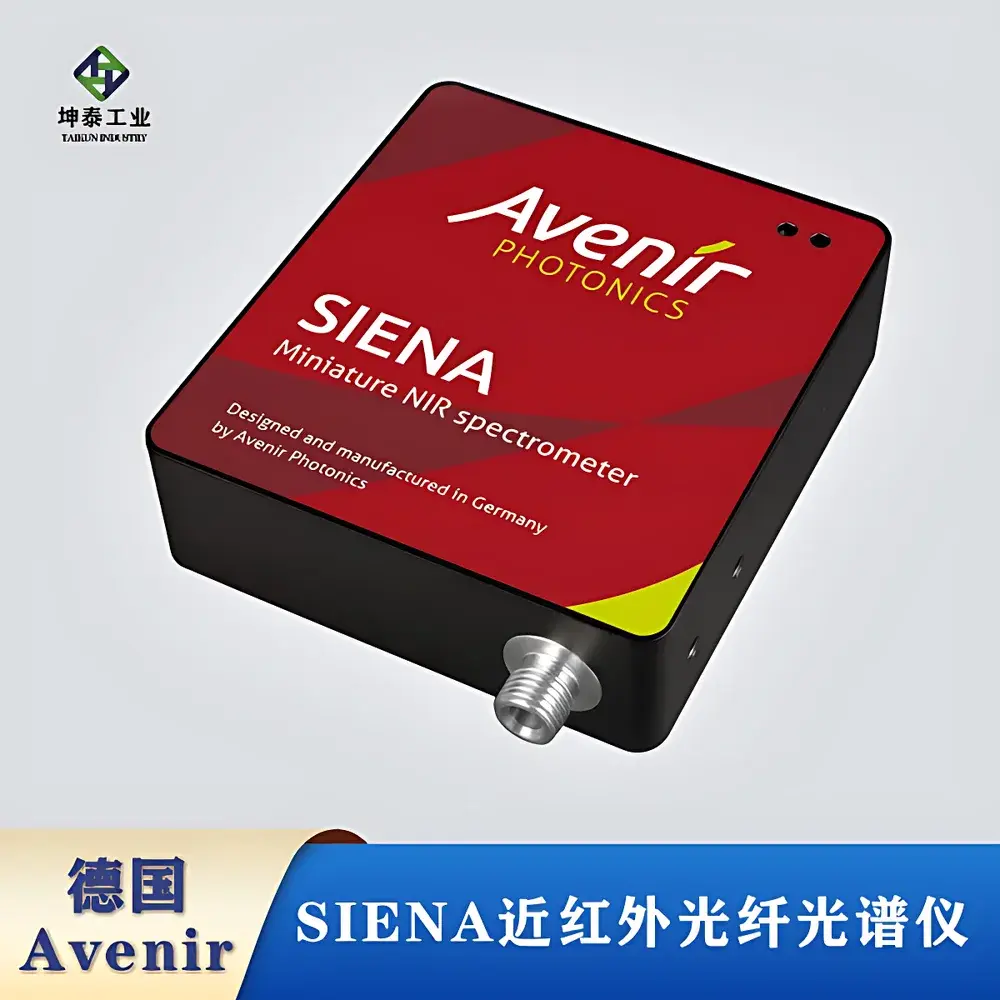
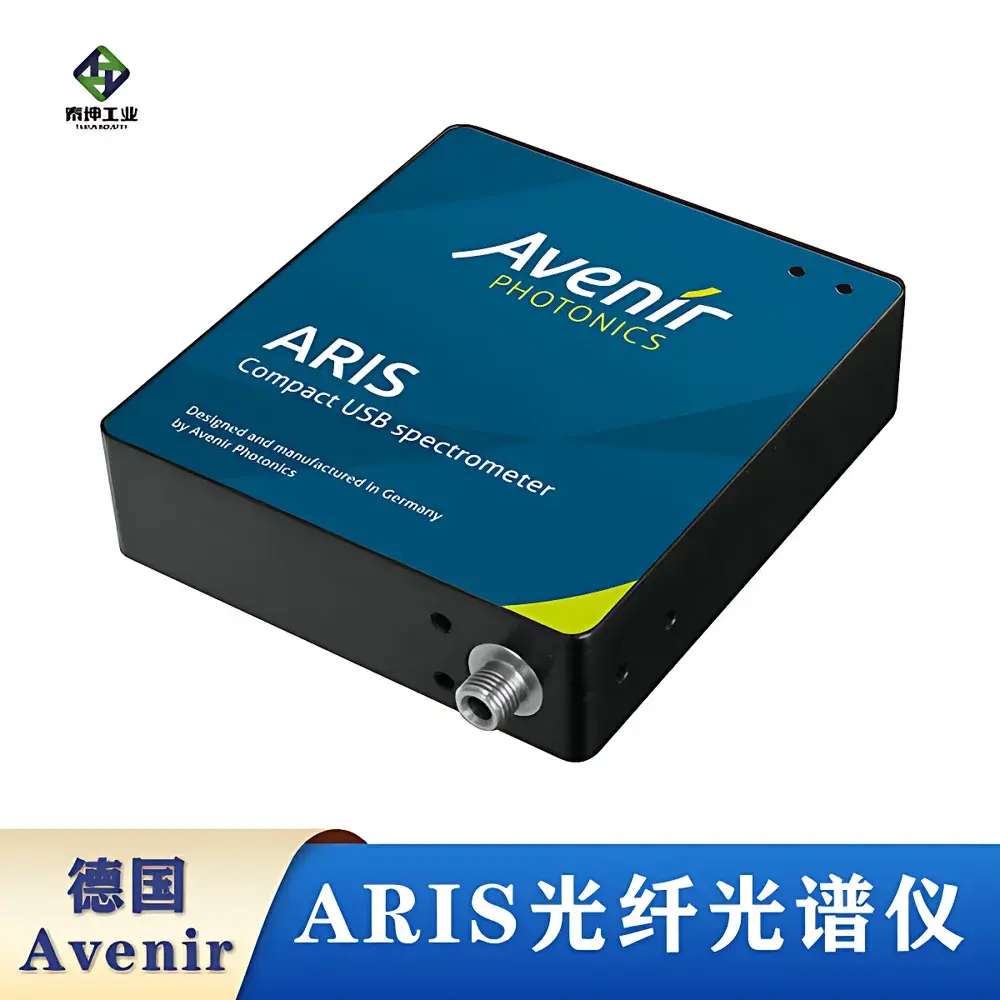
Avenir Sie na Uncooled Near-Infrared Fiber Optic Spectrometer
| Brand | Avenir |
|---|---|
| Origin | Germany |
| Model | Sie na |
| Spectral Range | 900–1700 nm, 800–1900 nm, 900–2100 nm |
| Detector Type | InGaAs CCD Array |
| Optical Resolution (FWHM) | 8 nm (typ.), up to 15 nm (max.) |
| Signal-to-Noise Ratio | 1000 (unaveraged) |
| Dynamic Range | 12,000:1 |
| Stray Light | < 0.08 % |
| Entrance Slit | 20 µm (user-replaceable) |
| Interface | USB 2.0 Full-Speed, UART, optional SPI/I²C |
| Power Supply | 5 V DC (4.4–5.5 V), ≤ 60 mW |
| Dimensions | 52.0 × 57.0 × 17.0 mm |
| Weight | 80 g |
| Operating Temperature | –20 °C to +60 °C |
| Compliance | EU EMC Directive 2014/30/EU, RoHS, REACH SVHC, U.S. Conflict Minerals Law |
Overview
The Avenir Sie na is a compact, uncooled near-infrared (NIR) fiber optic spectrometer engineered for high-performance spectroscopic measurement in portable, embedded, and industrial sensing applications. Unlike conventional cooled InGaAs-based spectrometers—whose operation beyond 1700 nm requires thermoelectric or cryogenic cooling—the Sie na leverages a proprietary room-temperature-stable 256-pixel linear InGaAs photodiode array with integrated dark-current compensation. This enables full spectral acquisition from 800 nm to 2100 nm without active cooling, eliminating fan noise, thermal drift, and power overhead associated with Peltier elements. Its optical architecture employs a symmetric Czerny-Turner design with a 30 mm focal length and f/5.3 throughput (NA = 0.19), optimized for high light throughput and minimal aberration across the NIR band. The spectrometer operates on a single 5 V supply, drawing ≤60 mW, and integrates real-time onboard signal processing—including automatic exposure control, spectral averaging, offset correction, nonlinearity compensation, and reference/dark spectrum subtraction—making it suitable for OEM integration where latency, power, and size are critical constraints.
Key Features
- Uncooled InGaAs detector enabling continuous operation from 800 nm to 2100 nm at ambient temperature (–20 °C to +60 °C)
- Three standard spectral configurations: Sie na 1.7 (900–1700 nm), Sie na 1.9 (800–1900 nm), and Sie na 2.1 (900–2100 nm)
- High stray-light suppression (< 0.08 %, measured with halogen lamp + longpass filter), essential for accurate absorbance quantification over wide dynamic ranges
- User-replaceable entrance slits (10–300 µm options available), allowing trade-off optimization between resolution, sensitivity, and optical throughput
- Onboard 16-bit ADC (2 MHz sampling), 426-spectrum buffer, and real-time spectral processing firmware supporting custom algorithm deployment
- Dual digital interfaces: USB 2.0 Full-Speed (Type-C) for host communication and UART for embedded control; optional SPI/I²C for microcontroller-level integration
- Robust mechanical design: aluminum housing, 80 g mass, IP-rated sealing-compatible form factor (52 × 57 × 17 mm), compliant with industrial shock/vibration profiles
Sample Compatibility & Compliance
The Sie na is compatible with standard SMA-905 fiber-optic interfaces (custom connectors available upon request), supporting coupling to halogen, tungsten-halogen, LED, or laser-based illumination sources. Its low-noise analog front-end and 12,000:1 dynamic range enable reliable detection of both weak diffuse reflectance signals and strong transmission peaks—even in high-absorbance regimes (>3 AU). The instrument meets stringent regulatory requirements for global deployment: electromagnetic compatibility per EU Directive 2014/30/EU, restriction of hazardous substances under RoHS 2011/65/EU and REACH SVHC Annex XIV, and U.S. conflict minerals reporting obligations (Dodd-Frank Act Section 1502). While not certified for GLP/GMP environments out-of-the-box, its deterministic firmware behavior, reproducible exposure timing (trigger jitter ≤1 µs), and traceable calibration reports support validation under ISO/IEC 17025 and ASTM E1421–22 frameworks when integrated into validated analytical systems.
Software & Data Management
Avenir provides a Windows-compatible application suite (Windows 7+) featuring real-time spectrum visualization, batch acquisition, and export in CSV, ASCII, and HDF5 formats. The included SDK delivers comprehensive C/C++, Python, and LabVIEW APIs with documented callback structures for spectral preprocessing, trigger synchronization, and firmware configuration. All spectral data includes embedded metadata (timestamp, integration time, slit ID, calibration coefficients), ensuring auditability in regulated workflows. Optional features include spectral evaluation engines tailored for moisture, fat, protein, or polymer identification—deployable as compiled DLLs or interpreted scripts. No cloud dependency or telemetry is enabled by default; all processing occurs locally, aligning with data sovereignty requirements in pharmaceutical, defense, and academic settings.
Applications
- Portable NIR analyzers for agricultural feedstock screening (moisture, starch, oil content)
- In-line process monitoring in food & beverage manufacturing (e.g., sugar concentration in syrups, alcohol content in distillates)
- Pharmaceutical raw material verification (API identity, excipient ratio, blend uniformity)
- Recycling sorting systems using NIR fingerprinting of polymers (PET, PP, PE, ABS)
- Environmental field sensors for soil organic carbon or hydrocarbon contamination assessment
- OEM integration into handheld medical devices for noninvasive tissue oximetry or glucose trend estimation
FAQ
Does the Sie na require external cooling to operate at 2100 nm?
No. The integrated InGaAs detector uses advanced dark-current compensation circuitry, enabling stable, low-noise operation from 800 nm to 2100 nm at ambient temperatures without thermoelectric or liquid cooling.
Can I change the spectral resolution after purchase?
Yes. Resolution is primarily determined by entrance slit width and grating selection. Users may replace the default 20 µm slit with optional slits (10–300 µm); narrower slits improve resolution at the expense of sensitivity, and vice versa.
Is factory recalibration required annually?
Not mandatory, but recommended every 12 months for applications requiring traceable metrology. Each unit ships with NIST-traceable wavelength and radiometric calibration certificates; users may perform field verification using certified reference standards.
What is the minimum integration time, and how is exposure controlled?
The shortest programmable integration time is 4 µs. Exposure is managed autonomously via onboard auto-exposure logic or manually via host command—supporting both single-shot and continuous streaming modes with sub-millisecond inter-spectrum latency.
Are spectral data timestamps synchronized to UTC or internal clock?
Timestamps are generated by the host system during USB frame receipt. For precise time-critical applications, external TTL triggering with hardware timestamping (via GPIO) is supported, enabling alignment to external event markers within ±1 µs jitter.
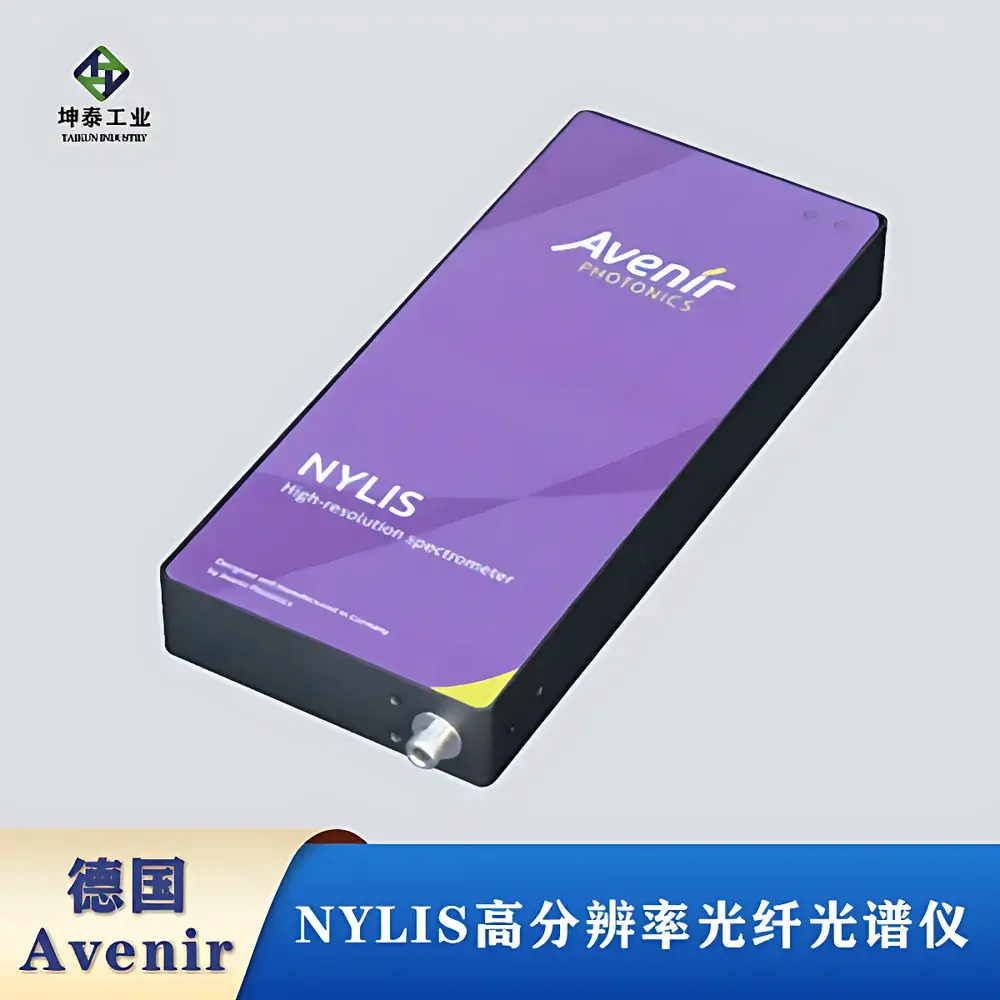
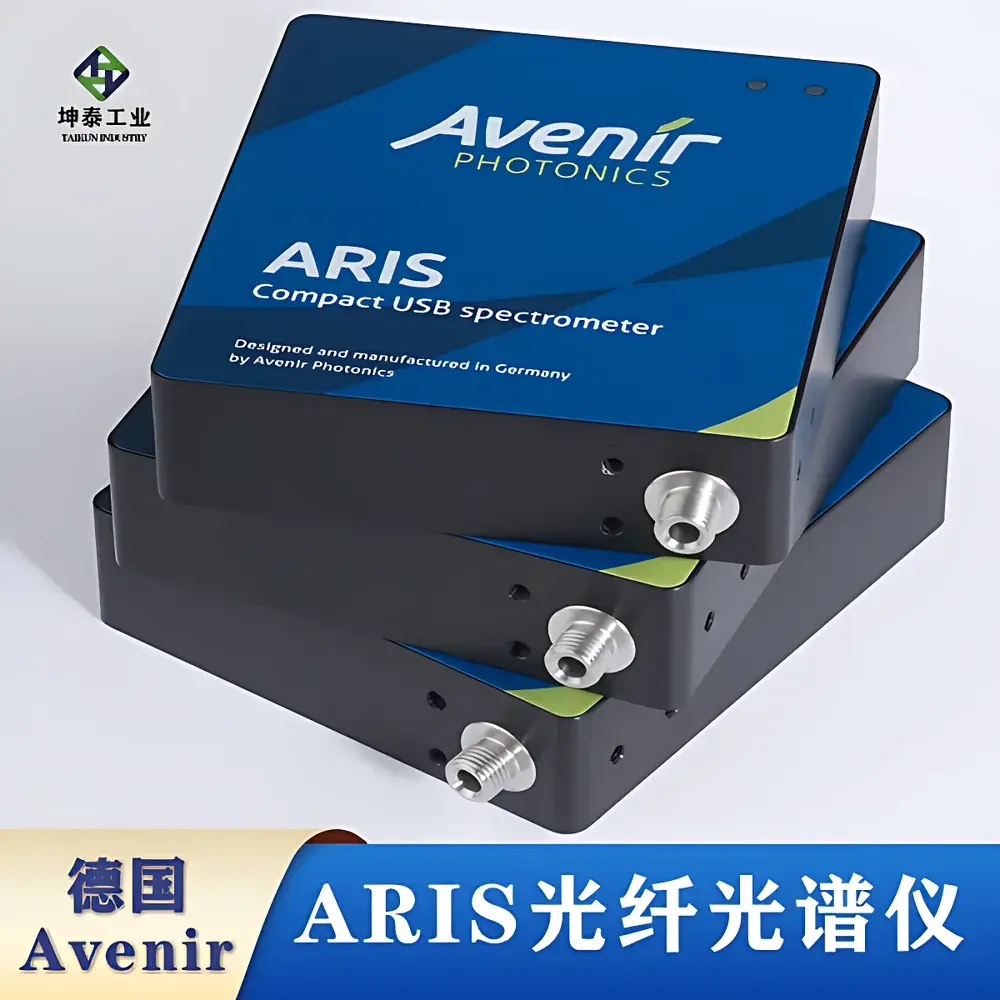
Related Products




