
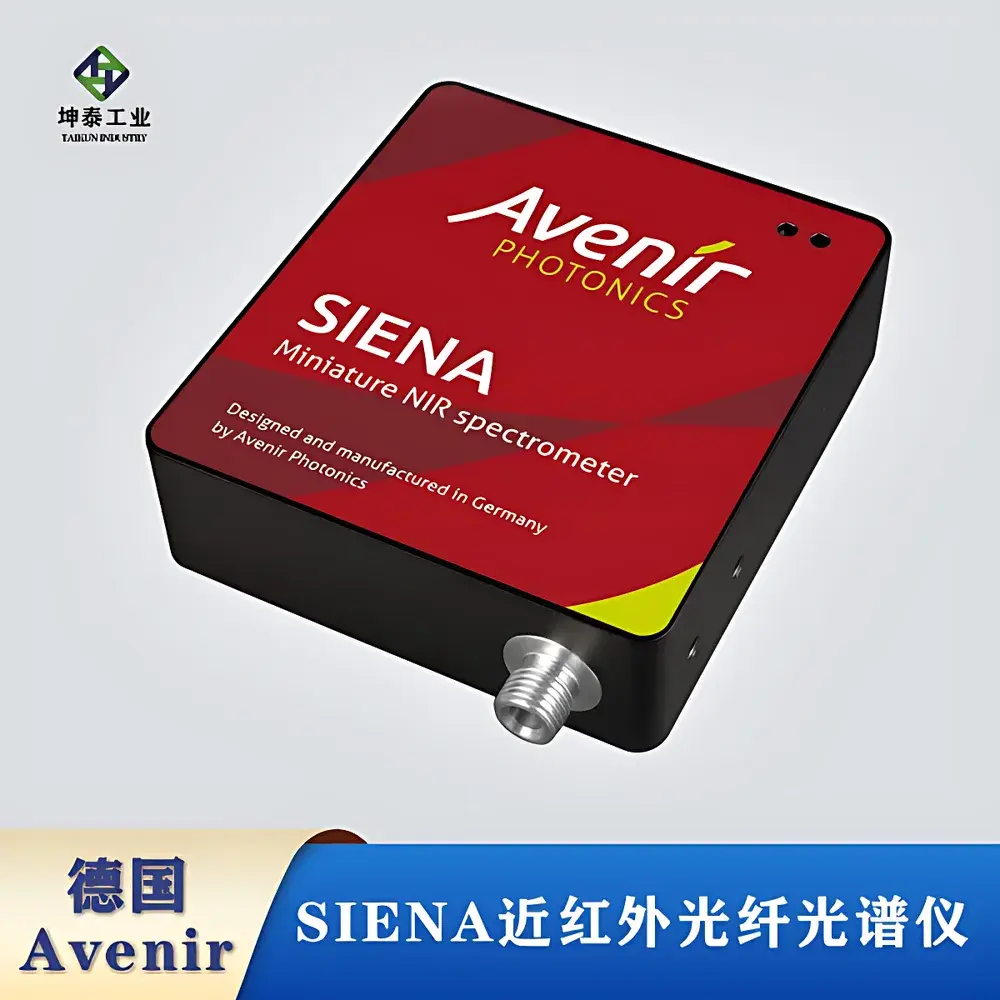
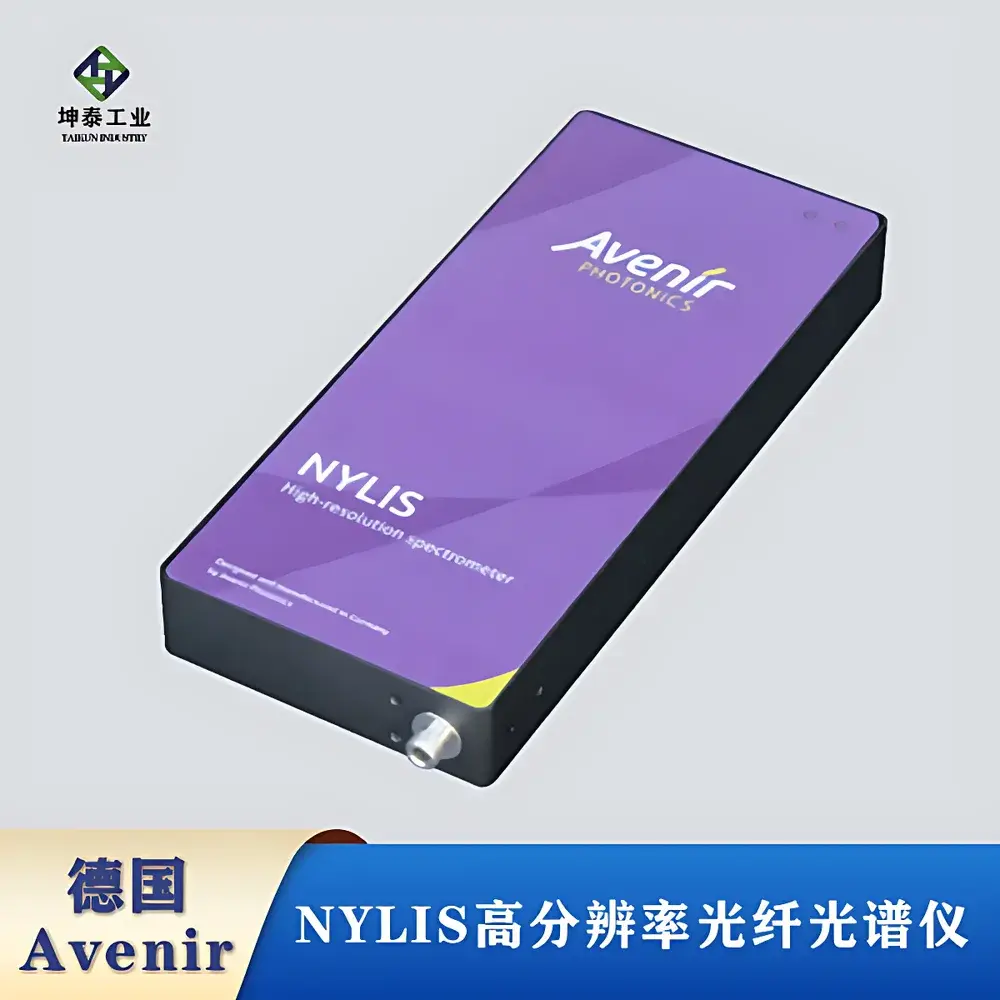
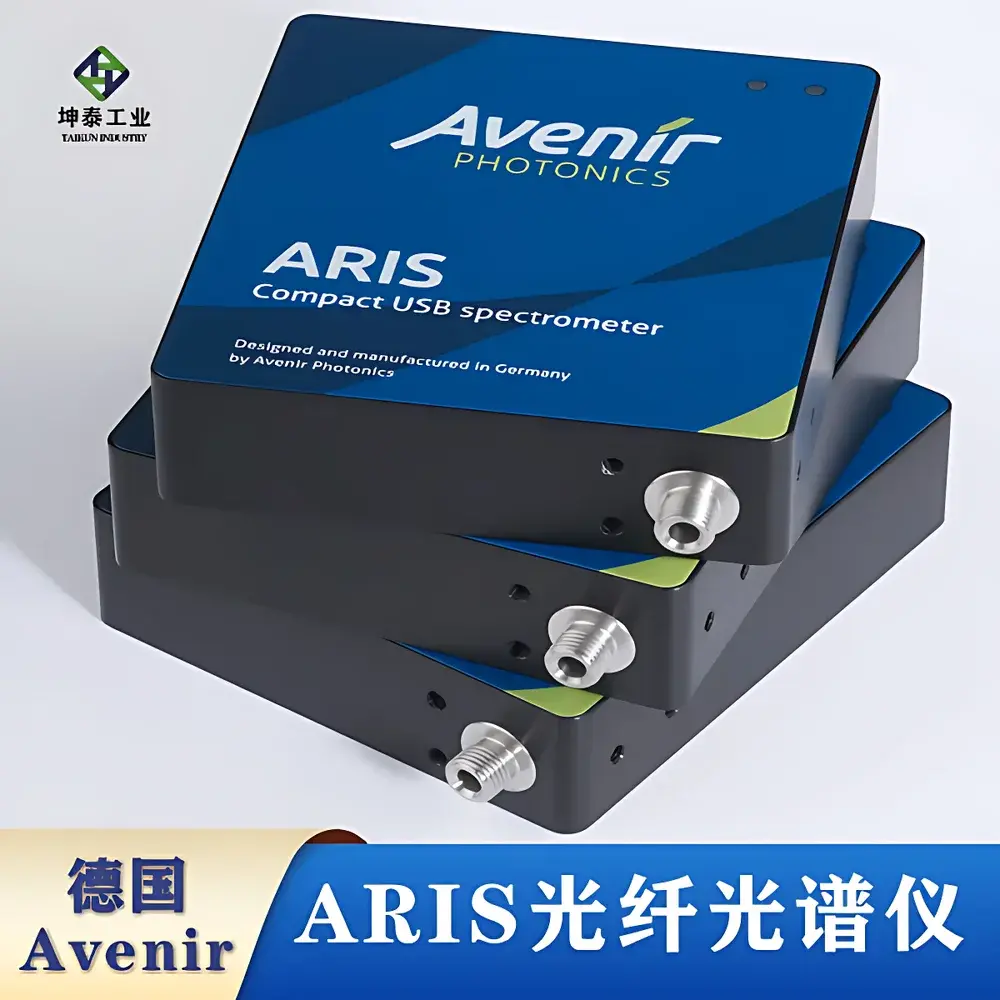
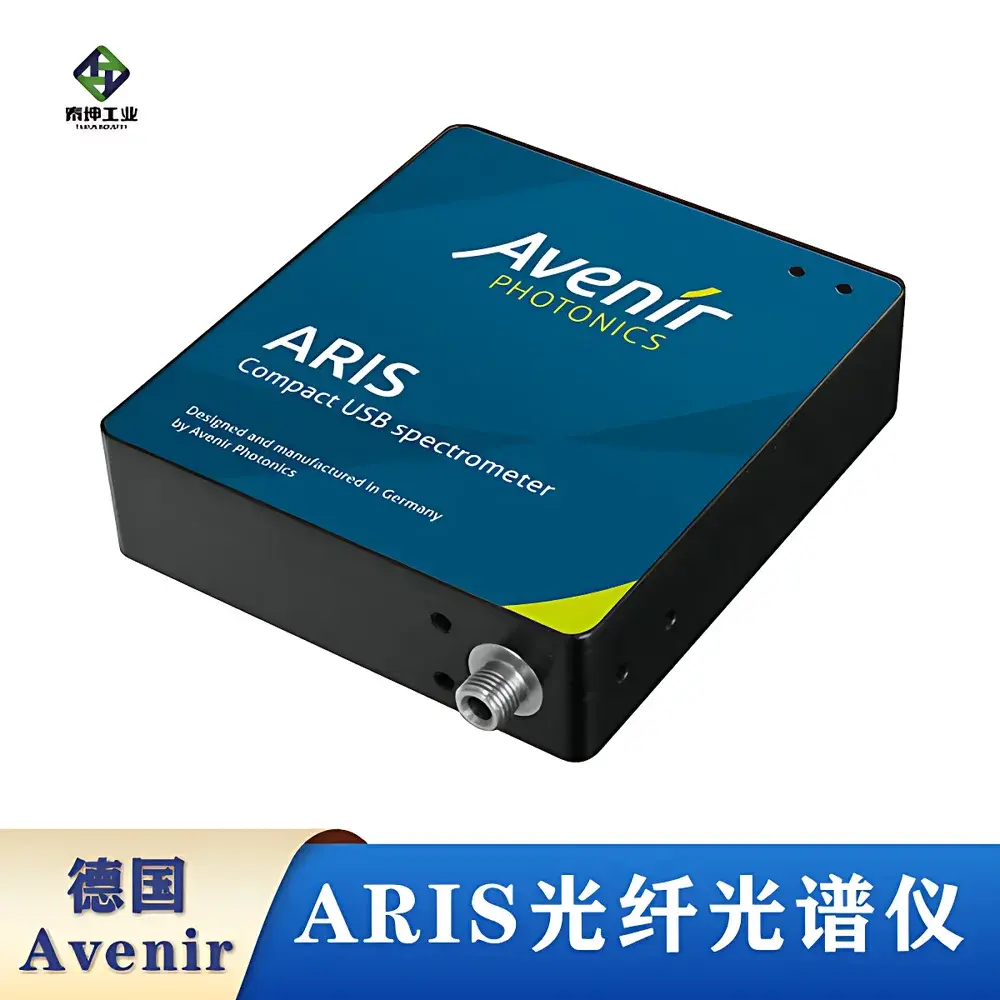
Avenir Siena Non-Cooled InGaAs Fiber Optic Spectrometer
| Brand | Avenir |
|---|---|
| Origin | Germany |
| Model | Siena |
| Spectral Range | 900–1700 nm, 800–1900 nm, 900–2100 nm |
| Detector Type | InGaAs CCD Array |
| Optical Resolution (FWHM) | 8–15 nm (configurable) |
| Signal-to-Noise Ratio | 1000 (max, unaveraged) |
| Dynamic Range | 12,000:1 |
| Stray Light | < 0.08 % |
Overview
The Avenir Siena is a compact, non-cooled InGaAs fiber optic spectrometer engineered for high-fidelity near-infrared (NIR) spectral acquisition in resource-constrained environments. Unlike conventional cooled InGaAs spectrometers—whose operation beyond 1700 nm necessitates thermoelectric or cryogenic cooling—the Siena leverages a proprietary room-temperature-stable 256-pixel linear InGaAs detector with integrated dark-current compensation. This enables continuous, stable spectral measurement up to 2100 nm without active cooling, eliminating fan noise, thermal drift, and power overhead associated with Peltier elements. Its optical architecture follows a symmetric Czerny-Turner design with a 30 mm focal length and f/5.3 numerical aperture (NA = 0.19), optimized for throughput and stray light suppression. The spectrometer operates on a single 5 V supply (<60 mW total power draw), supports USB 2.0 Full-Speed communication, and embeds real-time firmware for auto-exposure, spectral averaging, offset correction, nonlinearity compensation, and dark/reference spectrum subtraction—making it suitable for embedded OEM integration in portable analyzers, process sensors, and field-deployable instrumentation.
Key Features
- Three standard spectral configurations: Siena 1.7 (900–1700 nm), Siena 1.9 (800–1900 nm), and Siena 2.1 (900–2100 nm), each with factory-optimized grating and order-sorting filters
- Non-cooled InGaAs linear array (256 pixels) with on-chip dark current correction—enables stable operation from –20 °C to +60 °C ambient without thermal stabilization
- Optimized optical design achieving < 0.08 % stray light (measured with halogen source + longpass filter), critical for accurate absorbance quantification across wide dynamic ranges
- User-replaceable entrance slits (standard 20 µm; optional 10–300 µm) to balance resolution, sensitivity, and étendue per application requirements
- Onboard 16-bit ADC (2 MHz sampling), 426-spectrum buffer, and real-time spectral processing engine supporting exposure optimization, pixel binning, and baseline correction
- Low-latency triggering (≤1 µs jitter), sub-millisecond minimum repetition time (0.34 ms), and deterministic USB transfer latency (4–6 ms for 32-bit spectra)
- Compact footprint (52.0 × 57.0 × 17.0 mm) and lightweight construction (80 g), compatible with space-limited enclosures and mobile platforms
Sample Compatibility & Compliance
The Siena interfaces via SMA-905 optical connectors (custom interfaces available upon request) and supports standard NIR-compatible fiber optics (e.g., silica-core, low-OH fibers for 800–2100 nm transmission). It is compatible with common broadband illumination sources—including tungsten-halogen lamps, LED arrays, and supercontinuum lasers—when paired with appropriate bandpass or longpass filtering. Its robust mechanical and thermal design ensures consistent performance under vibration, humidity (0–90 % RH, non-condensing), and extended temperature cycling (–40 °C to +70 °C storage). The device complies with EU directives 2014/30/EU (EMC), 2011/65/EU (RoHS), REACH SVHC regulations, and the U.S. Conflict Minerals Reporting Standard (CMRT). While not certified for IEC 61000-6-2/-4 or FDA 21 CFR Part 11 out-of-the-box, its deterministic firmware logging, traceable calibration reports, and SDK-supported audit trail generation enable validation pathways for GLP/GMP-compliant environments.
Software & Data Management
Avenir provides a Windows-based application suite (Windows 7 or later) featuring real-time spectrum visualization, multi-curve overlay, peak detection, and absorbance/transmittance conversion with user-defined reference and dark spectra. The included Software Development Kit (SDK) delivers native C/C++, Python, and LabVIEW APIs with full register-level access to exposure control, trigger modes, buffer management, and onboard processing flags. All spectral data are timestamped and tagged with instrument metadata (serial number, firmware version, slit ID, calibration date). Raw 16-bit spectra are exported in HDF5 or CSV format, preserving bit-depth integrity for post-acquisition chemometric modeling (e.g., PLS, PCA). Optional firmware updates support custom spectral evaluation algorithms deployed directly to the microcontroller—enabling edge-based preprocessing prior to host transmission.
Applications
- Portable NIR analyzers for agricultural feedstock screening (moisture, protein, oil content in grains and forage)
- In-line process monitoring of polymer melt index, pharmaceutical tablet coating uniformity, and solvent concentration in chemical reactors
- Recycling sorting systems leveraging spectral fingerprints of plastics (e.g., PET vs. PP vs. PE) between 1100–1800 nm
- Field-deployable soil carbon and organic matter assessment using diffuse reflectance spectroscopy
- OEM integration into handheld medical devices for non-invasive tissue oximetry and hemoglobin analysis
- Research-grade spectral libraries for machine learning training in material identification and quality grading
FAQ
Does the Siena require external cooling to operate at 2100 nm?
No. The Siena uses a specially designed non-cooled InGaAs linear array with on-chip dark current compensation, enabling stable, low-drift operation up to 2100 nm at ambient temperatures between –20 °C and +60 °C.
Can spectral resolution be improved beyond the standard 8–15 nm FWHM?
Yes. Resolution is slit-dependent: narrower entrance slits (e.g., 10 µm) improve resolution at the expense of sensitivity. Custom gratings and optical redesigns are available for applications requiring <5 nm resolution.
Is the Siena compatible with third-party fiber probes and light sources?
Yes. It accepts standard SMA-905 terminated fibers and is compatible with most commercially available NIR light sources when appropriate spectral filtering is applied to prevent order overlap and saturation.
What calibration documentation is provided?
Each unit ships with a NIST-traceable wavelength and radiometric calibration report, including pixel-to-wavelength mapping, linearity verification, and stray light characterization data.
Can the Siena operate in triggered acquisition mode synchronized with external equipment?
Yes. It supports hardware-triggered acquisition with ≤1 µs jitter on TTL-compatible input, and provides programmable output pulses for lamp synchronization or data acquisition gating.




