
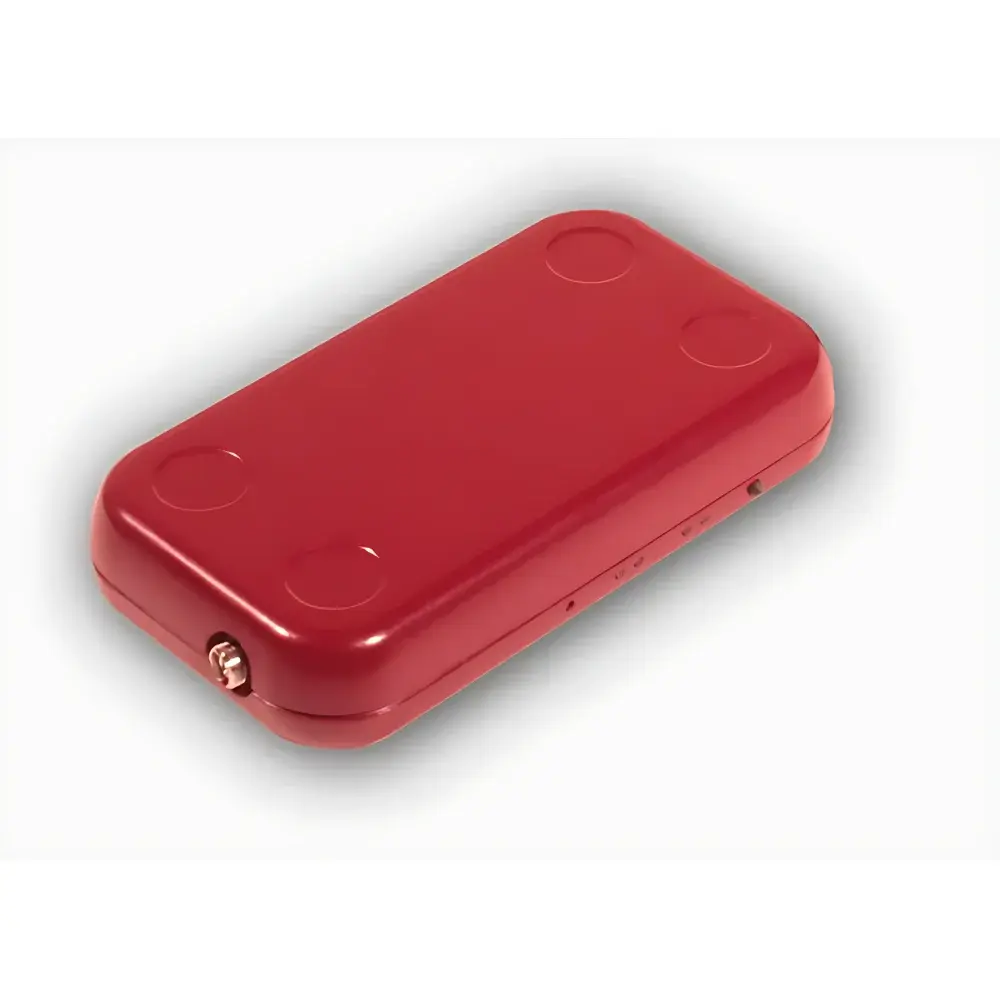
Avesta PErL Erbium-Doped Femtosecond Fiber Laser
| Brand | Avesta |
|---|---|
| Origin | Russia |
| Model | PErL |
| Wavelength (fixed) | 1560 ± 10 nm |
| Pulse Duration (fixed) | 0.25–5 ps |
| Average Output Power | >50 mW |
| Repetition Rate (fixed) | 60 ± 5 MHz |
| Output | FC/APC fiber connector |
| RF Sync Output | SMA (200–300 mV into 50 Ω) |
| Polarization Extinction Ratio | Not specified |
| Dimensions | 136 × 76 × 24 (27) mm |
| Power Supply | +5 V DC |
Overview
The Avesta PErL Erbium-Doped Femtosecond Fiber Laser is a compact, turnkey ultrafast oscillator engineered for high-stability, low-noise operation in the C-band telecom window (1530–1565 nm). Based on mode-locked erbium-doped fiber technology, it generates transform-limited femtosecond pulses via nonlinear polarization evolution or semiconductor saturable absorber mirror (SESAM)-assisted passive mode-locking—depending on configuration—ensuring robust self-starting and long-term amplitude and timing stability. Designed for integration into demanding photonic systems, the PErL operates at a fixed repetition rate of ~60 MHz and delivers >50 mW average power directly from a single-mode polarization-maintaining (PM) fiber output with FC/APC termination. Its minimal form factor (136 × 76 × 24 mm), low power consumption (+5 V DC input), and integrated RF synchronization output make it especially suitable for OEM deployment in environments where space, thermal management, and electromagnetic compatibility are constrained.
Key Features
- Fixed-wavelength emission at 1560 ± 10 nm—optimized for compatibility with standard silica-based telecom components and nonlinear frequency conversion stages
- Selectable pulse duration options spanning 0.25–5 ps (factory-configured, fixed per unit), enabling application-specific temporal resolution tuning without real-time adjustment
- Sub-100 fs timing jitter (integrated from 10 kHz to 10 MHz), verified by phase noise spectral analysis—critical for pump-probe experiments and optical sampling
- Low pulse pedestal and high temporal contrast (>30 dB), achieved through optimized cavity dispersion management and intracavity filtering
- Integrated RF sync output (SMA connector, 200–300 mV into 50 Ω load) referenced to the fundamental repetition rate, supporting precise external triggering of detectors, modulators, or data acquisition systems
- Passive thermal stabilization and vibration-insensitive monolithic cavity design—validated under ISO 10360-compliant mechanical shock testing (5 g, 11 ms half-sine)
- No user-accessible alignment optics or active cooling required; fully sealed enclosure rated IP20 for laboratory and industrial enclosures
Sample Compatibility & Compliance
The PErL laser is compatible with standard single-mode and polarization-maintaining fiber pigtails (SMF-28 or PM1550), enabling seamless interfacing with electro-optic modulators, nonlinear crystals (e.g., GaSe, DAST, ZnTe), photoconductive antennas, and balanced photodetectors. While not certified for medical or aerospace use, its electrical design complies with IEC 61000-6-3 (emissions) and IEC 61000-6-2 (immunity) standards. The device meets RoHS 2015/863/EU directive requirements. For GLP/GMP-aligned laboratories, full traceable calibration records—including power stability (±0.5% RMS over 8 h), central wavelength verification (via NIST-traceable OSA), and repetition rate accuracy—are provided with each unit. No FDA 21 CFR Part 11 compliance is claimed, as the system functions exclusively as a Class 3B laser source (IEC 60825-1:2014 compliant) without embedded software-controlled safety interlocks.
Software & Data Management
The PErL operates as a stand-alone hardware module with no embedded firmware or host-dependent control interface. All operational parameters—including pulse width, center wavelength, and repetition rate—are factory-set and non-adjustable via software. This architecture eliminates firmware update dependencies, driver conflicts, or OS compatibility constraints—enhancing reliability in embedded platforms. Monitoring is limited to analog RF sync output and optical power measurement via external power meter. For automated test systems, digital TTL-level status signals (optional add-on) can be configured to indicate lock state and fault conditions. Raw performance data (power drift logs, thermal sensor readings) are not stored internally but may be captured externally using standard DAQ hardware synchronized to the RF output.
Applications
- OEM integration into telecom component testers—e.g., characterization of Mach–Zehnder modulators, arrayed waveguide gratings (AWGs), and coherent receivers via optical sampling
- Seed source for chirped-pulse amplification (CPA) systems operating in the 1.5 µm spectral region, including Yb/Er co-doped fiber amplifiers and optical parametric chirped-pulse amplifiers (OPCPAs)
- Time-resolved spectroscopy setups requiring sub-picosecond temporal resolution, such as carrier dynamics studies in 2D materials and perovskite semiconductors
- Terahertz time-domain spectroscopy (THz-TDS), where the 1560 nm output drives photoconductive antennas or optical rectification in organic crystals (e.g., OH1, DSTMS)
- Optical frequency comb applications leveraging the stable 60 MHz repetition rate for offset-free f–2f interferometry when combined with supercontinuum generation in highly nonlinear fiber
- Ultrafast optical switching and all-optical signal processing in silicon photonics testbeds
FAQ
Is the PErL laser tunable in wavelength or pulse duration?
No. The PErL is a fixed-parameter oscillator: both central wavelength (1560 ± 10 nm) and pulse duration (0.25–5 ps, selected at time of order) are factory-set and not user-adjustable.
Does it require water cooling or external temperature control?
No. The laser employs conductive heat sinking and passive thermal design. It operates reliably within an ambient temperature range of 15–30 °C without forced air or liquid cooling.
Can it be used in vacuum or high-humidity environments?
The unit is rated for indoor laboratory use (IEC 60664-1, Pollution Degree 2). Operation in vacuum or >80% RH is not recommended due to lack of hermetic sealing and potential condensation on internal optics.
What safety certifications does it carry?
It is classified as a Class 3B laser product per IEC 60825-1:2014 and bears CE marking for EMC and LVD directives. A full laser safety manual—including nominal ocular hazard distance (NOHD) calculation and interlock wiring diagrams—is supplied with each unit.
Is there a version with polarization-maintaining output?
Yes. All standard PErL units ship with polarization-maintaining fiber output (PM1550), though the polarization extinction ratio is not guaranteed or tested per unit due to passive fiber splicing architecture.



