
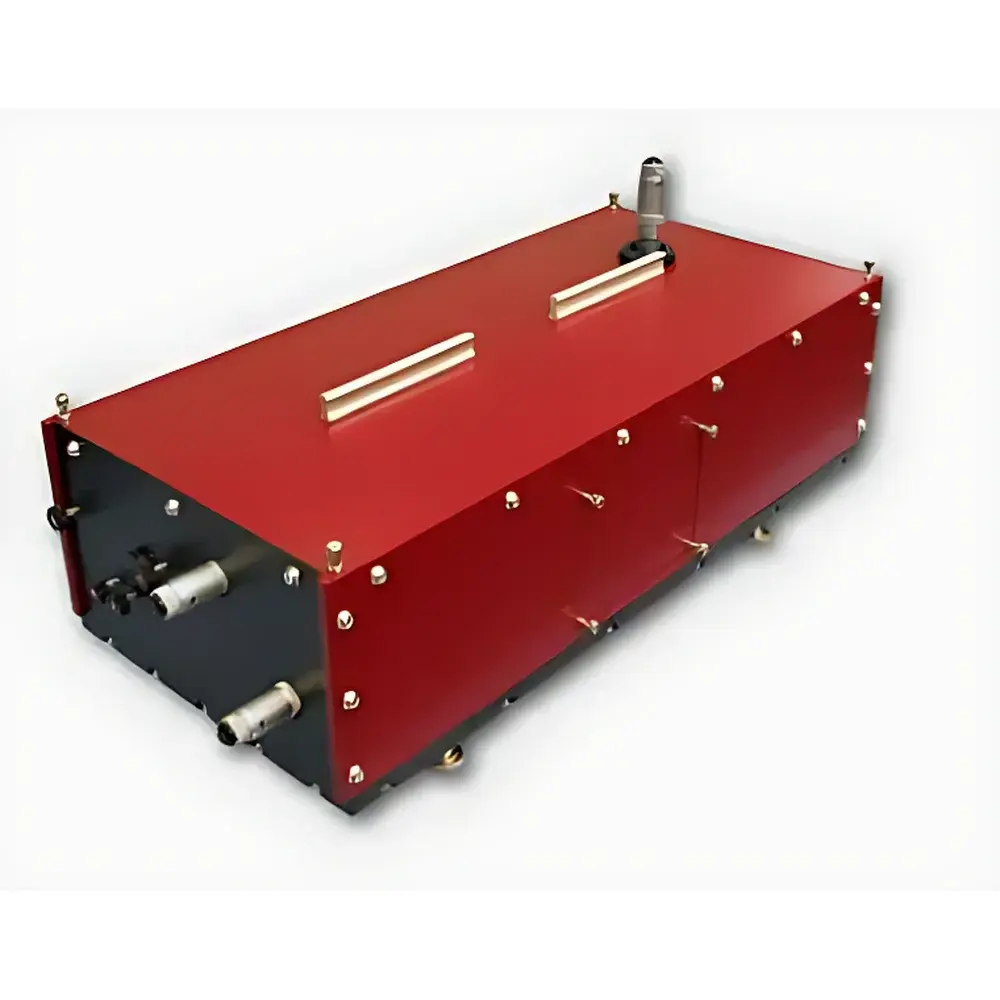
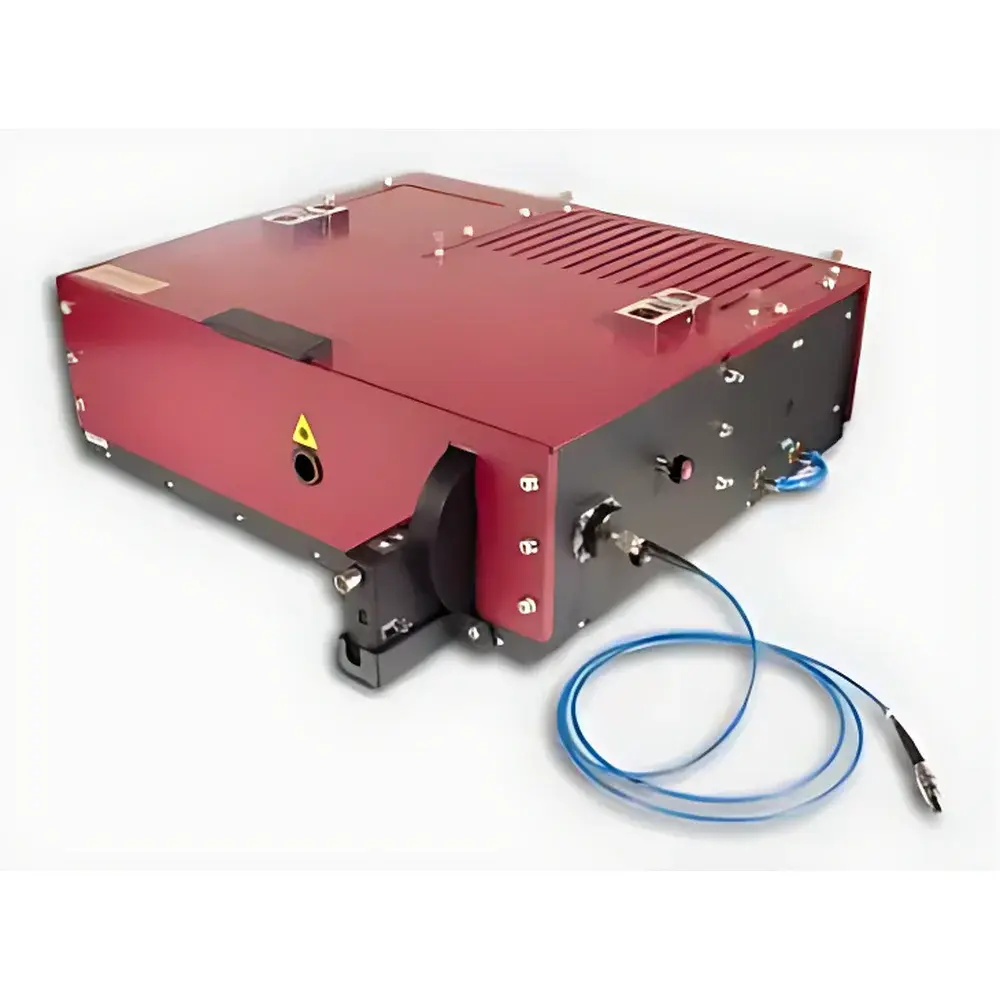
Avesta TiC Titanium:Sapphire Continuous-Wave Laser System
| Brand | Avesta |
|---|---|
| Origin | Russia |
| Manufacturer Type | Authorized Distributor |
| Origin Category | Imported |
| Model | TiC |
| Core Type | Solid-State CW Laser Oscillator |
| Pumping Requirement | 532 nm CW DPSS or Argon-Ion Laser |
| Tuning Mechanism | Manual Birefringent Filter or Motorized USB-Controlled Filter Drive |
| Optional Intracavity Etalons | Single or Dual for Linewidth Narrowing |
| Output Options | Free-Space TEM₀₀ Beam or Fiber-Coupled (SM, FC/FC, 1 m, 4 µm Core) |
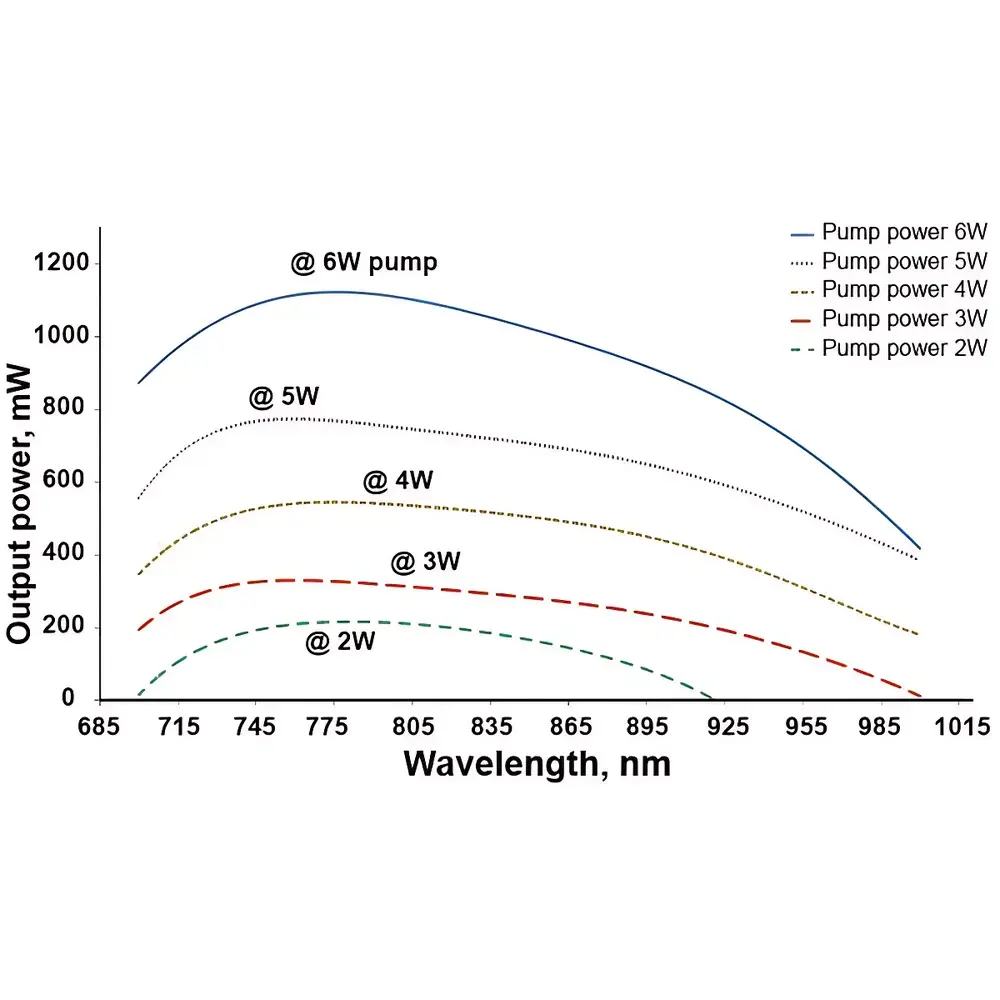
| Power Range (Oscillator Only) | ≥1.5 W @ 800 nm (5 W Pump) |
| Fiber-Coupled Power | ≥400 mW @ 800 nm |
| Linewidth | <45 GHz (free-running), <20 GHz (with one etalon), <2 GHz (with two etalons) |
| Beam Divergence | <2 mrad |
| Polarization | Linear, >100:1 (free-space output, 5 W pump) |
Overview
The Avesta TiC Titanium:Sapphire Continuous-Wave (CW) Laser System is a high-stability, broadly tunable solid-state laser oscillator engineered for precision spectroscopic and ultrafast science applications. Based on the Ti:sapphire gain medium, it operates on the principle of four-level electronic transitions within the Ti³⁺ ion doped into an Al₂O₃ crystal lattice, pumped optically at 532 nm. Its fundamental design enables continuous-wave lasing across a wide spectral range—from 700 nm to 1000 nm—making it especially suited for high-resolution absorption spectroscopy, cavity ring-down measurements, frequency metrology pre-staging, and as a seed source for optical parametric oscillators (OPOs) or amplifier systems. Unlike pulsed Ti:sapphire lasers, the TiC delivers exceptional amplitude and frequency stability (<0.5% RMS power fluctuation over 1 hour, typical), low spatial noise, and diffraction-limited TEM₀₀ beam quality—critical for interferometric and heterodyne detection schemes.
Key Features
- Broad wavelength tuning range: 700–1000 nm via precision birefringent filter; manual or motorized USB-controlled adjustment with sub-nanometer repeatability
- High average output power: >1.5 W at 800 nm under 5 W 532 nm pump excitation (oscillator-only configuration)
- Optional intracavity etalons: Configurable single- or dual-etalon setup enabling linewidth reduction to <20 GHz or <2 GHz respectively
- Flexible output architecture: Switchable between free-space collimated TEM₀₀ beam (M² < 1.1) and fiber-coupled output via SMF-28-compatible 4 µm core fiber (FC/FC connector, 1 m length)
- Fiber-coupled power: ≥400 mW at 800 nm with polarization-maintaining coupling efficiency >65%
- Integrated pump laser option: Available with co-packaged 532 nm DPSS pump sources (2–10 W output, air-cooled, Class IV compliant)
- Beam specifications: Divergence 100:1 (free-space), pointing stability <5 µrad/°C
Sample Compatibility & Compliance
The TiC laser system is designed for laboratory integration in environments requiring long-term operational reliability and regulatory traceability. Its mechanical and optical architecture conforms to ISO 10110-7 (laser beam quality specifications) and IEC 60825-1:2014 (laser product safety classification). When equipped with optional integrated pump modules, the full system meets FDA 21 CFR Part 1040.10/1040.11 requirements for Class IV laser products. All electrical subsystems comply with CE marking directives (EMC Directive 2014/30/EU and Low Voltage Directive 2014/35/EU). The oscillator housing is constructed from thermally stable aluminum alloy with passive cooling channels, ensuring minimal thermal drift during extended spectral scans (>8 h continuous operation demonstrated at constant wavelength). No consumables or gas supplies are required—consistent with GLP-compliant instrument maintenance protocols.
Software & Data Management
Avesta provides the TiC Control Suite—a native Windows application supporting USB 2.0 communication with the motorized filter drive and optional pump laser controller. The software enables automated wavelength sweeps (linear, stepwise, or custom profile), real-time power monitoring (via integrated photodiode feedback), and synchronized data logging (timestamped wavelength, power, temperature, and etalon position). Export formats include CSV, HDF5, and MATLAB-compatible .mat files. For integration into larger experimental frameworks, DLL-based API access is provided for LabVIEW, Python (PyUSB, NumPy), and MATLAB scripting. Audit trails—including user login, parameter changes, and calibration events—are recorded per ISO/IEC 17025:2017 Annex A.2 guidelines. Firmware updates are delivered via secure HTTPS channel with SHA-256 signature verification.
Applications
- High-resolution atomic and molecular spectroscopy (e.g., Doppler-free saturation spectroscopy of alkali vapors)
- Cavity-enhanced absorption spectroscopy (CEAS) and off-axis ICOS for trace gas detection
- Precision wavelength calibration of spectrometers and monochromators
- Seed source for picosecond OPOs and CW-pumped Raman shifters
- Optical coherence tomography (OCT) system development requiring tunable near-IR sources
- Frequency stabilization experiments using Pound–Drever–Hall locking to ultra-low-expansion (ULE) cavities
- Photoacoustic spectroscopy requiring narrow-linewidth, intensity-stable illumination
FAQ
What pump laser specifications are required to operate the TiC oscillator?
A CW 532 nm laser with minimum 2 W output power, M² < 1.3, and beam diameter 1.5–2.5 mm (1/e²) is required. Recommended sources include Verdi-series DPSS lasers or air-cooled argon-ion lasers with line-narrowed 532 nm output.
Can the TiC be retrofitted with an integrated pump laser after initial purchase?
Yes—field-upgrade kits including mechanical mounting interface, thermal management module, and control firmware are available under part number TI-C-UPG-PUMP.
Is the fiber-coupled output polarization-maintaining?
No—the standard 4 µm core fiber is single-mode but not polarization-maintaining. A PM-fiber variant (4 µm core, Panda-type) is available upon request with additional alignment calibration.
What is the warm-up time to achieve spectral stability?
Typical thermal stabilization time is 30 minutes from cold start; wavelength drift remains <±0.05 nm over subsequent 4-hour operation at fixed setting.
Does the TiC support external modulation of output power?
An analog modulation input (0–5 V, bandwidth DC–10 kHz) is available on the integrated pump laser version for direct amplitude control; oscillator-only units require external AOM or EOM integration.





