
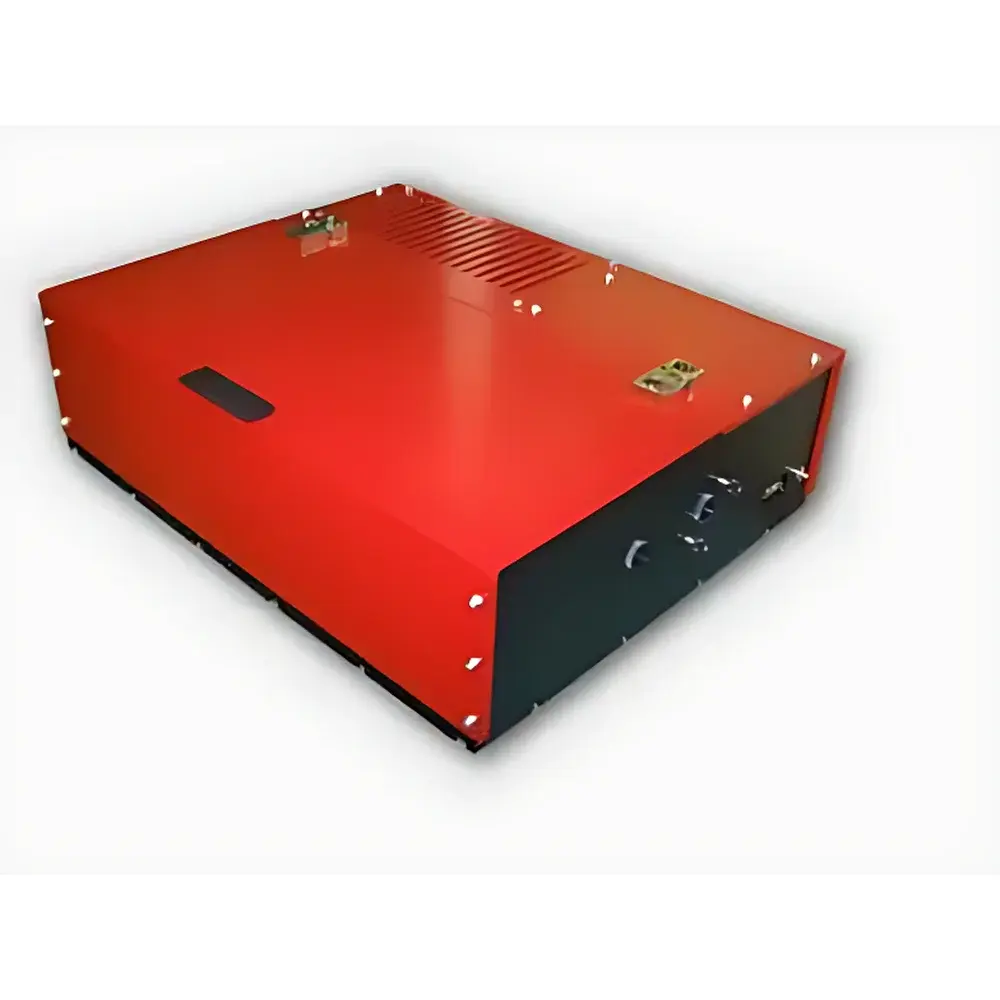
Avesta TiF-50 Titanium:Sapphire Femtosecond Laser System
| Brand | Avesta |
|---|---|
| Origin | Russia |
| Model | TiF-50 |
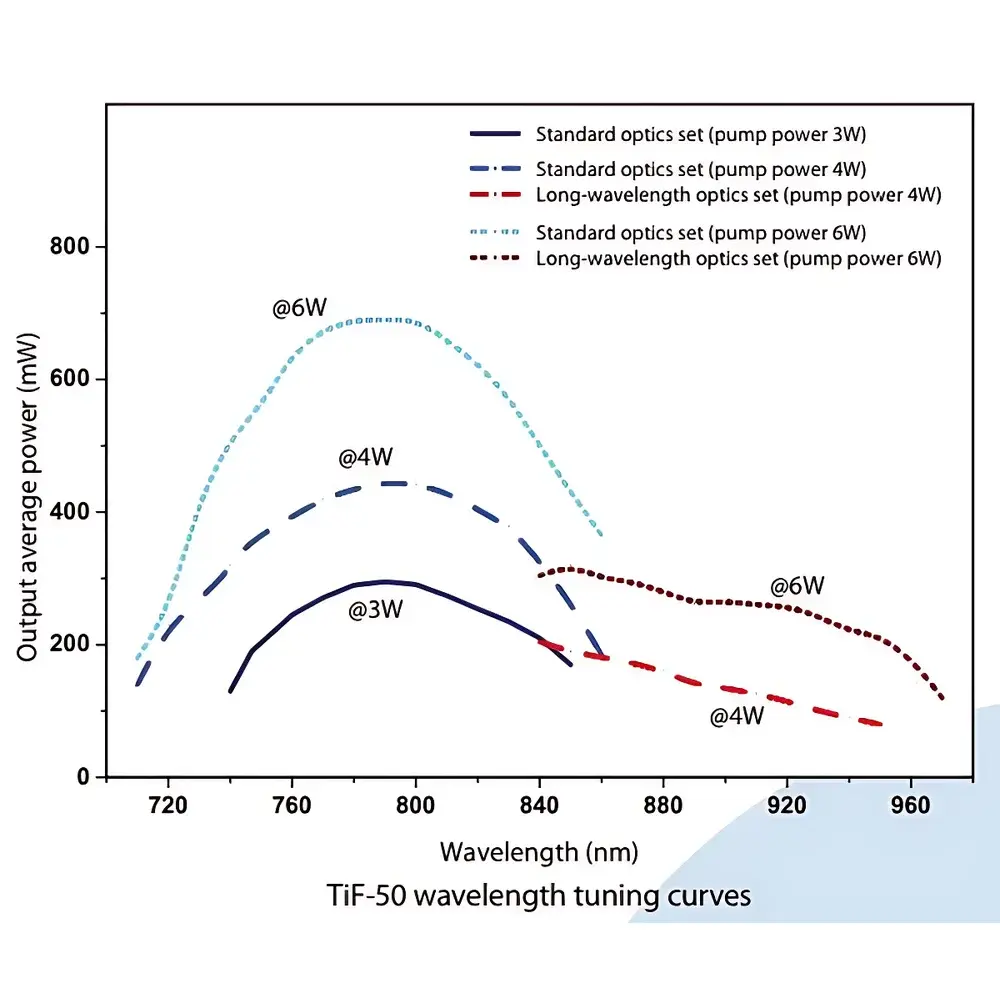
| Tuning Range | 730–950 nm |
| Pulse Width | <50 fs |
| Output Power | up to 1.2 W (at 10 W pump) |
| Repetition Rate | 80 MHz |
| Pump Power Max | 10 W |
| Beam Quality | TEM₀₀ |
| Polarization | Linear, horizontal |
| Beam Divergence | <1 mrad |
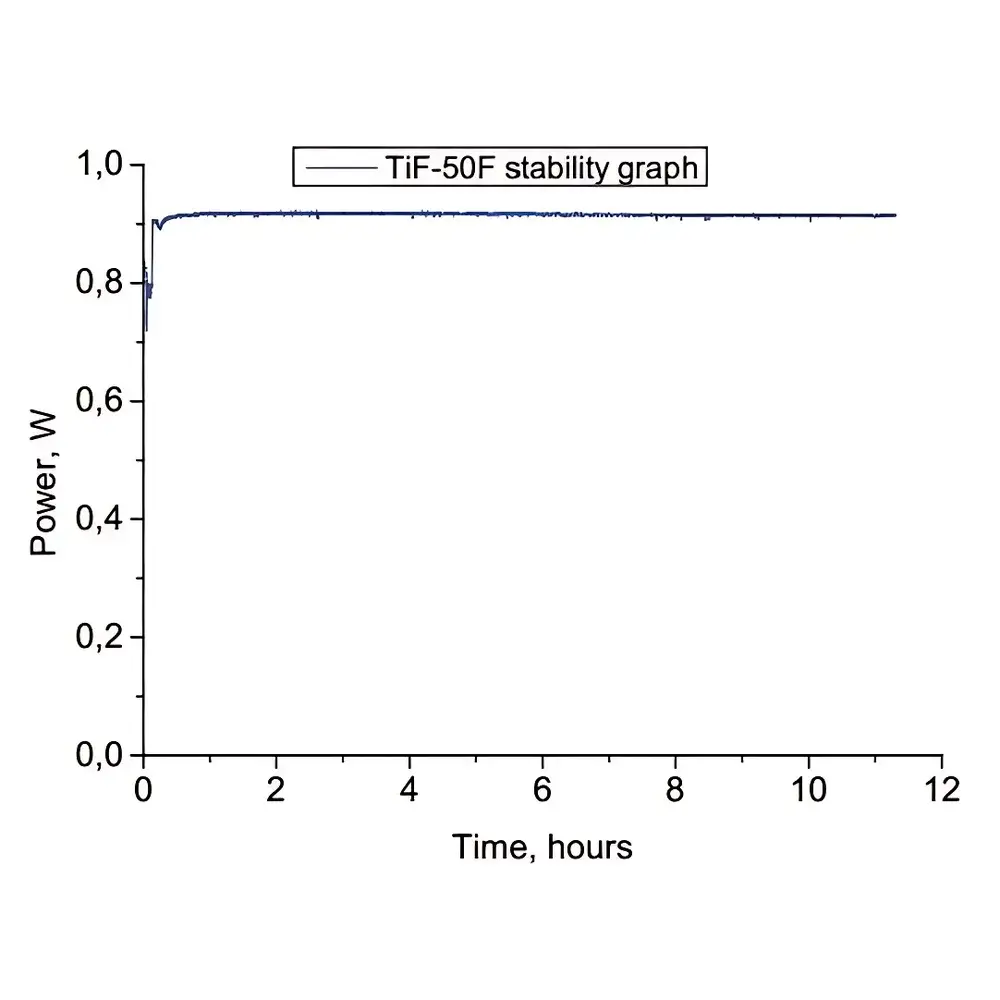
| RMS Power Stability | <1% |
| Dimensions | 610 × 450 × 197 mm |
| Optional Features | Motorized wavelength tuning (USB), birefringent filter, etalon, prism pair / APC for dispersion pre-compensation, electromagnetic shutter for fs/CW switching |
Overview
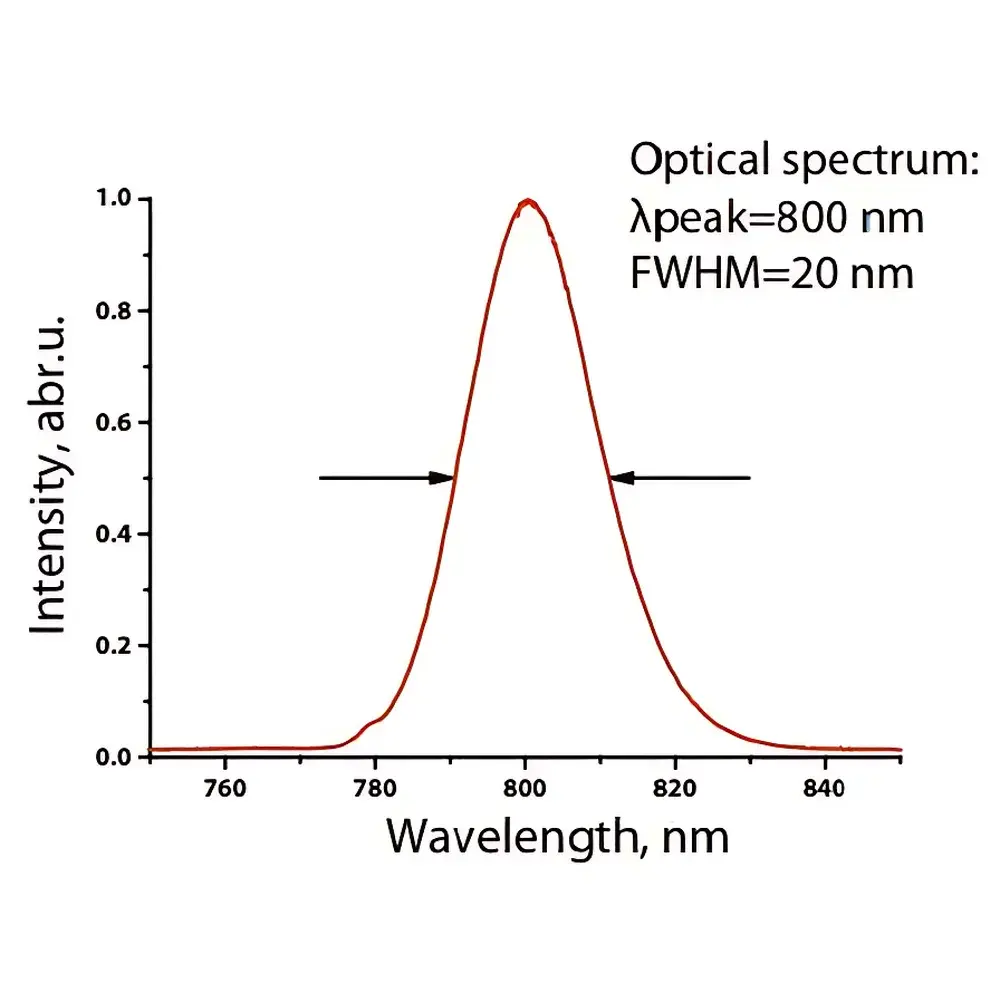
The Avesta TiF-50 is a high-performance, tunable titanium:sapphire (Ti:S) femtosecond oscillator engineered for precision ultrafast science applications. Based on the fundamental principles of mode-locked solid-state laser operation, the TiF-50 generates transform-limited pulses via Kerr-lens mode-locking (KLM) in a Ti:S crystal pumped by a frequency-doubled Nd:YVO₄ or similar CW green laser. Its design emphasizes spectral flexibility and temporal fidelity—delivering sub-50-fs pulses across a broad 730–950 nm tuning range, with typical spectral bandwidth exceeding 20 nm at 800 nm. The system operates at a fixed repetition rate of 80 MHz and maintains diffraction-limited beam quality (TEM₀₀) with linear horizontal polarization and low divergence (<1 mrad), ensuring compatibility with downstream nonlinear optics, pulse compression, and spatially demanding setups such as multiphoton microscopy or THz generation.
Key Features
- Wide, continuous wavelength tuning from 730 nm to 950 nm via motorized birefringent filter or etalon (optional)
- Pulse duration consistently below 50 fs—verified by autocorrelation and spectral phase characterization
- High average output power: up to 1.2 W at 800 nm when pumped with 10 W of 532 nm light
- Two operational configurations: TiF-50 (external pump laser required) and TiF-50F (factory-integrated industrial-grade pump laser)
- Identical Ti:S laser head dimensions across both versions—enabling seamless upgrade paths and mechanical interchangeability
- Integrated thermal feedback control and electromagnetic shutter for reliable fs/CW switching (optional)
- USB-controlled motorized wavelength tuning with programmable step resolution and repeatability
- Robust mechanical architecture with vibration-insensitive cavity design and sealed optical housing
Sample Compatibility & Compliance
The TiF-50 is designed for integration into regulated and research-grade optical laboratories. Its stable output and deterministic pulse characteristics support compliance with experimental requirements defined in ISO/IEC 17025-accredited environments. While not a medical device, its performance aligns with laser safety standards per IEC 60825-1:2014 (Class 4 laser product). All electrical components meet CE and RoHS directives. The system’s thermal management and long-term power stability (<1% RMS over 8 hours) facilitate reproducible data acquisition in GLP-compliant spectroscopy, time-resolved fluorescence, and pump-probe experiments. No FDA 21 CFR Part 11 functionality is provided, as the device serves as a core optical source—not a data-generating analytical instrument—though its USB interface enables traceable parameter logging via third-party software.
Software & Data Management
The TiF-50 does not include proprietary closed-source firmware or embedded operating systems. Wavelength tuning, shutter control, and status monitoring are accessible via standard USB 2.0 HID protocol, enabling direct integration with LabVIEW, Python (PySerial), MATLAB, or custom C++ applications. Device drivers and communication protocols are documented in the technical manual and available upon request. No onboard data storage or audit trail capability is implemented; all operational logs—including timestamped tuning position, pump power input, and shutter state—are generated externally by the host system. This architecture ensures full transparency, avoids vendor lock-in, and supports validation workflows requiring full traceability of control parameters.
Applications
- Multiphoton excitation microscopy: Optimized for deep-tissue imaging with high signal-to-background ratio using near-IR excitation
- Seed source for amplified Ti:S laser systems (e.g., regenerative amplifiers) requiring stable, broadband fs pulses
- Terahertz time-domain spectroscopy (THz-TDS): Serving as both pump and probe source in air-biased-coherent-detection (ABCD) and photoconductive antenna configurations
- Ultrafast pump-probe spectroscopy: Enabling sub-100-fs temporal resolution in studies of carrier dynamics, vibrational relaxation, and exciton formation
- Optical coherence tomography (OCT): Supporting high-resolution, dispersion-compensated swept-source and full-field implementations
- Micro-machining and precision ablation: Where minimal thermal damage and high peak intensity are critical for transparent and polymeric materials
FAQ
What pump laser specifications are required for the TiF-50 (standalone version)?
The TiF-50 requires a CW green pump laser at 532 nm with output power adjustable from 3 W to 10 W, M² < 1.3, and beam diameter between 1.2–2.0 mm (1/e²). Recommended sources include Verdi-series or similar industrial DPSS lasers.
Can the TiF-50 operate in continuous-wave (CW) mode?
Yes—via optional electromagnetic shutter and intracavity birefringent filter or etalon, the system supports stable, narrowband CW lasing across the full tuning range, enabling spectroscopic calibration and cw-pumped nonlinear conversion.
Is dispersion pre-compensation included by default?
No—prism pairs or adjustable pulse compressors (APCs) are optional accessories. However, the laser head includes standardized kinematic mounts and beam height alignment references for straightforward integration of external dispersion management optics.
How is thermal drift managed during extended operation?
An integrated thermoelectric cooler (TEC) and PID-controlled thermal feedback loop actively stabilize the Ti:S crystal temperature within ±0.1°C, minimizing center-wavelength drift and maintaining mode-locking stability over multi-hour sessions.
What is the expected lifetime of the Ti:S crystal under normal operating conditions?
Based on accelerated aging tests and field data from deployed units, the Ti:S crystal exhibits no measurable degradation in output power or pulse width after >20,000 hours of cumulative operation at ≤10 W pump power and ambient temperatures of 20–25°C.




