
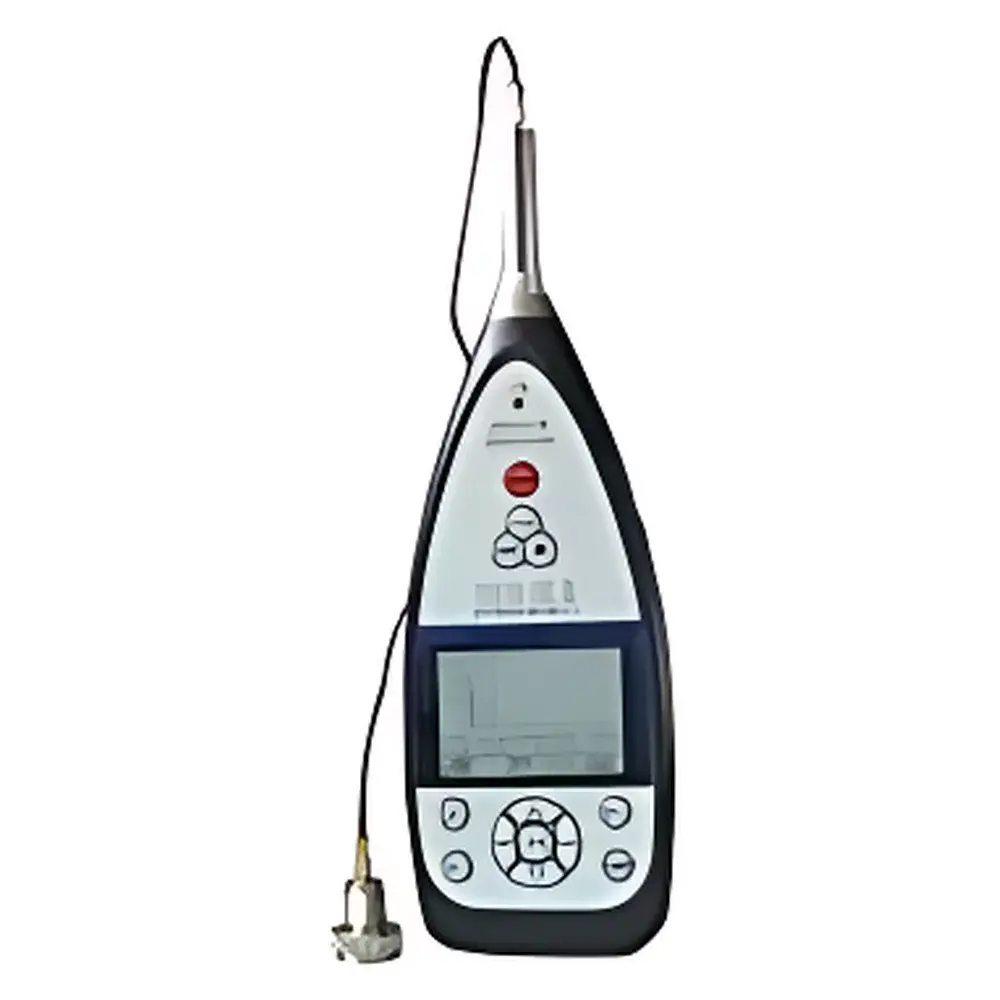
AWA6291 Real-Time Vibration Signal Analyzer for Machine, Human Body & Low-Frequency Vibration Measurement
| Origin | Jiangsu, China |
|---|---|
| Manufacturer Type | Authorized Distributor |
| Origin Category | Domestic (PRC) |
| Model | AWA6291 |
| Pricing | Upon Request |
| Acceleration Sensor | AWA84106 (≈2.5 pC/m·s²), AWA14400 (40 mV/m·s²), CA-YD-181/182 |
| Frequency Range | Acc: 2 Hz–20 kHz |
| Vel | 2 Hz–1.5 kHz |
| Displ | 2 Hz–200 Hz |
| Whole-Body Vib | 0.5–80 Hz |
| Hand-Arm Vib | 8 Hz–1 kHz |
| Low-Freq 1/3 OCT | 0.63–250 Hz ±1 dB |
| Measurement Ranges | Acc: 0.05–5000 m/s² |
| Vel | 0.5–50000 mm/s |
| Displ | 5 µm–500 mm |
| WBV | 48–158 dB re 10⁻⁶ m/s² |
| HAV | 100–190 dB re 10⁻⁶ m/s² (0.1–3160 m/s²) |
| Frequency Weightings | Wb/Wc/Wd/We/Wj/Wk/Wm (WBV), Wh/BL (HAV), a/v/s (general) |
| Detectors | RMS, Peak, Peak-to-Peak (parallel) |
| Time Averaging | Exponential (125 ms, 1 s, 8 s), Linear |
| FFT Resolution | Real-time 512-point FFT (200 spectral lines), sampling rates: 750 Hz–48 kHz |
| 1/3 OCT Bands | 12.5 Hz–16 kHz (machine), 0.63 Hz–250 Hz (low-frequency) |
| Compliance | GB/T 23716–2009 (ISO 8041:2005), ISO 2631 (whole-body), GB/T 14790.1 (ISO 5349-1), GBZ/T 189.9, GB/T 50355–2005, JGJ/T 170–2009 |
| Data Storage | 12,288 measurement sets (internal), USB mass storage export |
| Display | 240×160 dot-matrix LCD with LED backlight |
| Power | 6×LR6 alkaline or rechargeable batteries (≥12 h operation), 5 V DC external input (<150 mA) |
| Dimensions | 260 × 90 × 38 mm |
| Mass | 0.5 kg (main unit), +0.55 kg (AWA14400 sensor) |
| Operating Environment | –10 °C to +50 °C, 25–90 % RH |
Overview
The AWA6291 Real-Time Vibration Signal Analyzer is an engineering-grade portable instrument designed for precision vibration metrology across three critical domains: industrial machine health monitoring, human vibration exposure assessment, and low-frequency environmental vibration characterization. Based on digital signal processing architecture compliant with ISO 8041:2005 (adopted as GB/T 23716–2009 in China), the analyzer implements simultaneous parallel detection of acceleration (a), velocity (v), and displacement (s) using high-stability piezoelectric transducers and calibrated analog front-end circuitry. Its real-time acquisition engine supports dual-mode spectral analysis—Fast Fourier Transform (FFT) for transient fault diagnostics and 1/3-octave band filtering for frequency-weighted energy distribution evaluation—enabling traceable, standards-aligned measurements per ISO 2631 (whole-body), ISO 5349-1 (hand-arm), and ISO 5349-2 (tool interface). The device operates under Class 1 metrological performance specifications defined in IEC 61260-1:2014 and maintains amplitude linearity over >90 dB dynamic range.
Key Features
- Triple-parameter concurrent measurement: simultaneous RMS, peak, and peak-to-peak computation of acceleration, velocity, and displacement—with full digital integration for equivalent vibration level (Leq) derivation.
- Dual-spectral analysis capability: real-time 512-point FFT (200-line resolution) at selectable sampling rates from 750 Hz to 48 kHz; and 1/3-octave digital filter banks meeting ANSI S1.11–2020 and IEC 61260–1 Class 1 tolerances.
- Multi-standard frequency weighting: parallel application of Wb, Wc, Wd, We, Wj, Wk, Wm (for whole-body), Wh and BL (band-limited, for hand-arm), plus user-definable custom weightings.
- Comprehensive time-domain metrics: exponential averaging (125 ms / 1 s / 8 s), linear averaging, statistical distribution (L10, L50, L90), and cumulative exposure calculation (e.g., 4-hr and 8-hr A(8) values per ISO 5349).
- Integrated sensor interface architecture: optimized for AWA84106 (charge-mode, ≈2.5 pC/m·s²), AWA14400 (IEPE, 40 mV/m·s²), and industry-standard hand-transmitted sensors (CA-YD-181/182), with automatic sensitivity recognition via calibration data embedding.
- Robust data handling: internal flash memory stores up to 12,288 measurement records; USB 1.1/2.0 interface enables direct PC synchronization, real-time streaming, and bulk export to U-disk in CSV or proprietary binary format.
Sample Compatibility & Compliance
The AWA6291 accommodates diverse mechanical and biological vibration sources through modular sensor coupling and software-defined configuration. For machine vibration diagnostics, it interfaces with standard triaxial accelerometers mounted on rotating equipment, gearboxes, or bearing housings. In occupational health applications, it supports seat-pad transducers (for seated whole-body exposure per ISO 2631-1) and handle-mounted accelerometers (per ISO 5349-1 for hand-arm transmission). Low-frequency building vibration assessment—including railway-induced ground-borne vibration per JGJ/T 170–2009 and residential indoor vibration per GB/T 50355–2005—is enabled by its extended 0.63 Hz–250 Hz 1/3-octave capability with ±1 dB amplitude tolerance. All measurement modes are validated against GB/T 23716–2009 (identical to ISO 8041:2005), ensuring metrological equivalence for regulatory reporting, GLP-compliant field studies, and third-party audit readiness.
Software & Data Management
The analyzer operates with firmware-hosted application modules that load dynamically based on connected hardware and license keys. Pre-installed packages include S6291-02406 (FFT Analysis), S6291-02305 (1/3 OCT for machinery), S6291-01107 (Human Vibration Analysis), and S6291-01010 (Low-Frequency 1/3 OCT). Each module enforces domain-specific signal conditioning—e.g., anti-aliasing filter roll-off, weighting network coefficients, and integration order selection (double-integration for displacement)—with full audit trail logging. Data output conforms to ASTM E1779-22 metadata conventions, embedding timestamp, sensor ID, calibration due date, operator ID, and environmental conditions. Exported datasets include raw time-history waveforms (16-bit PCM), spectral magnitude arrays, and summary statistics compliant with ISO 5347-14 for interchange with MATLAB, Python (SciPy), or enterprise LIMS platforms. Firmware updates are delivered via signed USB firmware images to maintain integrity under FDA 21 CFR Part 11 electronic record requirements.
Applications
- Machinery condition monitoring: bearing defect detection via envelope spectrum analysis, imbalance identification from fundamental harmonic amplitude trends, and structural resonance mapping using swept-sine or impact-response techniques.
- Occupational health & safety: quantification of daily vibration exposure (A(8)) for compliance with EU Directive 2002/44/EC and China’s GBZ/T 189.9, including dose–response modeling for neurological and vascular risk assessment.
- Civil infrastructure assessment: evaluation of vibration transmission from adjacent rail lines or construction activities into sensitive buildings, with pass/fail thresholds aligned to ISO 2631-2 and GB/T 50355–2005 serviceability limits.
- Auditorium and laboratory acoustics: low-frequency modal analysis of floor slabs and suspended ceilings, supporting ISO 10137 vibration serviceability criteria for precision instrumentation environments.
- Product development testing: validation of vibration isolation systems, shock absorption performance of ergonomic tools, and ride comfort metrics for automotive seating subsystems.
FAQ
What international standards does the AWA6291 fully support for human vibration measurement?
It complies with ISO 2631-1 (whole-body), ISO 5349-1 and ISO 5349-2 (hand-arm), and GB/T 23716–2009 (equivalent to ISO 8041:2005), with built-in Wb–Wm and Wh/BL weighting filters and exposure duration algorithms.
Can the AWA6291 perform real-time 1/3-octave analysis below 1 Hz?
Yes—the low-frequency 1/3 OCT module (S6291-01010) covers 0.63 Hz to 250 Hz with ±1 dB amplitude accuracy, certified per IEC 61260–1 Class 1 for environmental vibration studies.
Is USB data export compatible with Windows, macOS, and Linux systems?
The device appears as a standard USB Mass Storage Class (MSC) device; CSV and binary files are platform-agnostic and readable via spreadsheet software or scripting environments without proprietary drivers.
How is calibration traceability maintained across sensor swaps?
Each supported sensor (AWA84106, AWA14400, CA-YD-181/182) carries embedded EEPROM-stored calibration coefficients, automatically loaded upon connection to ensure measurement continuity and NIST-traceable uncertainty budgets.
Does the instrument support remote control or automated measurement sequences?
Via RS-232 or USB CDC ACM mode, the AWA6291 accepts SCPI-like ASCII commands for start/stop, parameter setting, and data polling—enabling integration into automated test benches and IoT-based monitoring networks.



