
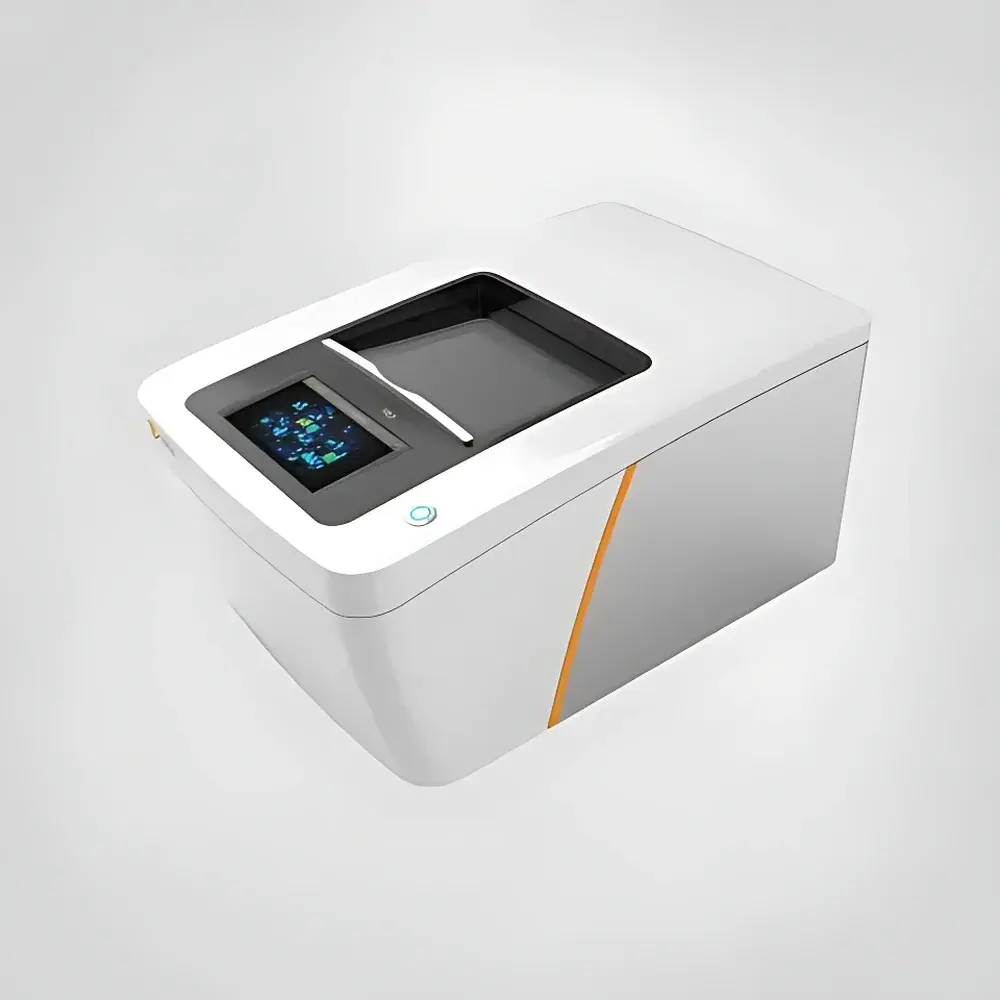
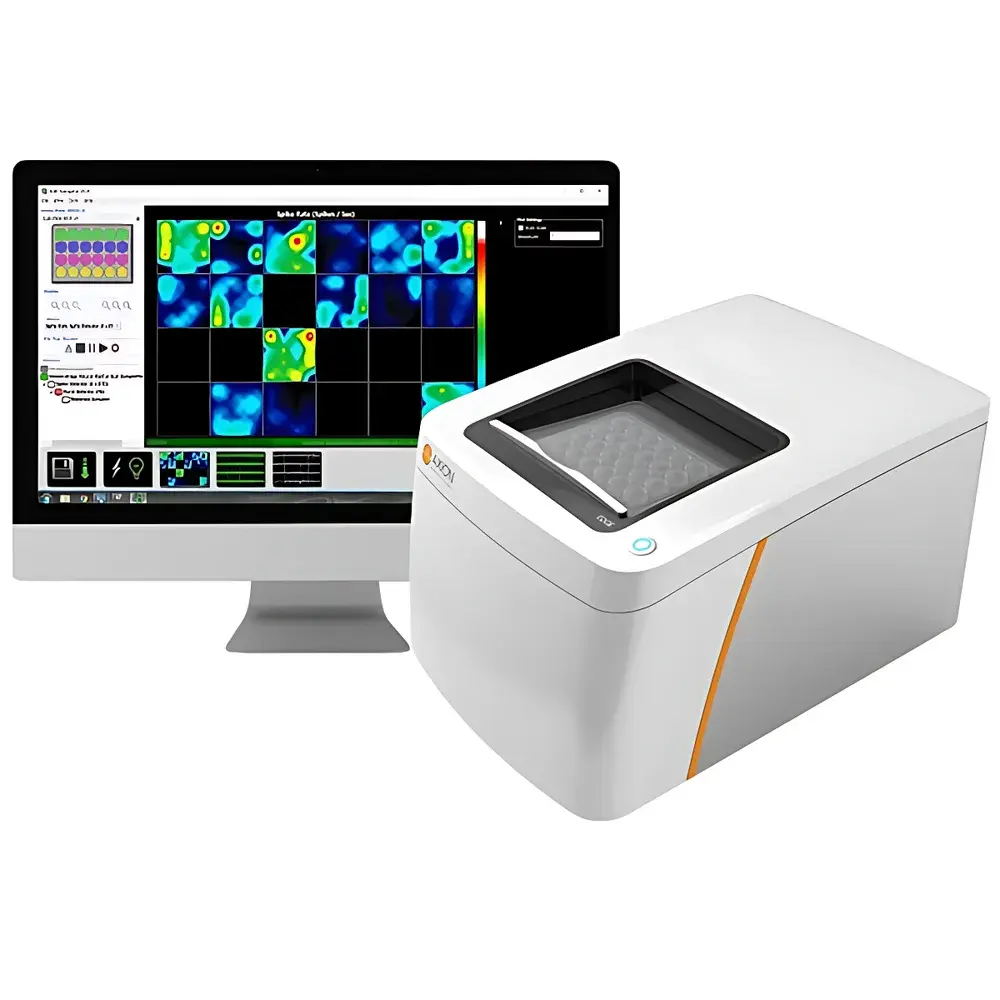
Axion BioSystems Maestro PRO/EDGE High-Throughput Microelectrode Array (MEA) System for Cardiac Electrophysiology and LQTS In Vitro Modeling
| Brand | Axion BioSystems |
|---|---|
| Origin | USA |
| Manufacturer Type | Original Equipment Manufacturer (OEM) |
| Product Category | Imported Instrument |
| Model | Maestro PRO / EDGE |
| Instrument Type | Multiwell (6-/24-/48-/96-well format) |
| Application Scope | In Vitro |
| Electrode Count per Well | 384 or 768 |
| Compliance | Designed for GLP/GMP-aligned workflows, compatible with FDA 21 CFR Part 11–ready software audit trails |
Overview
The Axion BioSystems Maestro PRO/EDGE is a high-throughput, non-invasive microelectrode array (MEA) platform engineered for label-free, real-time electrophysiological monitoring of spontaneously active cardiac cell models—particularly human induced pluripotent stem cell-derived cardiomyocytes (iPSC-CMs). It operates on the principle of extracellular field potential recording: when electrically excitable cells such as cardiomyocytes form functional syncytia on the MEA plate surface, their depolarization and repolarization generate extracellular current transients detectable by embedded planar electrodes. These signals—field potentials (FPs)—are temporally resolved at millisecond precision and spatially mapped across all electrodes within each well. The system enables quantitative analysis of key cardiac electrophysiological parameters including field potential duration (FPD), beat rate, beat rate variability (BRV), conduction velocity, and arrhythmic event incidence—making it especially suited for modeling Long QT Syndrome (LQTS), a hereditary channelopathy characterized by delayed ventricular repolarization and elevated risk of torsades de pointes (TdP) and sudden cardiac death.
Key Features
- High-density electrode architecture: 384 or 768 titanium-nitride electrodes per well, integrated into standard multiwell plates (6-, 24-, 48-, or 96-well formats), enabling parallel acquisition from multiple biological replicates under identical environmental conditions.
- Integrated environmental control: Onboard temperature regulation (37 °C ± 0.2 °C) and CO2/O2 gas mixing ensure physiologically relevant culture maintenance during long-term recordings (hours to weeks).
- Real-time, label-free detection: No dyes, reporters, or genetic modifications required—preserving native ion channel function and enabling longitudinal functional phenotyping without phototoxicity or cytotoxic artifacts.
- Simultaneous multi-parameter output: From a single assay, extracts four core functional metrics—field potential morphology, spontaneous beating activity, inter-electrode conduction propagation, and contractile coupling (via motion artifact correlation)—all time-synchronized and spatially registered.
- Scalable hardware architecture: Maestro PRO supports up to 96-well throughput with full electrode-level resolution; Maestro EDGE offers optimized cost-per-data-point for mid-throughput labs while retaining identical signal fidelity and analytical rigor.
Sample Compatibility & Compliance
The Maestro platform accepts primary cardiomyocytes, iPSC-CMs, cardiac spheroids, and cardiac organoids cultured directly on Axion’s proprietary MEA plates. Its non-invasive design preserves cellular network integrity—critical for modeling intercellular coupling defects in LQTS or drug-induced proarrhythmia. All assays comply with industry-standard validation frameworks: data acquisition and analysis workflows align with CiPA (Comprehensive in vitro Proarrhythmia Assay) guidelines; software features configurable audit trails, electronic signatures, and secure user access controls meeting FDA 21 CFR Part 11 requirements for regulated preclinical safety studies. Plate-based format ensures compatibility with automated liquid handlers and incubators used in GLP-compliant laboratories.
Software & Data Management
AxIS Navigator™ software provides an integrated environment for acquisition, visualization, and quantitative analysis. It supports batch processing of multi-well datasets, automated FP detection and fiducial point assignment (e.g., FP onset, peak, end), and export of ISO/IEC 17025-traceable metadata. Advanced modules include beat-to-beat FPD correction (e.g., Fridericia, Bazett), conduction velocity vector mapping, and arrhythmia classification algorithms trained on annotated clinical ECG morphologies. Raw data are stored in HDF5 format for reproducibility and third-party interoperability; analysis pipelines can be scripted in Python via Axion’s open API for integration into enterprise LIMS or cloud-based analytics platforms.
Applications
- Preclinical cardiac safety assessment per CiPA initiative—quantifying hERG-independent proarrhythmic liabilities across diverse ion channel targets.
- In vitro modeling of monogenic cardiac disorders, including LQTS subtypes (LQT1–LQT3), Brugada syndrome, and catecholaminergic polymorphic ventricular tachycardia (CPVT).
- Functional quality control of iPSC-CM batches during biomanufacturing—assessing maturation status, electrophysiological stability, and lot-to-lot consistency.
- Optogenetic interrogation of cardiac networks using integrated Lumos light-stimulation modules (4-wavelength LED arrays, 100-ms temporal resolution, per-well independent control).
- Longitudinal pharmacological profiling—including chronic exposure studies, washout kinetics, and reverse-rate dependence evaluation.
FAQ
What distinguishes Maestro from conventional patch-clamp or calcium imaging platforms?
Maestro captures population-level extracellular field potentials—not single-cell action potentials or surrogate Ca2+ transients—providing direct readouts of network excitability, conduction integrity, and repolarization reserve without perturbing membrane physiology.
Can Maestro detect subtle changes in sodium or calcium channel function?
Yes. While not resolving individual channel currents, Maestro quantifies functional consequences—such as altered upstroke velocity (indicative of Nav1.5 dysfunction) or triangulated FP morphology (suggestive of L-type Ca2+ current imbalance)—within intact syncytia.
Is the system suitable for GMP-regulated environments?
Maestro systems deployed with AxIS Navigator v3.0+ support 21 CFR Part 11 compliance via role-based access control, electronic signatures, and immutable audit logs—validated for use in IND-enabling toxicology studies.
How does electrode density impact data resolution?
Higher electrode counts (768 vs. 384) improve spatial sampling of conduction wavefronts and enable more robust detection of localized arrhythmic foci or micro-reentry circuits—particularly valuable in heterogeneous disease models.
Can I integrate Maestro data with other omics modalities?
Yes. Time-synchronized electrophysiological endpoints serve as functional anchors for correlating transcriptomic, proteomic, or metabolomic profiles—facilitating mechanistic hypothesis generation in translational cardiac research.




