
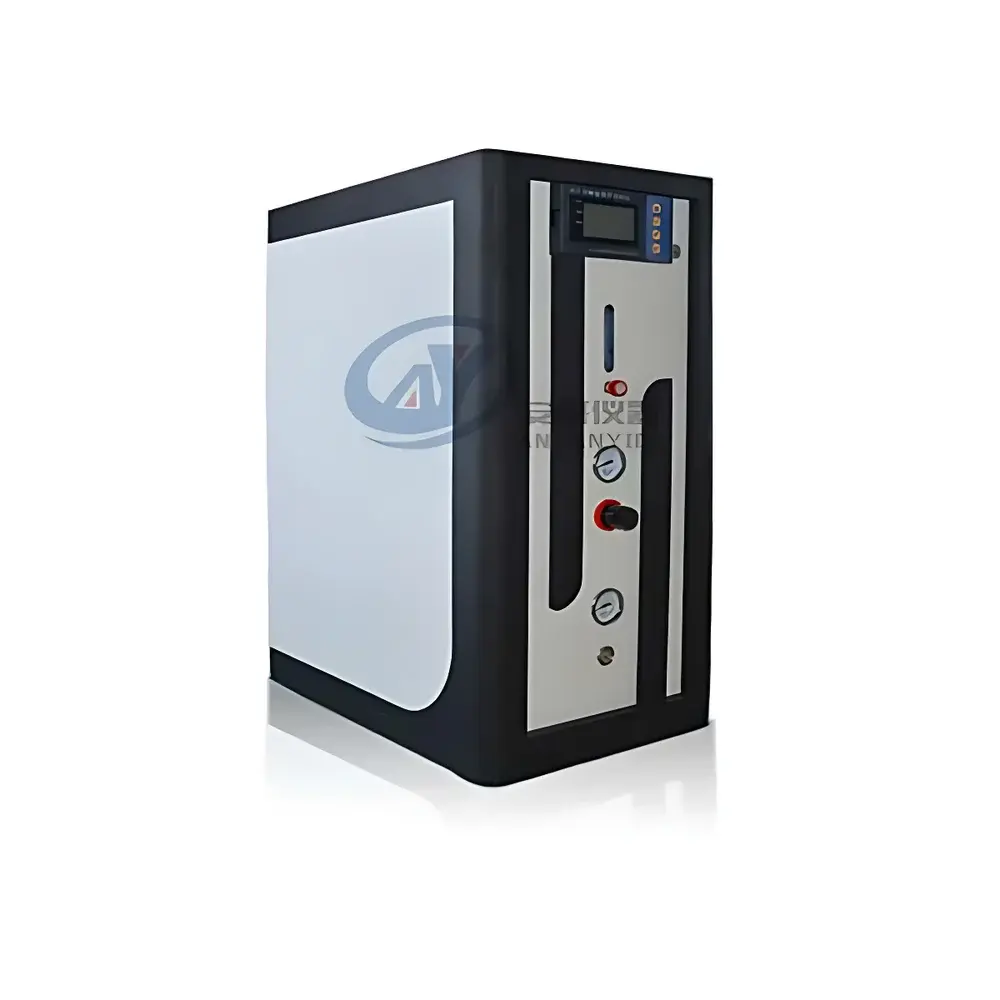
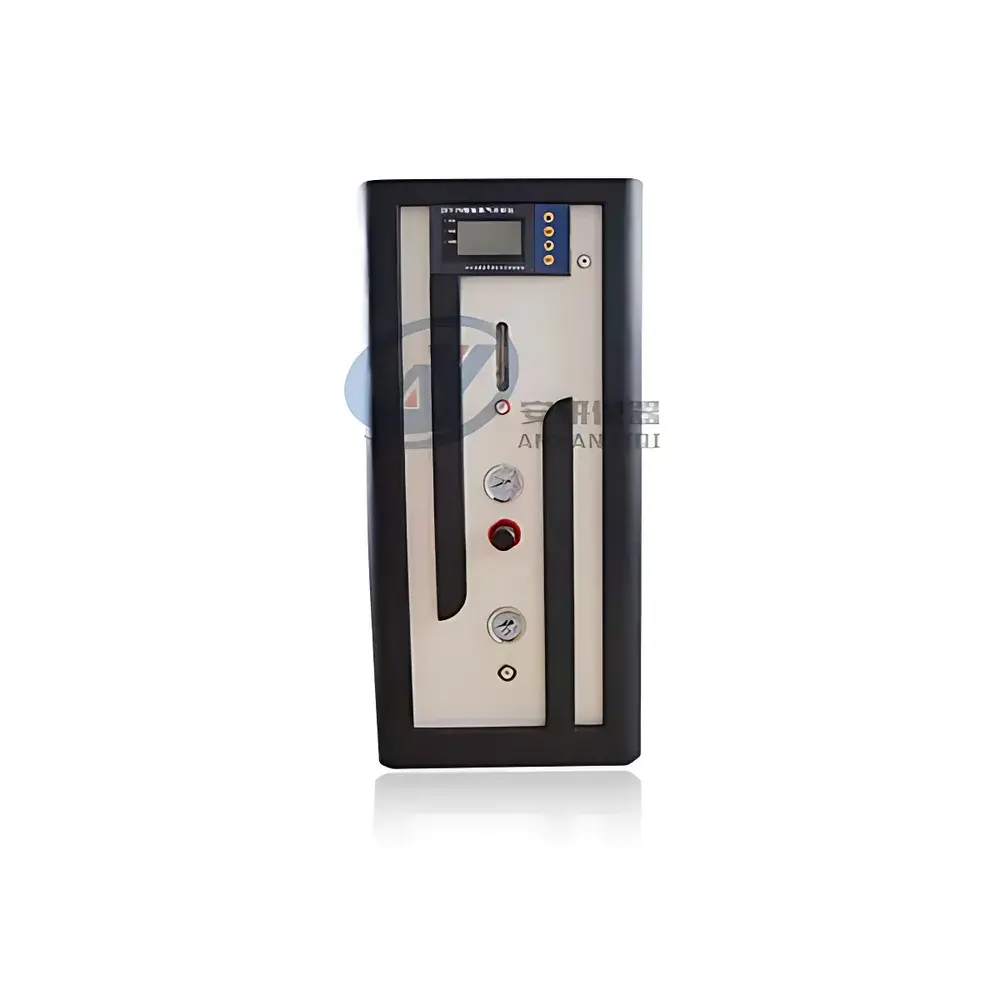
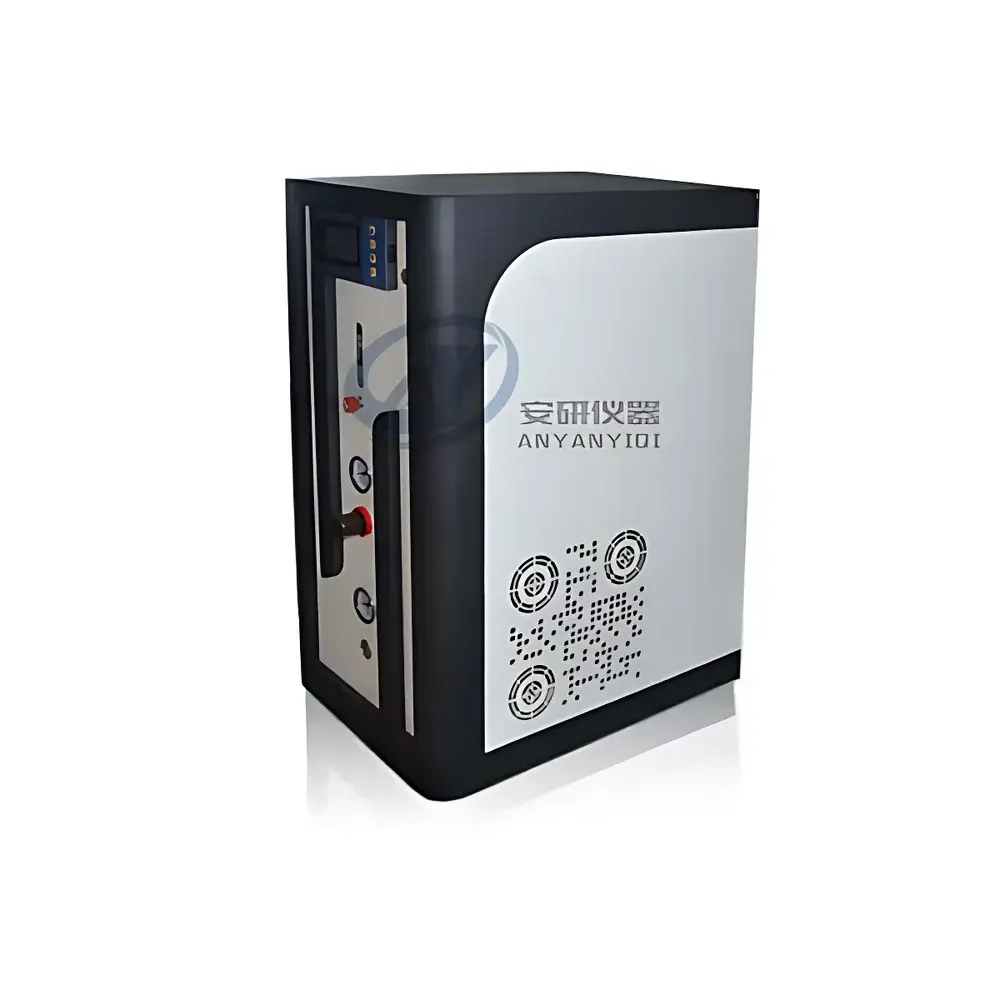
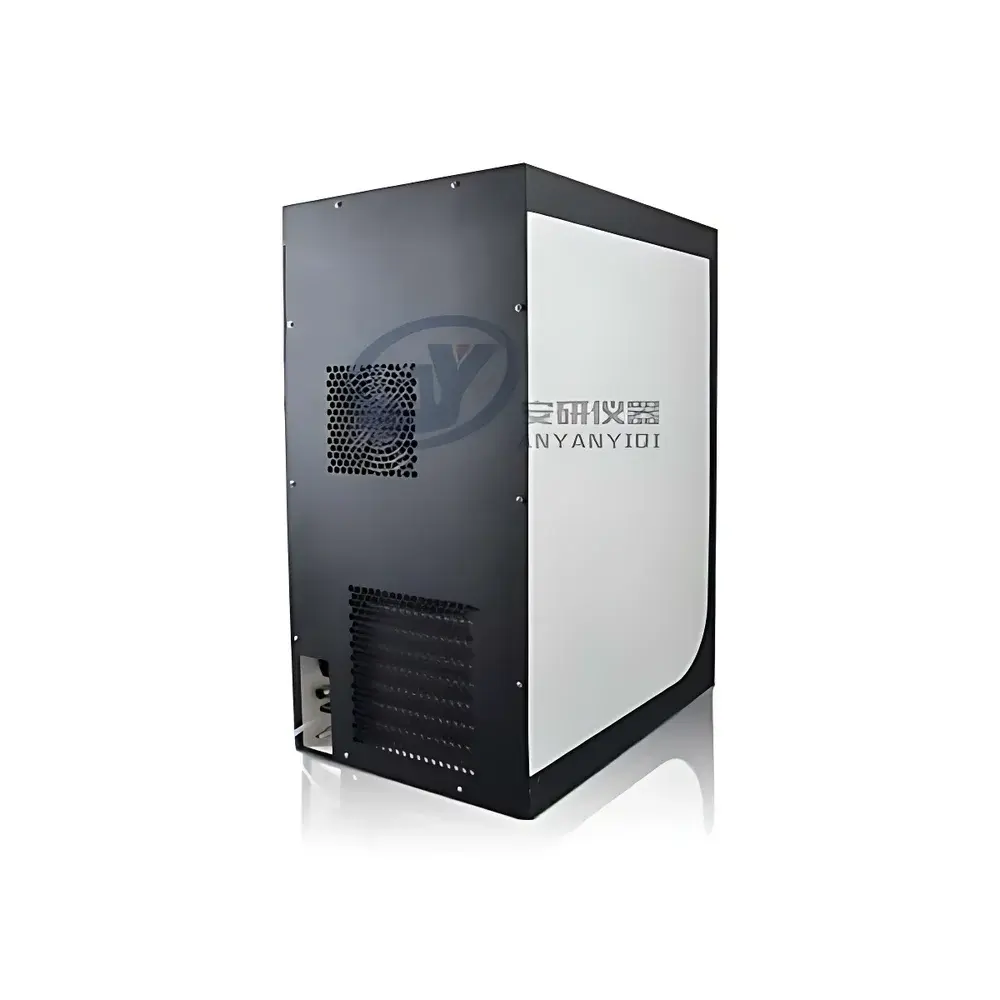
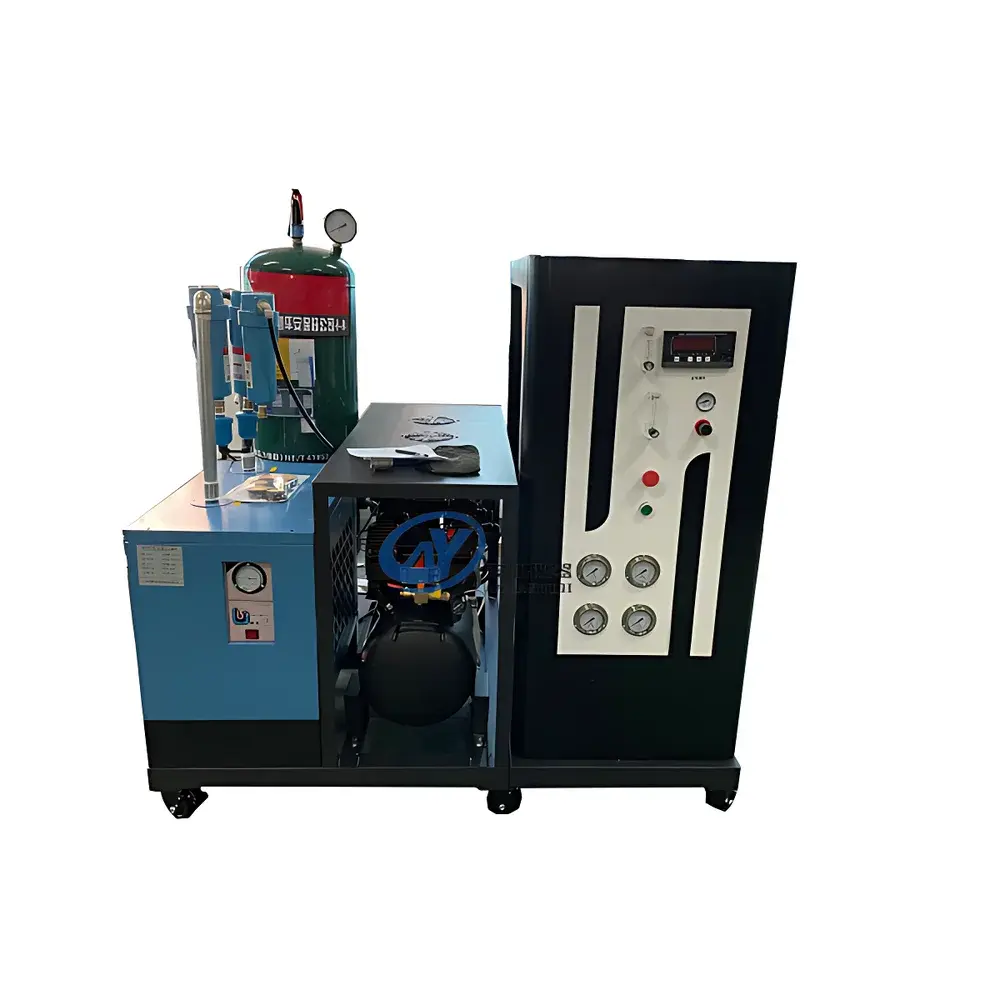
AYAN-1LG Nitrogen Generator by Anyan Instruments
| Brand | Anyan Instruments |
|---|---|
| Origin | Zhejiang, China |
| Model | AYAN-1LG |
| Nitrogen Generation Principle | Membrane Separation |
| Output Flow Rate | 1 L/min |
| Output Pressure Range | 0–0.6 MPa |
| Nitrogen Purity | 99% |
| Dew Point | ≤ −40 °C (typical for membrane-based systems) |
| Compliance | CE-marked design, ISO 8573-1 Class 3 compressed air input recommended |
| Power Supply | AC 220 V ± 10%, 50 Hz |
| Dimensions (W×D×H) | 360 × 280 × 520 mm |
| Net Weight | ~22 kg |
| Cooling Method | Air-cooled |
| Filtration Stages | Integrated coalescing pre-filter + activated carbon + particulate final filter |
Overview
The AYAN-1LG Nitrogen Generator is a compact, membrane-based laboratory-grade nitrogen supply system engineered for consistent, on-demand generation of high-purity nitrogen gas (99% N₂) at a stable flow rate of 1 L/min. It operates on the principle of selective permeation through hollow-fiber polymeric membranes: compressed air—fed via an external or integrated oil-free air compressor—is introduced into the membrane module, where oxygen, water vapor, and CO₂ diffuse preferentially through the fiber walls due to their higher solubility and diffusivity, while nitrogen molecules pass through with minimal resistance. This physical separation process requires no consumables (e.g., molecular sieves), produces zero chemical waste, and delivers nitrogen with a typical dew point of ≤ −40 °C—suitable for moisture-sensitive analytical applications. Designed for continuous operation in ambient laboratory environments (15–30 °C, <80% RH), the AYAN-1LG eliminates dependency on high-pressure nitrogen cylinders, reducing logistical overhead, safety risks associated with cylinder handling, and long-term operational cost per liter of nitrogen.
Key Features
- Membrane separation technology ensures maintenance-free operation with no regeneration cycles, no moving parts in the core separation module, and no requirement for periodic replacement of adsorbent media.
- Integrated multi-stage filtration system—including coalescing pre-filter (removes aerosols ≥ 0.01 µm), activated carbon stage (adsorbs hydrocarbons and trace odors), and sub-micron particulate final filter—ensures feed air quality meets ISO 8573-1 Class 3 requirements for optimal membrane life and gas purity stability.
- Adjustable output pressure regulator (0–0.6 MPa) enables precise matching to instrument inlet specifications, including GC carrier gas modules, ECD detectors, and LC-MS nitrogen curtain gas inlets.
- Front-panel digital pressure gauge and flowmeter provide real-time monitoring of outlet pressure and volumetric flow; LED status indicators confirm power, airflow, and system readiness.
- Robust aluminum-alloy chassis and vibration-dampened mounting minimize acoustic noise (<55 dB(A)) and thermal drift during extended runs.
- Compliance-ready architecture supports integration into GLP/GMP workflows: all operating parameters are logged internally (timestamped), and optional RS-232/USB interface enables audit-trail-capable data export for FDA 21 CFR Part 11–aligned documentation.
Sample Compatibility & Compliance
The AYAN-1LG is validated for use with gas chromatography (GC) systems requiring carrier gas (e.g., capillary column separation, TCD/FID/ECD detection) and as auxiliary gas for LC-MS nitrogen curtain gas, FTIR purge, and sample preparation purging (e.g., SPE, solvent evaporation). Its 99% nitrogen purity meets ASTM D6624 and ISO 8573-1 specifications for instrumental gas applications where oxygen content 99.995% purity (e.g., high-resolution MS), supplemental purification (e.g., oxygen scavenger traps) may be required upstream. The unit complies with IEC 61000-6-3 (EMC emission) and IEC 61000-6-2 (immunity) standards; electrical safety conforms to IEC 61010-1. No hazardous materials are used in construction; RoHS-compliant components ensure environmental regulatory alignment.
Software & Data Management
While the base AYAN-1LG operates as a standalone hardware unit, its optional communication interface supports ASCII protocol over RS-232 or USB virtual COM port. Compatible with LabVIEW™, Python (pySerial), and custom SCADA platforms, it enables remote monitoring of pressure, flow, runtime hours, and fault codes (e.g., low inlet pressure, filter saturation warning). Logged data can be exported in CSV format for inclusion in electronic lab notebooks (ELN) or LIMS. Firmware updates are performed via secure bootloader—no physical disassembly required. All configuration changes are timestamped and retained across power cycles, satisfying basic ALCOA+ data integrity criteria for non-critical gas supply systems.
Applications
- Gas chromatography: Carrier gas for packed and fused-silica capillary columns; make-up gas for electron capture detectors (ECD); tail-blank gas in split/splitless injectors.
- Mass spectrometry: Curtain gas and nebulizer gas for electrospray ionization (ESI) and atmospheric pressure chemical ionization (APCI) sources.
- Elemental analysis: Purge gas for total organic carbon (TOC) analyzers and combustion-based CHNS/O instruments.
- Material testing: Inert atmosphere generation for thermal gravimetric analysis (TGA), differential scanning calorimetry (DSC), and glovebox purging.
- Pharmaceutical QC: Nitrogen blanketing during dissolution testing, residual solvent analysis (USP ), and stability chamber inerting.
FAQ
What is the expected service life of the membrane module?
Under continuous operation with ISO Class 3 feed air and routine filter replacement every 6–12 months, the hollow-fiber membrane typically maintains specified performance for ≥5 years.
Can the AYAN-1LG be connected directly to a GC without an external air compressor?
No—an oil-free, desiccated air source delivering 2–3 L/min at 0.7–1.0 MPa is mandatory. Integrated compressors are not included; we recommend pairing with a certified laboratory-grade diaphragm or scroll-type air compressor.
Is the nitrogen output suitable for use with flame ionization detectors (FID)?
Yes—99% nitrogen meets standard FID make-up gas specifications per ASTM D3612 and Agilent GC documentation; however, verify detector-specific O₂ tolerance thresholds with your instrument OEM.
Does the unit require annual calibration?
No formal calibration is required; however, periodic verification using a traceable thermal mass flow meter and electrochemical O₂ analyzer (e.g., to confirm ≤1% O₂) is recommended annually per ISO/IEC 17025 internal quality procedures.
How does ambient temperature affect nitrogen purity and flow stability?
Output flow and purity remain stable between 15–30 °C; operation outside this range may reduce membrane selectivity and accelerate moisture breakthrough—environmental conditioning of the installation space is advised for critical applications.



