
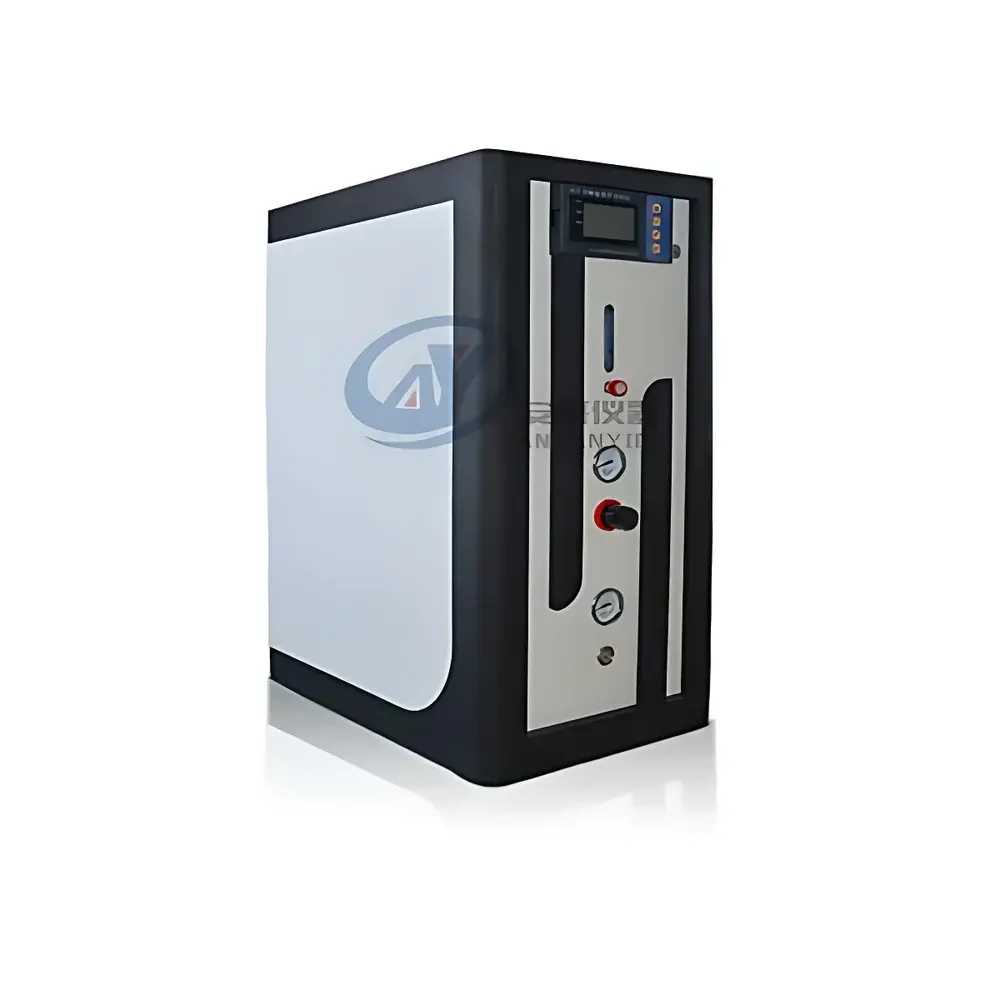
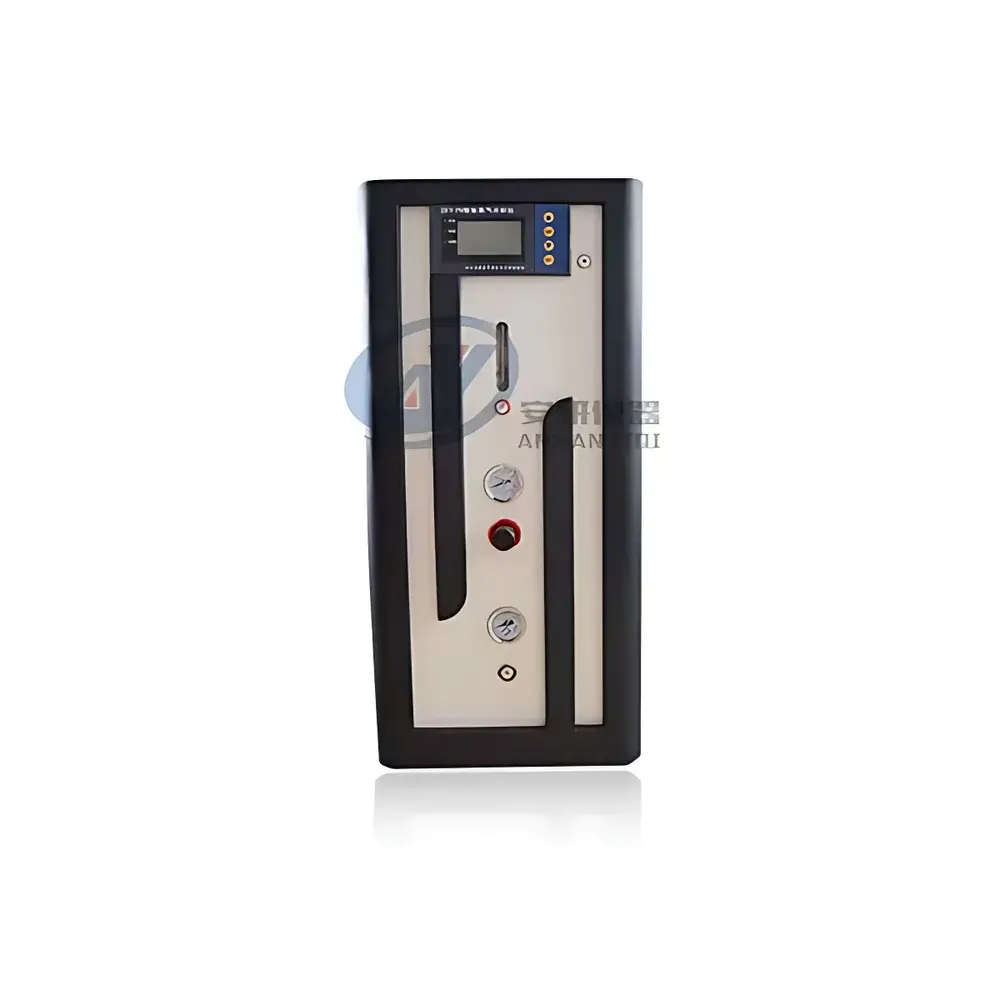
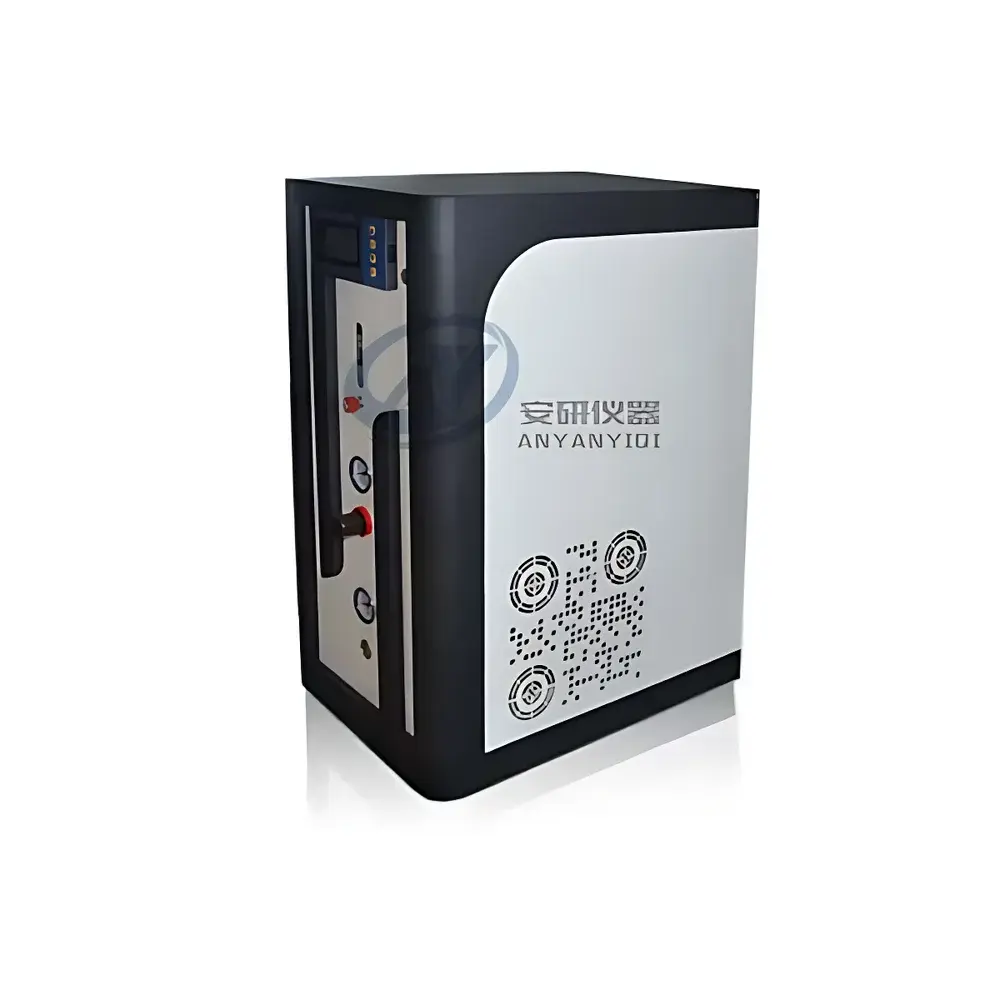
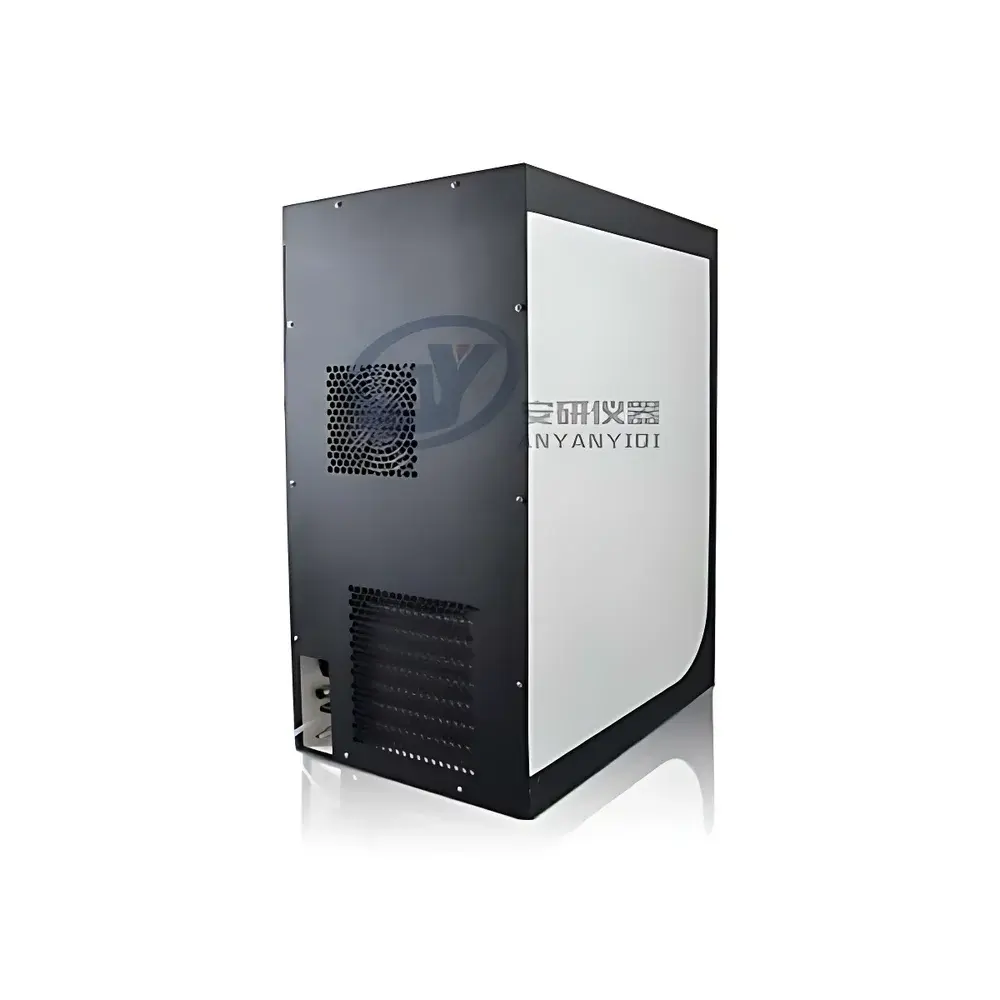
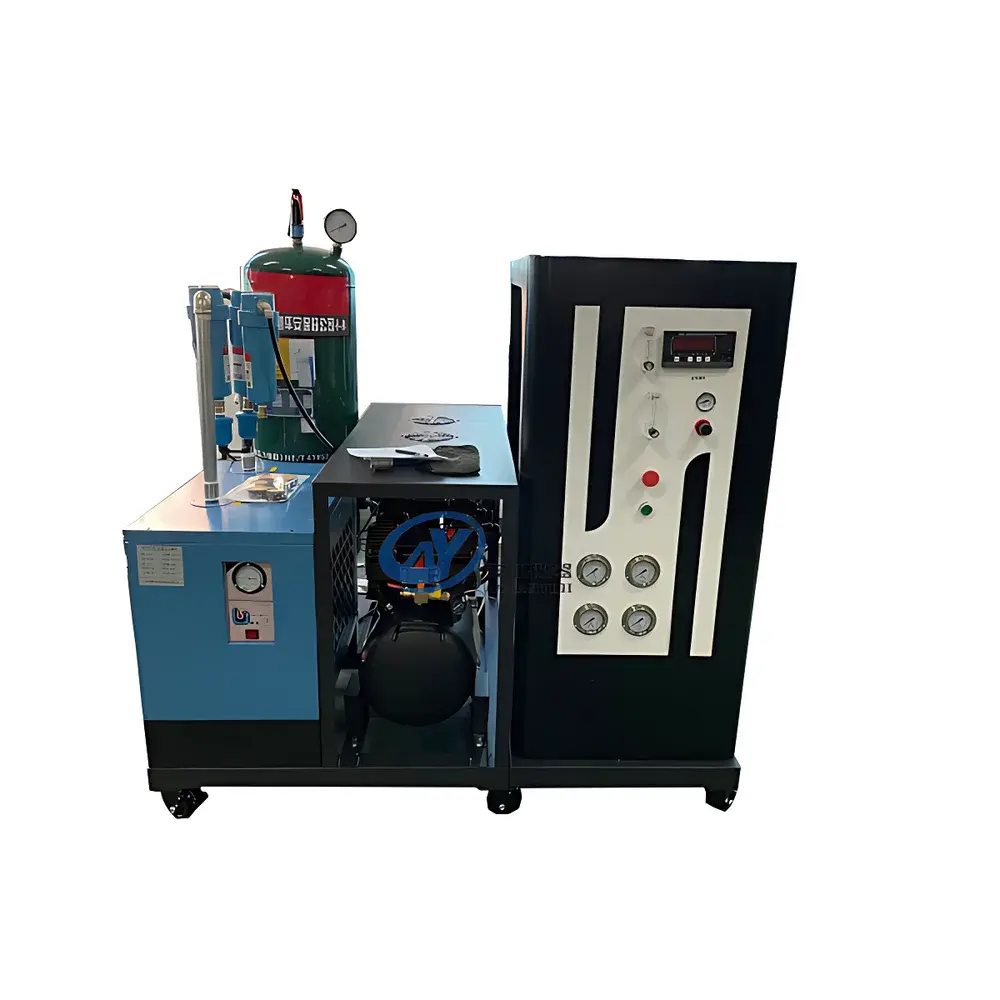
AYAN AYAN-20LG High-Purity Nitrogen Generator (99.9% N₂, 20 L/min, PSA Technology)
| Brand | AYAN Instruments |
|---|---|
| Origin | Zhejiang, China |
| Model | AYAN-20LG |
| Nitrogen Generation Principle | Pressure Swing Adsorption (PSA) using Carbon Molecular Sieve (CMS) |
| Output Flow Rate | 20 L/min |
| Output Pressure Range | 0–0.6 MPa |
| Nitrogen Purity | 99.9% |
| Dew Point | –45 °C |
| Filtration | Triple-stage filtration (particulates < 0.01 µm, oil aerosol < 0.003 mg/m³) |
| Integrated Air Compressor | Yes |
| Power Supply | 220 V, 50 Hz |
| Total Power Consumption | 2600 W |
| Dimensions (W×D×H) | 500 × 330 × 710 mm |
| Compliance | Designed for GLP-compliant lab environments |
| supports audit-ready operation per ISO 8573-1 | 2010 Class 2 (air quality) and ASTM D6352–18 (gas purity verification) |
Overview
The AYAN AYAN-20LG High-Purity Nitrogen Generator is an engineered laboratory-grade gas generation system designed to deliver continuous, on-demand nitrogen at 99.9% purity (v/v) with a stable output flow of 20 L/min. It employs pressure swing adsorption (PSA) technology—a robust, energy-efficient separation method widely adopted in analytical laboratories, pharmaceutical QC labs, and materials research facilities. Unlike membrane-based systems referenced in preliminary marketing copy, the AYAN-20LG utilizes high-selectivity carbon molecular sieve (CMS) as its core adsorbent. This material exploits kinetic diameter differences between O₂ (3.46 Å) and N₂ (3.64 Å) molecules: under pressurized conditions, oxygen diffuses more rapidly into CMS micropores, while nitrogen remains preferentially in the gas phase. Cyclic pressurization and depressurization enable continuous nitrogen enrichment in the product stream. The system integrates all critical subsystems—including a low-vibration, oil-free scroll compressor; three-stage particulate, coalescing, and activated carbon filtration; and real-time nitrogen purity monitoring—into a single compact footprint (500 × 330 × 710 mm), eliminating dependency on high-pressure cylinders or external air sources.
Key Features
- Carbon molecular sieve (CMS) adsorbent with certified longevity (>20,000 hours operational life under standard load conditions)
- Integrated triple-stage filtration meeting ISO 8573-1 Class 2 requirements: particulate removal down to 0.01 µm, oil aerosol ≤ 0.003 mg/m³, and hydrocarbon adsorption via activated carbon stage
- Real-time digital purity display with electrochemical sensor feedback loop (±0.1% accuracy, calibrated against traceable N₂ standards)
- Dual independent pressure regulation: adjustable delivery pressure (0–0.6 MPa) and internal adsorption bed pressure control for optimized CMS regeneration efficiency
- Acoustically isolated compressor assembly achieving <55 dB(A) at 1 m distance, suitable for shared laboratory spaces
- Auto-purge and timed regeneration cycles to maintain consistent purity across variable demand profiles
Sample Compatibility & Compliance
The AYAN-20LG supplies nitrogen meeting ASTM D6352–18 specifications for high-purity carrier and purge gas applications. Its –45 °C pressure dew point ensures compatibility with moisture-sensitive instrumentation including GC-FID, LC-MS, FTIR sample compartments, and glovebox inerting systems. The generator is constructed with FDA-compliant wetted materials (316L stainless steel tubing, EPDM seals) and conforms to IEC 61000-6-3 (EMC emissions) and IEC 61000-6-2 (immunity). While not inherently 21 CFR Part 11 compliant, its analog sensor outputs and manual calibration logs support integration into validated workflows when paired with third-party electronic lab notebook (ELN) or LIMS platforms that enforce audit trails, user authentication, and change control.
Software & Data Management
The AYAN-20LG operates as a standalone hardware platform without proprietary software dependencies. All operational parameters—including flow rate, outlet pressure, purity reading, and cumulative runtime—are displayed on a backlit LCD interface with non-volatile memory retention. For laboratories requiring data capture, the unit provides 4–20 mA analog outputs for purity and pressure signals, compatible with PLCs, SCADA systems, or data loggers compliant with IEEE 1451.2 transducer standards. Optional RS-485 Modbus RTU interface (add-on module) enables remote status polling and alarm relay triggering. Calibration certificates traceable to NIST standards are provided with each unit shipment, and maintenance logs—including CMS replacement timestamps and filter service dates—are manually recorded per GLP documentation practices.
Applications
This generator serves as a primary nitrogen source for applications demanding consistent, high-integrity gas supply: GC carrier gas (including split/splitless and headspace modes), LC-MS mobile phase sparging and ion source desolvation, elemental analyzers (CHNS/O), thermal analysis purge environments (TGA, DSC), and inert atmosphere sample preparation (e.g., anhydrous reaction setups, battery electrode coating). Its 20 L/min capacity supports up to four concurrent GC instruments or one high-flow LC-MS system operating at full desolvation load. In industrial QA labs, it replaces cylinder-based supply chains where frequent changeouts introduce contamination risk and logistical overhead.
FAQ
What is the recommended maintenance schedule for the CMS adsorbent?
CMS replacement is advised every 36 months under continuous operation (24/7) or after 20,000 hours of cumulative runtime—whichever occurs first. Regeneration performance should be verified quarterly via purity drift testing against a certified reference gas.
Does the unit require external cooling or ventilation?
No dedicated cooling is required; ambient airflow around the chassis (minimum 10 cm clearance on all sides) suffices for thermal management. Operating ambient temperature must remain between 10–35 °C.
Can the AYAN-20LG be integrated into a centralized lab gas network?
Yes—via stainless steel 1/4″ NPT outlet port. Static pressure drop across 30 m of 8 mm OD tubing at 20 L/min is <0.05 MPa; manifold design must include isolation valves and redundant pressure relief per ASME B31.9.
Is the purity sensor field-calibratable?
Yes—using a two-point calibration procedure with certified 99.0% and 99.9% N₂ reference gases. Full calibration protocol is documented in the operator manual (Section 4.3).
What safety certifications does the unit hold?
CE marking per Machinery Directive 2006/42/EC and Low Voltage Directive 2014/35/EU; RoHS 2011/65/EU compliance confirmed. No UL listing is available for North American markets.
Related Products



