
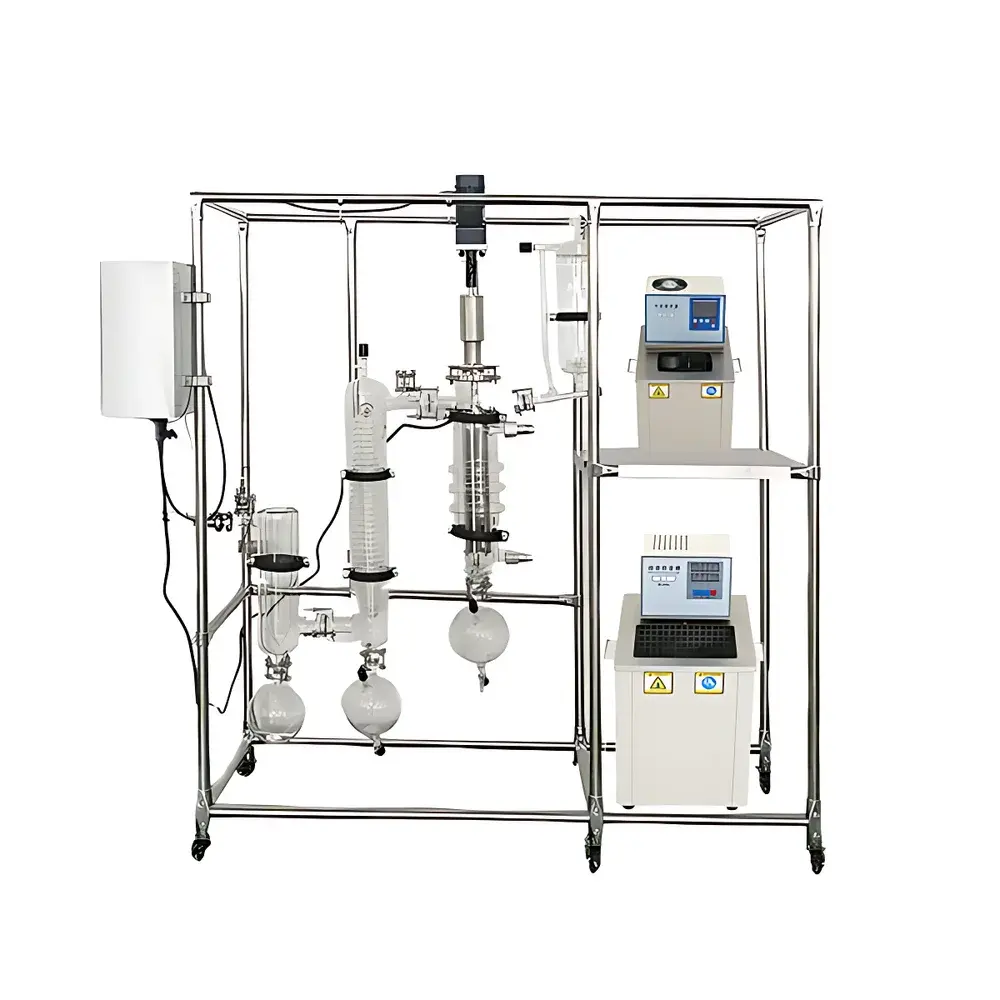
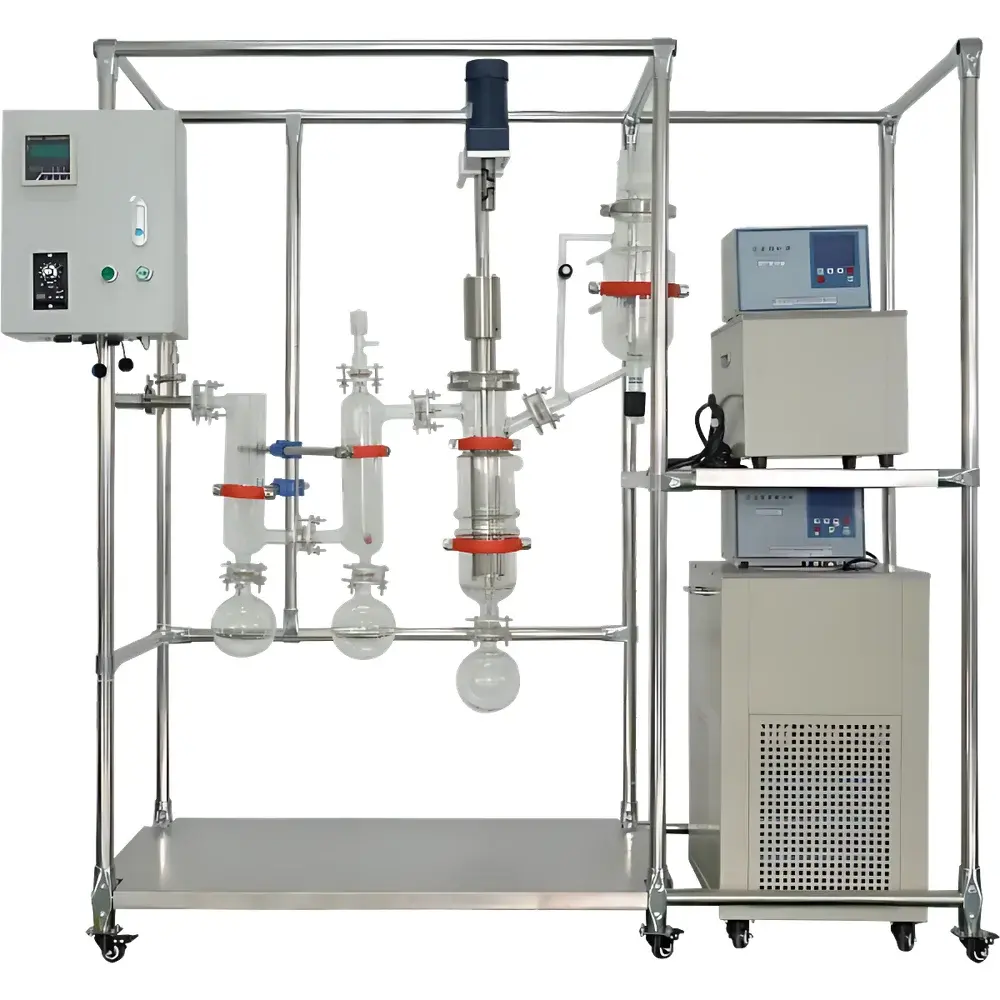
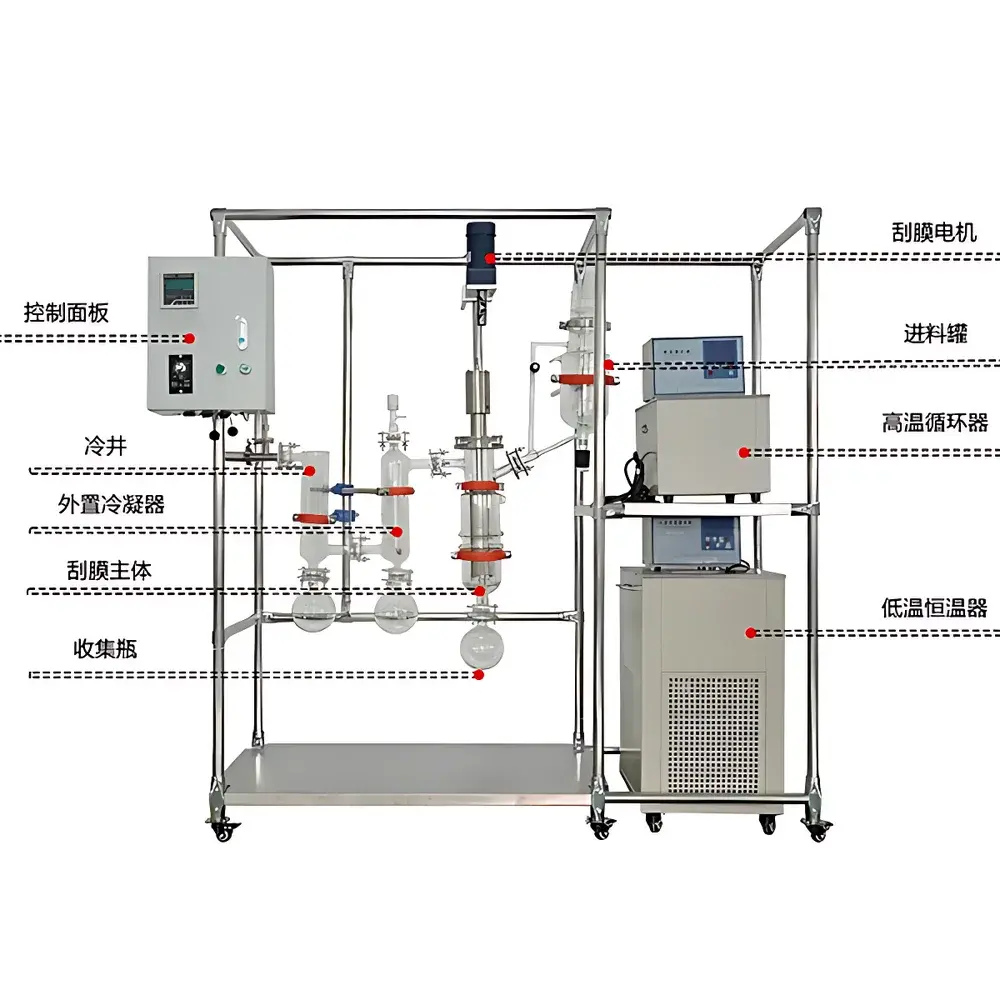
AYAN B80 Vacuum Thin-Film Evaporator for Liquid Mixture Separation
| Brand | AYAN Instruments |
|---|---|
| Model | B80 |
| Origin | Zhejiang, China |
| Equipment Type | Laboratory-Scale Vacuum Thin-Film Evaporator |
| Application Scope | Solvent Removal, Molecular Distillation, High-Viscosity Feedstock Purification, Heat-Sensitive Compound Concentration |
Overview
The AYAN B80 Vacuum Thin-Film Evaporator is an engineered laboratory-scale purification system designed for continuous, low-temperature separation of thermally sensitive or high-boiling-point liquid mixtures under reduced pressure. It operates on the principle of short-path molecular evaporation: feed liquid is distributed as a uniform, turbulent thin film (< 0.5 mm) across a heated vertical cylindrical evaporator surface (typically stainless steel 316L), while condensation occurs on an internal concentric condenser cooled to sub-ambient temperatures. Under high vacuum (typically < 1 mbar, achievable with optional dual-stage oil-sealed or dry scroll vacuum pumps), mean free path exceeds evaporator geometry dimensions—enabling direct vapor transport from film surface to condenser without bulk-phase vapor phase resistance. This configuration minimizes residence time (typically < 30 seconds), suppresses thermal degradation, and achieves high selectivity in separating components with close boiling points or significant vapor pressure differentials—such as fatty acid esters, monomer/solvent pairs in polymer synthesis, or volatile aroma compounds from botanical extracts.
Key Features
- Stainless steel 316L evaporator body and rotor assembly, electropolished to Ra ≤ 0.4 µm for corrosion resistance and cleanability
- Adjustable wiper blade system (PTFE-coated stainless steel) ensuring consistent film thickness and self-cleaning operation across viscosities up to 50,000 cP
- Heating jacket with PID-controlled electric heating (max. 250 °C, ±0.5 °C stability) and integrated temperature monitoring at three axial positions
- Integrated cold trap and condenser (−20 °C to +5 °C range, glycol-chilled) with real-time condensate temperature logging
- Modular vacuum interface compatible with external vacuum controllers and pressure transducers (0.001–100 mbar range)
- Sealed feed inlet with adjustable peristaltic dosing pump (0.1–200 mL/min flow control) and sight glass for film formation observation
Sample Compatibility & Compliance
The B80 accommodates aqueous, organic, and viscous non-aqueous solutions—including pharmaceutical intermediates (e.g., peptide solutions, antibiotic broths), natural product extracts (e.g., terpenes, polyphenols), polymer precursors (e.g., epoxy resins, silicone oils), and industrial solvents (e.g., DMF, THF, ethyl acetate). Its fully sealed construction meets basic GLP operational requirements for traceability and contamination control. While not certified to ISO 9001 or FDA 21 CFR Part 11 out-of-the-box, the system supports audit-ready documentation when paired with validated external data loggers and electronic lab notebooks (ELNs). All wetted materials comply with USP Class VI biocompatibility standards; optional quartz viewports enable in-situ process monitoring per ASTM E2915-22 guidelines for thermal stability assessment.
Software & Data Management
The B80 operates via a dedicated local HMI touchscreen interface with embedded data logging (sample rate: 1 Hz) for temperature, pressure, feed rate, and condensate weight (via optional load cell integration). Raw sensor data exports in CSV format for post-processing in MATLAB, Python (Pandas), or industry-standard chromatography/data analysis platforms. Optional Ethernet/RS485 connectivity enables remote supervision via Modbus TCP or OPC UA protocols—facilitating integration into centralized lab automation systems compliant with ISA-88 batch control architecture. Audit trail functionality (user login, parameter change history, run timestamps) is configurable per ALCOA+ principles for regulated environments.
Applications
- Pharmaceutical R&D: De-solventization of active pharmaceutical ingredient (API) suspensions without racemization; concentration of heat-labile monoclonal antibody formulations prior to lyophilization
- Food & Flavor Science: Low-oxygen concentration of citrus oils and coffee oleoresins while preserving volatile top notes (per ISO 9231:2019 sensory integrity protocols)
- Polymer Chemistry: Residual monomer removal from acrylate prepolymers to < 100 ppm (per ISO 17241:2021 specifications)
- Environmental Analysis: Pre-concentration of trace organics (e.g., PAHs, PCBs) from aqueous environmental samples prior to GC-MS analysis
- Academic Research: Isolation of reaction by-products in asymmetric catalysis studies where conventional distillation induces decomposition
FAQ
What vacuum level is required for optimal performance?
Operation below 0.5 mbar is recommended for molecular distillation regimes; standard configurations achieve ≤ 0.1 mbar with auxiliary vacuum pumping.
Can the B80 handle solids-containing feeds?
It is not designed for slurries or particulate-laden streams; feed must be pre-filtered to ≤ 50 µm to prevent wiper blade jamming.
Is cleaning validation supported?
Yes—electropolished surfaces and full drainability allow rinse efficacy verification per ICH Q5C and USP residue limits.
What maintenance intervals are recommended?
Wiper blades require inspection every 200 operational hours; vacuum pump oil replacement every 500 hours; annual calibration of temperature and pressure sensors.
Does the system support GMP-compliant operation?
As supplied, it serves as a research-grade tool; GMP readiness requires documented IQ/OQ protocols, qualified peripherals (e.g., calibrated vacuum gauge), and procedural SOPs aligned with Annex 15.



