
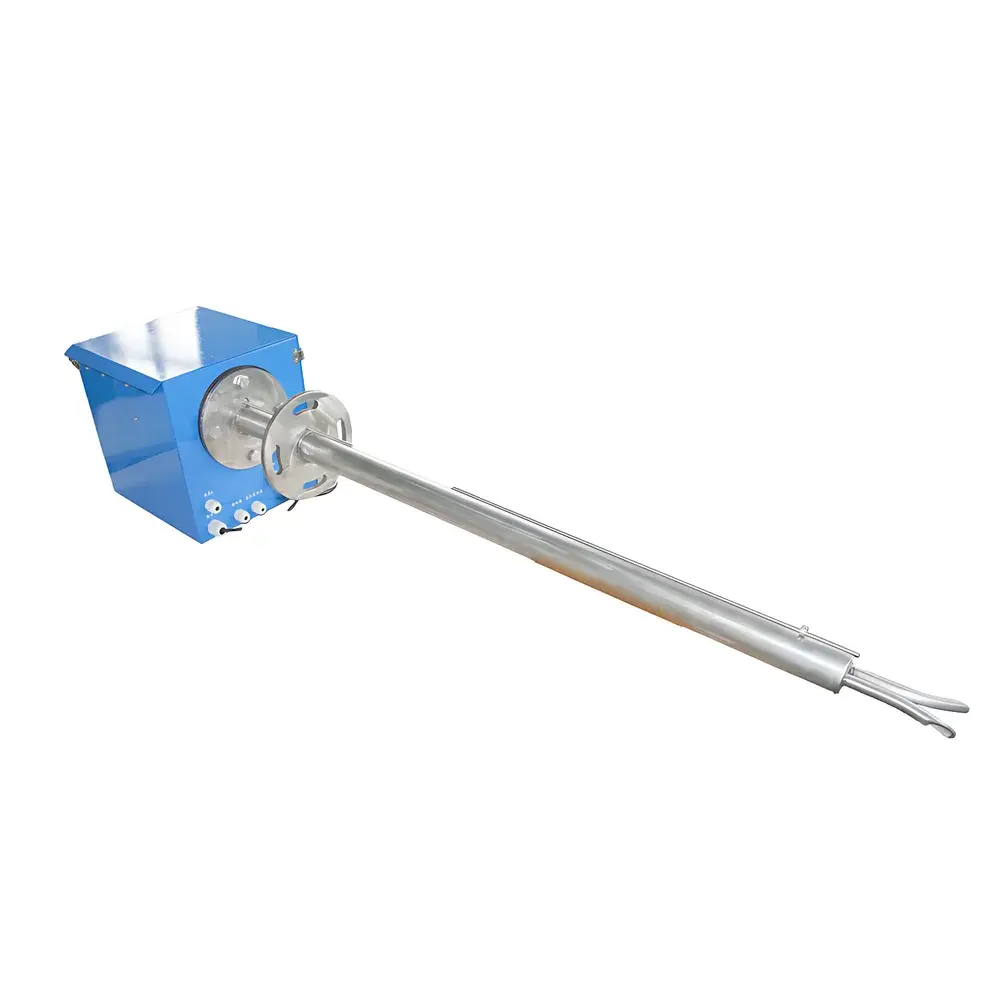
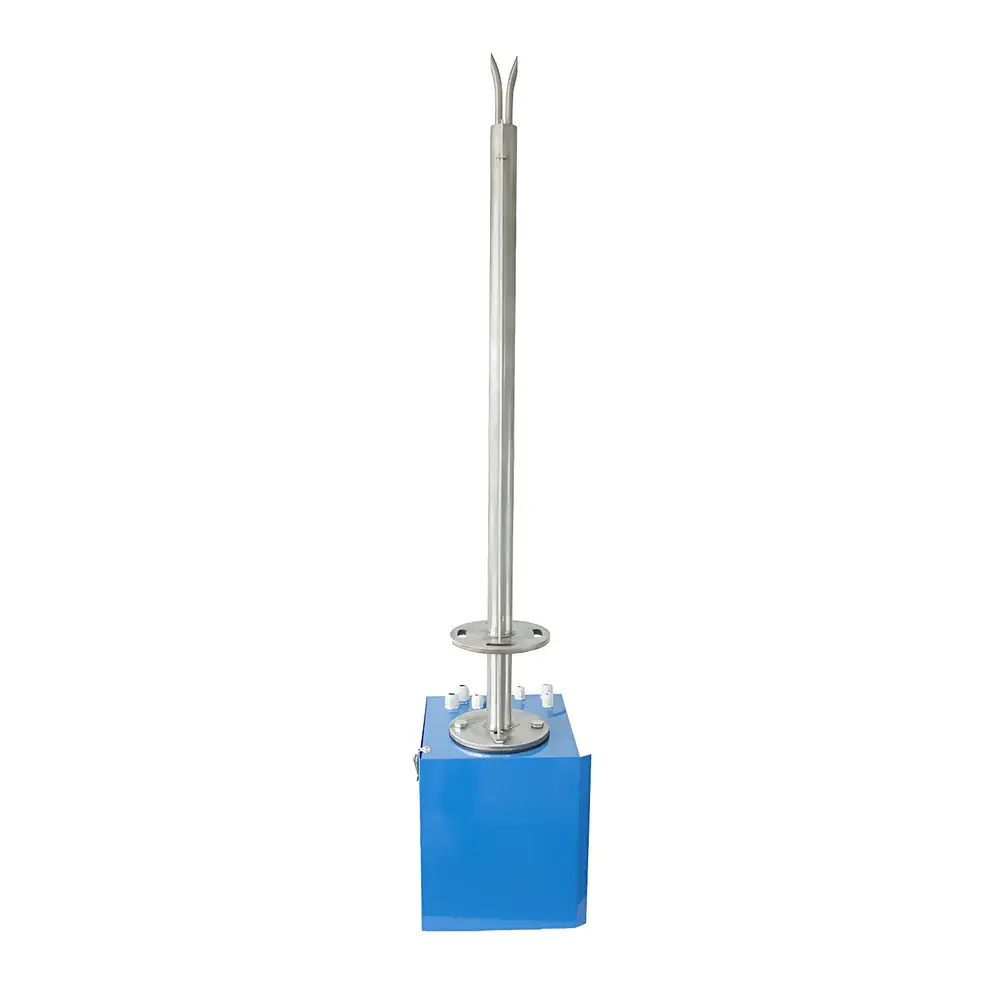
BCC KPV-2000 Integrated Temperature-Pressure-Velocity Flue Gas Monitoring System
| Brand | BCC |
|---|---|
| Origin | Hebei, China |
| Model | KPV-2000 |
| Instrument Type | Continuous Emission Monitoring System (CEMS) |
| Measurement Parameters | Temperature, Pressure, Velocity |
| Temperature Range | 0–500 °C (customizable up to 1100 °C) |
| Pressure Range | −8 to +8 kPa |
| Velocity Range | 5–40 m/s |
| Measurement Methods | Pt100 resistance thermometer (temperature), piezoresistive pressure transducer (pressure), Pitot tube differential pressure method (velocity) |
| Accuracy | ±2% relative error |
| Power Consumption | < 0.04 kVA |
| Output Signal | 4–20 mA analog |
| Environmental Rating | Rated for continuous operation at ambient housing temperatures up to 1100 °C |
| Additional Feature | Integrated automatic purge system |
Overview
The BCC KPV-2000 Integrated Temperature-Pressure-Velocity Flue Gas Monitoring System is a field-deployable, fixed-installation CEMS component engineered for real-time, simultaneous measurement of flue gas temperature, static/differential pressure, and volumetric flow velocity in industrial stack environments. It operates on well-established physical principles: temperature is determined via calibrated Pt100 platinum resistance thermometry conforming to IEC 60751 Class A tolerances; pressure is acquired using a compensated piezoresistive sensor with thermal drift compensation; and gas velocity is derived from differential pressure across a dual-tube Pitot probe, applying Bernoulli’s equation with real-time gas density correction based on measured temperature and pressure. Designed for integration into full-stack CEMS architectures, the KPV-2000 meets the foundational data acquisition requirements outlined in EPA Method 2 (velocity), Method 3A (temperature/pressure), and EN 15267-3 for certified emission monitoring subsystems.
Key Features
- High-temperature-rated mechanical housing capable of direct mounting in ducts or stacks where external surface temperatures reach 1100 °C — achieved through multi-layer ceramic insulation and Inconel 625 probe sheathing.
- Corrosion-resistant wetted materials including Hastelloy C-276 Pitot tubes and 316L stainless steel pressure ports, enabling reliable operation in acidic, high-humidity, and particulate-laden flue streams (e.g., coal-fired, waste-to-energy, or cement kiln exhaust).
- Integrated automatic purge system utilizing clean, dry instrument air (0.4–0.7 MPa) to periodically clear Pitot tube ports and pressure sensing orifices — eliminating manual cleaning intervals and mitigating plugging caused by condensable vapors or fly ash accumulation.
- Low-power design (< 0.04 kVA) compatible with standard 24 V DC or 220 V AC supply, minimizing thermal load and enabling deployment in explosion-proof enclosures (optional ATEX/IECEx certification available).
- Factory-calibrated transducers with NIST-traceable documentation; each unit ships with individual calibration certificates covering all three parameters across their specified operating ranges.
Sample Compatibility & Compliance
The KPV-2000 is validated for use with flue gases containing SO₂, NOₓ, CO, HCl, HF, and water vapor at concentrations typical of regulated combustion sources. It complies with mechanical and electrical safety standards including GB/T 18268.1–2010 (industrial EMC), GB 4208–2017 (IP66 ingress protection), and supports functional alignment with regulatory frameworks such as China’s HJ 75–2017 and HJ 76–2017 for CEMS performance verification. While not a standalone certified analyzer, its output signals are fully compatible with third-party data acquisition systems (DAS) that meet EPA 40 CFR Part 60 Appendix B PS-11 or EU Directive 2010/75/EU (IED) requirements for quality-assured emissions reporting.
Software & Data Management
The KPV-2000 outputs linearized 4–20 mA analog signals for each parameter (temperature, pressure, velocity), designed for seamless integration into programmable logic controllers (PLCs), distributed control systems (DCS), or dedicated CEMS DAS platforms. No embedded firmware or local HMI is provided; instead, signal conditioning and validation occur upstream in the host system. When integrated with compliant DAS software (e.g., certified per FDA 21 CFR Part 11 or ISO/IEC 17025), the device supports audit-trail logging, zero/span verification records, and automated calibration status flagging. Raw analog outputs permit calculation of standardized volumetric flow (e.g., Nm³/h at 0 °C, 101.325 kPa) using industry-standard equations (e.g., ISO 5167, ASME MFC-3M).
Applications
- Continuous monitoring of stack gas velocity and thermodynamic state in coal-, biomass-, and gas-fired power plants for mass balance calculations and fan efficiency optimization.
- Regulatory compliance support in municipal solid waste incinerators, where accurate velocity data under variable moisture and acid gas loads is critical for dilution-corrected pollutant concentration reporting.
- Process control feedback in cement rotary kilns and glass melting furnaces, where rapid response to temperature and pressure transients enables dynamic damper and ID fan adjustment.
- Pre-compliance verification during CEMS commissioning, serving as a reference-grade velocity and temperature source for cross-validation against optical or ultrasonic flow meters.
- Research and development testing of novel scrubber or catalyst configurations, where synchronized, time-aligned T/P/V data improves reaction kinetics modeling accuracy.
FAQ
Is the KPV-2000 certified for use in EPA- or EU-mandated CEMS?
No — it is a component-level measurement device, not a complete certified CEMS. Final certification requires integration, validation, and QA/QC procedures performed on the full system per applicable regulatory protocols.
Can the temperature range be extended beyond 500 °C?
Yes — custom variants with specialized thermowell materials (e.g., alumina ceramic sheaths) support continuous operation up to 1100 °C at the probe tip; lead time and calibration traceability must be confirmed prior to order.
Does the automatic purge system require external compressed air?
Yes — it requires a clean, oil-free, desiccated instrument air supply at 0.4–0.7 MPa; flow rate is adjustable between 2–8 L/min depending on duct particulate loading.
How often does the system require recalibration?
Annual field verification is recommended per HJ 75–2017; factory recalibration is advised every 24 months or after exposure to thermal shock exceeding 200 °C/min.
Is Modbus or HART communication supported?
Not natively — only 4–20 mA analog outputs are provided. Digital protocol support (e.g., HART 7, Modbus RTU) is available via optional signal converter modules mounted externally in the junction box.
Related Products







