
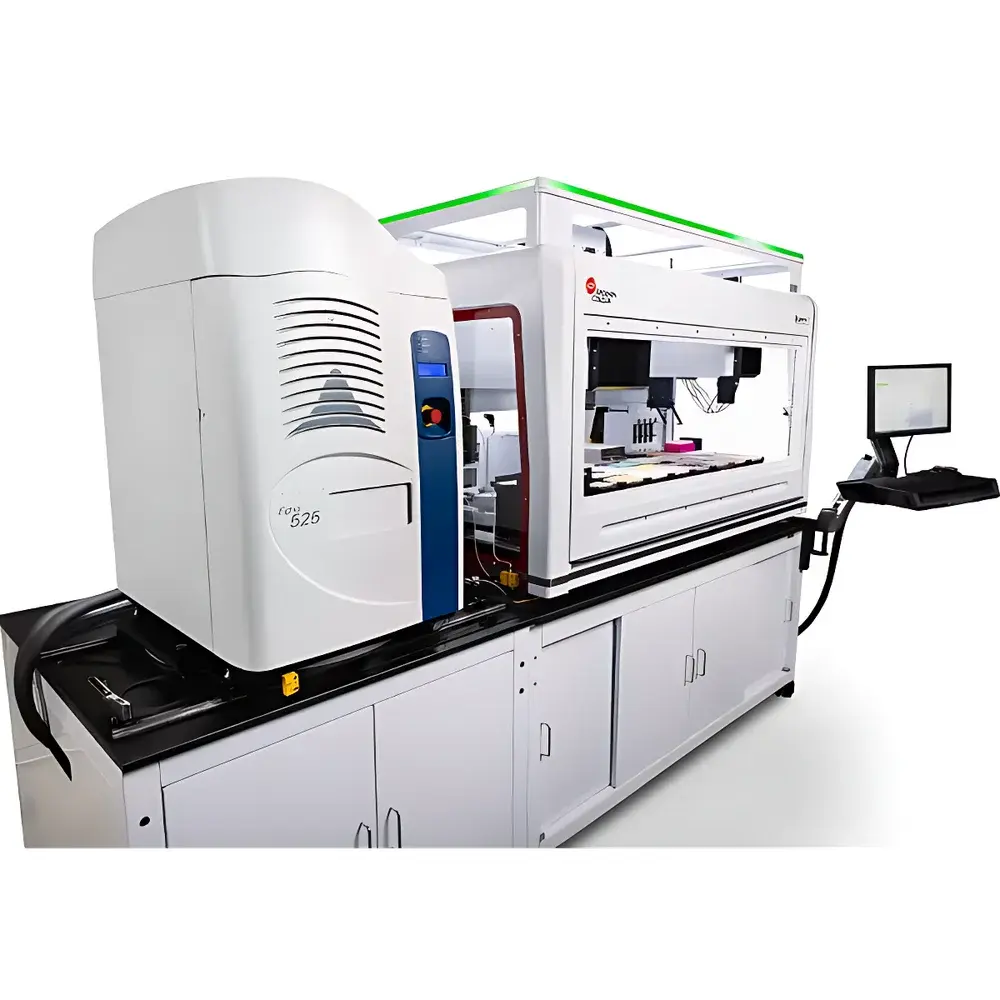
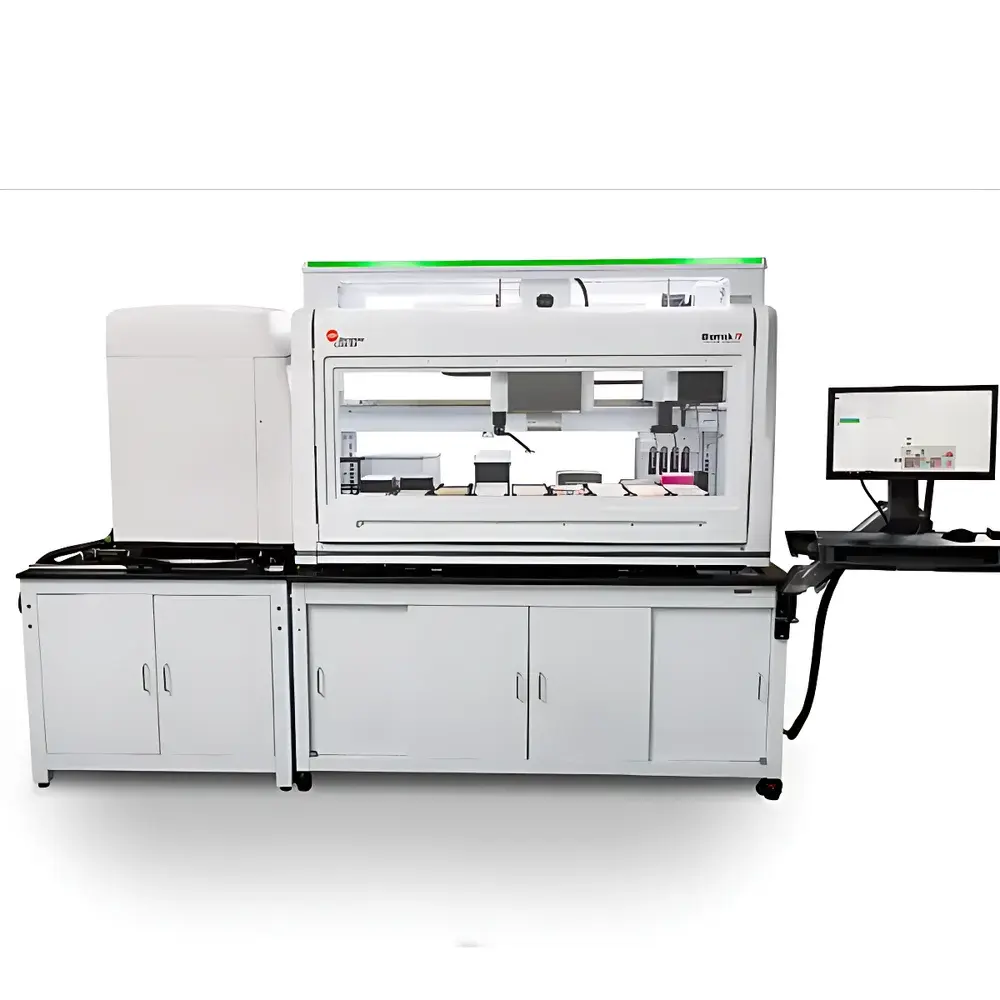
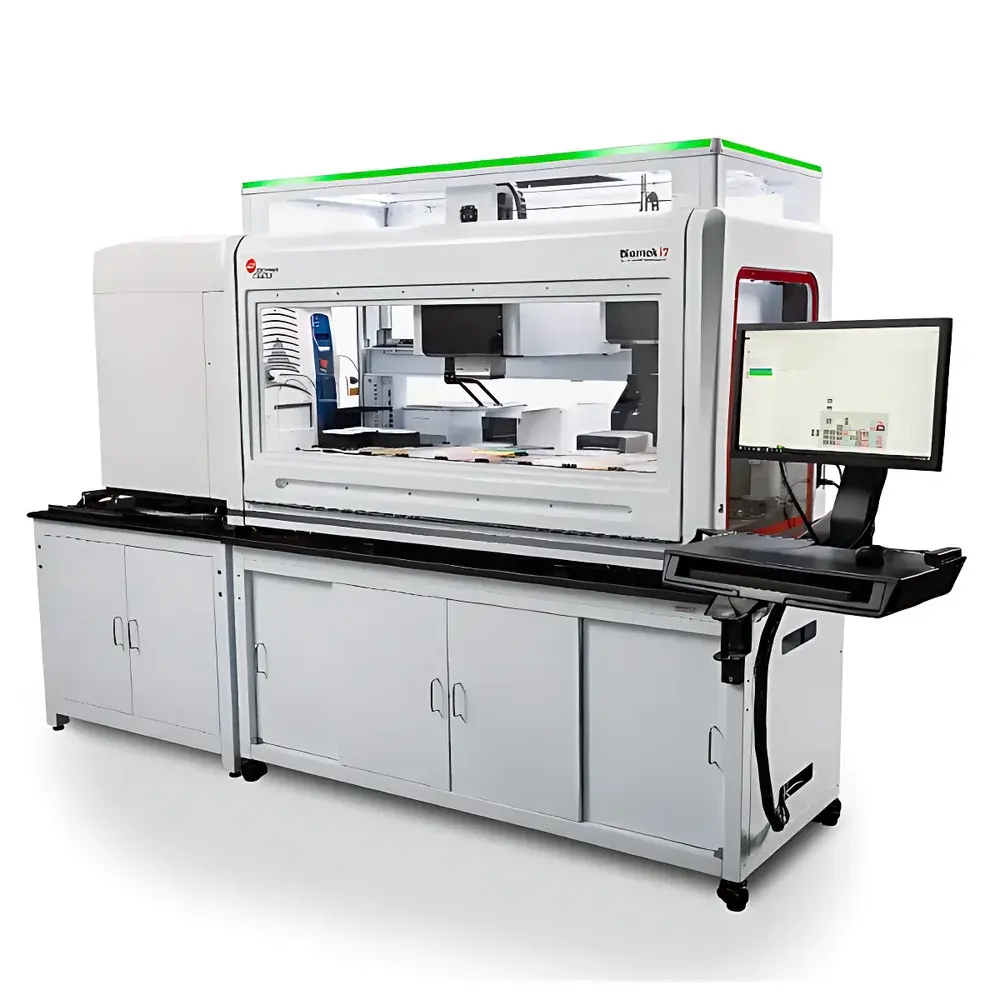
Beckman Coulter Biomek Echo Laboratory Automation Integration System
| Brand | Beckman Coulter |
|---|---|
| Origin | USA |
| Manufacturer Type | Original Equipment Manufacturer (OEM) |
| Origin Category | Imported |
| Model | Biomek Echo |
| Pricing | Available Upon Request |
Overview
The Beckman Coulter Biomek Echo Laboratory Automation Integration System is a modular, scalable platform engineered to unify discrete laboratory instruments—including liquid handlers, plate readers, incubators, centrifuges, and mass spectrometry sample prep modules—into a cohesive, software-coordinated automation ecosystem. Unlike standalone robotic workstations, the Biomek Echo system operates as an integration backbone, leveraging deterministic scheduling, hardware abstraction layers, and vendor-agnostic device drivers to orchestrate heterogeneous instrumentation from over 60 third-party manufacturers. Its core architecture is built upon Beckman Coulter’s proprietary eNvision™ control framework, which implements real-time event-driven workflow execution compliant with ISO/IEC 17025 and GLP-aligned audit trail requirements. Designed for life science R&D, biopharma QC/QA, and translational research labs, the system enables end-to-end traceability of samples, reagents, and process metadata—from assay initiation through data export—without requiring proprietary hardware lock-in.
Key Features
- Multi-vendor interoperability: Native support for >300 third-party devices across liquid handling, detection, thermal control, and sample preparation domains via standardized communication protocols (RS-232, TCP/IP, Modbus, and vendor-specific APIs).
- Workflow-centric orchestration: Drag-and-drop visual programming interface for defining parallelized, conditional, and error-handling logic across instruments—enabling complex multi-step assays such as CRISPR library screening or ADC conjugation workflows.
- Full-chain auditability: Automatic generation of time-stamped, immutable audit trails per run—including instrument status logs, user authentication events, parameter versioning, and electronic signatures—meeting FDA 21 CFR Part 11 and EU Annex 11 compliance prerequisites.
- Scalable physical footprint: Configurable layouts ranging from benchtop-integrated echo modules (e.g., Biomek Echo + single ELISA reader) to full-room robotic cells with conveyor-based sample routing and environmental monitoring.
- Reagent and consumables management: Integrated barcode scanning and inventory tracking synchronized with LIMS interfaces (e.g., LabWare, STARLIMS), supporting lot-level traceability and expiration-aware scheduling.
Sample Compatibility & Compliance
The Biomek Echo system accommodates standard microplate formats (96-, 384-, and 1536-well), tube racks (1.5–50 mL), cryovials, and custom carriers. It supports biological matrices including whole blood, plasma, cell lysates, bacterial cultures, and nucleic acid libraries without cross-contamination risk, validated per ISO 20776-1 for microbiological assay integrity. All integrated workflows are documented under Beckman Coulter’s Quality Management System (QMS), certified to ISO 9001 and ISO 13485. System validation packages—including IQ/OQ/PQ documentation templates and risk assessments aligned with ICH Q9—support GxP-regulated environments.
Software & Data Management
The system runs on Beckman Coulter’s Method Studio™ software, a browser-based platform enabling collaborative method development, version-controlled protocol storage, and role-based access control (RBAC). Raw instrument data streams are aggregated into structured JSON/CSV outputs compatible with downstream analysis tools (e.g., GraphPad Prism, Python pandas, or enterprise analytics platforms). Built-in data integrity safeguards include automatic checksum validation, encrypted local backups, and configurable retention policies. Optional integration with cloud-based data lakes (AWS S3, Azure Blob Storage) supports federated analysis across geographically distributed sites while maintaining HIPAA/GDPR-compliant data residency controls.
Applications
- High-throughput drug screening: Automated dose-response curves, counter-screens, and cytotoxicity profiling using integrated plate readers and dispensers.
- Hybridoma and single-cell cloning: Coordinated cell sorting (e.g., BD FACSAria), plate seeding, imaging (e.g., Molecular Devices ImageXpress), and ELISA confirmation.
- Next-generation sequencing (NGS) library prep: End-to-end automation of fragmentation, end-repair, A-tailing, adapter ligation, and size selection—validated for Illumina, PacBio, and Oxford Nanopore chemistries.
- Microbial strain engineering: Automated colony picking, glycerol stock generation, fermentation inoculation, and HPLC-MS metabolite quantification.
- Biologics characterization: Automated SEC-MALS sample injection, fraction collection, and buffer exchange prior to DLS or CD analysis.
FAQ
Does the Biomek Echo system require proprietary consumables?
No—it accepts industry-standard plates, tips, tubes, and reagent containers from multiple suppliers; no vendor-locked consumables are mandated.
Can legacy instruments be retrofitted into the integration system?
Yes—through Beckman Coulter’s Hardware Interface Kit (HIK), which provides protocol-adapted I/O modules and firmware updates for instruments manufactured within the past 15 years.
How is cybersecurity addressed in networked deployments?
All communications use TLS 1.2+ encryption; the system supports VLAN segmentation, LDAP/Active Directory integration, and regular penetration testing reports per NIST SP 800-53 Rev. 4.
Is remote monitoring and troubleshooting supported?
Yes—via secure SSH tunneling and Beckman Coulter’s Remote Diagnostic Portal (RDP), which provides real-time performance telemetry and predictive maintenance alerts without granting direct OS-level access.
What training and documentation are provided post-installation?
Comprehensive on-site training (2–5 days), SOP development workshops, and lifetime access to the Beckman Coulter Automation Knowledge Base—including video tutorials, API reference guides, and validated method libraries.
Related Products



