
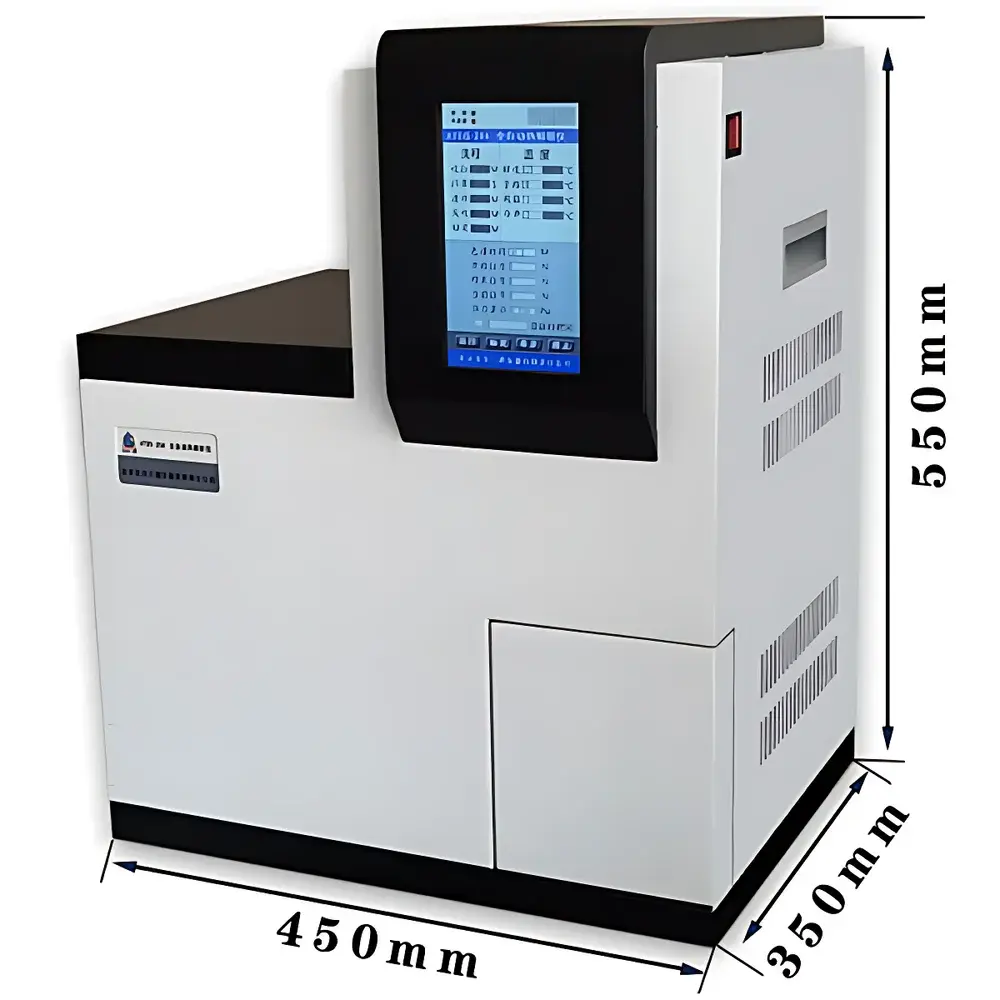
Beifen Sanpu ADTS-20A Fully Automated Two-Stage Thermal Desorber for TVOC Analysis in Indoor Air
| Brand | Beifen Sanpu |
|---|---|
| Origin | Beijing, China |
| Manufacturer Type | Direct Manufacturer |
| Instrument Type | Two-Stage Thermal Desorber |
| Primary Desorption Temp Range | Ambient to 450 °C |
| Secondary Desorption Temp Range | 100 to 450 °C |
| Cryo-Focusing Trap Temp Range | −35 to Ambient °C |
| Desorption Recovery Rate | >99% (compound-dependent) |
| Sample Capacity | 20 positions |
| Dimensions | 350 × 450 × 510 mm |
| Weight | ~40 kg |
Overview
The Beifen Sanpu ADTS-20A is a fully automated two-stage thermal desorber engineered for precise, high-throughput analysis of trace-level volatile organic compounds (VOCs) and total volatile organic compounds (TVOC) in indoor air, ambient air, and building material emissions. It operates on the principle of solid-phase adsorption followed by sequential thermal desorption—first releasing analytes from the sorbent tube under controlled heating (primary desorption), then refocusing them onto a cryogenically cooled trap (−35 °C), and finally injecting a narrow, solvent-free analyte band into a gas chromatograph (GC) or GC–MS via secondary desorption. This two-stage architecture eliminates solvent interference, suppresses water vapor breakthrough, and delivers exceptional peak shape resolution and detection sensitivity—critical for compliance with low-concentration regulatory limits defined in ISO 16000-6, ASTM D6196, and HJ 644–2013. The system is designed for direct interfacing with all major GC and GC–MS platforms, including Agilent, Thermo Fisher, Shimadzu, and PerkinElmer instruments, via standardized pneumatic and electrical interfaces.
Key Features
- Fully automated 20-position sample carousel enabling unattended overnight operation without manual intervention
- Independent four-zone temperature control: primary desorption oven, secondary desorption chamber, transfer line, and six-port valve—all programmable from ambient to 450 °C in 1 °C increments
- Integrated Peltier-based cryo-focusing trap with precise −35 °C minimum setpoint and < ±0.5 °C thermal stability
- Motor-driven six-port valve with reproducible switching timing and integrated back-flush capability to prevent cross-contamination between samples
- Programmable multi-step sequence: desorption → trap focusing → secondary desorption → GC injection → post-run trap/valve cleaning
- Onboard sample tube activation protocol with customizable heating profiles and purge gas flow (0–160 mL/min)
- Embedded touchscreen interface with real-time status animation, method storage, and audit-ready event logging
- Optional quartz-lined transfer lines for enhanced recovery of reactive or polar VOCs (e.g., aldehydes, organic acids)
- Compatible with standard 1/4″ × 3.5″ US-spec sorbent tubes (Tenax TA, Carbopack B/C, Carboxen series)
- Supports external GC trigger synchronization and bidirectional communication with third-party chromatography data systems
Sample Compatibility & Compliance
The ADTS-20A is validated for use with EPA TO-17–compliant sorbent media and meets method requirements for national and international indoor air quality standards, including GB/T 18883–2022 (Indoor Air Quality Standard), GB 50325–2020 (Control Standard for Indoor Environmental Pollution in Civil Building Engineering), HJ 644–2013 (Ambient Air VOCs by TD–GC–MS), HJ 583–2010 (BTEX by TD–GC–FID), and HJ 734–2014 (VOCs from Stationary Sources). Its quantitative performance—demonstrated RSD ≤2.5% at 0.05 μg benzene in methanol and >99% recovery across C2–C16 hydrocarbons—ensures robustness for GLP and ISO/IEC 17025 accredited laboratories. All thermal zones are calibrated traceably to NIST-certified references; system suitability tests include breakthrough volume verification and blank tube assessment per ISO 16000-6 Annex B.
Software & Data Management
The ADTS-20A runs on an embedded Linux-based controller with a 7-inch capacitive touchscreen GUI supporting English-language navigation. Method files store complete temperature ramp profiles, timing sequences, gas flow parameters, and GC synchronization logic. Event logs record every thermal cycle, valve actuation, error condition, and user login—exportable as CSV for LIMS integration. Audit trail functionality complies with FDA 21 CFR Part 11 requirements when paired with validated chromatography data systems (e.g., OpenLab CDS, Chromeleon). Remote monitoring and firmware updates are supported via Ethernet or optional Wi-Fi module. No proprietary software license is required for basic operation; optional PC-based configuration utility enables advanced method development and batch report generation.
Applications
This thermal desorber serves analytical workflows across environmental monitoring, industrial hygiene, building product certification, and regulatory compliance testing. Typical applications include quantification of benzene, toluene, ethylbenzene, xylenes (BTEX), styrene, C3–C12 aliphatics, terpenes, and oxygenated VOCs (e.g., acetone, butanone, ethanol) in indoor air samples collected per ISO 16000-2. It supports emission testing of carpets, adhesives, paints, and composite wood products per ASTM D5116 and EN 13419-1. In occupational health labs, it enables personal exposure assessment using passive or active sampling per NIOSH Method 1501. Its high recovery and low carryover make it suitable for forensic air analysis and source identification studies requiring compound-specific fingerprinting.
FAQ
What sorbent tubes are compatible with the ADTS-20A?
Standard 1/4″ OD × 3.5″ length stainless steel or glass tubes packed with Tenax TA, Carbopack B/C, Carboxen 1000/1016, or mixed-bed sorbents (e.g., Carbograph 1TD) are fully supported.
Does the instrument support cold trap modulation for improved chromatographic resolution?
Yes—the integrated Peltier-cooled trap achieves −35 °C and enables rapid thermal refocusing, yielding narrow (<50 ms) analyte bands ideal for capillary GC separation.
Can the ADTS-20A be used for semi-volatile organic compound (SVOC) analysis?
It is optimized for VOCs up to ~350 °C boiling point; for SVOCs (e.g., PAHs, phthalates), extended desorption times and higher secondary temperatures may be applied—but method validation per ISO 16000-8 is required.
Is calibration traceable to international standards?
All temperature zones are calibrated against NIST-traceable RTDs; factory calibration certificates include uncertainty budgets per ISO/IEC 17025 guidelines.
How is carryover minimized between samples?
Automated post-injection back-flush of the transfer line and valve with inert gas (0–100 mL/min, programmable) ensures effective removal of residual analytes before the next run.
Related Products





