
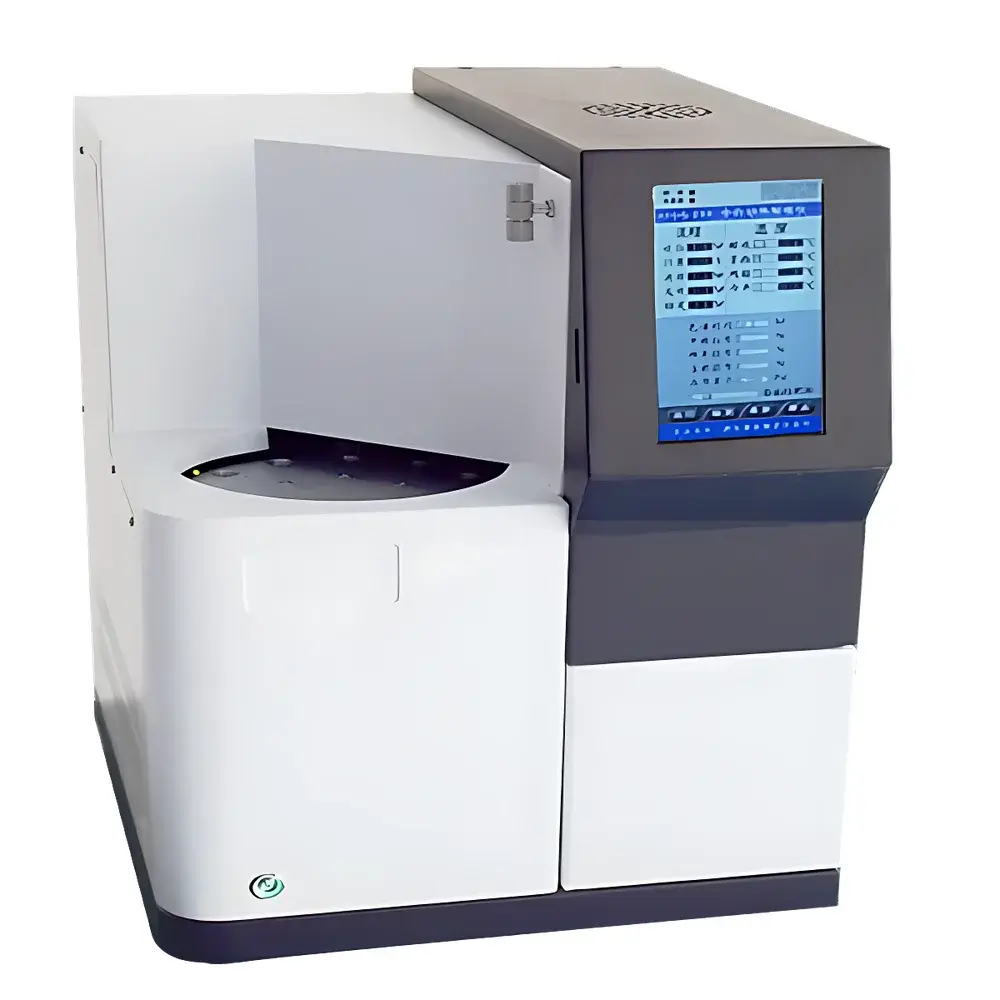
Beifen Sanpu AeTDS-20A Cryogenic Cold Trap Automated Two-Stage Thermal Desorber
| Brand | Beifen Sanpu |
|---|---|
| Origin | Beijing, China |
| Manufacturer Type | Manufacturer |
| Product Origin | Domestic (China) |
| Model | AeTDS-20A |
| Price | USD 21,800 (FOB Beijing) |
Overview
The Beifen Sanpu AeTDS-20A Cryogenic Cold Trap Automated Two-Stage Thermal Desorber is an engineered solution for trace-level volatile organic compound (VOC) and semi-volatile organic compound (SVOC) analysis in environmental, industrial hygiene, and building materials testing. It operates on the principle of two-stage thermal desorption coupled with cryogenic focusing: first-stage desorption releases analytes from sorbent tubes under controlled heating; second-stage desorption transfers the volatilized compounds into a cryogenically cooled trap (–35 °C to ambient), where they are refocused into a narrow band prior to rapid injection into a gas chromatograph (GC) or GC–MS system. This architecture delivers enhanced sensitivity, improved peak shape resolution, and superior reproducibility—critical for compliance with stringent regulatory methods including EPA TO-17, ISO 16017-1, and multiple Chinese national standards (e.g., HJ 644–2013, HJ 734–2014). Designed for unattended operation, the AeTDS-20A supports full automation of up to 20 samples per sequence, integrating precise temperature control across four independently regulated zones and synchronized timing with external GC systems.
Key Features
- 20-position automated sample carousel with motor-driven six-port valve for fully unattended batch processing
- Four-zone independent temperature control: primary desorption oven (room temp to 450 °C), secondary desorption zone (room temp to 450 °C), transfer line (room temp to 300 °C), and valve manifold (room temp to 300 °C)
- Cryogenic cold trap with electronic cooling (–35 °C to ambient), enabling sharp band focusing and minimizing peak broadening
- Programmable thermal ramp rates exceeding 3000 °C/min for rapid second-stage desorption
- Integrated sample tube activation protocol with programmable heating and purge cycles
- Automated back-flush function for transfer line and valve using adjustable carrier gas flow (0–100 mL/min)
- Simulated sampling mode with controllable flow (0–160 mL/min) for calibration curve generation directly on the instrument
- Self-diagnostic startup sequence with real-time fault detection, error logging, and visual alarm prompts
- Touchscreen HMI with intuitive workflow navigation, method storage, and dynamic status animation
- Universal GC interface compatibility—including dedicated adapters for Agilent, Thermo Fisher, Shimadzu, and PerkinElmer instruments
Sample Compatibility & Compliance
The AeTDS-20A accommodates standard 1/4″ OD × 3.5″ (US specification) sorbent tubes packed with common media including Tenax TA, Carbopack B/C, Carboxen, and graphitized carbon blacks. Optional fused silica transfer lines minimize adsorption of polar or reactive analytes (e.g., aldehydes, amines, sulfur compounds). The system meets functional requirements for ISO/IEC 17025-accredited laboratories performing VOC analysis under GLP conditions. Its operational parameters align with method validation criteria specified in HJ 644–2013 (ambient air VOCs), HJ 734–2014 (stationary source emissions), GB/T 18883–2002 (indoor air quality), and HJ/T 400–2007 (in-vehicle air). Temperature stability (< ±0.5 °C) and quantitative repeatability (RSD ≤ 2.5% at 0.05 µg benzene) support data integrity required for regulatory reporting and audit readiness.
Software & Data Management
Instrument control and method programming are executed via embedded firmware with a responsive 7-inch capacitive touchscreen interface. All thermal and pneumatic parameters—including desorption times, trap hold durations, purge flows, and GC trigger events—are configurable through time-segmented sequences. Method files store complete parameter sets with user-defined names and timestamps. Audit-trail functionality logs operator actions, system errors, and calibration events—supporting alignment with FDA 21 CFR Part 11 principles when deployed in GxP environments. Raw instrument logs export in CSV format for integration with LIMS or third-party chromatography data systems (CDS). No proprietary software installation is required on host PCs; remote monitoring is achievable via Ethernet-connected network infrastructure.
Applications
- Environmental monitoring: ambient air, indoor air, soil headspace, and stack emissions per HJ 644, HJ 734, and ISO 16017-1
- Building product emissions testing: formaldehyde, benzene, toluene, xylenes, and other SVOCs from carpets, adhesives, and composite wood panels (GB 50325–2020)
- Automotive cabin air quality assessment per HJ/T 400–2007
- Workplace exposure evaluation (NIOSH 1501, OSHA 2549)
- Food packaging migration studies and flavor compound profiling
- Pharmaceutical residual solvent analysis (ICH Q3C guidelines)
FAQ
Does the AeTDS-20A support both ambient and cryogenic secondary desorption configurations?
Yes. The instrument can be factory-configured or retrofitted with either ambient-temperature or cryogenic two-stage desorption modules, depending on target analyte volatility and required detection limits.
What sorbent tube formats are compatible?
Standard 1/4″ OD × 3.5″ stainless steel or glass tubes conforming to ASTM D6196 and EPA TO-17 specifications. Custom tube holders are available upon request.
Is the system compliant with 21 CFR Part 11 for electronic records?
While the embedded firmware provides audit-trail logging and user access controls, full 21 CFR Part 11 compliance requires integration with validated CDS software and organizational procedural controls—not inherent to the hardware alone.
Can the cold trap temperature reach below –35 °C?
No. The electronic cooling module is rated for a minimum of –35 °C, which is sufficient for refocusing C2–C12 hydrocarbons and most oxygenated VOCs without requiring liquid nitrogen.
How is carryover mitigated between samples?
Through automated high-flow back-flush of the transfer line and six-port valve using inert carrier gas, plus optional quartz-lined or deactivated stainless-steel tubing to reduce surface adsorption.




