
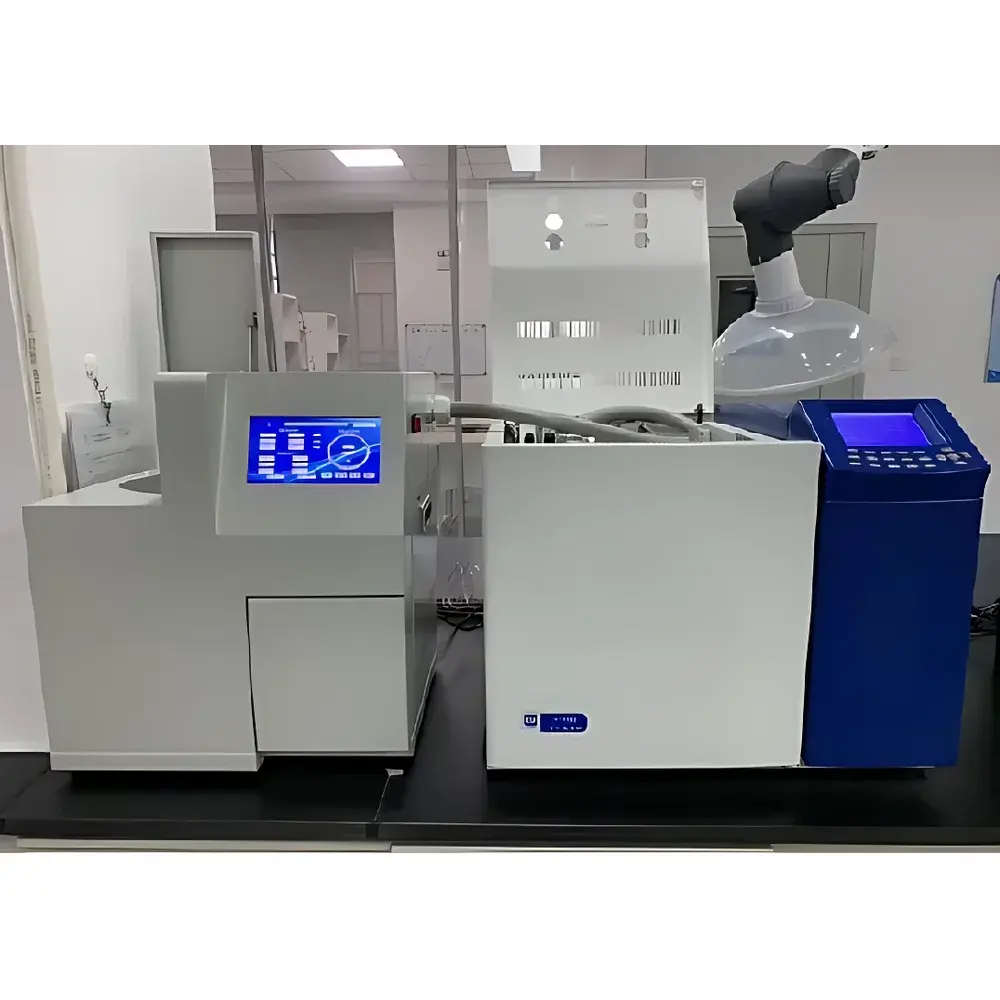
Beifen Sanpu AH3S-20A Plus Laboratory Gas Chromatograph System for HS-GC Analysis of VOCs in Cigarette Packaging Papers
| [Brand | Beifen Sanpu |
|---|---|
| Origin | Beijing, China |
| Manufacturer Type | Direct Manufacturer |
| Instrument Type | Laboratory Gas Chromatograph |
| Model | AH3S-20A Plus |
| Carrier Gas Pressure Range & Control | 14.5 psi |
| Maximum Injector Temperature | 260 °C |
| Detector Configuration | Dual FID |
| Compatible Sample Introduction | Automated Headspace Sampler (AHS-20A Plus) |
| Column Compatibility | HP-1 and HP-1wax capillary columns |
| Operating Standard | YC/T 207–2006] |
Overview
The Beifen Sanpu AH3S-20A Plus is a dedicated laboratory gas chromatography (GC) system engineered for the precise quantification of volatile organic compounds (VOCs) in cigarette carton and strip packaging papers—specifically compliant with the Chinese tobacco industry standard YC/T 207–2006. This method employs headspace-gas chromatography (HS-GC) coupled with dual flame ionization detection (FID), enabling trace-level analysis of 16 regulated VOCs including benzene, toluene, xylene isomers, alcohols (e.g., ethanol, isopropanol), ketones (e.g., acetone, methyl ethyl ketone), and esters (e.g., ethyl acetate). The analytical principle relies on thermal equilibrium partitioning of VOCs from solid paper matrix into the headspace vapor phase, followed by quantitative separation on fused-silica capillary columns (HP-1 or HP-1wax) and sensitive, linear FID response. Designed for routine QC laboratories in tobacco manufacturing, regulatory testing centers, and third-party certification institutes, the system delivers high reproducibility (<3% RSD for replicate injections) and robust baseline stability under extended operational cycles.
Key Features
- Dual-FID detection architecture ensures simultaneous, independent quantification of target analytes—enhancing throughput and cross-validation capability without column switching.
- Integrated AHS-20A Plus automated headspace sampler with precise temperature control: sample incubation at 80 °C, valve oven at 80 °C, and transfer line at 120 °C—minimizing condensation and carryover.
- Optimized GC oven programming: isothermal hold at 50 °C for 9 min, followed by 9 °C/min ramp to 180 °C (held 3 min), delivering baseline-resolved elution of polar and nonpolar VOCs within ≤25 min.
- Injector temperature up to 260 °C supports thermally stable derivatization-free analysis; detector temperature maintained at 300 °C ensures complete combustion and signal fidelity for oxygenated VOCs.
- Nitrogen carrier gas pressure regulation at 14.5 psi provides consistent linear velocity across batch runs—critical for retention time repeatability per ISO 17025 validation requirements.
- Modular hardware design allows seamless integration with external standards preparation workflows and GLP-compliant data archiving systems.
Sample Compatibility & Compliance
The AH3S-20A Plus system is validated for use with cigarette packaging substrates—including coated and uncoated base papers, aluminum foil laminates, and water-soluble overprint varnishes—as specified in YC/T 207–2006. Sample preparation follows strict geometric precision: 80 cm² specimens are rolled inward (printed side facing center) to maximize surface exposure, sealed in 20-mL crimp-top headspace vials, and spiked with 1000 µL triacetin as internal solvent. This protocol ensures uniform VOC extraction kinetics and minimizes matrix-induced adsorption artifacts. The system meets essential regulatory alignment criteria: method performance conforms to ISO/IEC 17025:2017 for testing laboratories; data integrity supports audit readiness for China NMPA and CNAS assessments; and instrument configuration permits full traceability required under GB/T 27404–2008 (Guidelines for Validation of Chemical Testing Methods).
Software & Data Management
Control and data acquisition are managed via Beifen Sanpu’s GC Navigator v3.2 software—a Windows-based platform supporting dual-channel FID signal synchronization, automated peak integration with customizable baseline algorithms, and calibration curve generation with forced origin constraint (per YC/T 207–2006 requirement). All raw chromatograms, method parameters, and audit logs are timestamped and stored in encrypted .gcx binary format. Software features include electronic signature support, user role-based access control (admin/operator/auditor), and export compatibility with CSV, PDF, and XML formats for LIMS integration. While not natively 21 CFR Part 11 compliant, the system architecture supports third-party validation packages for GMP environments requiring electronic record retention and change control.
Applications
- Quantitative screening of residual solvents in gravure- and flexo-printed cigarette packaging papers.
- Batch release testing of packaging materials against national VOC limits (e.g., ≤0.05 mg/m² for benzene; ≤1.0 mg/m² for total VOCs).
- Method development and validation studies for alternative substrates (e.g., bio-based coatings, water-based inks).
- Root cause analysis of VOC migration during storage or accelerated aging (40 °C/75% RH).
- Supporting technical documentation for China Tobacco Standardization Technical Committee submissions.
FAQ
What VOCs does this system quantify per YC/T 207–2006?
It targets 16 priority compounds: benzene, toluene, ethylbenzene, o/m/p-xylene, styrene, acetone, methyl ethyl ketone, cyclohexanone, ethanol, isopropanol, butanol, ethyl acetate, butyl acetate, isobutyl acetate, propyl acetate, and butyl glycol.
Is HP-1wax column mandatory for all analytes?
No—HP-1 is recommended for aromatic hydrocarbons and ketones; HP-1wax improves resolution of polar alcohols and esters. Column selection depends on target compound polarity and required selectivity.
Can the system be upgraded for EPA TO-17 compliance?
Yes—the AHS-20A Plus sampler accepts standard 0.5–2.0 mL vial formats and supports programmable pressurization and purge cycles compatible with EPA Method TO-17 pre-concentration protocols.
What is the minimum detectable level for benzene under this method?
Based on typical system configuration and 80 cm² sampling area, the method detection limit (MDL) for benzene is ≤0.005 mg/m² (equivalent to ~0.2 ng absolute on-column).
Does the manufacturer provide method validation documentation?
Yes—Beifen Sanpu supplies a comprehensive YC/T 207–2006 implementation kit including certified reference standards, SOP templates, system suitability test protocols, and blank matrix characterization reports.






