
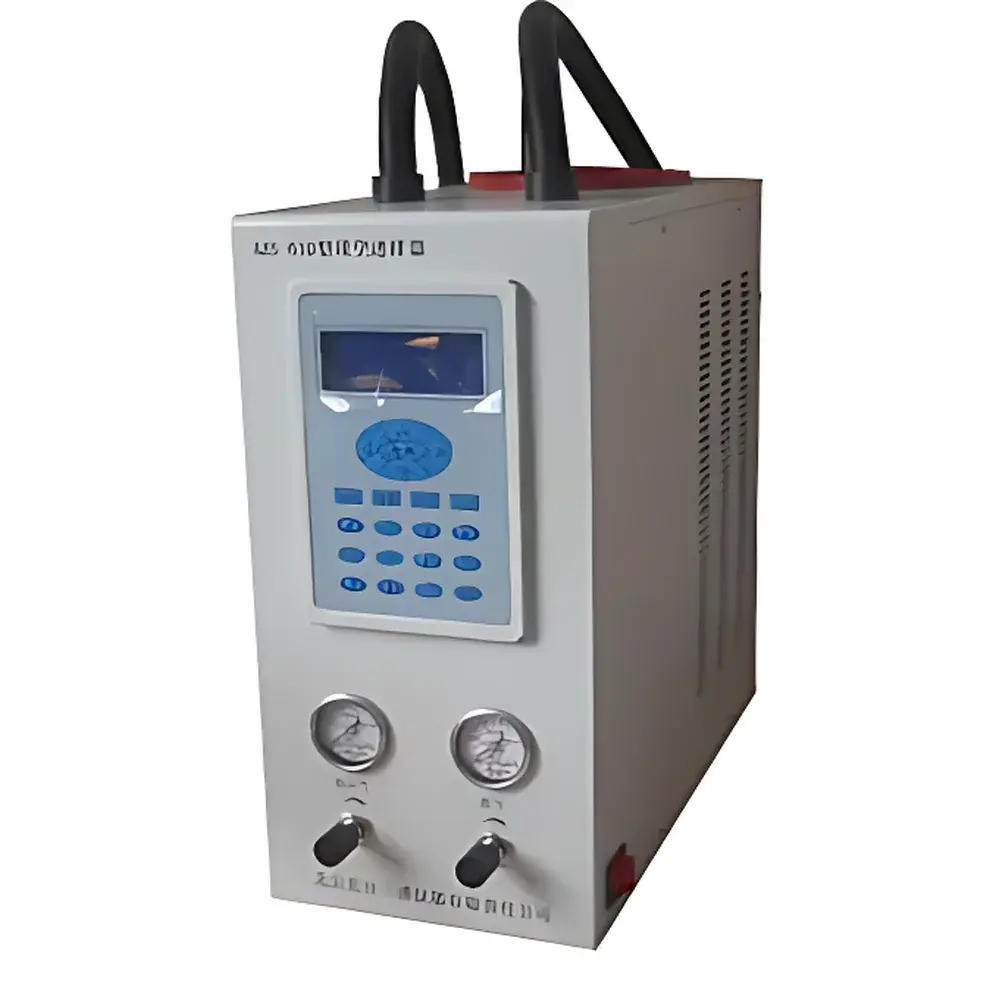
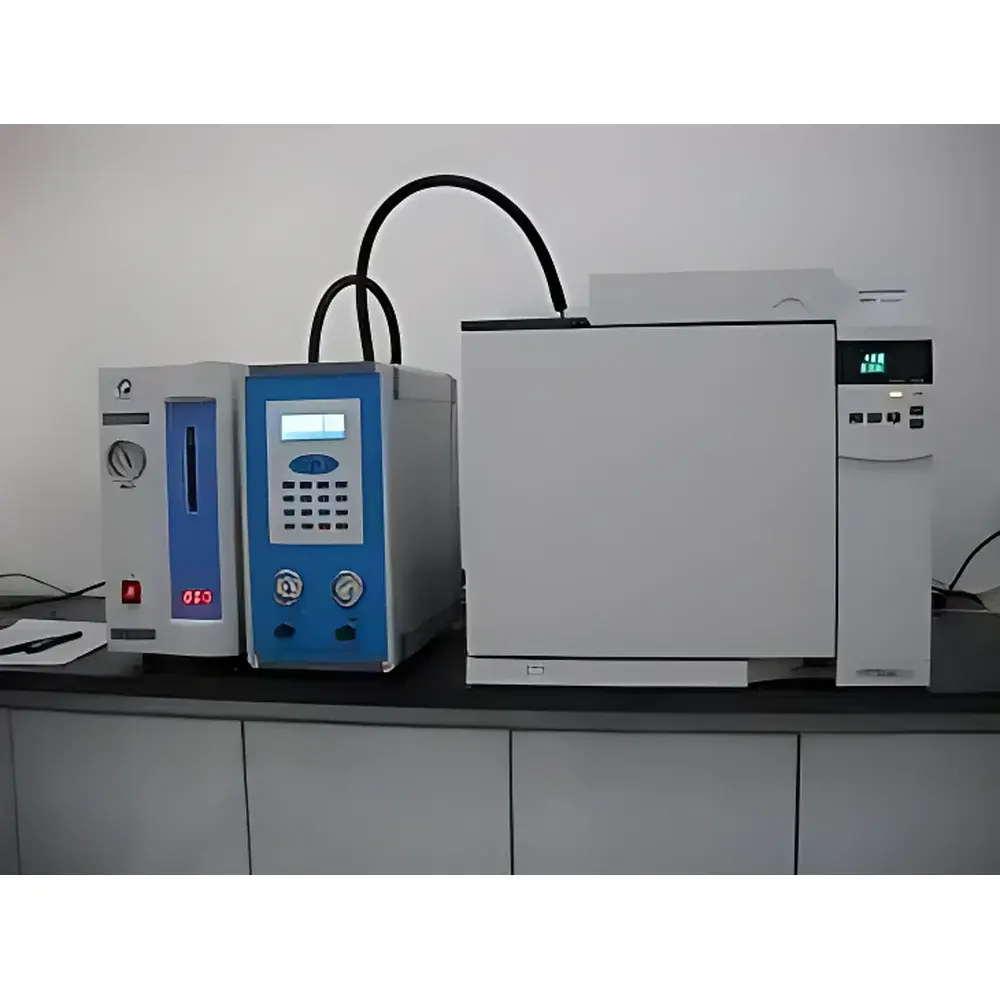
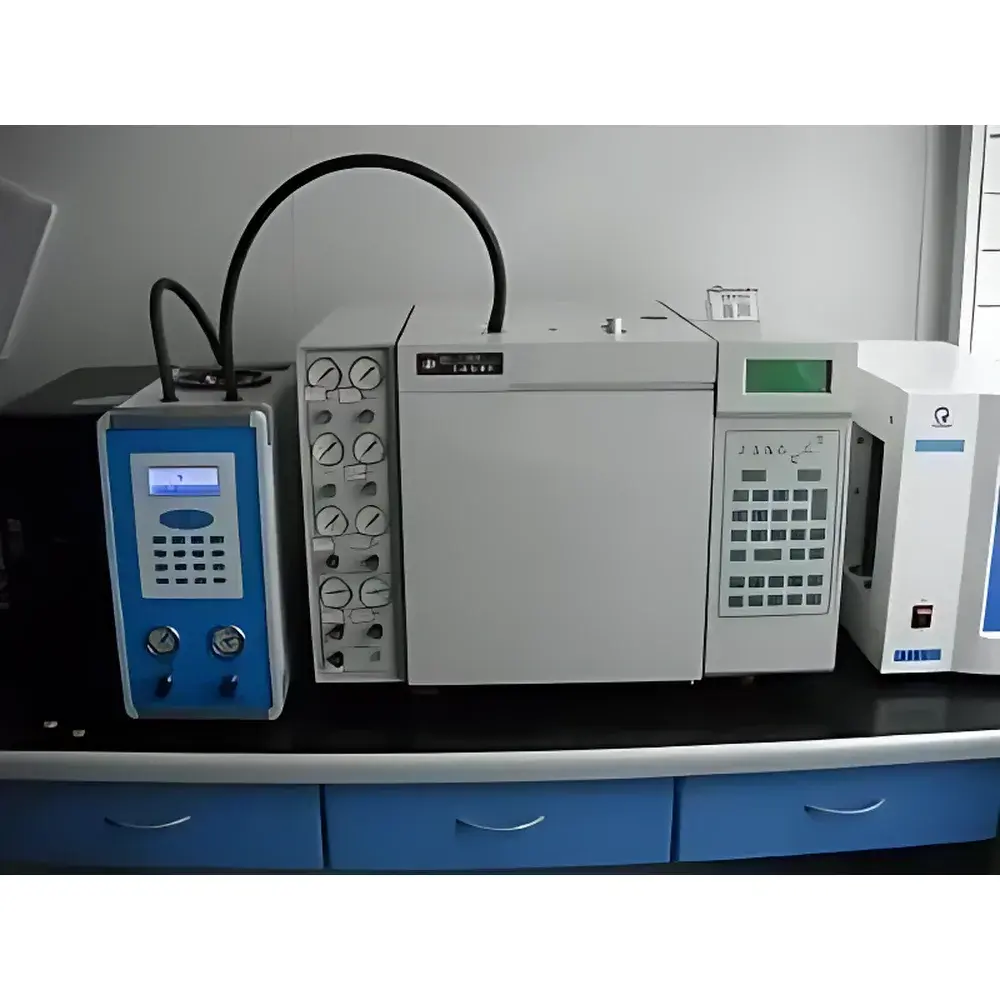
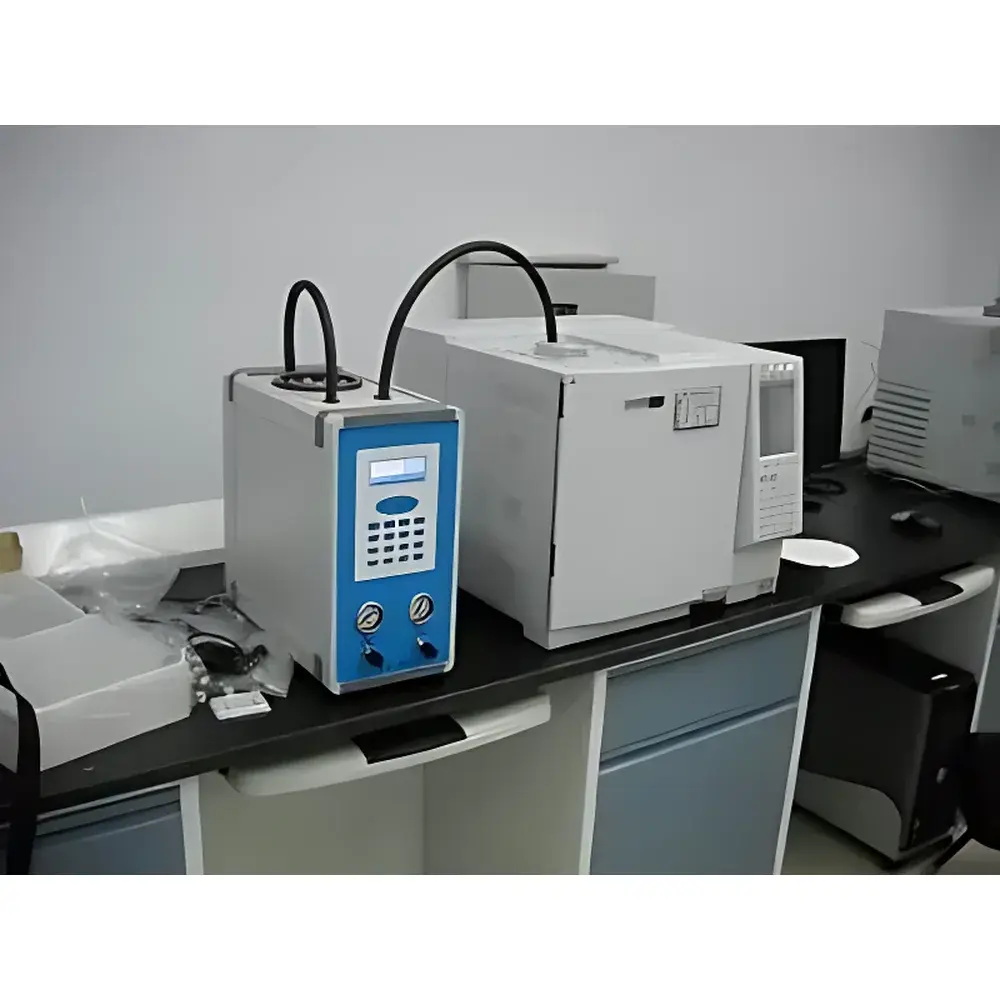
Beifen Sanpu AHS-610 Static Headspace Sampler
| Brand | Beifen Sanpu |
|---|---|
| Origin | Beijing, China |
| Manufacturer Type | Direct Manufacturer |
| Instrument Type | Static Headspace Sampler |
| Automation Level | Semi-Automatic |
| Vial Heating Range | Ambient to 200 °C |
| Valve & Transfer Line Temperature Control Range | Ambient to 180 °C |
| Sample Loop Volume Options | 1 mL or 3 mL (selectable) |
| Vial Capacity | 9 positions |
| Compatible Vial Sizes | 10 mL and 20 mL standard (custom sizes available) |
Overview
The Beifen Sanpu AHS-610 Static Headspace Sampler is an engineered solution for reproducible, solvent-free volatile compound extraction prior to gas chromatographic analysis. Designed around the fundamental principle of phase equilibrium partitioning—where analytes distribute between a solid/liquid sample matrix and its overlying vapor phase—the AHS-610 enables quantitative transfer of headspace vapor into a gas chromatograph (GC) without direct contact with non-volatile matrix components. This static headspace methodology eliminates solvent interference, avoids thermal degradation of labile compounds, and prevents column contamination from high-boiling residues—significantly extending GC column and detector lifetime while reducing routine maintenance frequency. The system operates under controlled temperature and pressure conditions to ensure thermodynamic equilibrium, making it especially suitable for regulated environments where method robustness and inter-laboratory transferability are critical.
Key Features
- Triple-zone independent temperature control: sample vial block (ambient–200 °C), valve assembly (ambient–180 °C), and transfer line (ambient–180 °C), each with ±0.5 °C accuracy and uniformity
- Semi-automatic operation with 9-position vial carousel accommodating standard 10 mL and 20 mL crimp-top vials; custom vial sizes (e.g., 50 mL) supported upon request
- Selectably configurable sample loop volumes (1 mL or 3 mL) for optimized sensitivity across concentration ranges
- Integrated pressure regulation (0–0.4 MPa, continuously adjustable) enabling precise pressurized headspace transfer without reliance on GC carrier gas
- Programmable 3-event, 8-step time-controlled sequence with built-in self-start and auto-stop functionality
- Onboard microprocessor with LCD interface supporting Chinese/English bilingual display, real-time status monitoring, date/time stamping, and method storage (up to 9 user-defined methods)
- Automatic post-injection purge of sampling needle and transfer line using adjustable reverse-flow (0–20 mL/min) to minimize carryover and cross-contamination
- Modular design compatible with multiple GC systems simultaneously; requires no hardware modification to host instruments
- Optional 0.53 mm fused silica transfer tubing for enhanced inertness in active compound analysis (e.g., aldehydes, amines, organic acids)
- Integrated vial seal integrity tester to verify crimp seal performance before equilibration—critical for method validation and GLP compliance
Sample Compatibility & Compliance
The AHS-610 supports diverse sample matrices including aqueous solutions, polymers, soils, pharmaceutical tablets, foodstuffs, and medical device packaging materials. Its static headspace approach complies with core principles outlined in ASTM D6866, ISO 11843-2, USP , and ICH Q2(R2) guidelines for residual solvent analysis. While not inherently 21 CFR Part 11 compliant out-of-the-box, the system’s programmable event logging, method versioning, and time-stamped operational records provide foundational traceability required for GxP-aligned workflows. When integrated with validated GC data systems (e.g., Agilent OpenLab, Thermo Chromeleon), full audit trail capability—including user access logs and parameter change history—can be achieved per laboratory SOPs.
Software & Data Management
The AHS-610 operates via embedded firmware with no external PC dependency. All method parameters—including equilibration time, pressurization duration, loop fill time, injection delay, and purge settings—are stored locally in non-volatile memory. Synchronization with GC systems is supported through TTL-level external trigger inputs or relay-based start signals, enabling seamless coordination with instrument acquisition software. Raw operational logs (vial position, temperature setpoints, pressure values, cycle timestamps) are retained onboard and exportable via RS-232 interface for integration into LIMS or electronic lab notebooks. For laboratories requiring electronic signature and audit trail capabilities, integration with third-party chromatography data systems (CDS) is recommended to satisfy FDA 21 CFR Part 11 requirements.
Applications
The AHS-610 delivers consistent performance across regulated and research-driven applications: residual solvent quantification in APIs per ICH Q3C; volatile organic compound (VOC) profiling in drinking water per EPA Method 502.2; ethylene oxide sterilant residue testing in medical devices (ISO 10993-7); hexane extraction solvent detection in edible oils; acetaldehyde migration assessment in PET beverage containers; flavor compound profiling in tea, wine, and fermented foods; forensic toxicology screening for ethanol, acetone, and isopropanol in biological fluids; and environmental monitoring of chlorinated hydrocarbons in soil and sediment extracts. Its thermal stability and pressure control fidelity make it particularly suited for high-boiling analytes (e.g., trihalomethanes, polycyclic aromatic hydrocarbons) where conventional dynamic headspace may induce fractionation artifacts.
FAQ
Is the AHS-610 compatible with all gas chromatographs?
Yes—it interfaces via standard TTL triggers or passive relay outputs and does not require GC firmware modification. Carrier gas independence allows use with any GC model equipped with a split/splitless inlet.
What is the typical method development workflow for a new sample type?
Start with 30–60 min equilibration at 80–120 °C; optimize vial pressure (0.1–0.3 MPa) and loop fill time (0.2–1.0 s) empirically; validate RSD ≤1.5% across six replicate injections.
Can the AHS-610 perform multiple injections from the same vial?
Yes—programmable multi-injection sequences allow up to 10 repeated headspace samplings per vial, supporting kinetic studies and method ruggedness assessment.
Does the system support GLP-compliant documentation?
While the standalone unit provides timestamped method execution logs, full GLP compliance requires integration with a validated CDS that enforces electronic signatures, audit trails, and secure data archiving.
Are replacement parts and service support available outside China?
Beifen Sanpu maintains authorized distributor networks in Southeast Asia, the Middle East, and Latin America; technical documentation, spare parts catalogs, and remote diagnostic support are provided in English.





