
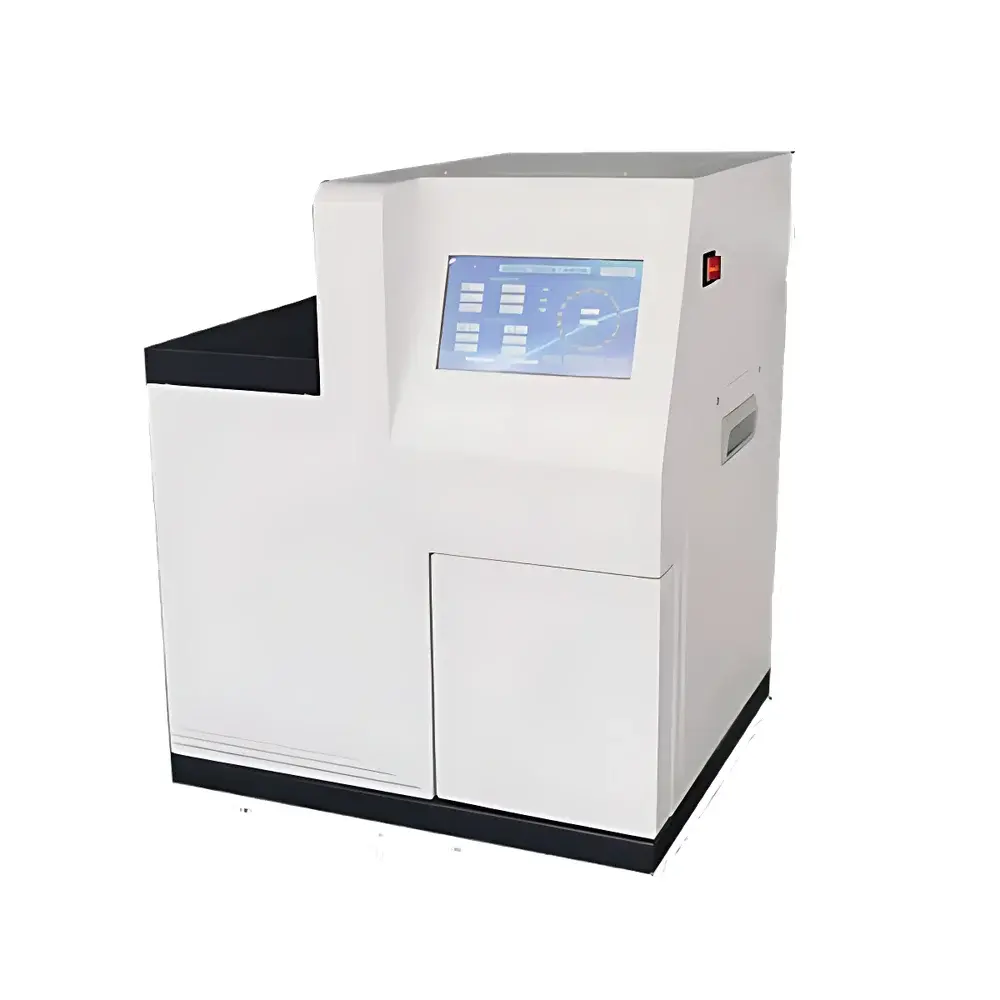
Beifen Sanpu AHSPlus Automated Static Headspace Sampler
| Brand | Beifen Sanpu |
|---|---|
| Origin | Beijing, China |
| Manufacturer Type | Direct Manufacturer |
| Instrument Type | Static Headspace Sampler |
| Automation Level | Fully Automatic |
| Sample Vial Heating Range | 40–220 °C |
| Valve Heating Range | 40–220 °C |
| Quantitative Loop Volume | 1 mL |
| Vial Capacity | 20 positions |
| Vial Size | 10 mL |
Overview
The Beifen Sanpu AHSPlus Automated Static Headspace Sampler is an engineered solution for precise, reproducible extraction and transfer of volatile organic compounds (VOCs) from liquid or solid matrices into gas chromatography (GC) systems. Based on the principle of static headspace equilibrium—where analytes partition between a sealed sample phase and its overlying vapor phase—the AHSPlus enables quantitative analysis without solvent interference or matrix-derived contamination. Designed for routine compliance-driven laboratories in environmental, pharmaceutical, food safety, forensic, and industrial quality control applications, it delivers robust performance under GLP/GMP-aligned workflows. Its architecture integrates thermally controlled zones (sample vial oven, valve manifold, and transfer lines), pressure-assisted sampling, and inert flow paths to preserve analyte integrity and minimize carryover. The system operates at atmospheric pressure during injection, ensuring baseline stability and eliminating GC detector drift commonly associated with pressurized introduction methods.
Key Features
- Fully automated operation: sequential heating, equilibration, pressurization, sampling, injection, and post-run purging—all programmable and executed without manual intervention.
- 20-position rotating sample carousel with automatic vial position detection and mechanical fault avoidance; supports 10 mL standard headspace vials (custom sizes including 20 mL, 50 mL, and 100 mL available upon request).
- Triple-zone independent temperature control: sample oven (40–220 °C), six-port valve housing (40–220 °C), and transfer line (40–220 °C); all with ±0.5 °C stability and 0.5% accuracy.
- High-inertness fluidic path: de-activated fused-silica tubing and passivated stainless-steel components throughout the sampling loop, valve, and needle assembly to prevent adsorption or degradation of reactive VOCs.
- Positive-pressure sampling mechanism: eliminates need for carrier gas supply; compatible with ambient-pressure GC inlets and ensures consistent injection volume (1 mL standard loop, optional 0.5/2/5 mL configurations).
- Motor-driven actuation system: no external compressed air or nitrogen required—enhancing lab safety and reducing infrastructure dependencies.
- Integrated EPC (Electronic Pressure Control) module (optional): enables precise regulation of pressurization (0–0.25 MPa, continuously adjustable) and purge flow (0–100 mL/min).
- 7-inch full-color TFT LCD interface with animated workflow guidance; supports both front-panel and USB-connected PC configuration.
Sample Compatibility & Compliance
The AHSPlus accommodates diverse sample types—including aqueous solutions, soils, polymers, pharmaceutical excipients, beverages, and packaging materials—without derivatization or extraction. Its thermal and pressure parameters align with major international headspace-GC method standards, including ASTM D6866 (bio-based content), ISO 11843-3 (detection capability), USP (Residual Solvents), and ICH Q2(R2) (Analytical Procedure Validation). It fully supports regulatory requirements outlined in EPA Methods 502.2, 524.4, 8260D, and 8270E, as well as Chinese national standards GB 5749-2022 (Drinking Water), HJ 642-2013 / HJ 643-2013 (Soil & Solid Waste VOCs), and pharmacopoeial monographs (ChP 2020 Vol. IV, General Chapter 0521). All firmware logs—including method parameters, run timestamps, temperature profiles, and error events—are timestamped and stored for audit readiness per FDA 21 CFR Part 11 (electronic records and signatures).
Software & Data Management
Control and data acquisition are managed via a dedicated Windows-based software suite supporting USB 2.0 communication. Users define multi-step methods—including equilibration time (0–30 min), pressurization duration (0–999 s), sampling time (0–30 min), injection time (0–999 s), and purge cycles—with 1 ms temporal resolution. The software provides real-time monitoring of temperature setpoints, actual readings, valve status, and motor position. Method files include embedded metadata (operator ID, sample ID, instrument serial number) and support version-controlled revision history. Export formats include CSV and XML for LIMS integration. Audit trail functionality records all parameter changes, user logins, and system alerts—enabling full traceability for ISO/IEC 17025 accreditation and internal quality audits.
Applications
- Environmental testing: quantification of chlorinated solvents (e.g., chloroform, carbon tetrachloride), BTEX compounds, and halogenated hydrocarbons in water, soil, and leachate per EPA and HJ-series protocols.
- Pharmaceutical QC: residual solvent analysis in active pharmaceutical ingredients (APIs) and finished dosage forms per USP and ICH Q3C guidelines.
- Food & beverage safety: detection of ethanol, acetaldehyde, and flavor volatiles in wines, spirits, dairy products, and packaged foods.
- Forensic toxicology: blood alcohol concentration (BAC) determination using headspace-GC-FID, compliant with GA/T 842-2009.
- Packaging and polymer analysis: measurement of migration compounds (e.g., toluene, xylene) from food contact materials per SN/T 4068-2014 and YC/T 207-2014.
- Chemical manufacturing: batch release testing of monomers, catalysts, and reaction intermediates where thermal lability precludes direct injection.
FAQ
What sample matrices are compatible with the AHSPlus?
Liquid samples (aqueous, organic, viscous), solids (soils, powders, tablets), and semi-solids (creams, gels) can be analyzed directly—provided they are sealed in standard crimp-top headspace vials.
Does the AHSPlus support method validation per ICH Q2(R2)?
Yes. Its thermal precision (<±0.5 °C), quantitative loop accuracy (RSD <1.0% at 100 ppm ethanol), and electronic audit trail meet key validation criteria for specificity, repeatability, and robustness.
Can the system be integrated with third-party GC instruments?
Yes. It features TTL-level synchronization outputs for triggering GC oven start, detector acquisition, and data system initiation—compatible with Agilent, Thermo Fisher, Shimadzu, PerkinElmer, and国产 GC platforms.
Is remote monitoring or network deployment supported?
While native Ethernet or Wi-Fi is not included, the USB interface allows connection to a local host PC running the control software; virtual network access may be enabled via secure remote desktop solutions compliant with institutional IT policies.
What maintenance intervals are recommended for long-term reliability?
Valve seals and septa should be inspected every 500 runs; transfer lines require annual passivation verification. Firmware updates and calibration checks are advised annually or after critical hardware service events.
Related Products





