
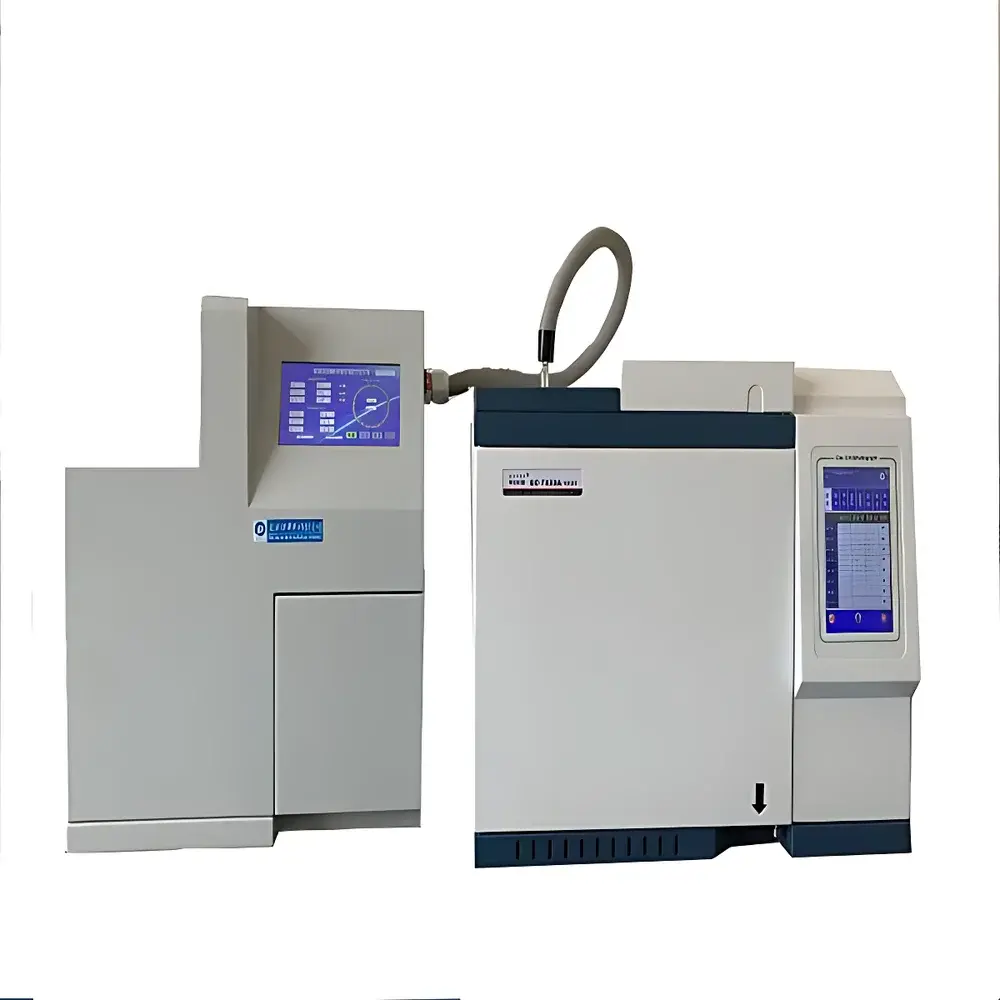
Beifen Sanpu AmHS-20A Plus Automated Static Headspace Sampler
| Brand | Beifen Sanpu |
|---|---|
| Origin | Hebei, China |
| Manufacturer Type | Manufacturer |
| Regional Category | Domestic (China) |
| Model | AmHS-20A Plus |
| Instrument Type | Static Headspace Sampler |
| Automation Level | Fully Automatic |
| Sample Vial Heating Range | Ambient to 200 °C (1 °C increments) |
| Valve Temperature Control Range | 40–220 °C (±1 °C accuracy) |
| Quantitative Loop Volume | 1 mL |
| Vial Capacity | 20 positions |
| Vial Size Compatibility | 10 mL or 20 mL |
Overview
The Beifen Sanpu AmHS-20A Plus is a fully automated static headspace sampler engineered for precise, reproducible extraction and introduction of volatile organic compounds (VOCs) from solid or liquid matrices into gas chromatography (GC) systems. It operates on the principle of phase equilibrium partitioning—where analytes in the sample matrix volatilize into the headspace above the sample under controlled temperature and pressure conditions, followed by quantitative transfer via pressurized gas displacement into the GC inlet. This methodology is widely adopted in pharmaceutical quality control for residual solvent analysis per ICH Q3C guidelines, as well as in environmental, food safety, and forensic applications requiring trace-level VOC quantification.
Key Features
- Fully automated 20-position sample carousel with real-time positional validation and mechanical fault detection to prevent vial collision or misalignment.
- Triple-zone independent temperature control: sample vial oven (ambient–200 °C), six-port valve (40–220 °C), and transfer line (40–220 °C), all with ±0.5 °C stability and 0.5% absolute accuracy.
- Pressurized headspace sampling using adjustable helium or nitrogen carrier gas (0–0.25 MPa), ensuring high sensitivity and baseline stability without column overloading.
- High-inertness flow path: de-activated fused-silica capillary tubing and passivated stainless-steel components minimize adsorption, carryover, and cross-contamination.
- Optimized low-dead-volume configuration: integrated heated valve manifold and thermally insulated loop-to-GC interface preserve analyte integrity during transfer.
- 7-inch full-color graphical LCD interface with animated workflow guidance; supports both front-panel and USB-connected PC-based parameter configuration.
- Programmable timing resolution down to 1 ms for pressurization, equilibration, sampling, injection, and purge cycles—enabling method robustness across diverse matrices.
- Comprehensive self-diagnostic suite including power-on system check, vial presence sensing, thermal error logging, and motion anomaly shutdown protocols.
Sample Compatibility & Compliance
The AmHS-20A Plus accommodates standard 10 mL and 20 mL crimp-top headspace vials (custom sizes available upon request) and supports both liquid and solid samples—including pharmaceutical APIs, excipients, herbal extracts (e.g., Qinglongkusu), polymers, soils, and aqueous environmental specimens. Its design conforms to multiple regulatory frameworks governing residual solvent testing: ICH Q3C (Class 1–3 solvents), USP , EP 2.4.24, and Chinese Pharmacopoeia 2015 Edition Vol. IV (Appendix XIX R). The instrument meets GA/T 842–2009 (forensic toxicology), HJ 642–2013 / HJ 643–2013 (soil/solid waste VOC analysis), and SN/T 4068–2014 (food contact materials), supporting GLP-compliant workflows when paired with 21 CFR Part 11–enabled chromatography data systems.
Software & Data Management
Controlled via N3000 Chromatography Workstation (included) or third-party GC software through TTL/USB synchronization triggers. All method parameters—including vial heating profile, valve/line temperatures, pressurization duration, sampling time, injection volume, and post-injection purge—are fully programmable and stored with timestamped audit trails. The system logs operational status, thermal deviations, and error events in non-volatile memory, facilitating traceability during regulatory audits. Optional EPC (Electronic Pressure Control) module enhances carrier gas consistency and long-term retention time reproducibility—critical for multi-day batch analyses in QC laboratories.
Applications
- Residual solvent quantification in active pharmaceutical ingredients (APIs) and finished dosage forms per ICH Q3C—e.g., benzene, toluene, p-xylene, n-hexane in Qinglongkusu (a hepatoprotective natural compound).
- VOC profiling in environmental samples: groundwater (HJ 810–2016), soil (HJ 736–2015), and indoor air matrices.
- Solvent residue screening in food packaging films (SN/T 4068–2014), tobacco paper (YC/T 207–2014), and regenerated cellulose coatings.
- Quality assurance testing of polymer resins, adhesives, and composite materials where low-molecular-weight extractables impact performance or safety.
- Forensic toxicology screening for volatile intoxicants (e.g., ethanol, acetone, methanol) in biological fluids per GA/T 842–2009.
FAQ
What types of samples can be analyzed using the AmHS-20A Plus?
It accepts liquids, suspensions, powders, tablets, and semi-solids—provided they generate measurable vapor-phase concentrations under defined thermal conditions. Matrix-specific method development is recommended for viscous or highly adsorptive samples.
Is the instrument compatible with GC-MS systems?
Yes. Its inert flow path, precise timing control, and synchronization capability ensure seamless integration with both single-quadrupole and triple-quadrupole mass spectrometers for confirmatory identification and low-level quantification.
How is carryover minimized between injections?
Through programmable high-flow purge cycles (0–100 mL/min), heated transfer line maintenance, and use of ultra-low-bleed de-activated tubing. RSD for 100 ppm ethanol in water is <1.0%, demonstrating analytical repeatability.
Can the system be validated for GMP environments?
Yes. When operated with qualified GC hardware and 21 CFR Part 11–compliant data handling software (e.g., N3000 with audit trail enabled), it supports IQ/OQ/PQ documentation packages required for pharmaceutical manufacturing compliance.
What maintenance is required for routine operation?
Scheduled replacement of septa and O-rings every 200–300 injections; annual calibration verification of temperature sensors and pressure transducers using NIST-traceable standards; quarterly inspection of vial carousel alignment and motor torque response.
Related Products






