
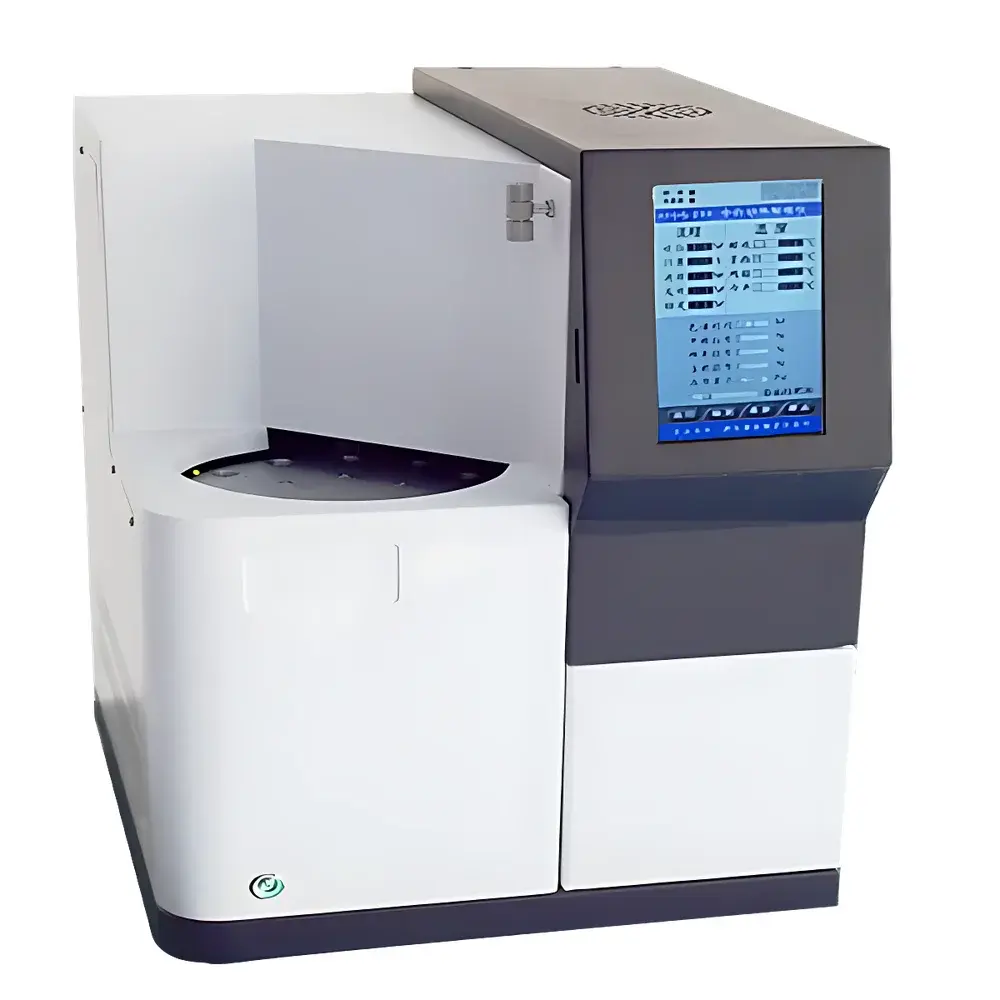
Beifen Sanpu ATDS-12B Fully Automated Dual-Channel Two-Stage Thermal Desorber
| Brand | Beifen Sanpu |
|---|---|
| Origin | Beijing, China |
| Manufacturer Type | Direct Manufacturer |
| Instrument Type | Two-Stage Thermal Desorber |
| Model | ATDS-12B |
| Automation Level | Fully Automated |
| Primary Desorption Temp Range | Ambient to 450 °C |
| Valve Injection Temp Range | Ambient to 260 °C |
| Transfer Line Temp Range | Ambient to 260 °C |
| Cold Trap Temp Range | −35 °C to Ambient |
| Temperature Control Accuracy | < ±0.5 °C |
| Desorption Recovery Rate | >99% (compound-dependent) |
| Sample Capacity | 24 positions (dual 12-position carousel) |
| Cold Trap Cooling Method | Semiconductor-based Electronic Cooling |
| Max Heating Rate | >3000 °C/min (secondary desorption zone) |
| RSD | ≤2.5% (for benzene in 0.05 μg methanol standard) |
| Sample Tube Format | 1/4″ OD × 3.5″ (ASTM D6196-compliant) |
Overview
The Beifen Sanpu ATDS-12B is a fully automated, dual-channel two-stage thermal desorber engineered for high-fidelity, trace-level volatile organic compound (VOC) and semi-volatile organic compound (SVOC) analysis in environmental, industrial hygiene, food safety, and building materials testing laboratories. It operates on the principle of cryofocused two-stage thermal desorption: adsorbed analytes are first thermally released from sorbent tubes under controlled inert gas flow (primary desorption), then refocused onto a cryogenically cooled trap (−35 °C), followed by rapid resistive heating (>3000 °C/min) and transfer into the GC inlet (secondary desorption). This architecture delivers narrow, symmetrical peaks, enhanced sensitivity (sub-ppt detection limits achievable with compatible GC systems), and minimized breakthrough or carryover—critical for compliance with EPA TO-17, ISO 16017-1, and ASTM D6196 methodologies.
Key Features
- Fully automated dual 12-position sample carousel (24 total samples), enabling unattended overnight operation and high-throughput batch processing.
- Independent four-zone temperature control: primary desorption oven, injection valve, transfer line, and secondary desorption/cold trap assembly—each adjustable in 1 °C increments with stability < ±0.5 °C.
- Semiconductor-based electronic cooling for the cold trap, eliminating liquid nitrogen dependency while maintaining consistent −35 °C minimum temperature and precise thermal refocusing.
- Motor-driven six-port switching valve with integrated inert gas purge and automated back-flush functionality to prevent cross-contamination between samples.
- Dedicated simulated sampling module with programmable flow (0–160 mL/min) for direct calibration curve generation using certified gas standards or liquid spiking—fully traceable per ISO/IEC 17025 requirements.
- Time-segmented method programming supporting dry purge, adsorption trapping, primary desorption, cold trap focusing, secondary desorption, GC injection, and post-run valve/line back-flush—all executed without manual intervention.
- USB interface and embedded 7-inch capacitive touchscreen with multi-user authentication, audit trail logging, and bilingual (English/Chinese) UI—designed to support GLP/GMP documentation workflows.
Sample Compatibility & Compliance
The ATDS-12B accepts standard 1/4″ OD × 3.5″ stainless steel or quartz sorbent tubes (e.g., Tenax TA, Carbopack B/C, Carboxen 1000), compatible with both active and passive air sampling configurations. Its pneumatic architecture uses passivated stainless-steel tubing and electropolished valve surfaces to minimize analyte adsorption and catalytic degradation. The instrument supports method validation per EPA Method TO-17 (for ambient and indoor air), ISO 16017-1 (indoor air VOCs), and ASTM D6196 (VOC emissions from building materials). Temperature ramp fidelity, recovery reproducibility (RSD ≤2.5% at 0.05 μg level), and system blank integrity meet internal QC criteria required for ISO/IEC 17025-accredited laboratories. Optional 21 CFR Part 11-compliant software modules are available for regulated pharmaceutical or clinical environmental monitoring applications.
Software & Data Management
Instrument control and method development occur via Windows-based PC software connected via USB 2.0, featuring intuitive drag-and-drop sequence building, real-time status visualization (temperature profiles, valve states, gas flows), and synchronized GC start triggering. Up to 20 user-defined methods—including custom hold times, ramp rates, and purge cycles—can be saved, version-controlled, and recalled with password-protected access levels. System logs record all parameter changes, run completions, error events, and user logins with timestamps—exportable as CSV or PDF for internal audits. Firmware updates are delivered via secure encrypted package; no internet connectivity is required during routine operation to maintain network isolation in regulated environments.
Applications
- Regulatory environmental monitoring: quantification of C2–C12 VOCs in ambient air, workplace breathing zones, and landfill/bioremediation headspace per EPA and EU directives.
- Indoor air quality (IAQ) assessment: formaldehyde, benzene, toluene, xylene (BTX), and terpenes from paints, adhesives, carpets, and composite wood products.
- Food packaging migration studies: residual solvents (e.g., ethyl acetate, isopropanol) and off-gassing compounds from laminates and polymer films.
- Pharmaceutical cleanroom monitoring: low-level solvent residuals and cleaning agent traces on surfaces and in HVAC ducts.
- Forensic and failure analysis: identification of pyrolysis products from fire debris or degraded polymer components.
FAQ
What sorbent tube formats does the ATDS-12B support?
It accepts standard 1/4″ OD × 3.5″ (6.35 mm × 89 mm) tubes compliant with ASTM D6196 and EPA TO-17 specifications—including single-, dual-, and triple-bed configurations.
Can the instrument be integrated with third-party GC or GC-MS systems?
Yes. It includes universal hardware interfaces (TTL/relay triggers) and software protocols to synchronize with Agilent, Thermo Fisher, Shimadzu, and PerkinElmer GC platforms—including auto-start and data correlation via vendor-neutral ASCII method export.
Is liquid nitrogen required for cold trapping?
No. The semiconductor-based electronic cooling system achieves and maintains −35 °C without consumables, reducing operational cost and logistical complexity.
How is carryover mitigated between samples?
Automated high-flow inert gas back-flush of the six-port valve and transfer line occurs after each injection, validated with blank tube runs showing <0.5% carryover for target VOCs at 100 ng levels.
Does the system support 21 CFR Part 11 compliance?
The base configuration includes electronic signatures, audit trails, and role-based access control. Full Part 11 compliance requires optional validated software extension and documented IQ/OQ/PQ protocols—available upon request.





