
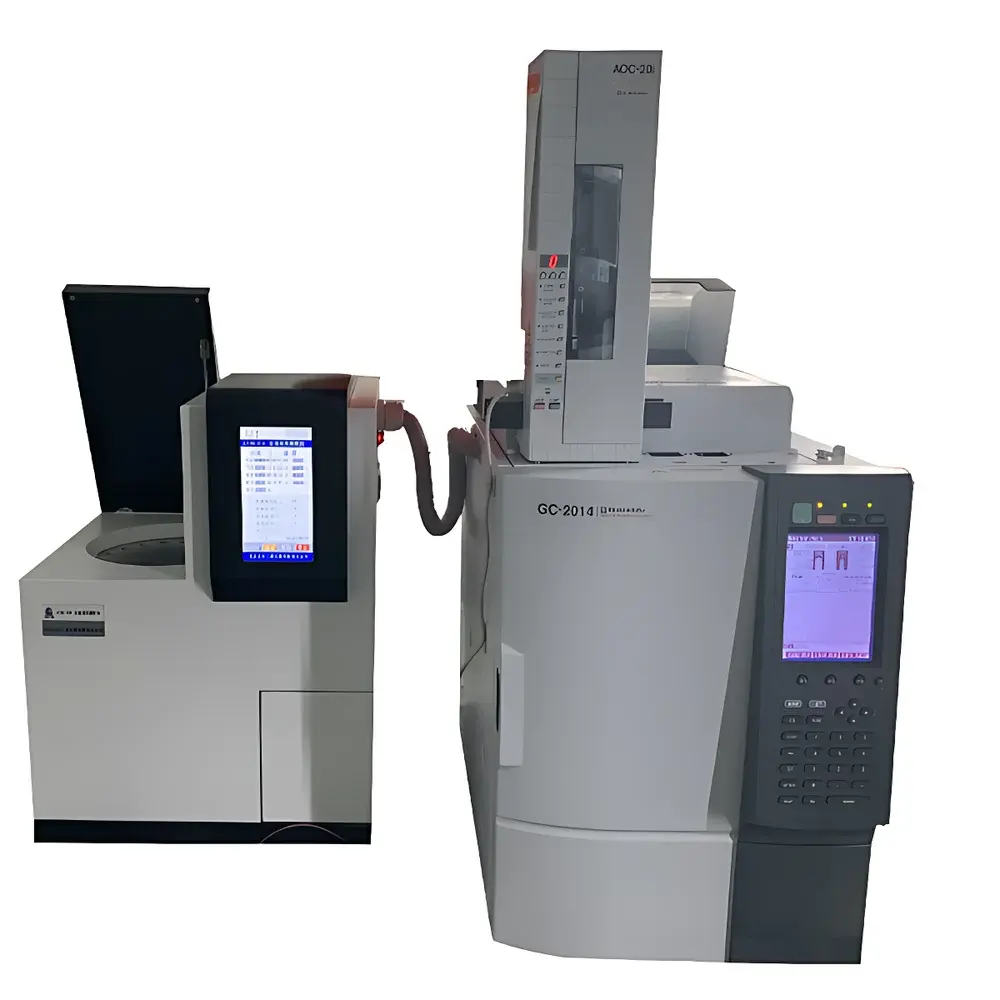
Beifen Sanpu ATDS-20A Automated Dual-Stage Thermal Desorber for VOC and BTEX Analysis per HJ/583–2010
| Brand | Beifen Sanpu |
|---|---|
| Origin | Beijing, China |
| Manufacturer Type | OEM Manufacturer |
| Product Category | Domestic |
| Model | ATDS-20A |
| Instrument Type | Dual-stage thermal desorber |
| Primary Desorption Temp Range | Ambient to 400 °C |
| Secondary Desorption Temp Range | 100–400 °C |
| Cryo-Focusing Trap Temp Range | Down to −35 °C |
| Desorption Recovery Rate | >90% |
| Sample Capacity | 20 tubes (¼″ × 3.5″) |
Overview
The Beifen Sanpu ATDS-20A is an automated dual-stage thermal desorber engineered for high-fidelity quantification of volatile organic compounds (VOCs), particularly benzene, toluene, ethylbenzene, and xylenes (BTEX), in ambient and indoor air matrices per China’s national standard HJ/583–2010. It implements a two-step thermally assisted desorption process: first, analytes are thermally released from sorbent tubes (e.g., Tenax TA); second, vapors undergo cryogenic focusing at ≤−35 °C followed by rapid, high-rate thermal desorption (>3000 °C/min) into the GC inlet. This architecture minimizes band broadening, enhances sensitivity, and ensures reproducible peak shape—critical for compliance with regulatory methods requiring sub-ppbv detection limits and strict RSD specifications (≤2.5% at 0.05 μg benzene in methanol). The system operates as a standalone module or integrates seamlessly with any GC or GC-MS platform via standardized pneumatic and electrical interfaces, supporting both FID and mass-selective detection.
Key Features
- Automated 20-position sample carousel with motor-driven six-port valve actuation and self-calibrating tray positioning
- Independent temperature control across four zones: primary desorption furnace (ambient–450 °C), secondary desorption chamber (ambient–450 °C), transfer line (ambient–300 °C), and valve oven (ambient–300 °C), all adjustable in 1 °C increments
- Integrated electronic cooling trap capable of sustained operation down to −35 °C, enabling sharp, narrow-band injection for improved chromatographic resolution
- Programmable sequence logic supporting full unattended operation: tube activation, sampling simulation, desorption, cold trapping, flash desorption, GC trigger synchronization, and post-run backflush cleaning
- Dual-mode compatibility: configurable as single-stage or dual-stage (ambient or cryogenic) thermal desorption unit
- Backflush-enabled transfer line and valve with adjustable purge flow (0–100 mL/min) to eliminate carryover between samples
- Modular interface design compatible with major GC and GC-MS systems—including Agilent, Thermo Fisher, Shimadzu, and domestic platforms—via dedicated hardware adapters
- Embedded touchscreen HMI with real-time status animation, method storage, and audit-ready event logging
Sample Compatibility & Compliance
The ATDS-20A accepts standard ¼″ OD × 3.5″ stainless steel or quartz sorbent tubes conforming to ASTM D6196 and ISO 16017-1 dimensional and pressure-drop specifications. It supports widely used adsorbents including Tenax TA, Carbopack B/C, and multi-bed configurations for extended volatility range coverage (C2–C16). The instrument meets analytical requirements outlined in multiple Chinese environmental standards, including HJ/583–2010 (BTEX in ambient air), HJ/644–2013 (VOCs by TD-GC-MS), HJ/T 400–2007 (in-vehicle VOCs), GB/T 18883–2002 (indoor air quality), and HJ 734–2014 (stack emissions). Its temperature stability (90% for BTEX), and precision (RSD ≤2.5%) align with GLP-aligned laboratory validation protocols and support data integrity under CNAS and CMA accreditation frameworks.
Software & Data Management
Control and method development are performed via the embedded microprocessor-based firmware, supporting time-segmented temperature ramping, valve timing, and GC synchronization signals (TTL or contact closure). The system logs all operational events—including temperature setpoints, actual readings, valve actuations, and error codes—with timestamping for traceability. While no proprietary PC software is required for basic operation, optional BF-2002 chromatography data system (CDS) integration enables direct method transfer, peak integration, calibration curve generation (external standard or internal standard), and report export compliant with ISO/IEC 17025 documentation requirements. Audit trail functionality satisfies minimum expectations for regulated environments; full 21 CFR Part 11 compliance requires deployment with validated third-party CDS platforms.
Applications
The ATDS-20A serves laboratories engaged in environmental monitoring, occupational health assessment, building material emission testing, and indoor air quality (IAQ) certification. Typical use cases include: quantitative analysis of BTEX in urban ambient air networks; screening of formaldehyde and carbonyls in vehicle cabins per HJ/T 400–2007; verification of TVOC compliance against GB/T 18883–2002; and source identification of aromatic hydrocarbons in industrial stack emissions per HJ 734–2014. Its dual-stage architecture also supports method development for semi-volatile compounds (e.g., naphthalene, biphenyl) when paired with low-bleed capillary columns (e.g., 50-m DB-5ms) and high-sensitivity detectors.
FAQ
What sorbent tubes are compatible with the ATDS-20A?
Standard ¼″ × 3.5″ stainless steel or quartz tubes packed with Tenax TA, Carbopack B, Carbopack C, or multi-bed sorbents (e.g., Carbopack X + Carbosieve SIII) are supported. Tube resistance must comply with HJ/583–2010 specifications (≤3.5 kPa at 100 mL/min).
Can the ATDS-20A be used with GC-MS systems?
Yes—the instrument provides precise timing signals and inert, heated transfer lines suitable for coupling with benchtop and triple-quadrupole GC-MS platforms. Cold trap focusing improves sensitivity for trace-level SVOCs.
Is method validation support available?
Beifen Sanpu supplies application notes, calibration protocols, and typical performance data (recovery, RSD, LOD) aligned with HJ/583–2010. Full method validation must be conducted in-house per ISO/IEC 17025 guidelines.
Does the system include tube activation capability?
Yes—integrated tube conditioning mode enables automated thermal purging (up to 450 °C) under controlled carrier gas flow, eliminating residual contaminants prior to sampling.
What maintenance is required for long-term reliability?
Routine tasks include periodic O-ring replacement in the valve manifold, trap cleaning every 200 runs, and verification of temperature calibration using NIST-traceable reference thermometers.






