
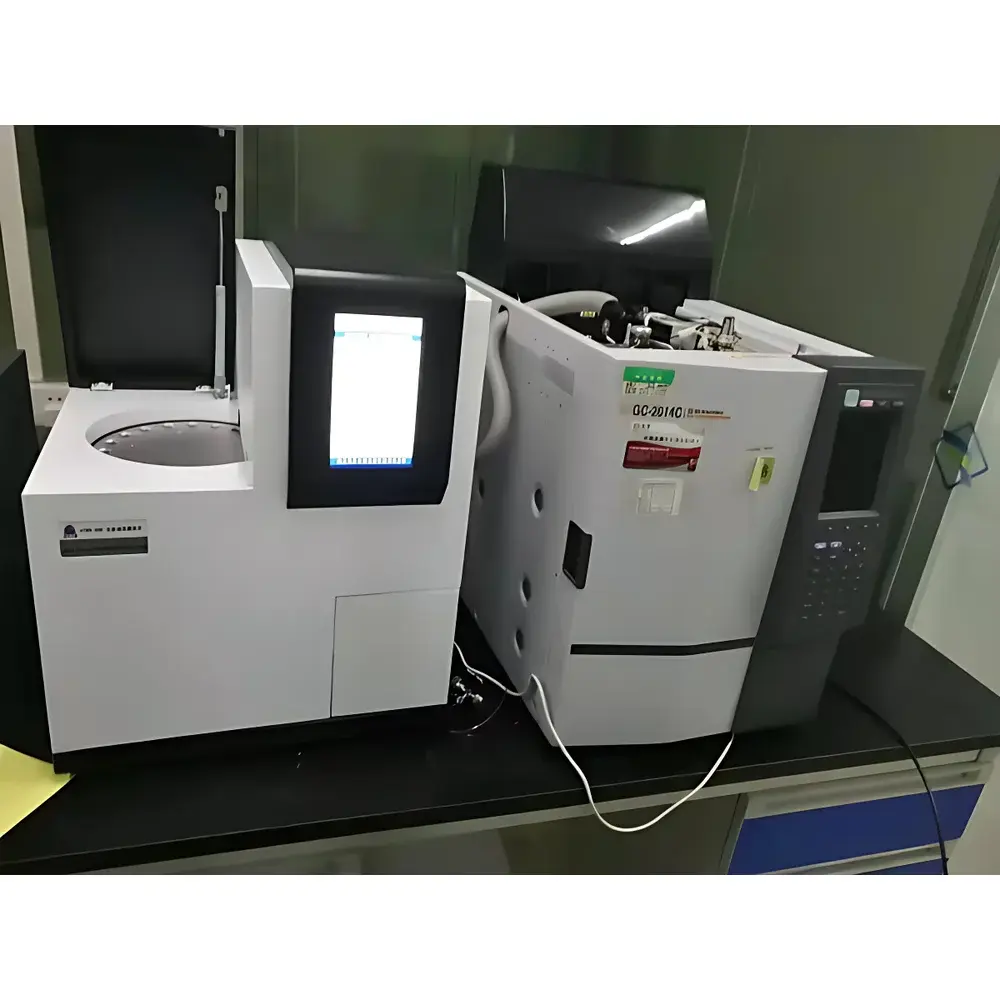
Beifen Sanpu ATDS-20A Automated Two-Stage Thermal Desorber for TVOC Analysis in Ambient Air
| Brand | Beifen Sanpu |
|---|---|
| Origin | Beijing, China |
| Manufacturer Type | Direct Manufacturer |
| Instrument Type | Two-Stage Thermal Desorber |
| Primary Desorption Temperature Range | Ambient to 400 °C |
| Secondary Desorption Temperature Range | 100–400 °C |
| Cold Trap Temperature Range | Down to −35 °C |
| Desorption Recovery Rate | >90% |
| Sample Capacity | 20 Adsorption Tubes |
Overview
The Beifen Sanpu ATDS-20A is an automated two-stage thermal desorber engineered for high-fidelity quantitative analysis of Total Volatile Organic Compounds (TVOC) in ambient and indoor air matrices. It operates on the principle of sequential thermal desorption: volatile organics are first collected onto sorbent tubes (e.g., Tenax TA), then subjected to primary desorption at controlled temperature, followed by cryo-focusing in a low-temperature cold trap (down to −35 °C), and finally rapid secondary desorption directly into the injection port of a gas chromatograph (GC) or GC–MS system. This two-stage architecture significantly enhances analyte recovery (>90%), improves peak shape symmetry, reduces breakthrough risk for early-eluting compounds, and enables trace-level detection (sub-ppbv) without solvent dilution or manual intervention. The instrument complies with key regulatory methodologies including GB/T 18883–2002 (Indoor Air Quality Standard), HJ 644–2013 (Environmental Air – Determination of Volatile Organic Compounds by Adsorption–Thermal Desorption–Gas Chromatography–Mass Spectrometry), and aligns with ASTM D6196–22 (Standard Practice for Selecting Analytical Methods for Monitoring Airborne Volatile Organic Compounds). Its design prioritizes reproducibility, method transferability, and compatibility with both domestic and international GC platforms.
Key Features
- Automated 20-position sample carousel with precise tube indexing and pneumatic sealing for leak-free operation
- Independent dual-zone heating control: primary desorption oven (ambient to 400 °C, ±0.5 °C accuracy) and secondary desorption zone (100–400 °C, ramp rate up to 80 °C/s)
- Cryo-trap module with programmable cooling to −35 °C using Peltier technology; no liquid nitrogen required
- Integrated carrier gas flow control (N2, He, or Ar) with mass flow sensors and real-time pressure monitoring
- Full method programming via front-panel interface or optional PC-based software—supports multi-step temperature ramps, dwell times, and valve sequencing
- Robust mechanical architecture with corrosion-resistant internal surfaces and self-diagnostic firmware for uptime assurance
Sample Compatibility & Compliance
The ATDS-20A accepts standard 6 mm OD × 89 mm stainless steel or quartz sorbent tubes packed with Tenax TA, Carbopack B/C, or mixed-bed media. It supports both single-stage and two-stage desorption protocols per user-defined method requirements. Tube resistance is verified to meet GB/T 18883–2002 specifications (<2.5 kPa at 100 mL/min). The system is validated for use in GLP-compliant laboratories and supports audit-ready data integrity through time-stamped event logs and parameter change tracking. While not inherently 21 CFR Part 11 compliant, its operation can be integrated into validated workflows when paired with compliant chromatography data systems (CDS) that enforce electronic signatures and audit trails.
Software & Data Management
The ATDS-20A operates stand-alone or synchronizes with third-party GC/MS data systems (e.g., Agilent OpenLab, Thermo Chromeleon, or Shimadzu GCsolution) via TTL or RS-232 triggers. Method files include full thermal profiles, gas flow setpoints, valve timing, and cold trap equilibration parameters. All operational events—including tube loading status, temperature deviations, pressure anomalies, and desorption completion—are recorded in non-volatile memory with UTC timestamps. Exportable CSV logs facilitate trend analysis, preventive maintenance scheduling, and regulatory documentation. Optional BF-2002 chromatography workstation integration provides unified acquisition, calibration curve generation (external standard or internal standard), and reporting per GB/T 18883 Annex B.
Applications
- Quantitative TVOC profiling in residential, office, and school indoor environments per GB/T 18883–2002
- Workplace exposure assessment for benzene, toluene, ethylbenzene, xylenes (BTEX), styrene, ethyl acetate, and undecane
- Method development and validation for EPA TO-17 and ISO 16017-1 compliant monitoring programs
- Quality control of building materials, adhesives, coatings, and furniture emissions
- Support for source apportionment studies when coupled with GC×GC–TOFMS or high-resolution mass spectrometry
FAQ
Can the ATDS-20A be used with GC–MS systems?
Yes—it delivers sharp, focused analyte bands compatible with electron ionization (EI) sources and supports both full-scan and SIM acquisition modes.
Does it support internal standard addition during desorption?
No—internal standards must be spiked prior to sampling or introduced via a separate inlet; the ATDS-20A does not feature in-line spiking capability.
What maintenance intervals are recommended for the cold trap?
Peltier elements require no consumables; annual verification of cooling performance and trap cleanliness (via visual inspection and blank run evaluation) is advised.
Is tube conditioning supported onboard?
The ATDS-20A does not include tube aging functionality; users should employ a dedicated tube conditioner (e.g., Beifen Sanpu TD-20) prior to first use.
How is carryover minimized between samples?
Systematic bake-out cycles (up to 400 °C), inert gas purging, and programmable post-desorption hold times reduce residual contamination to <0.1% relative to previous injection.
Related Products





