
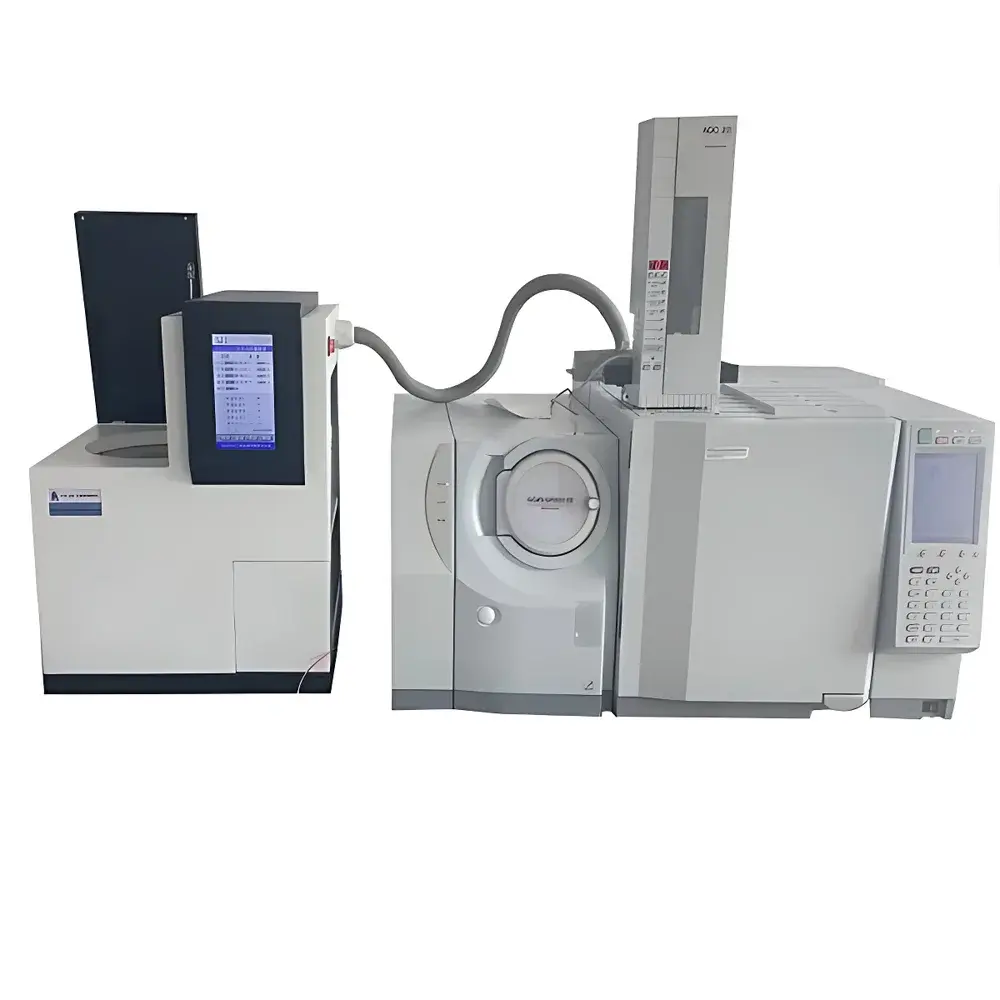
Beifen Sanpu ATDS-20A Automated Two-Stage Thermal Desorber for VOC Analysis in Ambient Air
| Brand | Beifen Sanpu |
|---|---|
| Origin | Beijing, China |
| Manufacturer Type | Direct Manufacturer |
| Instrument Type | Two-Stage Thermal Desorber |
| Primary Desorption Temperature Range | Ambient to 400 °C |
| Secondary Desorption Temperature Range | 100–400 °C |
| Cold Trap Temperature Range | Down to −35 °C |
| Desorption Recovery Rate | >90% |
| Sample Capacity | 20 adsorption tubes |
Overview
The Beifen Sanpu ATDS-20A is an automated two-stage thermal desorber engineered for high-fidelity quantification of volatile organic compounds (VOCs) and total volatile organic compounds (TVOCs) in ambient and indoor air matrices. It operates on the principle of sequential thermal desorption: first, analytes are trapped on a sorbent tube (typically Tenax TA or equivalent multi-bed media) during active or passive air sampling; second, the tube undergoes primary heating to release volatiles into a cryogenically focused cold trap; third, the cold trap is rapidly heated to inject a narrow, solvent-free analyte band onto a capillary gas chromatograph (GC) or GC–MS system. This two-stage architecture minimizes breakthrough, improves peak shape, enhances sensitivity (sub-ppbv detection achievable with optimized GC/FID or GC/MS), and ensures reproducible recovery across C2–C16 hydrocarbons and oxygenates — critical for compliance with ISO 16000-6, EPA TO-17, and GB/T 18883–2002 methodologies.
Key Features
- Automated 20-position sample carousel with programmable sequence control and status monitoring via integrated touchscreen interface
- Independent temperature regulation for primary desorption oven, secondary focusing trap, and transfer lines — all with ±0.5 °C stability
- Cryogenic cold trap capable of sustained operation at −35 °C using thermoelectric cooling (no liquid nitrogen required)
- Optimized flow path design minimizing dead volume and ensuring inert, low-bleed carrier gas delivery (helium or nitrogen)
- Integrated leak-check function and real-time pressure monitoring for method validation and QA/QC traceability
- Modular architecture enabling seamless integration with domestic and international GC and GC–MS platforms (e.g., Agilent, Shimadzu, Thermo Fisher, and Beifen Sanpu GC-3420A)
Sample Compatibility & Compliance
The ATDS-20A is validated for use with standard 6 mm OD stainless-steel or quartz sorbent tubes packed with Tenax TA, Carbopack B/C, or custom multi-bed configurations. It fully supports EPA Method TO-17 requirements for ambient air VOC analysis, including specified flow rates (0.1–1.5 L/min), sampling volumes (1–10 L), and desorption parameters. The instrument meets the mechanical and thermal specifications outlined in ISO 16000-6 for indoor air TVOC determination and aligns with GB/T 18883–2002’s retention time window definition (n-hexane to n-hexadecane). All thermal zones are calibrated per ISO/IEC 17025 guidelines, and system suitability tests (SST) — including recovery checks using certified VOC standards (e.g., benzene, toluene, ethylbenzene, xylenes, styrene) — are supported by built-in protocol templates.
Software & Data Management
Control and data acquisition are managed through BF-2002 Chromatography Data System (CDS) software, compliant with GLP and 21 CFR Part 11 requirements when deployed in regulated environments. The software provides full audit trail functionality, electronic signatures, user access levels, and method versioning. It supports automatic calibration curve generation (linear/non-linear), peak integration using retention time locking, and reporting aligned with ISO 17025 documentation standards. Raw desorption event logs — including temperature ramp profiles, valve actuation timestamps, and cold trap cooldown/heating cycles — are stored alongside chromatographic data for full forensic traceability.
Applications
The ATDS-20A serves as a core component in environmental monitoring laboratories conducting routine TVOC screening in residential, commercial, and industrial settings. It enables precise measurement of target compounds including benzene, toluene, ethylbenzene, xylenes (BTEX), styrene, ethyl acetate, and undecane — as recommended by WHO (1989) and GB/T 18883 for surrogate-based quantification. Beyond regulatory air quality testing, it supports occupational hygiene assessments (per OSHA/NIOSH methods), emissions source profiling, indoor material emission testing (e.g., carpets, adhesives, paints), and method development for emerging contaminants such as halogenated VOCs and oxygenated derivatives. Its robustness and repeatability make it suitable for long-term unattended operation in central laboratory or mobile monitoring configurations.
FAQ
Can the ATDS-20A be used with both FID and MS detectors?
Yes — its carrier gas compatibility (He, N2, H2) and low-bleed transfer line design ensure optimal performance with flame ionization (FID), mass spectrometric (MS), and electron capture (ECD) detectors.
Does the instrument support EPA TO-17-compliant cold trapping?
Yes — the −35 °C cold trap meets TO-17’s minimum −20 °C requirement and provides enhanced focusing for early-eluting compounds (e.g., vinyl chloride, acetaldehyde).
Is sorbent tube conditioning supported onboard?
No — tube aging and blank verification require external equipment (e.g., dedicated tube conditioner); however, the ATDS-20A includes purge protocols to verify post-desorption carryover.
What is the maximum allowable backpressure during desorption?
The system maintains stable flow up to 150 kPa inlet pressure, accommodating high-resistance multi-bed tubes per ISO 16000-6 specifications.
How is calibration verification performed?
Users perform daily system suitability tests using certified gas-phase standards; recovery, precision (%RSD), and retention time stability are automatically calculated and logged within BF-2002 CDS.




