
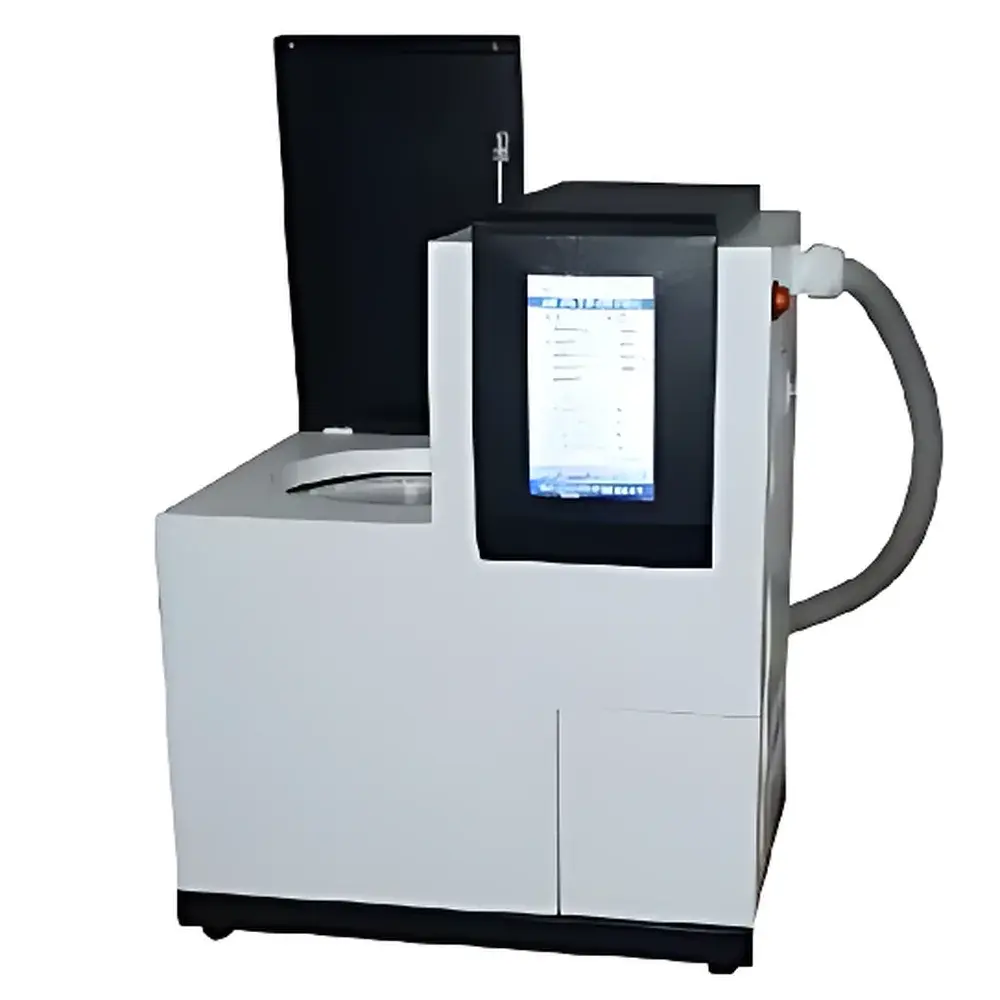
Beifen Sanpu ATDS-20A Cryogenic Cold Trap Dual-Stage Automated Thermal Desorber
| Brand | Beifen Sanpu |
|---|---|
| Origin | Beijing, China |
| Manufacturer Type | Direct Manufacturer |
| Instrument Type | Dual-Stage Thermal Desorber |
| Primary Desorption Temp Range | Ambient to 450 °C |
| Secondary Desorption Temp Range | 100–450 °C |
| Cold Trap Temp Range | −35 °C to Ambient |
| Desorption Recovery Rate | >99% (compound-dependent) |
| Sample Capacity | 20 positions |
| Temperature Control Precision | ±0.5 °C |
| RSD | ≤2.5% (benzene at 0.05 μg) |
| Sample Tube Format | 1/4″ OD × 3.5″ (ASTM D6196-compliant) |
Overview
The Beifen Sanpu ATDS-20A Cryogenic Cold Trap Dual-Stage Automated Thermal Desorber is a precision-engineered sample introduction system designed for trace-level volatile organic compound (VOC) and semi-volatile organic compound (SVOC) analysis in environmental, industrial hygiene, and materials testing laboratories. It implements a two-stage thermal desorption process coupled with cryogenic focusing to maximize analyte sensitivity, chromatographic peak integrity, and method robustness. In the first stage, adsorbed analytes are thermally released from sorbent tubes under controlled inert gas flow; the evolved vapors are then refocused in a cryogenically cooled trap (down to −35 °C) before rapid thermal desorption into the GC or GC-MS inlet. This dual-stage architecture—combined with independent temperature control of the primary desorption zone, secondary desorption chamber, transfer line, and six-port valve—ensures quantitative transfer of thermally labile and high-boiling compounds (up to ~350 °C boiling point), while minimizing breakthrough, carryover, and degradation.
Key Features
- 20-position fully automated sample carousel enabling unattended overnight operation and high-throughput batch processing
- Independent four-zone temperature control: primary desorption furnace (ambient to 450 °C), secondary desorption chamber (100–450 °C), transfer line (ambient to 300 °C), and six-port valve (ambient to 300 °C), all adjustable in 1 °C increments
- Integrated Peltier-based cryogenic cold trap with precise regulation from −35 °C to ambient, eliminating liquid nitrogen dependency while ensuring narrow band focusing
- Motor-driven six-port valve with programmable timing for desorption, purge, re-desorption, injection, and back-flush cycles
- Automated tube activation protocol with configurable heating profiles and carrier gas flow (0–160 mL/min)
- Onboard calibration mode simulating field sampling for direct generation of calibration curves without external hardware
- Back-flush capability for transfer line and valve (0–100 mL/min, continuously adjustable) to prevent cross-contamination between samples
- Low-voltage (24 V DC) heating for transfer line, enhancing operational safety and EMI immunity
- Touchscreen HMI with real-time status animation, method storage, and audit-ready event logging
- GC synchronization interface supporting both hardware trigger (TTL) and software initiation via external chromatography data systems
Sample Compatibility & Compliance
The ATDS-20A accepts standard 1/4″ OD × 3.5″ stainless steel or quartz sorbent tubes compliant with ASTM D6196, ISO 16017-1, and US EPA TO-17 specifications. Its design supports Tenax TA, Carbopack B/C, Carboxen, and multi-bed sorbent configurations. The instrument meets performance criteria outlined in key regulatory methods including HJ 644–2013 (ambient air VOCs by TD-GC/MS), HJ 583–2010 (benzene series in ambient air), HJ 734–2014 (stationary source VOCs), GB/T 18883–2002 (indoor air quality), and GB 50325–2020 (civil building indoor pollution control). Temperature stability (±0.5 °C) and repeatability (RSD ≤2.5% for benzene at 0.05 μg) satisfy GLP and ISO/IEC 17025 validation requirements. All thermal zones feature redundant overtemperature protection and self-diagnostic startup routines.
Software & Data Management
The embedded firmware supports full method programming—including desorption times (0–60 min), cold trap hold time, focus duration, injection duration, and back-flush parameters—with up to 100 user-defined methods stored locally. Event timestamps, temperature profiles, valve actuation logs, and error codes are recorded in CSV format for traceability. The system exports metadata compatible with LIMS integration and supports 21 CFR Part 11–compliant electronic signatures when paired with validated third-party chromatography data systems (e.g., Thermo Chromeleon, Agilent OpenLab CDS, Shimadzu LabSolutions). Audit trails capture operator ID, method changes, and critical parameter modifications.
Applications
The ATDS-20A is routinely deployed in accredited environmental labs for monitoring regulated VOCs in ambient air, indoor air, vehicle cabin emissions, and industrial stack gases. It supports method development for emerging contaminants such as oxygenated VOCs (aldehydes, ketones), halogenated solvents, and polar SVOCs in polymer leachates and building materials. Its low-bleed thermal architecture and inert quartz-lined transfer option (optional) enable reliable analysis of reactive species including formaldehyde, acetaldehyde, and isocyanates. Applications extend to forensic toxicology (headspace desorption from evidence swabs), pharmaceutical residual solvent testing (ICH Q3C), and packaging migration studies per ISO 11843.
FAQ
Does the ATDS-20A require liquid nitrogen for cold trapping?
No—it uses solid-state Peltier cooling to achieve −35 °C, eliminating cryogen handling, storage, and associated safety protocols.
Can the instrument be validated for ISO/IEC 17025 compliance?
Yes—its temperature accuracy (±0.5 °C), recovery (>99%), and repeatability (RSD ≤2.5%) meet minimum performance thresholds for method validation; IQ/OQ/PQ documentation templates are available upon request.
Is remote operation supported?
The unit includes Ethernet and RS-232 interfaces for networked control and status monitoring via TCP/IP commands; no proprietary driver installation is required.
What sorbent tube formats are compatible?
Standard 1/4″ OD × 3.5″ tubes per ASTM D6196; custom-length tubes may be accommodated with optional tray adapters.
How is carryover mitigated between samples?
Through programmable back-flush of the transfer line and six-port valve using inert gas, plus high-temperature bake-out cycles post-analysis.






