
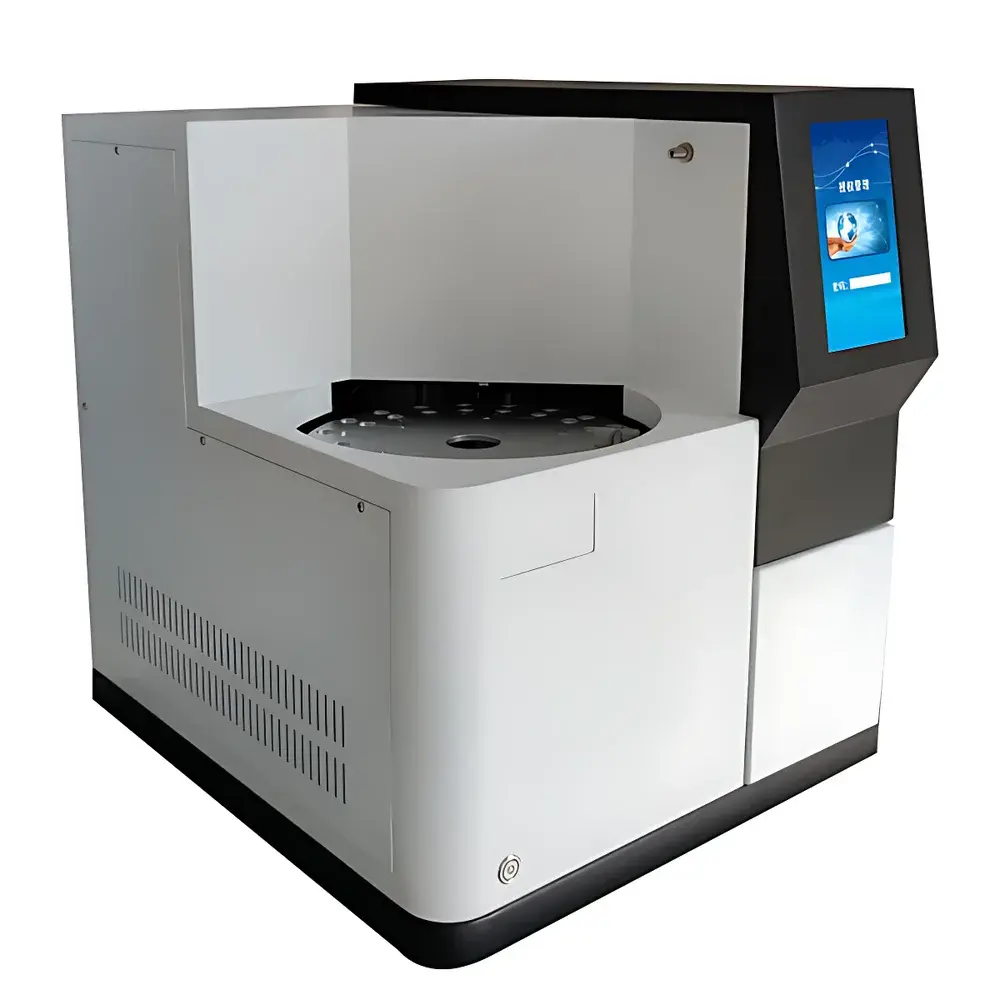
Beifen Sanpu ATDS-20B Dual-Channel Automated Two-Stage Thermal Desorber
| Brand | Beifen Sanpu |
|---|---|
| Origin | Hebei, China |
| Manufacturer Type | Manufacturer |
| Product Category | Domestic |
| Model | ATDS-20B |
| Instrument Type | Two-Stage Thermal Desorber / Thermal Desorber |
| Primary Desorption Temperature Range | 100–450 °C |
| Secondary Desorption (Focusing) Temperature Range | Room Temp–450 °C |
| Cryo-Focusing Trap Temperature Range | –35 °C to Room Temp |
| Desorption Recovery Rate | >99% (compound-dependent) |
| Sample Capacity | 40 positions (dual 20-position carousel) |
| Carrier Gas Flow Control | 0–100 mL/min (purge/flush), 0–160 mL/min (calibration/sampling simulation) |
| Temperature Accuracy | < ±0.5 °C |
| RSD | ≤2.5% (for 0.05 μg benzene in methanol) |
| Heating Ramp Rate | >3000 °C/min (secondary desorption zone) |
| Sample Tube Format | 1/4″ OD × 3.5″ (ASTM D6196-compliant) |
| Interface | Motor-driven 6-port valve, GC-compatible universal inlet adapter |
| Dimensions | 350 × 450 × 550 mm (W × D × H) |
| Weight | ~40 kg |
Overview
The Beifen Sanpu ATDS-20B Dual-Channel Automated Two-Stage Thermal Desorber is an engineered solution for trace-level volatile organic compound (VOC) and semi-volatile organic compound (SVOC) analysis in environmental, occupational health, building materials, and indoor air quality applications. It implements a two-stage thermal desorption process—primary desorption from sorbent tubes followed by cryogenic focusing and secondary desorption—enabling quantitative transfer of analytes into gas chromatography (GC) or GC–MS systems with high fidelity and minimal band broadening. The instrument adheres to core principles of thermal desorption physics: controlled heating kinetics, inert flow-path architecture, and precise temperature zoning to preserve analyte integrity across the entire thermal cycle. Designed for compliance with major regulatory frameworks—including HJ 644–2013, HJ 583–2010, HJ 734–2014, GB/T 18883–2020, and GB 50325–2020—the ATDS-20B delivers reproducible performance required for accredited laboratories operating under GLP or ISO/IEC 17025 conditions.
Key Features
- Dual independent 20-position sample carousels (40 total), enabling unattended sequential analysis without manual intervention
- Four-zone independent temperature control: primary desorption oven (RT–450 °C), secondary desorption/focusing zone (RT–450 °C), valve manifold (RT–300 °C), and transfer line (RT–300 °C), all with 1 °C resolution and <±0.5 °C stability
- Integrated Peltier-based cryo-focusing trap operating from –35 °C to ambient, ensuring sharp, narrow chromatographic peaks via rapid thermal release (>3000 °C/min ramp)
- Automated method-driven workflow: dry purge, adsorption simulation, primary desorption, cold trap focusing, secondary desorption, GC injection, and post-run valve/line back-flush—all programmable via time-segmented sequences
- Inert, passivated stainless-steel gas pathways and motorized 6-port switching valve minimize carryover; automated reverse-flow cleaning (0–100 mL/min) between samples prevents cross-contamination
- USB-connected PC software interface with full method editor, real-time status visualization, audit-ready event logging, user role management, and bilingual (English/Chinese) UI support
- Calibration-ready functionality: integrated sampling simulation module (0–160 mL/min adjustable flow) for direct generation of calibration curves using standard gases or permeation tubes
- Universal GC interface compatibility—including dedicated adapters for Agilent, Thermo Fisher, Shimadzu, and PerkinElmer instruments—ensures seamless integration without signal timing mismatch or pressure imbalance
- Over 20 pre-configurable method templates, editable and password-protected; supports timestamped method versioning and electronic signature for 21 CFR Part 11 readiness
Sample Compatibility & Compliance
The ATDS-20B accepts standard 1/4″ OD × 3.5″ stainless-steel or quartz sorbent tubes compliant with ASTM D6196 and ISO 16017-1. It supports multi-bed configurations (e.g., Tenax TA, Carbopack B/C, Carboxen 1000) for broad VOC–SVOC coverage up to ~350 °C boiling point. All thermal zones meet IEC 61000-4 electromagnetic compatibility standards and operate within Class II electrical safety specifications. The system’s firmware enforces parameter interlocks (e.g., trap temperature must be stabilized before secondary desorption initiation), satisfying internal QA/QC requirements for method validation per ISO/IEC 17025 Clause 7.2.2. Data integrity is preserved through local encrypted storage of raw method files, run logs, and calibration records—traceable to operator ID, timestamp, and instrument serial number.
Software & Data Management
Control and acquisition are managed via Windows-based desktop software communicating over USB 2.0. The application provides full method development with multi-segment temperature ramps, flow profiles, valve actuation timing, and GC trigger synchronization (TTL or contact closure). All user actions—including method edits, run starts/stops, and parameter overrides—are logged in an immutable, tamper-evident audit trail compliant with FDA 21 CFR Part 11 Annex 11 expectations. Export formats include CSV (peak area/time), PDF reports (with embedded chromatograms), and XML for LIMS integration. Remote monitoring is supported via secure VNC-enabled access (customer-configured), while data backups adhere to NIST SP 800-88 guidelines for media sanitization and retention.
Applications
- Environmental monitoring: ambient air, stack emissions, and soil vapor analysis per HJ 644–2013, HJ 734–2014, and EPA TO-17 equivalents
- Indoor air quality assessment: formaldehyde, benzene, toluene, ethylbenzene, xylenes (BTEX), and C2–C12 aliphatics per GB/T 18883–2020 and GB 50325–2020
- Building material emission testing: carpets, adhesives, paints, and composite wood products under HJ/T 400–2007
- Automotive cabin air screening: aldehydes, ketones, and aromatic hydrocarbons per ISO 12219-1
- Workplace exposure evaluation: OSHA Method 52, NIOSH Methods 1501/1600 series
- Pharmaceutical packaging leachables: residual solvents in blister foils and polymer containers per USP <467>
FAQ
What sorbent tube formats are supported?
Standard 1/4″ OD × 3.5″ (6.35 mm × 89 mm) metal or quartz tubes, compatible with ASTM D6196, ISO 16017-1, and EPA TO-17 geometries.
Does the system support GLP-compliant data archiving?
Yes—audit trails, electronic signatures, method versioning, and encrypted local storage meet core GLP and ISO/IEC 17025 documentation requirements.
Can the ATDS-20B be integrated with third-party GC data systems?
It supports hardware-triggered start via TTL or dry-contact signal and exports standardized CSV/PDF reports compatible with OpenLab CDS, Chromeleon, and Analyst software.
Is remote diagnostics or software update capability available?
Firmware updates are delivered via signed USB installer; remote troubleshooting requires customer-authorized network access and is subject to IT security policy alignment.
What maintenance intervals are recommended for long-term reliability?
Valve seals and O-rings should be inspected every 6 months or after 500 runs; cryo-cooler performance is verified annually via trap temperature calibration check.
Related Products






