
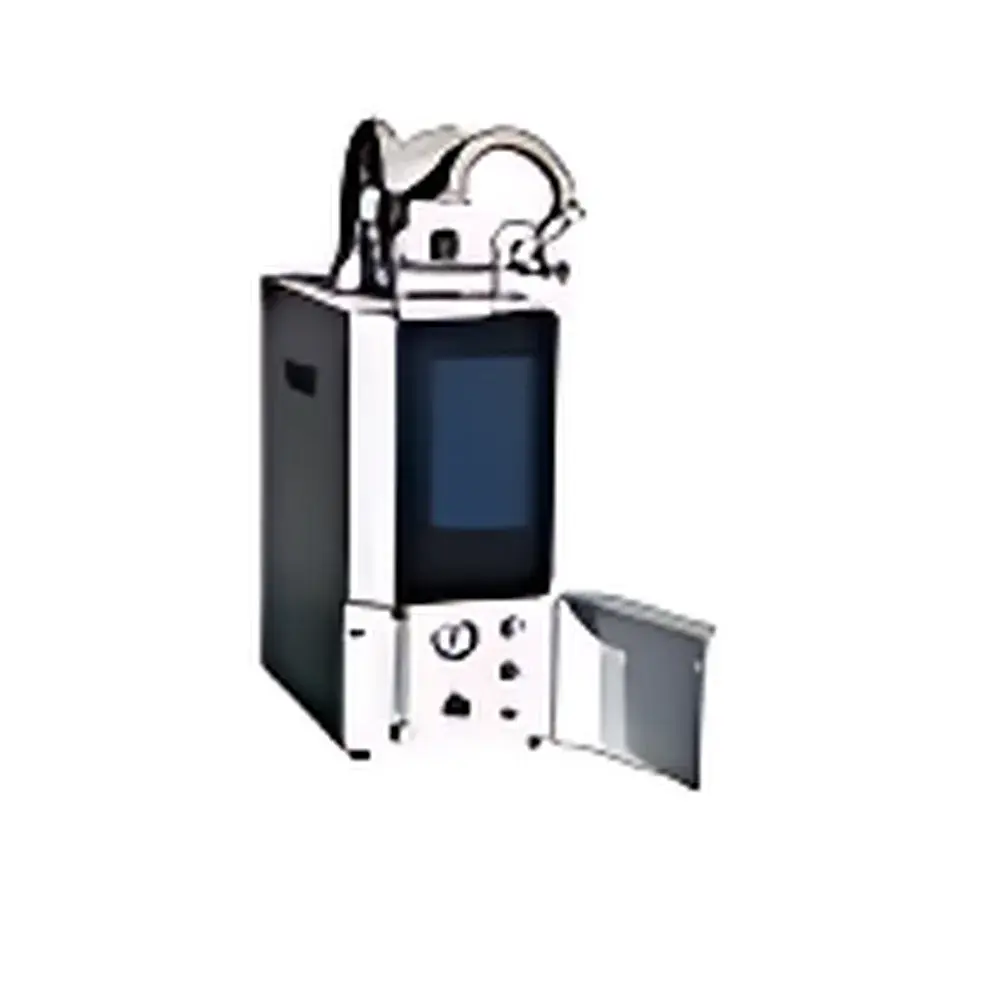
Beifen Sanpu ATDS-3430 Dual-Stage (Cryogenic Trap) Thermal Desorber
| Brand | Beifen Sanpu |
|---|---|
| Origin | Beijing, China |
| Manufacturer Type | Direct Manufacturer |
| Instrument Type | Dual-Stage Thermal Desorber |
| Desorption Temperature Range | Ambient to 450 °C |
| Cryo-Trap Temperature Range | −35 °C to Ambient |
| Desorption Recovery Rate | >99% (compound-dependent) |
| Sample Position Capacity | 1 tube |
Overview
The Beifen Sanpu ATDS-3430 Dual-Stage (Cryogenic Trap) Thermal Desorber is a fully automated, benchtop thermal desorption system engineered for high-fidelity quantitative analysis of volatile and semi-volatile organic compounds (VOCs and SVOCs) in ambient air, indoor air, building materials, food packaging headspace, and industrial emissions. It operates on the principle of two-stage thermal desorption coupled with cryofocusing: first-stage desorption releases analytes from sorbent tubes under controlled heating; analytes are then refocused onto a cryogenically cooled trap (−35 °C); finally, rapid second-stage desorption (≥3000 °C/min) delivers a narrow, solvent-free analytical band into the gas chromatograph (GC) or GC–MS inlet. This architecture minimizes band broadening, enhances sensitivity, and ensures reproducible transfer of thermally labile compounds—critical for compliance with modern environmental monitoring standards including HJ 644–2013, HJ 583–2010, HJ 734–2014, and GB 50325–2020.
Key Features
- Integrated Peltier-based cryogenic cooling system enables precise trap temperature control from −35 °C to ambient, eliminating reliance on liquid nitrogen or external chillers.
- Four independently programmable heated zones: primary desorption oven, six-port valve assembly (rated to 240 °C), transfer line (up to 260 °C), and secondary desorption/focusing zone (up to 450 °C), all with ±0.5 °C temperature stability.
- High-inertness sample pathway: entire transport line—including valve interface—is constructed from de-activated fused silica or SilcoNert®-treated stainless steel to prevent adsorption, carryover, or catalytic degradation.
- Motor-driven high-temperature six-port valve ensures precise timing and zero dead-volume switching; valve and transfer line housed within a thermally insulated chamber to eliminate cold spots.
- Automated sequence programming supports full method execution: primary desorption → carrier gas purge → cryo-trap focusing → rapid thermal flash desorption → GC injection → post-run valve/line back-flush (0–100 mL/min, continuously adjustable).
- Onboard calibration capability: built-in simulated sampling mode (0–160 mL/min flow control) allows direct generation of calibration curves using standard vapor permeation or dynamic spiking techniques.
- Universal GC interface: configurable hardware adapters for Agilent, Thermo Fisher, Shimadzu, PerkinElmer, and other major GC platforms; compatible with both split/splitless and PTV inlets via standardized 1/4″ or 1/8″ tubing connections.
Sample Compatibility & Compliance
The ATDS-3430 accepts standard 6 mm OD × 150 mm L stainless steel or glass sorbent tubes (e.g., Tenax TA, Carbopack B/C, Carboxen 1000), supporting single-tube operation with manual loading. Its performance meets or exceeds requirements defined in multiple regulatory methods: HJ 644–2013 (VOCs in ambient air by TD-GC/MS), HJ 583–2010 (benzene series by TD-GC), HJ 734–2014 (VOCs in stationary source emissions), and GB/T 18883–2002 (indoor air quality). System repeatability is validated at ≤2.5% RSD (n = 6) for 0.05 μg benzene in methanol matrix. All temperature zones feature traceable calibration certificates, and time-programmed operations support audit-ready documentation per GLP and ISO/IEC 17025 frameworks.
Software & Data Management
Controlled via an embedded 7-inch TFT LCD touchscreen running real-time firmware, the ATDS-3430 provides intuitive method setup, live status animation, and cycle progress tracking. Method files store complete thermal profiles, flow parameters, and timing sequences. The instrument supports external triggering via TTL or contact closure, enabling synchronization with GC start signals or third-party data systems (e.g., Chromeleon, OpenLab, Empower). While no proprietary PC software is bundled, ASCII-log export (CSV format) of run metadata—including timestamps, setpoints, and actual temperatures—is available via USB port for integration into LIMS or QA/QC databases. Full electronic records comply with ALCOA+ principles for data integrity.
Applications
Typical use cases include: quantification of C2–C12 VOCs (e.g., benzene, toluene, xylenes, styrene, ethylbenzene) in indoor/outdoor air; screening of formaldehyde and carbonyls in vehicle cabin air (HJ/T 400–2007); determination of residual solvents in polymer films and adhesives; forensic analysis of ignitable liquid residues; and monitoring of odorants and off-gassing compounds in construction materials per GB 50325–2020. Its narrow peak width (99% recovery for mid-polarity analytes make it especially suitable for low-concentration environmental monitoring where detection limits below 10 ng/m³ are required.
FAQ
Is the ATDS-3430 compatible with GC–MS systems?
Yes—it delivers sharp, solvent-free injections directly into standard GC–MS inlets and has been validated with Thermo ISQ, Agilent 5977B, and Shimadzu QP2020 platforms.
Can the cryo-trap operate without liquid nitrogen?
Yes—the integrated Peltier cooler achieves stable −35 °C without consumables, reducing operational cost and logistical complexity.
What sorbent tube formats does it support?
Standard 6.5 mm OD × ≥150 mm length tubes; custom adapters available upon request for alternative dimensions.
Does it meet FDA 21 CFR Part 11 requirements?
The system itself does not include electronic signature or audit trail functionality; however, its deterministic timing, calibrated temperature control, and exportable run logs enable compliant implementation within a validated laboratory IT environment.
Is remote operation or network connectivity supported?
No Ethernet or Wi-Fi interface is built in; control is local via touchscreen or external TTL trigger. Integration with SCADA or central lab networks requires auxiliary signal conditioning hardware.
Related Products





