
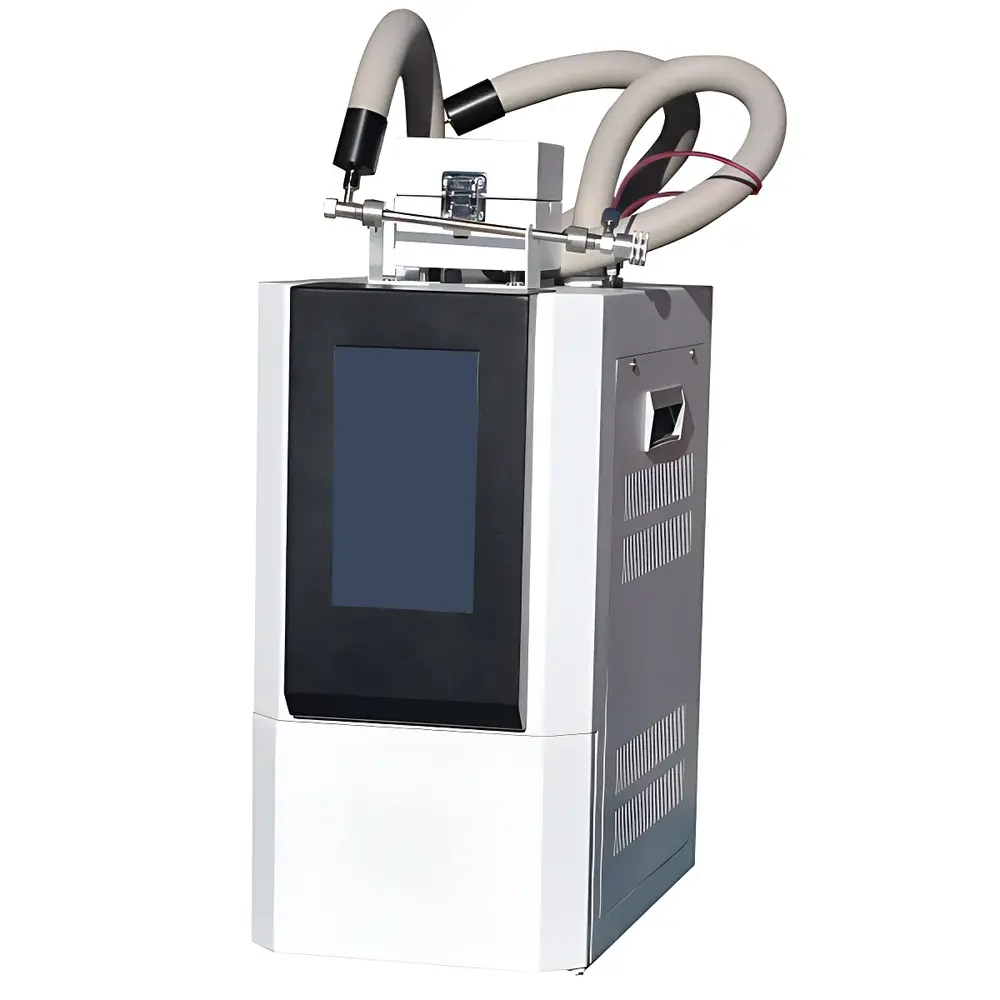
Beifen Sanpu ATDS-3430 Dual-Stage Thermal Desorber
| Brand | Beifen Sanpu |
|---|---|
| Origin | Beijing, China |
| Manufacturer Type | Direct Manufacturer |
| Model | ATDS-34340 |
| Desorption Temperature Range | Ambient to 450 °C |
| Cold Trap Temperature Range | −35 °C to Ambient |
| Desorption Recovery Rate | >99% (compound-dependent) |
| Sample Position Capacity | 1 tube |
| Cooling Method | Solid-State Thermoelectric (Peltier) |
| Second-Stage Heating Rate | >3000 °C/min |
| Peak Width | <3 s |
| RSD | ≤2.5% (for 0.05 μg benzene in methanol) |
| Valve Max Temp | 240 °C |
| Tube Compatibility | OD ≤6.5 mm, L ≥150 mm |
| Power Consumption | 500 W |
| Dimensions (L×W×H) | 380×220×410 mm |
| Weight | ~15 kg |
Overview
The Beifen Sanpu ATDS-3430 Dual-Stage Thermal Desorber is a fully automated, benchtop thermal desorption system engineered for high-fidelity preconcentration and introduction of volatile and semi-volatile organic compounds (VOCs and SVOCs) into gas chromatography–mass spectrometry (GC–MS) or GC–FID systems. It operates on the principle of two-stage thermal desorption: first-stage desorption releases analytes from sorbent tubes under controlled inert gas flow; second-stage focusing occurs in a cryogenically cooled trap (−35 °C), followed by rapid thermal desorption (>3000 °C/min) directly into the GC inlet. This architecture ensures minimal band broadening, sharp chromatographic peaks (<3 s width), and quantitative transfer of thermally labile compounds up to 350 °C boiling point—critical for compliance with environmental monitoring standards including HJ 644–2013, HJ 583–2010, and GB 50325–2020. The system integrates seamlessly with domestic and international GC platforms via standardized pneumatic and electronic interfaces, supporting both manual and software-synchronized start triggers.
Key Features
- Fully programmable microprocessor control with 7-inch full-color LCD interface, enabling intuitive method setup, real-time status animation, and time-based sequence execution (desorption, purge, re-desorption, injection, back-flush)
- Four independently heated zones: primary desorption oven (ambient–450 °C), secondary desorption zone (ambient–450 °C), valve manifold (ambient–240 °C), and transfer line (ambient–260 °C), all with ±0.5 °C temperature stability
- High-efficiency Peltier-based cold trap operating from −35 °C to ambient—eliminating liquid nitrogen dependency while maintaining consistent trapping efficiency for C2–C16 VOCs
- Gas-tight, high-inertness sample pathway using imported deactivated fused-silica tubing and a motor-driven high-temp 6-port valve (rated to 240 °C), ensuring zero carryover and cross-contamination
- Integrated back-flush functionality for both transfer line and injection valve (0–100 mL/min adjustable), validated to deliver RSD ≤2.5% (n=6, 0.05 μg benzene standard)
- Dual-mode configuration support: selectable operation as ambient-temperature or cryo-focused secondary desorption unit, adaptable to method-specific requirements
- Onboard calibration simulation mode for direct generation of multi-point calibration curves without external sampling equipment
- Modular mechanical design with 24 V low-voltage heating circuits for enhanced safety and electromagnetic compatibility in shared laboratory environments
Sample Compatibility & Compliance
The ATDS-3430 accepts standard 6.35 mm OD × 150 mm (or longer) sorbent tubes packed with Tenax TA, Carbopack B/C, or custom multi-bed media. Its validated performance meets the instrumental criteria specified in multiple Chinese national and ecological standards: HJ 644–2013 (ambient air VOCs), HJ 583–2010 (benzene series), HJ 734–2014 (stationary source emissions), GB/T 18883–2002 (indoor air quality), and GB 50325–2020 (civil construction indoor pollution control). While not certified to ISO/IEC 17025 or FDA 21 CFR Part 11 out-of-the-box, its deterministic timing control, audit-ready parameter logging (via optional RS232/USB export), and reproducible thermal profiles support GLP-aligned workflow documentation when integrated into validated laboratory information management systems (LIMS).
Software & Data Management
The instrument operates autonomously via embedded firmware with no external PC dependency. All method parameters—including temperature ramps, dwell times, gas flows, and valve actuation sequences—are stored in non-volatile memory with timestamped versioning. Data export is supported via USB flash drive or RS232 serial output for integration with third-party chromatography data systems (CDS) such as Agilent OpenLab, Thermo Chromeleon, or Shimadzu GC Solutions. Optional Ethernet-enabled remote monitoring modules (sold separately) allow for centralized fleet management in multi-instrument labs. Raw thermal event logs include start/stop timestamps, actual vs. setpoint temperatures per zone, and valve position history—providing traceability essential for internal QA audits.
Applications
The ATDS-3430 delivers robust performance across environmental, occupational health, and materials testing domains. Typical use cases include: quantification of BTEX, aldehydes, and halogenated VOCs in ambient and indoor air samples per HJ/T 400–2007; analysis of off-gassing compounds from building materials, furniture, and automotive interiors; screening of residual solvents in pharmaceutical excipients (aligned with ICH Q3C principles); and forensic identification of ignitable liquids in fire debris. Its narrow peak focusing capability also supports emerging applications in atmospheric microplastic analysis—where thermal desorption coupled to high-resolution GC×GC–TOFMS enables detection of polymer pyrolysis markers (e.g., styrene, caprolactam) at sub-ng levels.
FAQ
Does the ATDS-3430 support multi-tube autosampling?
No—the standard configuration accommodates one sorbent tube per run. For unattended sequential analysis, integration with third-party robotic autosamplers (e.g., Gerstel MPS) is possible via TTL trigger and analog voltage signaling.
Can the cold trap temperature be lowered below −35 °C?
No—the Peltier module is rated for −35 °C minimum. Liquid nitrogen cooling is not supported due to structural and safety design constraints.
Is method transfer possible between different GC vendors?
Yes—valve timing, temperature profiles, and carrier gas flow settings are vendor-agnostic. Interface kits for Agilent, Thermo, Shimadzu, and PerkinElmer GC inlets are available as accessories.
What maintenance intervals are recommended?
Valve rotor seal replacement every 10,000 cycles; cold trap cleaning every 200 runs; annual calibration verification using NIST-traceable standards (e.g., EPA TO-17 test mix).
Related Products





