
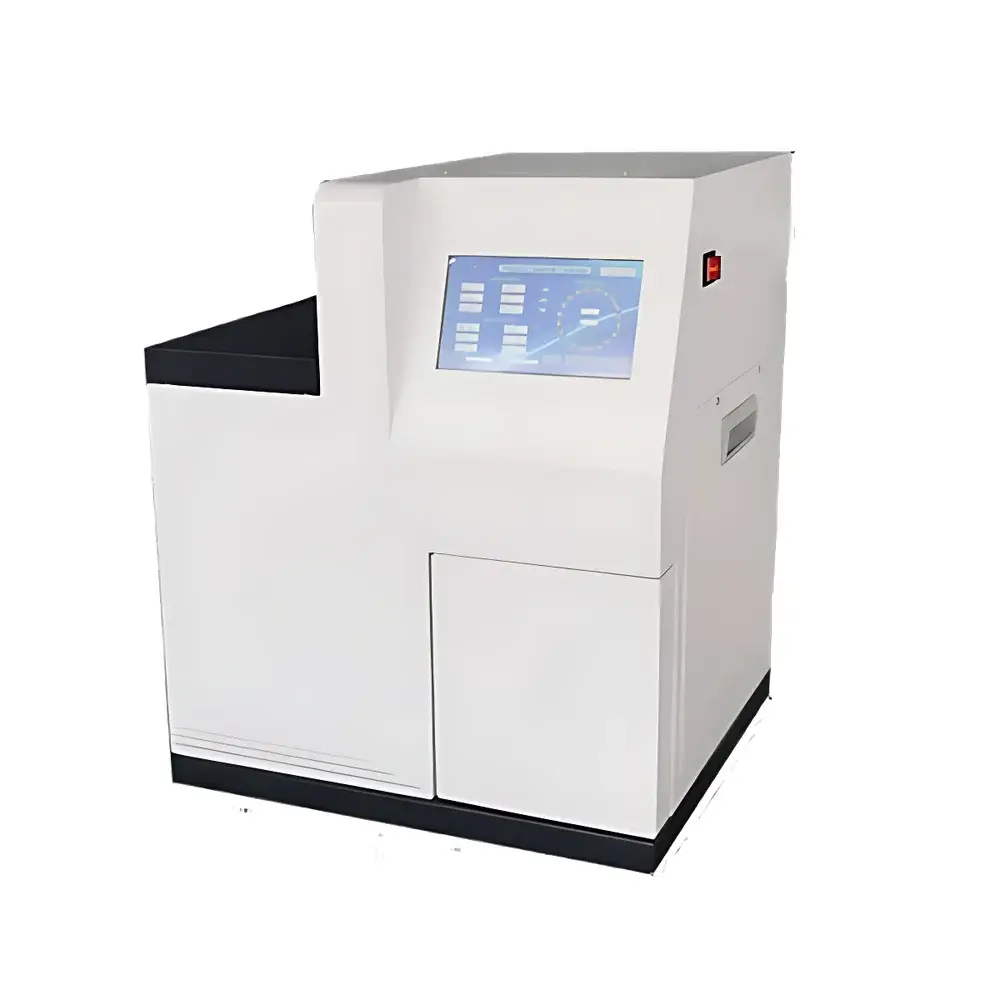
Beifen Sanpu DAHS-20A Plus 20-Position Automatic Headspace Sampler
| Brand | Beifen Sanpu |
|---|---|
| Model | DAHS-20A Plus |
| Origin | Beijing, China |
| Manufacturer Type | Direct Manufacturer |
| Heating Range (Sample/Valve/Transfer Line) | 40–220 °C (configurable up to 300 °C) |
| Temperature Accuracy | ±0.5 °C |
| Temperature Stability | < ±0.5 °C |
| Pressurization Time | 0–999 s |
| Sampling Time | 0–30 min |
| Injection Time | 0–999 s |
| Purge Time | 0–30 min |
| Minimum Time Resolution | 1 ms |
| Pressurization Pressure | 0–0.25 MPa (continuously adjustable) |
| Quantitative Loop Volume | 1 mL (customizable: 0.5 / 2 / 5 mL) |
| Vial Capacity | 10 mL or 20 mL (customizable: 50 / 100 mL) |
| Sample Positions | 20 |
| Simultaneously Heated Samples | 1 or 2 |
| RSD | < 1.0% (100 ppm ethanol in water) |
| Purge Flow Rate | 0–100 mL/min (continuously adjustable) |
| Interface | USB |
| Control Mode | PC-based or front-panel |
| Inert Flow Path | Deactivated fused-silica tubing and valve components |
| Valve Configuration | High-inertness 6-port rotary valve with integrated heated transfer line |
| Sampling Method | Positive-pressure headspace injection |
| EPC Option | Available (electronic pressure control) |
Overview
The Beifen Sanpu DAHS-20A Plus is a 20-position fully automated headspace sampler engineered for precise, reproducible, and unattended sample introduction into gas chromatography (GC) systems. It operates on the principle of equilibrium headspace analysis—where volatile organic compounds (VOCs) partition from liquid or solid matrices into the vapor phase above the sample at controlled temperature and pressure. The instrument employs positive-pressure sampling to transfer the equilibrated headspace gas directly into the GC injector via a thermally insulated, high-inertness flow path. This methodology eliminates solvent interference, reduces matrix effects, and enhances detection sensitivity—particularly critical for trace-level VOC quantification in environmental, pharmaceutical, food safety, and forensic applications. Designed for robust daily operation in regulated laboratory environments, the DAHS-20A Plus integrates thermal management, motion control, and electronic timing with engineering rigor consistent with ISO/IEC 17025-compliant analytical workflows.
Key Features
- 20-position carousel with automatic vial recognition and fault-tolerant positioning—skips empty or misaligned positions to prevent mechanical collision and ensure uninterrupted batch runs.
- Triple-zone independent heating system: sample oven (40–220 °C), valve block (40–220 °C), and transfer line (40–220 °C), all configurable up to 300 °C upon request; temperature stability maintained within ±0.5 °C for high inter-batch reproducibility.
- Heated 6-port rotary valve mounted inside the thermal enclosure—eliminates cold spots and preserves analyte integrity during transfer.
- Deactivated fused-silica quantitative loop (standard 1 mL, optional 0.5/2/5 mL) and inert sample pathway components minimize adsorption, carryover, and cross-contamination—validated by RSD < 1.0% using 100 ppm ethanol in aqueous solution.
- Motor-driven actuation system—no external carrier gas or pneumatic supply required, reducing operational complexity and safety hazards.
- High-resolution timing control: all event durations (pressurization, sampling, injection, purge) adjustable in 1 ms increments for method optimization and regulatory alignment.
- Integrated self-diagnostic firmware: performs power-on system check, monitors motor homing, detects wiring faults, and triggers audible/visual alerts for immediate troubleshooting.
- Flexible sampling protocols: supports single-vial multi-injection, single-vial single-injection, and multi-vial single-injection modes—ideal for calibration curve generation or sample screening.
Sample Compatibility & Compliance
The DAHS-20A Plus accommodates standard 10 mL and 20 mL crimp-top headspace vials (custom configurations available for 50 mL and 100 mL formats). Its positive-pressure sampling mechanism enables direct analysis of liquids, suspensions, powders, polymers, and semi-solids without derivatization or extraction. The system meets essential requirements for GLP and GMP environments: full audit trail capability via USB-connected PC logging, parameter change timestamps, run history with date/time stamps, and method version tracking. While not pre-certified to 21 CFR Part 11, its architecture supports compliant deployment when paired with validated LIMS or chromatography data systems (CDS) that implement electronic signatures, user access controls, and immutable record retention.
Software & Data Management
Control and method development are executed via a dedicated Windows-based application accessible through USB 2.0 interface. The software provides real-time visualization of temperature profiles, valve actuation status, pressure curves, and timeline sequencing. All method parameters—including equilibration time, pressurization pressure, loop fill volume, injection speed, and post-run purge duration—are programmable and exportable as XML templates for cross-laboratory method transfer. Instrument logs capture start/stop times, error codes, and thermal deviations—exportable in CSV format for QA review. Front-panel operation remains fully functional for standalone use, with intuitive icon-driven navigation on the 7-inch TFT LCD display and animated workflow guidance for rapid operator onboarding.
Applications
- Residual solvent analysis per ICH Q3C guidelines in pharmaceutical active pharmaceutical ingredients (APIs) and finished dosage forms.
- VOC profiling in drinking water, wastewater, and soil extracts per EPA Methods 502.2, 524.4, and 8260D.
- Flavor and fragrance compound quantification in beverages, dairy products, and packaged foods.
- Monomer and catalyst residue testing in polymer manufacturing and quality control.
- Forensic toxicology screening for volatile substances including ethanol, acetone, and chlorinated hydrocarbons.
- Stability-indicating assays for oxidation-prone compounds where thermal degradation must be minimized during sample introduction.
FAQ
What vial sizes does the DAHS-20A Plus support?
Standard configuration supports 10 mL and 20 mL headspace vials; custom trays for 50 mL and 100 mL vials are available upon request.
Is the system compatible with third-party GC instruments?
Yes—it features universal TTL-level trigger outputs and accepts external start signals, enabling seamless synchronization with Agilent, Thermo Fisher, Shimadzu, PerkinElmer, and other major GC platforms.
Can the instrument perform multiple injections from a single vial?
Yes—method programming allows up to 99 repeated injections per vial, useful for precision assessment or low-concentration samples requiring signal averaging.
Does it support electronic pressure control (EPC)?
EPC is an optional upgrade, providing closed-loop regulation of pressurization and purge flows for improved method ruggedness and long-term retention time stability.
How is carryover mitigated between samples?
The system implements programmable high-flow inert gas purge (0–100 mL/min) across the entire flow path—including valve stator surface, transfer line, and quantitative loop—with thermal soaking to eliminate residual analytes prior to next injection.





