
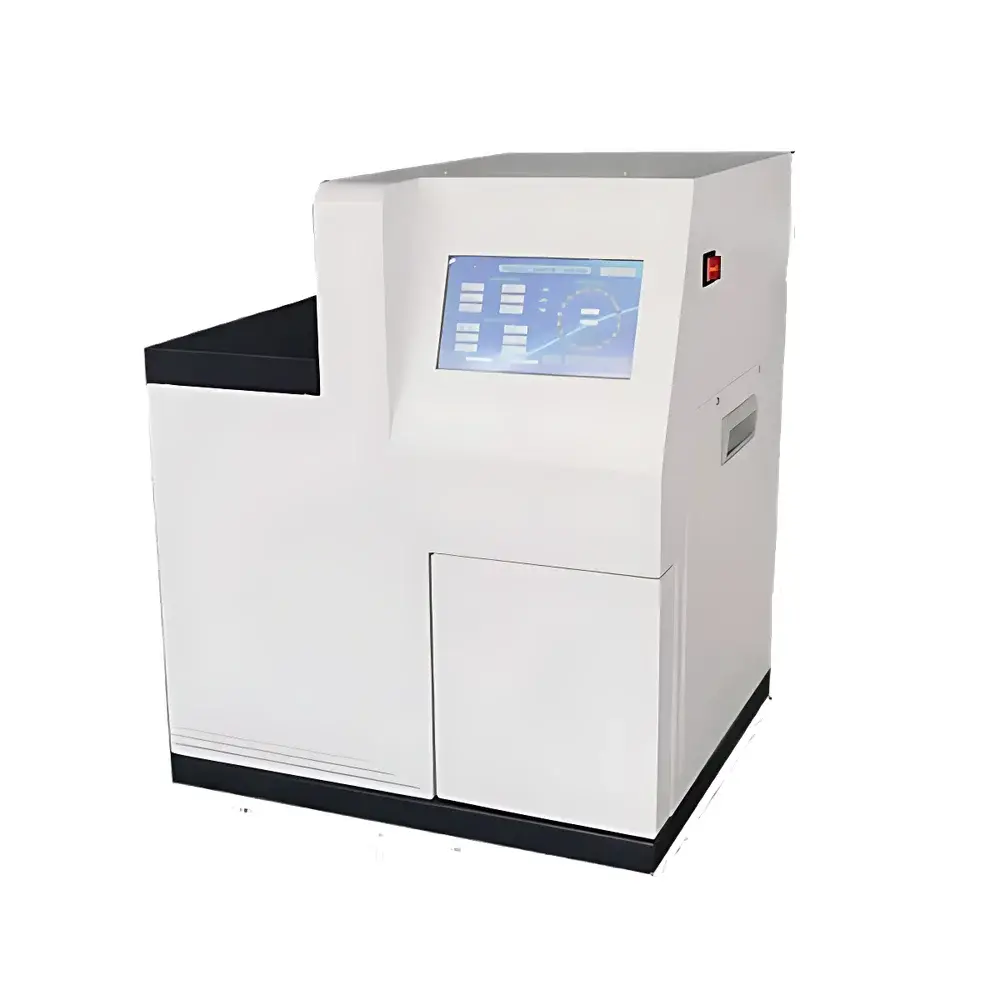
Beifen Sanpu EAHS-20A Plus Fully Automated Headspace Sampler
| Brand | Beifen Sanpu |
|---|---|
| Origin | Beijing, China |
| Manufacturer Type | Direct Manufacturer |
| Country of Origin | China |
| Model | EAHS-20A Plus |
| Price | USD 7,800 (FOB Beijing) |
| Sample Capacity | 20 positions |
| Heating Range (Sample/Valve/Transfer Line) | 40–220 °C (optional up to 300 °C) |
| Temperature Accuracy | ±0.5 °C |
| Temperature Stability | < ±0.5 °C |
| Pressurization Time | 0–999 s |
| Sampling Time | 0–30 min |
| Injection Time | 0–999 s |
| Purge Time | 0–30 min |
| Minimum Time Resolution | 1 ms |
| Pressurization Pressure | 0–0.25 MPa (continuously adjustable) |
| Loop Volume | 1 mL (customizable: 0.5 / 2 / 5 mL) |
| Vial Size Compatibility | 10 mL or 20 mL (customizable: 50 / 100 mL) |
| RSD | <1.0% (for 100 ppm ethanol in water) |
| Purge Flow Rate | 0–100 mL/min (adjustable) |
| Interface | USB communication with PC control + local panel operation |
| Valve Type | High-inertness 6-port valve with heated connection point |
| Sample Transfer Line | Deactivated fused-silica tubing |
| Drive Mechanism | Stepper motor actuation (no external gas required) |
| GC Synchronization | TTL/relay trigger for GC start and data system launch |
Overview
The Beifen Sanpu EAHS-20A Plus Fully Automated Headspace Sampler is a precision-engineered sample introduction system designed for quantitative analysis of volatile and semi-volatile organic compounds (VOCs and SVOCs) in complex matrices via gas chromatography (GC). It operates on the principle of equilibrium headspace analysis: a sealed sample vial is heated to establish vapor-phase equilibrium between the sample matrix (liquid or solid) and its overlying headspace gas. A precise volume of this equilibrated headspace is then pressurized, transferred through a thermostatted, high-inertness pathway, and injected into the GC inlet—ensuring minimal analyte degradation, carryover, or adsorption. The EAHS-20A Plus integrates thermally optimized hardware architecture with deterministic motion control and real-time thermal monitoring to deliver high reproducibility (RSD <1.0% at 100 ppm ethanol), essential for regulated QC/QA workflows in pharmaceutical, environmental, food safety, and forensic laboratories.
Key Features
- 20-position carousel with automatic vial recognition and intelligent position fault avoidance—mechanically detects empty slots and bypasses them to prevent collision or misalignment.
- Triple-zone independent temperature control: sample incubation oven, 6-port valve housing, and transfer line—all heated to 40–220 °C (optionally 300 °C) with stability <±0.5 °C and accuracy ±0.5 °C.
- Heated valve-to-loop interface housed entirely within the thermal zone—eliminates cold spots and preserves volatile integrity during transfer.
- Full motor-driven actuation (stepper motors only)—no external carrier gas or pneumatic lines required, reducing maintenance complexity and operational hazards.
- High-inertness fluidic path: deactivation-treated fused-silica tubing and passivated stainless-steel components minimize surface adsorption and cross-contamination.
- Configurable sampling protocols: single vial/multiple injections, single vial/single injection, or multi-vial/single injection—programmable via intuitive 7-inch graphical LCD or remote PC software.
- Comprehensive self-diagnostic suite: power-on system check, positional encoder validation, thermal sensor verification, and real-time fault logging with on-screen alerts.
- USB-based bidirectional communication enables full parameter configuration, method storage, runtime logging (date/time/stage), and firmware updates without proprietary dongles or serial adapters.
Sample Compatibility & Compliance
The EAHS-20A Plus accommodates standard 10 mL and 20 mL crimp-top or screw-cap headspace vials; custom configurations support 50 mL and 100 mL formats for low-concentration or high-volume applications. It handles aqueous solutions, polymers, soils, biological tissues, pharmaceutical tablets, and packaged foods—provided samples remain physically stable under defined heating conditions. All thermal zones comply with IEC 61010-1 safety standards for laboratory equipment. The instrument supports audit-ready operation when integrated with GLP/GMP-compliant GC data systems: time-stamped method parameters, user-access logs, and electronic signatures (via host software) align with FDA 21 CFR Part 11 requirements. Routine performance verification follows ASTM D6866 (bio-based content) and USP residual solvents methodology.
Software & Data Management
Local operation is managed via a responsive 7-inch capacitive touchscreen with animated workflow guidance—enabling rapid method setup without training overhead. For centralized deployment, the included Windows-compatible software provides method editor, sequence scheduler, real-time status dashboard, and CSV-exportable run reports (including temperature profiles, pressure traces, and timing events). All parameters—including pressurization ramp rates, loop fill dwell times, and purge flow gradients—are digitally configurable and stored with versioned timestamps. Data export conforms to LIMS-friendly formats (CSV, XML), and optional EPC (Electronic Pressure Control) integration allows closed-loop pressure regulation synchronized with GC inlet settings—enhancing retention time stability across long sequences.
Applications
This sampler is routinely deployed in: residual solvent analysis per ICH Q3C guidelines; ethanol quantification in pharmaceutical excipients; BTEX (benzene, toluene, ethylbenzene, xylenes) detection in groundwater per EPA Method 502.2; flavor compound profiling in beverages and dairy products; monomer release testing in polymer packaging; and forensic toxicology screening for volatile intoxicants (e.g., acetone, isopropanol, chloroform). Its robustness in handling viscous or particulate-laden matrices—without clogging or memory effects—makes it suitable for QC release testing in GMP manufacturing environments where throughput, traceability, and inter-laboratory reproducibility are critical.
FAQ
Does the EAHS-20A Plus require external compressed air or nitrogen for valve actuation?
No. All mechanical movements—including vial tray rotation, syringe plunger actuation, and valve switching—are driven by precision stepper motors. This eliminates dependency on external gas supplies and associated pressure regulators or filters.
Can the system be validated for ISO/IEC 17025 accredited laboratories?
Yes. Full IQ/OQ documentation packages—including temperature mapping reports, timing accuracy verification, RSD performance qualification (using certified ethanol standards), and electronic record integrity assessment—are available upon request.
Is remote monitoring possible via Ethernet or Wi-Fi?
The standard interface is USB 2.0. Ethernet or Wi-Fi connectivity requires an optional industrial-grade USB-to-Ethernet bridge configured at network layer—compatible with enterprise SCADA or lab automation middleware.
What maintenance intervals are recommended for routine operation?
Quarterly inspection of vial tray alignment and O-ring integrity; biannual replacement of septa and quantitative loop seals; annual calibration of all PT100 temperature sensors against NIST-traceable references.
How does the system handle vial cap puncture consistency across 20 positions?
A torque-controlled needle insertion mechanism ensures uniform septum penetration depth and force—verified during factory acceptance testing with >10,000 cycles on representative crimp caps.



