
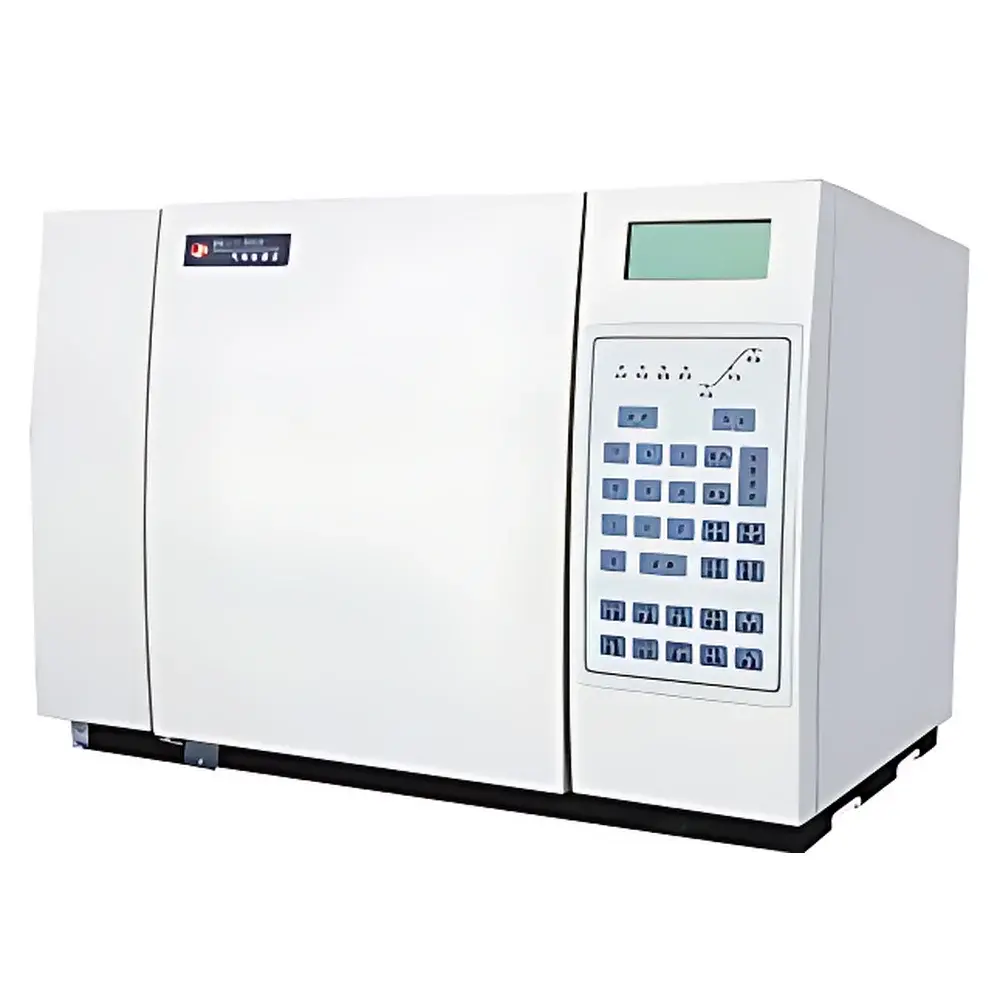
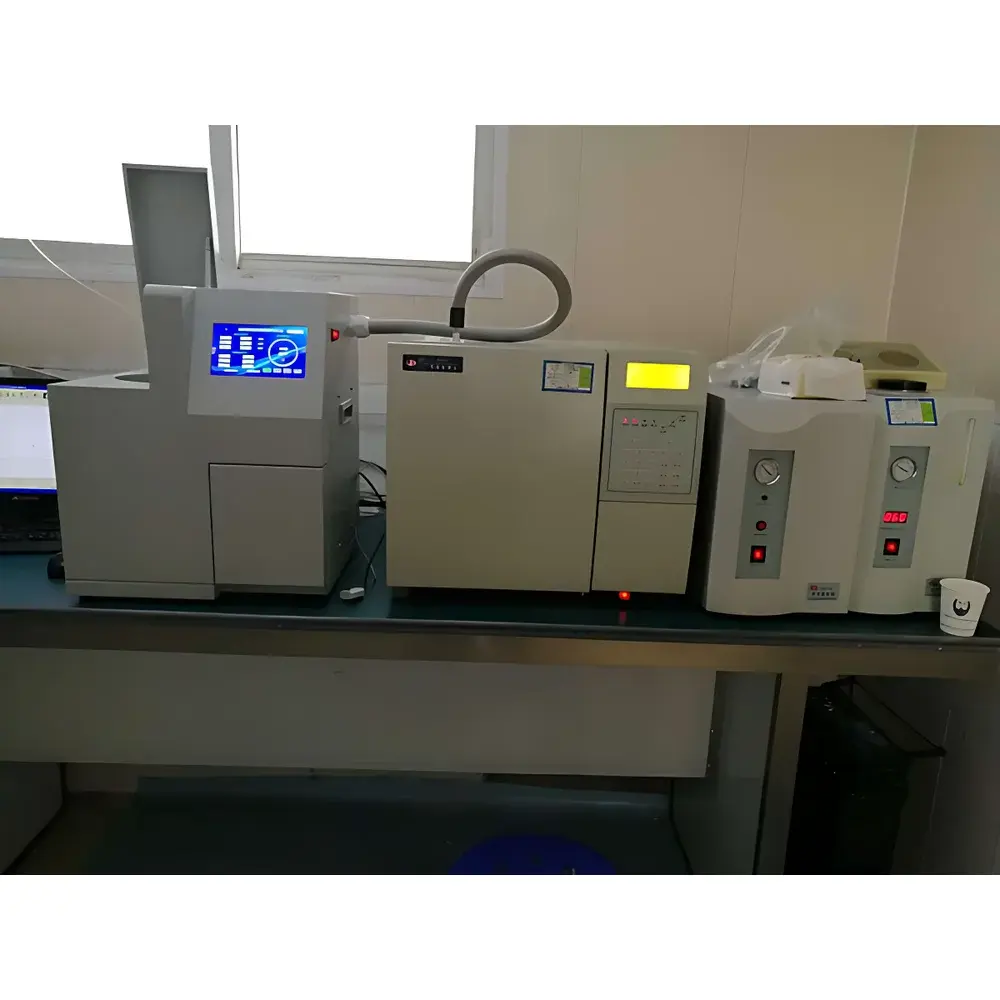
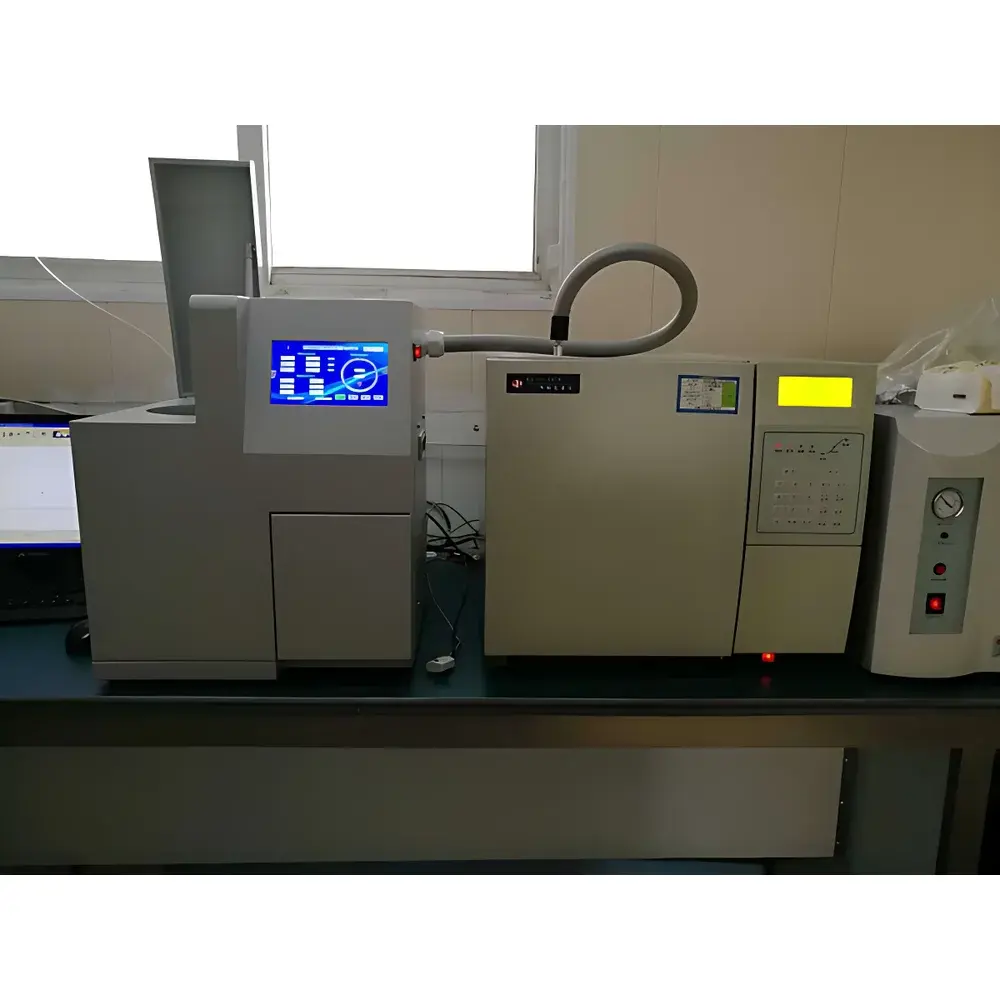
Beifen Sanpu GC-2010F Gas Chromatograph
| Brand | Beifen Sanpu |
|---|---|
| Origin | Beijing, China |
| Manufacturer Type | Direct Manufacturer |
| Product Category | Domestic Laboratory GC |
| Model | GC-2010F |
| Instrument Type | Laboratory Gas Chromatograph |
| Application Scope | General-Purpose / Forensic Toxicology |
| Oven Temperature Range | 420 °C |
| Maximum Ramp Rate | 40 °C/min |
| Cool-down Time | ~8 min (from 420 °C to 50 °C) |
| Carrier Gas Flow Range & Control | 0–800 mL/min |
| Carrier Gas Pressure Range & Control | 0–600 kPa |
| Injector Maximum Operating Temperature | 420 °C |
| Injector Pressure Setting Range | 0–600 kPa |
| Injector Total Flow Setting Range | 0–800 mL/min |
Overview
The Beifen Sanpu GC-2010F Gas Chromatograph is a dedicated laboratory-scale gas chromatographic system engineered for precise, reproducible quantification of ethanol in whole blood—specifically designed to comply with forensic toxicology requirements under Chinese judicial and public security standards. It operates on the principle of headspace gas chromatography coupled with flame ionization detection (HS-GC-FID), leveraging the volatile nature of ethanol to separate and quantify target analytes from complex biological matrices without derivatization or extensive sample preparation. The system integrates thermal programmability, pressure-controlled carrier gas delivery, and high-temperature injector stability to ensure consistent vapor-phase equilibrium and chromatographic resolution of ethanol and internal standard (e.g., tert-butanol) under strictly defined method conditions. Its architecture supports routine batch analysis in high-throughput forensic laboratories, clinical toxicology units, and traffic law enforcement testing facilities where evidentiary integrity, audit readiness, and regulatory traceability are mandatory.
Key Features
- Programmable column oven with temperature range up to 420 °C and linear ramp rates up to 40 °C/min, enabling rapid method development and robust retention time reproducibility.
- Electronically controlled split/splitless injector capable of operation at 420 °C, supporting precise pressure and flow programming for optimal headspace transfer efficiency.
- Integrated carrier gas control system with digital pressure and flow regulation (0–600 kPa, 0–800 mL/min), ensuring stable mobile phase delivery across variable backpressure scenarios typical in capillary column applications.
- Optimized thermal management design achieves full cool-down from 420 °C to 50 °C in approximately 8 minutes—reducing cycle time between forensic samples without compromising baseline stability.
- Dedicated hardware interface for seamless integration with AHS-20A PLUS automated headspace sampler, minimizing manual intervention and operator-induced variability.
- FID detector with high sensitivity (detection limit ≤ 0.001 g/L ethanol in blood matrix), low noise (< 0.02 pA), and linear dynamic range spanning three orders of magnitude.
Sample Compatibility & Compliance
The GC-2010F is validated for use in whole blood ethanol quantification according to SF/Z JD0107001–2016 (Technical Specification for Ethanol Determination in Blood, Ministry of Justice PRC) and GA/T 842–2009 (Forensic Toxicological Analysis Procedures, Ministry of Public Security PRC). These standards mandate strict procedural controls—including headspace equilibration time/temperature, internal standard selection (tert-butanol), calibration curve linearity (r² ≥ 0.999), system suitability criteria (retention time shift ≤ 0.05 min, peak area RSD ≤ 3.0%), and documentation of instrument performance verification prior to each analytical batch. The system meets GLP-aligned operational requirements for chain-of-custody documentation, raw data archiving, and audit trail generation when used with N3000 Chromatography Workstation software compliant with 21 CFR Part 11 principles (electronic signatures, user access control, and immutable event logs).
Software & Data Management
N3000 Chromatography Data System (CDS) provides full acquisition, processing, reporting, and archival functionality. It supports multi-level user authentication, customizable report templates aligned with judicial documentation formats, automatic calibration curve generation with forced zero-intercept options, and integrated peak purity assessment via spectral deconvolution algorithms. All raw signal files (.DAT), method parameters, audit trails, and electronic signatures are stored in a relational database structure with timestamped metadata. Export capabilities include PDF/A-1b certified reports, CSV-formatted quantitative results, and XML-based data interchange compliant with LIMS interfaces. Software validation documentation—including IQ/OQ protocols and version-controlled change logs—is available upon request to support laboratory accreditation (CNAS, ISO/IEC 17025).
Applications
- Forensic quantification of blood ethanol concentration (BAC) for DUI/DWI legal proceedings.
- Medical toxicology screening in emergency departments and clinical laboratories.
- Quality assurance in alcohol metabolism research and pharmacokinetic studies.
- Method transfer and validation support for accredited forensic testing laboratories.
- Training platform for GC theory, HS sampling mechanics, and FID optimization in academic settings.
FAQ
Why is blood ethanol analysis preferred over breath testing in judicial contexts?
Blood ethanol measurement directly quantifies analyte concentration in the physiological matrix, eliminating reliance on partition ratio assumptions (e.g., 2200:1 blood:breath) and environmental interference factors inherent to breath sampling. Per SF/Z JD0107001–2016, blood-based results serve as primary evidentiary material in criminal adjudication.
Does the GC-2010F support unattended overnight analysis?
Yes—when paired with the AHS-20A PLUS autosampler and N3000 CDS scheduler, the system executes fully automated sequences including vial tray loading, equilibration, injection, data acquisition, and report generation without manual supervision.
What consumables and accessories are required for routine operation?
Standard configuration includes a 30-m fused-silica capillary column (DB-ALC1 or equivalent), certified ethanol and tert-butanol reference standards, headspace vials with crimp seals, and high-purity carrier gases (N₂, H₂, synthetic air). Optional accessories include BF-300E hydrogen generator, BF-2L zero-air compressor, and BF-500N nitrogen generator for on-site gas supply.
Is method validation support provided with the instrument?
Beifen Sanpu supplies application notes, system suitability checklists, and SF/Z JD0107001–2016-aligned validation templates covering specificity, linearity, accuracy (recovery), precision (intra-/inter-day RSD), LOD/LOQ, and robustness testing per ICH Q2(R2) guidelines.
Can the GC-2010F be upgraded for other volatile organic compound (VOC) analyses?
Yes—the platform supports interchangeable detectors (ECD, TCD, PID), multiple inlet types (PTV, on-column), and optional mass spectrometric coupling (GC-MS interface kits available separately), enabling expansion into environmental, pharmaceutical, or food safety applications beyond forensic ethanol testing.
Related Products






