
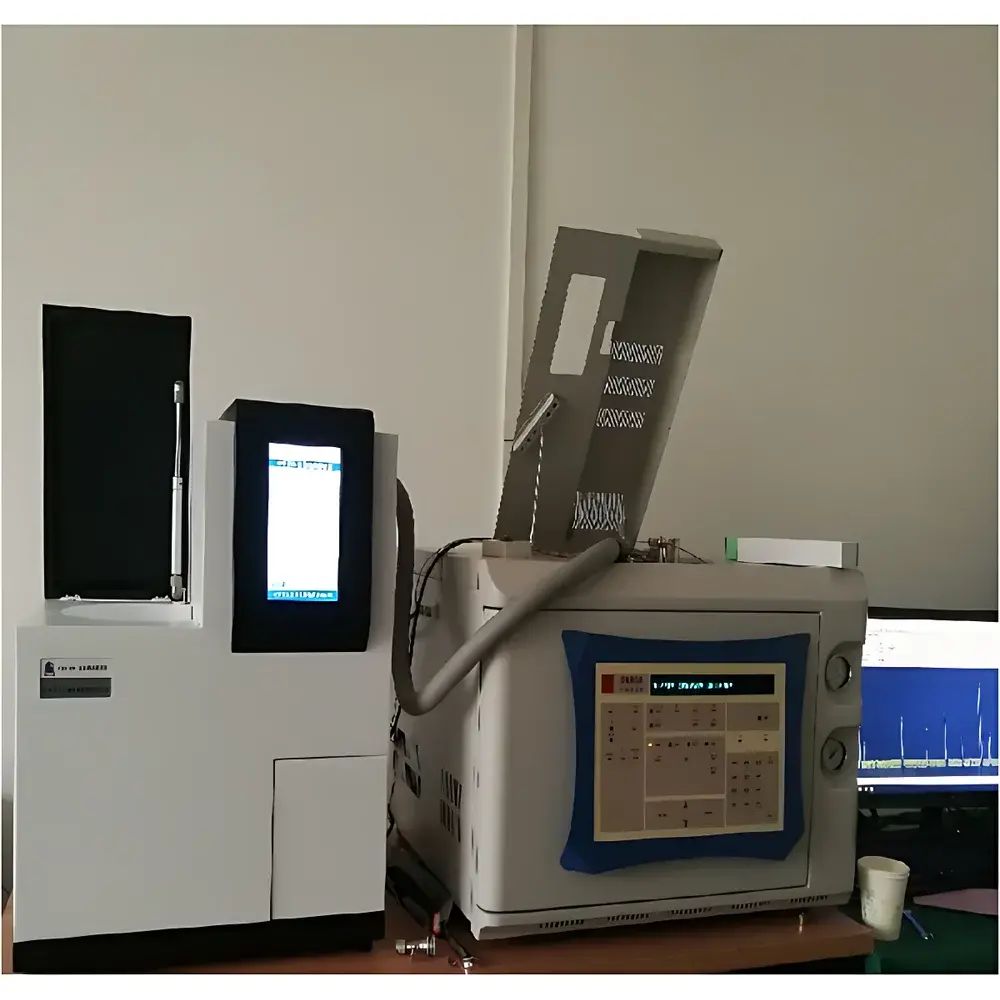
Beifen Sanpu GC-9860 Portable Gas Chromatograph for Indoor Air Benzene and TVOC Analysis
| [Brand | Beifen Sanpu |
|---|---|
| Origin | Beijing, China |
| Manufacturer Type | Direct Manufacturer |
| Instrument Type | Portable Gas Chromatograph |
| Temperature Control Range | 100–350 °C |
| Heating Rate | 0.1–40 °C/min |
| Cooling Time | ~6 min (from 350 °C to 100 °C) |
| Carrier Gas Flow Range | 0–1200 mL/min |
| Carrier Gas Pressure Range | 0–970 kPa |
| Injector Max Operating Temperature | 100–350 °C |
| Injector Pressure Setting Range | 0–970 kPa |
| Injector Total Flow Setting Range | 0–1000 mL/min] |
Overview
The Beifen Sanpu GC-9860 is a purpose-engineered portable gas chromatograph designed specifically for on-site and laboratory-based analysis of benzene and total volatile organic compounds (TVOC) in indoor air environments. It operates on the principle of capillary gas chromatography with flame ionization detection (FID), enabling selective separation, quantification, and trace-level detection of aromatic hydrocarbons and aliphatic VOCs per national and international indoor air quality standards—including GB 50325-2020, GB/T 18883-2002, HJ 644-2013, and HJ 583-2010. The instrument integrates a thermally stable oven with eight-stage linear programmed temperature ramping, dual post-column oven doors for near-ambient cooling, and precision electronic pressure/flow control (EPC/EFC) across multiple gas channels. Its modular architecture supports seamless coupling with optional accessories such as the ATDS-20A automated thermal desorber and HL-10A adsorbent tube conditioner—enabling full compliance with standardized thermal desorption workflows.
Key Features
- Industrial-grade chassis with ergonomic front-panel layout and 5.7-inch high-resolution LCD (320 × 240 pixels) supporting real-time bilingual (Chinese/English) display across 20 configurable interface screens.
- Eight-step programmable temperature ramping with ±0.1 °C oven temperature stability; dual independent oven doors enable rapid cooldown from 350 °C to 100 °C in approximately six minutes.
- Dual EPC/EFC modules for carrier gas, makeup gas, and hydrogen/air flows—each independently adjustable within specified ranges (0–1200 mL/min flow; 0–970 kPa pressure).
- FID detector with micro-current amplifier delivering enhanced sensitivity and automatic ignition; TCD option available with 5× improved signal-to-noise ratio versus prior-generation models.
- Multi-detector compatibility: simultaneous installation and operation of up to four detectors—including dual FID, dual TCD, or mixed configurations—with independent column routing and gas supply.
- Intelligent fault diagnostics with contextual Chinese-language error prompts; integrated flash memory ensures data retention without battery dependency.
- Gas failure protection circuitry safeguards columns and detectors during carrier gas interruption; platinum RTD-based overtemperature and open/short-circuit monitoring prevents hardware damage.
Sample Compatibility & Compliance
The GC-9860 is validated for use with thermally desorbed air samples collected on standard sorbent tubes (e.g., Tenax TA, Carbopack B/C, or multi-bed media), compatible with both single- and dual-stage desorption protocols. When paired with the ATDS-20A thermal desorber, it meets method requirements for HJ 644-2013 (VOCs in ambient air), HJ 583-2010 (benzene series), HJ 734-2014 (stationary source emissions), and GB 50325-2020 (indoor environmental control in civil construction). All operational parameters—including temperature programs, flow profiles, and detector settings—are fully configurable to satisfy ISO 16000-6, ASTM D5197, and EPA TO-17 compliance frameworks. Data acquisition and reporting support audit-ready documentation aligned with GLP and ISO/IEC 17025 laboratory accreditation requirements.
Software & Data Management
The GC-9860 employs embedded firmware with local data storage for up to 20 complete chromatographic methods and associated analysis results. Raw chromatograms, integration reports, calibration curves, and audit logs are exportable via USB to standard CSV or PDF formats. While no proprietary PC software is bundled, the instrument provides RS-232 and USB-B interfaces for integration with third-party chromatography data systems (CDS) compliant with FDA 21 CFR Part 11—including secure user authentication, electronic signatures, and immutable audit trails. Method transfer between instruments is facilitated through standardized parameter templates, ensuring reproducibility across multi-lab deployments in environmental testing networks.
Applications
- Indoor air quality (IAQ) assessment in residential, commercial, and institutional buildings per GB/T 18883-2002 and GB 50325-2020.
- VOC emission profiling from building materials, adhesives, paints, and composite wood products.
- Automotive cabin air monitoring per HJ/T 400-2007.
- Occupational hygiene screening in manufacturing, printing, and coating facilities.
- Field-deployable environmental monitoring for regulatory compliance and remediation verification.
- Academic research on VOC partitioning, sorption kinetics, and low-concentration trace analysis (ppt–% level).
FAQ
Is the GC-9860 suitable for unattended overnight analysis?
Yes—the instrument supports timed start/stop functions and retains method parameters in non-volatile flash memory, enabling reliable overnight operation without host computer dependency.
Can it be used with cryogenic cold traps for enhanced sensitivity?
When coupled with the ATDS-20A thermal desorber (which includes a programmable low-temperature trap), the system achieves effective focusing of C3–C12 VOCs, improving detection limits by up to two orders of magnitude versus direct injection.
Does it support quantitative analysis per ISO 16000-6?
Yes—calibration protocols using certified benzene and multi-component TVOC standards (e.g., SUPELCO TO-17 mix) are fully supported; retention time locking and internal standard normalization ensure inter-laboratory comparability.
What maintenance intervals are recommended for routine field use?
FID jet cleaning and detector alignment every 200–300 sample injections; column trimming and inlet liner replacement every 500 injections; annual verification of oven temperature accuracy and EPC linearity per ISO/IEC 17025 internal calibration procedures.
Is remote diagnostics or firmware update capability available?
Firmware updates are performed via USB drive; remote diagnostic access is not natively supported but can be enabled through optional Ethernet gateway modules for enterprise-level fleet management.
Related Products





