
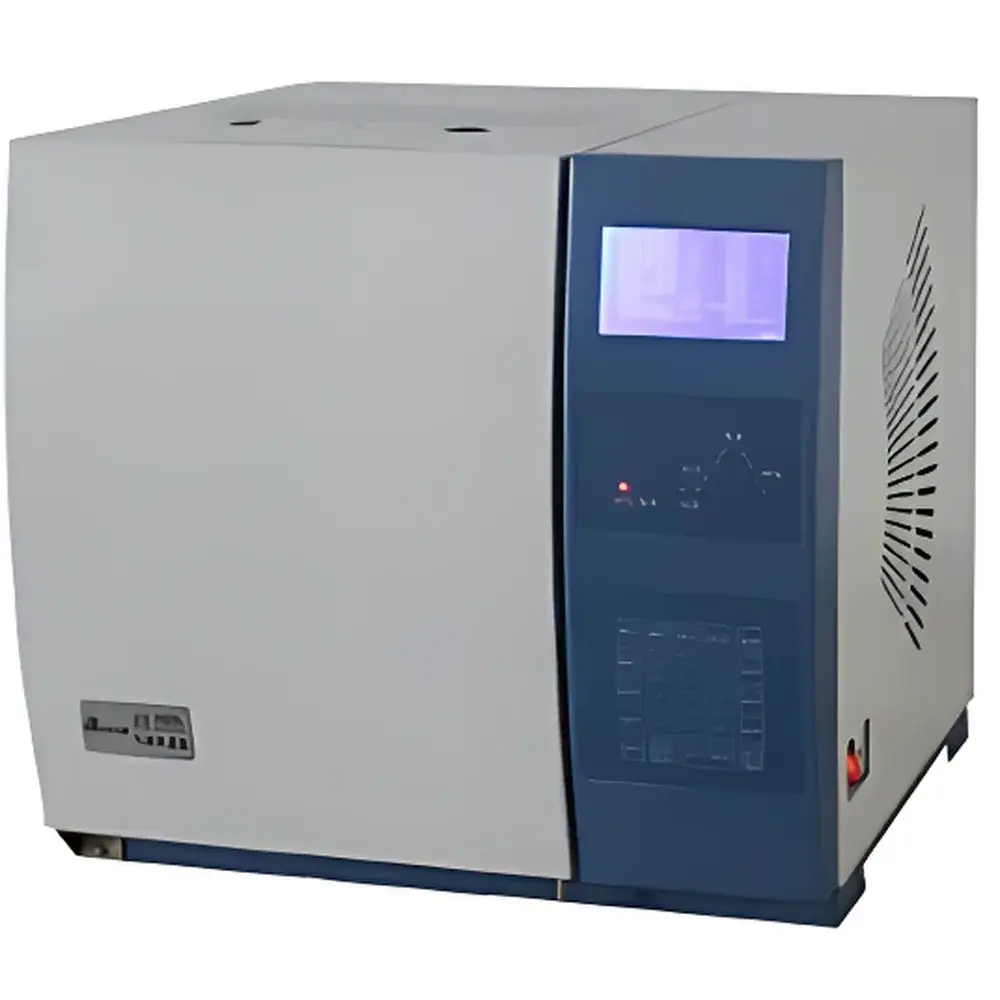
Beifen Sanpu GC-9860-VI Blood Ethanol Analysis Gas Chromatograph
| Brand | Beifen Sanpu |
|---|---|
| Origin | Beijing, China |
| Manufacturer Type | Direct Manufacturer |
| Instrument Type | Laboratory Gas Chromatograph |
| Model | GC-9860-VI |
| Temperature Control Range | Ambient to 450 °C |
| Oven Ramp Rate | 1–40 °C/min |
| Cool-down Time | ~8 min (from 450 °C to 50 °C) |
| Carrier Gas Flow Range & Control | 0–1200 mL/min |
| Carrier Gas Pressure Range & Control | 0–970 kPa |
| Injector Maximum Operating Temperature | 450 °C |
| Injector Pressure Setting Range | 0–970 kPa |
| Injector Total Flow Setting Range | 0–1200 mL/min |
| Detection Method | Flame Ionization Detection (FID) |
| Sample Introduction | Automated Headspace Sampling (AHS-20A Plus) |
| Compliant Standard | GA/T 842–2019 (China Public Security Industry Standard for Blood Alcohol Testing) |
Overview
The Beifen Sanpu GC-9860-VI Blood Ethanol Analysis Gas Chromatograph is a purpose-engineered laboratory gas chromatography system designed specifically for the precise, reliable, and legally defensible quantification of volatile alcohols—including ethanol, methanol, and n-propanol—in human blood and urine matrices. It operates on the principle of capillary or packed-column gas chromatography coupled with flame ionization detection (FID), delivering high-resolution separation and linear quantitative response across clinically and forensically relevant concentration ranges (0.005–5.00 g/L ethanol). The system integrates an AHS-20A Plus automated headspace sampler to eliminate manual derivatization, solvent extraction, or centrifugation steps—reducing analyst exposure, minimizing carryover risk, and ensuring strict adherence to GA/T 842–2019, the official People’s Republic of China public security industry standard governing blood alcohol testing procedures. Its robust thermal management architecture supports rapid temperature ramping and reproducible oven cooling, enabling high-throughput batch analysis in forensic toxicology laboratories, hospital clinical chemistry departments, and judicial appraisal centers.
Key Features
- Dual-inlet configuration supporting both packed-column and capillary-column operation for method flexibility and legacy method compatibility
- Programmable temperature-controlled oven with precision ±0.1 °C stability and ramp rates adjustable from 1 to 40 °C/min
- High-pressure, mass-flow-controlled carrier gas delivery (N2, H2, or air) with real-time digital pressure/flow monitoring (0–970 kPa, 0–1200 mL/min)
- 450 °C maximum injector temperature with independent pressure and total flow control per inlet
- AHS-20A Plus automated headspace sampler featuring 20-position vial capacity, programmable incubation (30–150 °C), precise pressurization control, and inert sample transfer path
- FID detector with 106, and <0.5% RSD for replicate injections
- Integrated BF-300E hydrogen generator, BF-2L air compressor, and BF-300N nitrogen generator—eliminating cylinder dependency and enhancing lab safety
Sample Compatibility & Compliance
The GC-9860-VI is validated for direct analysis of whole blood, serum, plasma, and urine specimens without organic solvent dilution or protein precipitation. It resolves and quantifies ethanol, methanol, n-propanol, acetaldehyde, acetone, isopropanol, n-butanol, and isoamyl alcohol—supporting differential diagnosis of toxic alcohol ingestion and postmortem interpretation. All hardware and method parameters align with GA/T 842–2019 requirements, including column specifications (BF-Blood Alcohol Capillary Column, 30 m × 0.53 mm ID × 3.0 µm film), calibration protocols (internal standard: n-propanol), retention time windows, and system suitability criteria (peak symmetry >0.8, resolution >1.5 between ethanol and internal standard). The platform supports audit-ready data integrity under GLP-compliant workflows and meets foundational expectations for traceability, electronic signature, and raw data preservation required by judicial evidence standards.
Software & Data Management
BF-2002 Chromatographic Data Processing Software provides full ICH-GCP-aligned acquisition, integration, calibration curve generation (linear, quadratic, or weighted), and report export (PDF, CSV, XML). It supports multi-level user authentication, electronic audit trails with timestamped operator actions, and secure data archiving compliant with local forensic record retention mandates. Raw signal files (.bdf) are stored unaltered; all processing parameters—including baseline correction, peak assignment, and integration events—are logged and reversible. Optional 21 CFR Part 11 compliance packages are available upon request, including role-based access control, biometric login support, and digital certificate signing for court-admissible reports.
Applications
- Forensic toxicology screening and confirmation of blood alcohol concentration (BAC) in DUI/DWI investigations
- Clinical assessment of acute ethanol intoxication, methanol poisoning, and ketonemia-related acetone elevation
- Postmortem toxicology for cause-of-death determination involving volatile solvents or alcohols
- Quality assurance in blood bank storage studies evaluating ethanol formation during refrigerated storage
- Method validation and reference material certification in national forensic science institutes
FAQ
What regulatory standards does this system comply with?
It is fully configured to meet GA/T 842–2019 and supports alignment with ISO/IEC 17025:2017 for testing laboratories through documented method validation, instrument qualification (IQ/OQ/PQ), and traceable calibration records.
Can the system analyze samples other than blood?
Yes—it is validated for urine, oral fluid, gastric contents, and tissue homogenates using standardized headspace equilibration protocols.
Is method transfer supported from legacy GC platforms?
The BF-2002 software includes method import/export utilities compatible with ASTM E2907-19 and common vendor formats (e.g., Agilent ChemStation .msd, Thermo Xcalibur .raw), facilitating seamless migration.
What maintenance intervals are recommended?
FID nozzle cleaning every 200 injections; column trimming every 500 injections; carrier gas filter replacement every 6 months; annual preventive maintenance including leak checking, detector optimization, and oven calibration verification.
Does the system support remote diagnostics?
Yes—via encrypted VNC-enabled service port with prior authorization, allowing Beifen Sanpu field engineers to perform firmware updates, parameter diagnostics, and performance verification without on-site visits.
Related Products





