
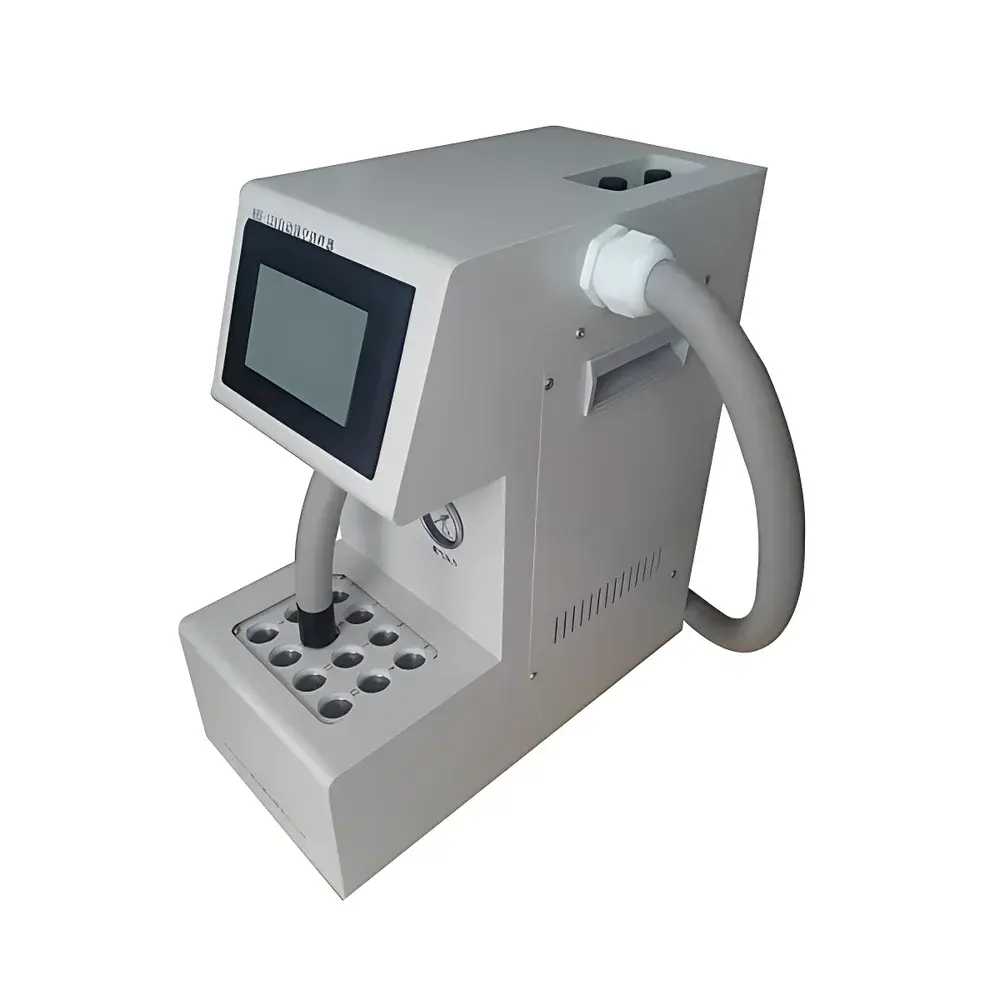
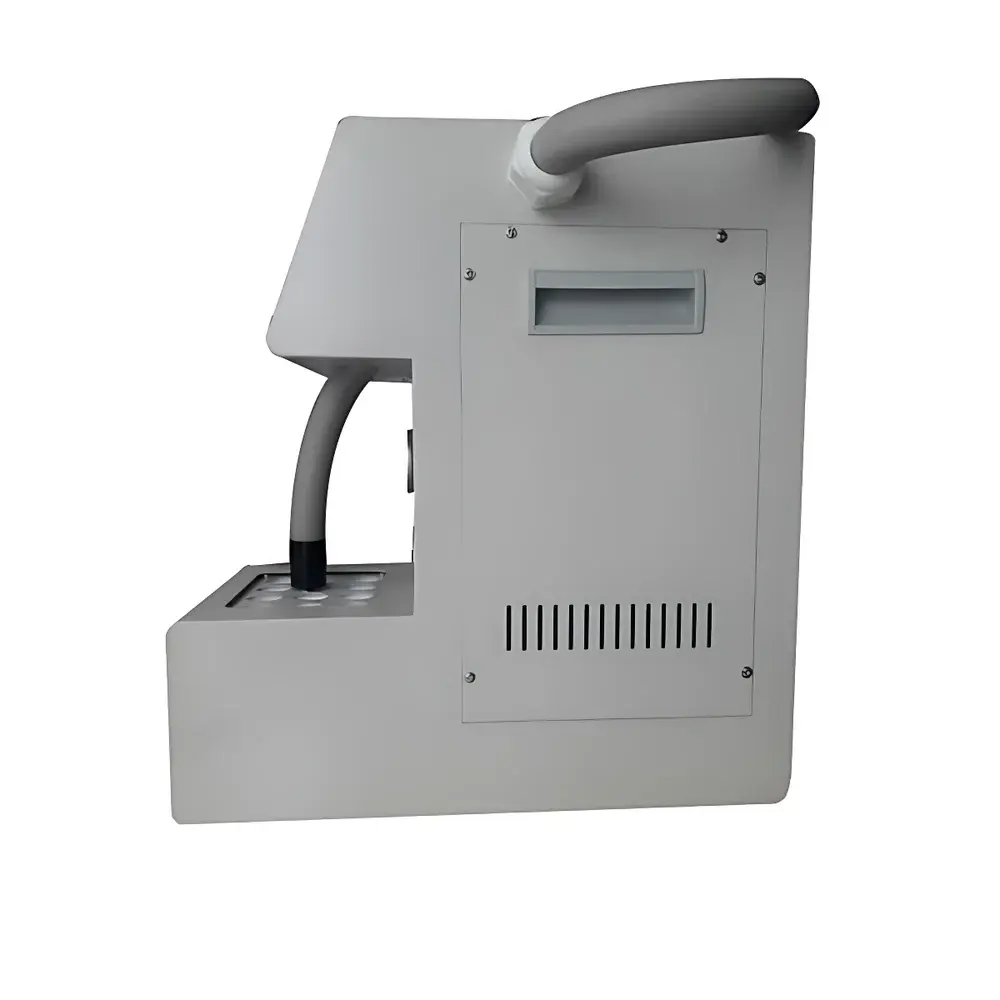
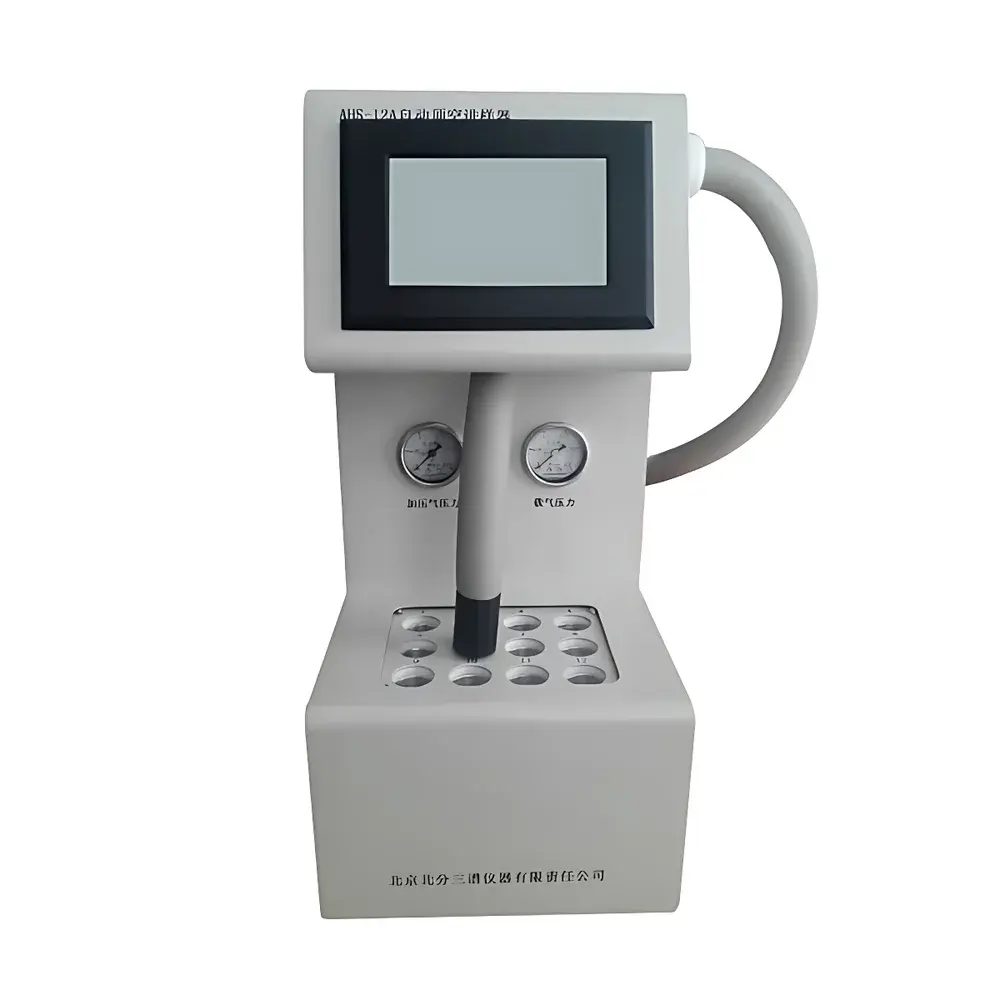
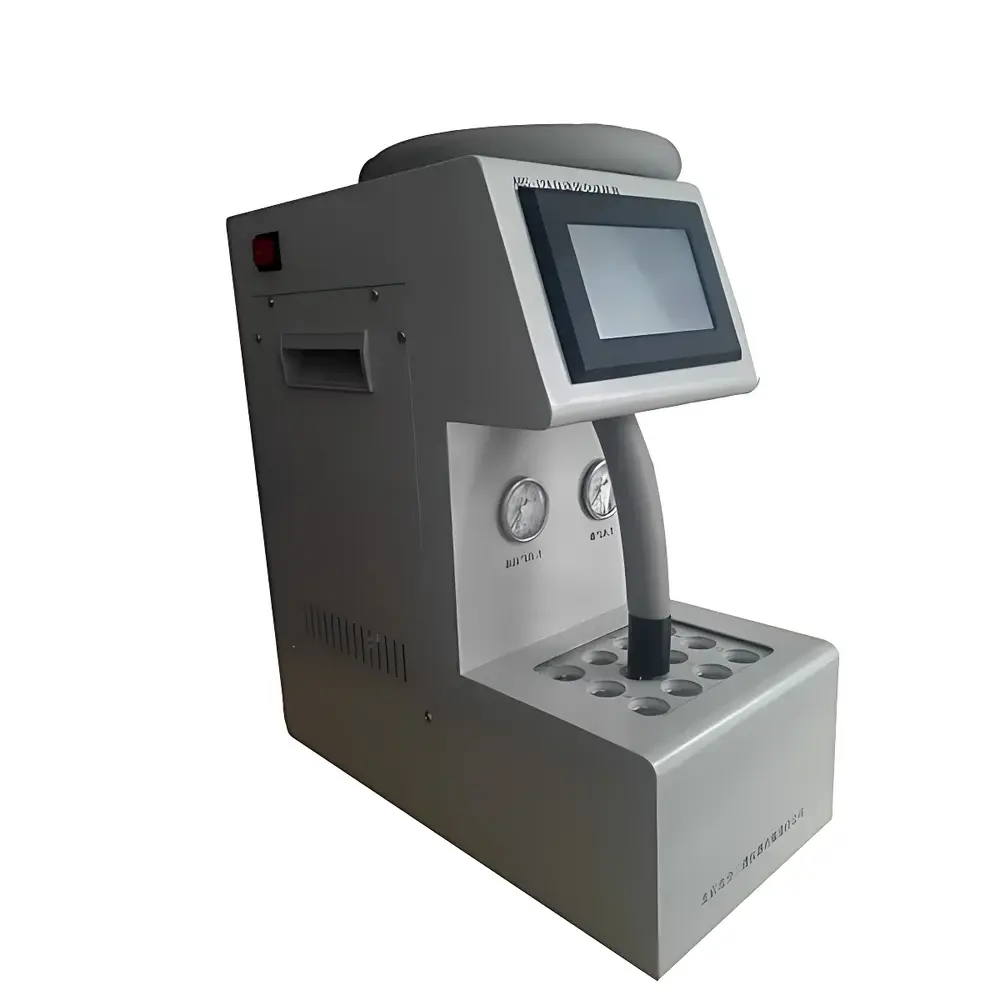
Beifen Sanpu HS-10A Automatic Headspace Sampler
| Brand | Beifen Sanpu |
|---|---|
| Origin | Beijing, China |
| Manufacturer Type | Manufacturer |
| Product Category | Domestic |
| Model | HS-10A |
| Instrument Type | Static Headspace Sampler |
| Automation Level | Semi-Automatic |
| Vial Heating Range | Ambient to 200 °C |
| Valve & Quantitative Loop Temperature Control Range | Ambient to 200 °C |
| Quantitative Loop Volume | 1 mL (optional: 0.5 mL or 3 mL) |
| Sample Vial Capacity | 12 positions |
| Vial Size Compatibility | 10 mL and 20 mL |
| Temperature Control Accuracy | < ±0.5 °C |
| Temperature Uniformity (Gradient) | < ±0.5 °C |
| RSD for Injection Precision | ≤1.5% (n = 6, 40 ppm ethanol in water) |
| Purge/Backflush Flow Rate | 0–500 mL/min (continuously adjustable) |
| Dimensions (L × W × H) | 200 × 360 × 420 mm |
| Weight | ~18 kg |
Overview
The Beifen Sanpu HS-10A Automatic Headspace Sampler is a statically operated, semi-automated sample introduction system engineered for reliable, reproducible volatile organic compound (VOC) analysis via gas chromatography (GC). It operates on the principle of static headspace equilibrium: a sealed sample vial is heated to promote partitioning of analytes between the non-volatile matrix (liquid or solid) and the overlying vapor phase. Once thermodynamic equilibrium is achieved, a precise volume of equilibrated headspace gas is withdrawn under positive pressure and transferred directly into the GC injection port. This technique eliminates matrix interference, minimizes contamination risk, and avoids thermal degradation associated with direct liquid injection—making it especially suitable for residual solvent analysis, environmental monitoring, pharmaceutical quality control, and food safety testing.
Key Features
- 12-position sample carousel with front-access design—enabling seated operation and improved ergonomics in high-throughput laboratory environments.
- Independent, three-zone temperature control: sample vials, six-port sampling valve + quantitative loop, and transfer lines—all heated to up to 200 °C with ±0.5 °C accuracy and uniformity, preventing condensation and ensuring quantitative transfer.
- Custom-engineered electrically actuated six-port valve with precision-machined quantitative loop (standard 1 mL; optional 0.5 mL or 3 mL) for positive-pressure sampling—delivering high sensitivity and low carryover.
- 5-inch full-color touch interface with intuitive navigation; supports storage and recall of up to 10 user-defined methods for rapid method deployment and instrument startup.
- Integrated backflush/purge function (0–500 mL/min, continuously adjustable) across sampling needle and valve pathways to eliminate cross-contamination between runs.
- Real-time synchronization with GC systems and third-party chromatography data systems (CDS), including automatic trigger signal output for seamless workflow integration.
- Safety-focused hardware design: over-temperature cutoff, thermal fuse protection, and modular, field-replaceable syringe needles compatible with all major GC inlet configurations (Agilent, Thermo, Shimadzu, PerkinElmer, etc.).
Sample Compatibility & Compliance
The HS-10A accommodates standard 10 mL and 20 mL crimp-top or screw-cap headspace vials, supporting both aqueous and heterogeneous solid matrices—including pharmaceutical tablets, polymer films, soil slurries, packaged foods, and clinical specimens. Its robust thermal management and low-RSD performance (≤1.5% at 40 ppm ethanol, n=6) meet routine QC requirements outlined in pharmacopeial standards such as USP , EP 2.4.24, and ICH Q3C(R8). While not inherently 21 CFR Part 11 compliant out-of-the-box, the instrument’s deterministic timing, method traceability, and hardware-level audit readiness support integration into GLP/GMP environments when paired with validated CDS platforms featuring electronic signatures and audit trail functionality.
Software & Data Management
The HS-10A operates independently via its embedded firmware and touchscreen interface—no PC dependency for basic operation. All method parameters (equilibration time, vial/valve/line temperatures, pressurization pressure, loop fill time, injection time, purge duration) are stored locally with timestamped versioning. For enterprise-scale deployment, analog/digital trigger outputs and RS-232 communication allow bidirectional handshake with GC controllers and chromatography data systems. Method export/import via USB is supported, enabling centralized method library management and cross-instrument consistency. Raw instrument logs (including temperature profiles, valve actuation timestamps, and error codes) are retained for troubleshooting and regulatory review.
Applications
- Pharmaceuticals: Residual solvents (e.g., acetone, methanol, dichloromethane) in APIs and final dosage forms per ICH Q3C guidelines.
- Environmental: Halogenated VOCs (chloroform, carbon tetrachloride, vinyl chloride) in drinking water and wastewater per EPA Methods 502.2 and 524.4.
- Food & Beverage: Ethanol quantification in vinegar, acetaldehyde in PET packaging, hexane residues in edible oils, and flavor volatiles in tea and beer.
- Clinical Toxicology: Blood alcohol concentration (BAC), ketone body profiling, and volatile metabolite screening in urine and serum.
- Materials Science: Monomer release from polymers, curing agent residuals in composites, and off-gassing characterization of adhesives and sealants.
- Forensics: Detection of ignitable liquids in fire debris and post-mortem volatile biomarkers.
FAQ
Is the HS-10A fully automated or semi-automatic?
The HS-10A is classified as semi-automatic: vial loading, crimping, and method selection are manual, while all thermal equilibration, pressurization, loop filling, injection, and backflush sequences are executed automatically per programmed method.
Can the HS-10A be integrated with third-party GC systems?
Yes—via TTL trigger signals and RS-232 serial interface. It supports synchronized start/stop commands with Agilent, Thermo Fisher, Shimadzu, and other GC platforms.
What vial sizes does the HS-10A support?
Standard 10 mL and 20 mL headspace vials; adapter kits for alternative formats are available upon request.
Does the instrument include validation documentation?
Factory calibration certificates for temperature sensors and loop volume verification are provided. Full IQ/OQ/PQ protocol development and execution require site-specific qualification by the end user or authorized service partner.
Is remote monitoring or network connectivity supported?
No built-in Ethernet or Wi-Fi; remote access requires external serial-to-Ethernet converters or integration through the host GC data system.





