
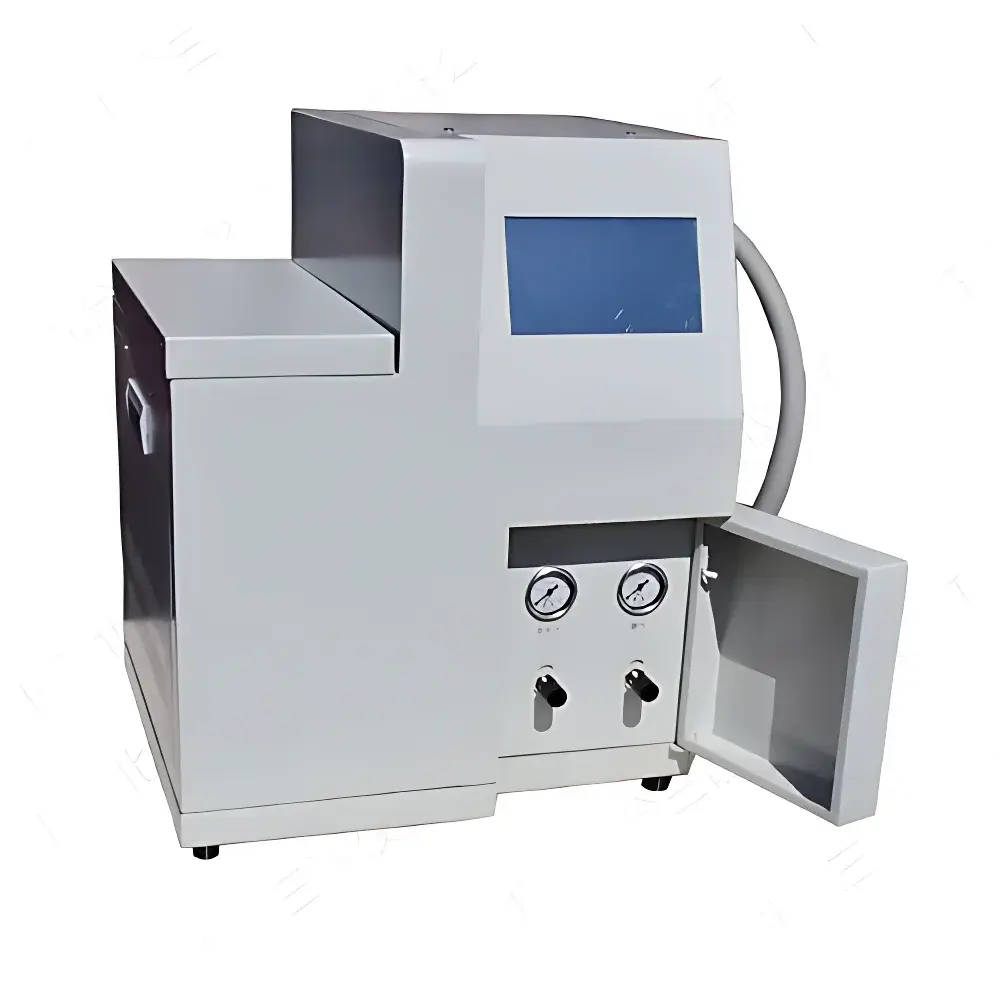
Beifen Sanpu HSA-20A Fully Automated Static Headspace Sampler for GC Analysis of Volatile Organic Compounds in Drinking Water
| Brand | Beifen Sanpu |
|---|---|
| Origin | Beijing, China |
| Manufacturer Type | Direct Manufacturer |
| Product Category | Domestic |
| Model | HSA-20A |
| Instrument Type | Static Headspace Sampler |
| Automation Level | Fully Automatic |
| Vial Heating Range | Ambient to 200 °C (1 °C increment) |
| Valve Temperature Control Range | 40–220 °C (±1 °C accuracy) |
| Sample Loop Volume | 1 mL |
| Vial Capacity | 20 positions |
| Vial Size Compatibility | 10 mL or 20 mL |
Overview
The Beifen Sanpu HSA-20A is a fully automated static headspace sampler engineered for precise, reproducible quantification of volatile organic compounds (VOCs) in aqueous matrices—particularly municipal drinking water. It operates on the principle of static headspace equilibrium gas-phase extraction: a sealed sample vial is heated to a defined temperature, allowing VOCs—including regulated disinfection by-products such as chloroform (CHCl₃) and carbon tetrachloride (CCl₄)—to partition into the headspace above the liquid phase. Once thermodynamic equilibrium is achieved, the gaseous phase is pressurized and transferred via a high-inertness six-port valve and heated transfer line directly into a coupled gas chromatograph (GC). This technique eliminates solvent-based extraction, minimizes column contamination, and avoids baseline drift associated with liquid injection—critical for compliance-driven environmental testing where trace-level sensitivity (<1 µg/L) and method robustness are mandated by regulatory frameworks including GB/T 5750.8–2006 and US EPA Method 524.2.
Key Features
- Fully automated operation: integrated sequence control for vial heating, pressurization, equilibration, sampling, injection, and post-run purging—no manual intervention required across all 20 positions.
- High-precision thermal management: independently controlled heating zones for sample vials (ambient–200 °C), six-port valve (40–220 °C), and transfer lines (40–220 °C), each maintaining ±1 °C stability over time (verified per ISO/IEC 17025 calibration protocols).
- Inert flow path architecture: all internal surfaces—including the 1 mL quantitative loop, valve rotor seal, and transfer tubing—are constructed from de-activated fused silica or SilcoNert®-treated stainless steel to prevent adsorption, carryover, or catalytic degradation of polar halogenated analytes.
- Zero-dead-volume valve design: optimized six-port valve geometry with heated interface ensures minimal band broadening and <1.0% RSD (n=6) for 100 ppm ethanol in water—a performance benchmark aligned with ASTM D3699 and ISO 15686-2 repeatability requirements.
- Intuitive human-machine interface: 7-inch TFT LCD display with animated workflow guidance, real-time parameter monitoring (temperature, pressure, timing), and calendar-stamped audit trail for GLP-compliant recordkeeping.
- Flexible method programming: supports single-vial multi-injection, single-shot per vial, and batch-mode multi-vial sequences; configurable pressurization (0–0.25 MPa), equilibration (0–999 s), sampling (0–30 min), and purge durations (0–30 min) at 1 ms resolution.
Sample Compatibility & Compliance
The HSA-20A accommodates standard 10 mL and 20 mL crimp-top headspace vials (ASTM D7277-compliant), with optional support for 50 mL and 100 mL formats upon request. It is validated for direct analysis of liquid samples (e.g., filtered tap water) and solid-phase matrices (e.g., soil slurries, polymer leachates) following EPA SW-846 Method 5021A. The system meets essential regulatory prerequisites for environmental laboratories: full compatibility with FDA 21 CFR Part 11 electronic signature and audit trail functionality when operated via USB-connected PC software; alignment with ISO/IEC 17025 clause 5.9 (method validation); and adherence to GB/T 5750.8–2006 for chlorinated hydrocarbon detection in potable water. All thermal and pressure parameters are traceable to NIST-certified references.
Software & Data Management
Control and data acquisition are executed through a dedicated Windows-based application supporting USB 2.0 communication. The software enables remote parameter configuration (temperature ramps, timing events, valve actuation logic), real-time status visualization, and export of raw method files (.hsa) and result logs (.csv/.xlsx) compatible with LIMS integration. Critical operations—including power-on self-diagnosis, vial position verification, mechanical fault detection (e.g., stepper motor stall, sensor timeout), and automatic collision avoidance during carousel rotation—are logged with timestamps and error codes. Optional EPC (Electronic Pressure Control) module provides closed-loop regulation of carrier gas pressure during injection, enhancing retention time stability across multi-day validation runs.
Applications
- Regulatory monitoring of trihalomethanes (THMs) and haloacetic acids (HAAs) in municipal water supplies per GB/T 5750.8–2006 and EU Directive 98/83/EC.
- Residual solvent analysis in pharmaceutical excipients (ICH Q3C) and packaging materials (ISO 11843-7).
- VOC profiling in wastewater effluents, landfill leachate, and industrial process streams.
- Flavor and fragrance compound screening in beverages and food extracts.
- Forensic toxicology screening for volatile poisons (e.g., benzene, toluene, xylene) in biological fluids.
FAQ
Is the HSA-20A compatible with Agilent, Thermo Fisher, and Shimadzu GC systems?
Yes—the instrument features universal GC synchronization via TTL trigger signals and supports direct hardware handshake with all major GC brands through configurable start/stop protocols.
Can the system be validated for ISO/IEC 17025 accreditation?
Yes—full documentation packages (IQ/OQ/PQ protocols, calibration certificates, uncertainty budgets) are available upon request to support laboratory accreditation audits.
What maintenance intervals are recommended for long-term reliability?
Valve rotor seal replacement every 10,000 injections; inert liner inspection every 6 months; annual NIST-traceable temperature and pressure recalibration.
Does the HSA-20A support unattended overnight operation?
Yes—20-position capacity, programmable sleep/wake cycles, and automatic error recovery enable fully autonomous 24/7 operation in routine QC environments.
How is carryover minimized between high-concentration and low-concentration samples?
Through configurable post-injection purge with adjustable flow (0–100 mL/min), heated transfer line (≥220 °C), and inert surface passivation—validated to achieve <0.1% carryover for chloroform at 100 µg/L level.





