
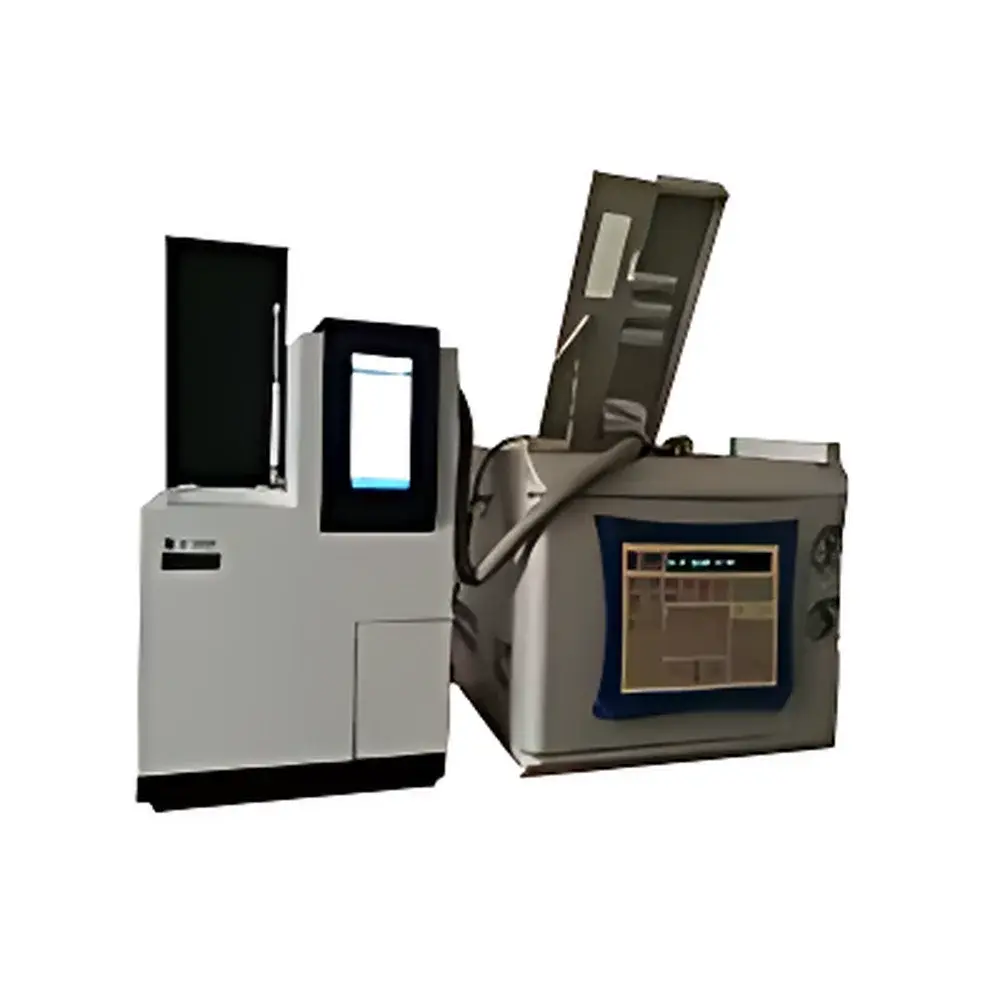
Beifen Sanpu SATDS-20A Dual-Stage Automated Thermal Desorber with Cryogenic Trap
| Brand | Beifen Sanpu |
|---|---|
| Model | SATDS-20A |
| Origin | Hebei, China |
| Manufacturer Type | Direct Manufacturer |
| Instrument Type | Dual-stage thermal desorber |
| Primary Desorption Temp Range | Ambient to 450 °C |
| Secondary Desorption Temp Range | 100–450 °C |
| Cryogenic Trap Temp Range | −35 °C to ambient |
| Desorption Recovery Rate | >99% (compound-dependent) |
| Sample Capacity | 20 positions |
| Temperature Control Precision | ±0.5 °C |
| RSD | ≤2.5% (benzene at 0.05 μg) |
| Sample Tube Size | 1/4″ OD × 3.5″ (ASTM D6196-compliant) |
Overview
The Beifen Sanpu SATDS-20A Dual-Stage Automated Thermal Desorber with Cryogenic Trap is an engineered solution for quantitative trace volatile organic compound (VOC) analysis in environmental, industrial hygiene, and materials testing laboratories. It operates on the principle of two-stage thermal desorption: first, analytes are thermally released from sorbent tubes under controlled inert gas flow; second, they are refocused onto a cryogenically cooled trap (down to −35 °C) before rapid thermal desorption into the GC or GC-MS inlet. This dual-stage process significantly enhances sensitivity, peak shape resolution, and reproducibility—particularly for low-boiling and reactive VOCs (e.g., C2–C12 aliphatics, aromatics, oxygenates, and halogenated compounds). Designed for full integration with any commercial gas chromatograph—including Agilent, Thermo Fisher, Shimadzu, and PerkinElmer systems—the SATDS-20A complies with core regulatory methodologies including EPA TO-17, HJ 644–2013, HJ 583–2010, HJ 734–2014, and GB/T 18883–2002. Its architecture supports unattended batch processing of up to 20 samples per run, minimizing manual intervention while maintaining analytical rigor required for GLP and ISO/IEC 17025-accredited workflows.
Key Features
- Four independently programmable heating zones: primary desorption oven, secondary desorption chamber, sample transfer line (24 V low-voltage heated), and six-port valve manifold—each controllable in 1 °C increments from ambient to 450 °C
- Integrated Peltier-based cryogenic trap capable of stable operation at −35 °C, enabling sharp band focusing and narrow chromatographic peaks (peak width reduction ≥40% vs. single-stage desorption)
- Motor-driven six-port valve with precise timing control for automated sequence execution: desorption → purge → cold trapping → flash desorption → GC injection → backflush cleaning
- Onboard calibration and self-diagnostic routines: automatic sample tray homing, real-time fault detection, audible/visual alarm triggers, and system status logging
- Dual functionality support: configurable as either ambient-temperature or cryogenic secondary desorption mode via optional hardware modules
- Standardized 1/4″ OD × 3.5″ sorbent tube interface compliant with ASTM D6196 and ISO 16017-1 specifications
- GC synchronization capability: TTL-level trigger output for coordinated start of GC oven ramp and data acquisition software
- Integrated sample tube activation protocol with programmable temperature ramping and inert gas purging for pre-analysis conditioning
Sample Compatibility & Compliance
The SATDS-20A accommodates standard stainless steel or quartz-lined sorbent tubes packed with multi-bed media (e.g., Tenax TA, Carbopack B/C, Carboxen 1000), supporting both passive and active sampling configurations. It is validated for use with EPA Method TO-17 matrices—including ambient air, indoor air, workplace breathing zone samples, polymer emissions, and building material headspace extracts. Regulatory alignment extends to Chinese national standards HJ 644–2013 (VOCs in ambient air by TD-GC/MS), HJ 734–2014 (stationary source VOCs), and GB 50325–2020 (indoor pollution control in civil construction). All thermal zones meet IEC 61000-4 electromagnetic compatibility requirements, and firmware supports audit-trail generation for 21 CFR Part 11–compliant environments when paired with validated LIMS or chromatography data systems.
Software & Data Management
Operation is managed via a 7-inch capacitive touchscreen running embedded Linux-based firmware. Users define complete method sequences—including desorption hold times, trap cooling duration, flash rate (up to 3000 °C/min), and backflush flow (0–100 mL/min)—through an intuitive graphical interface. Real-time animation displays valve actuation, temperature profiles, and elapsed cycle time. Method files are exportable in CSV format; event logs (including error codes, temperature deviations >±1.0 °C, and valve position errors) are timestamped and stored internally for ≥12 months. Optional RS-232 and Ethernet ports enable remote monitoring and integration with laboratory information management systems (LIMS) or electronic lab notebooks (ELN). No proprietary software license is required for basic operation; GC vendor-native control (e.g., Agilent OpenLab, Thermo Chromeleon) is supported via hardware-triggered start.
Applications
This instrument delivers robust performance across regulated and research-driven applications: quantification of benzene, toluene, ethylbenzene, and xylenes (BTEX) in ambient and indoor air per HJ/T 400–2007; screening of formaldehyde and acetaldehyde in vehicle cabin air; compliance testing of VOC emissions from carpets, adhesives, and composite wood products per GB 18580–2017; analysis of residual solvents in pharmaceutical packaging per USP ; and identification of odorants in food packaging headspace. Its high recovery (>99% for most C4–C10 VOCs) and low RSD (<2.5% at sub-ppbv levels) make it suitable for method validation studies requiring ISO 5725-2 precision criteria. The cryogenic trap configuration is especially critical for analyzing thermally labile compounds such as vinyl chloride, propylene oxide, and certain nitriles that degrade under conventional hot-desorption conditions.
FAQ
What distinguishes dual-stage thermal desorption from single-stage desorption?
Dual-stage desorption incorporates a cryofocusing step between primary desorption and GC injection, concentrating analytes into a narrow band and improving detection limits by 5–10× compared to single-stage systems.
Is the SATDS-20A compatible with GC-MS systems?
Yes—it provides synchronized TTL triggering and maintains carrier gas integrity through heated transfer lines, ensuring optimal coupling with quadrupole and time-of-flight mass spectrometers.
Can the instrument perform tube activation in situ?
Yes—integrated tube conditioning protocols include programmable heating ramps, dwell times, and nitrogen purge flows, eliminating the need for standalone aging ovens.
Does it support audit trails for regulated laboratories?
Firmware records all method changes, runtime events, and temperature excursions; when connected to validated chromatography data systems, it satisfies ALCOA+ data integrity principles.
What maintenance intervals are recommended?
Valve seals should be inspected every 500 runs; cryo-cooler performance is verified quarterly using isopropanol calibration checks; transfer line ferrules require replacement after 1000 thermal cycles.
Related Products



