
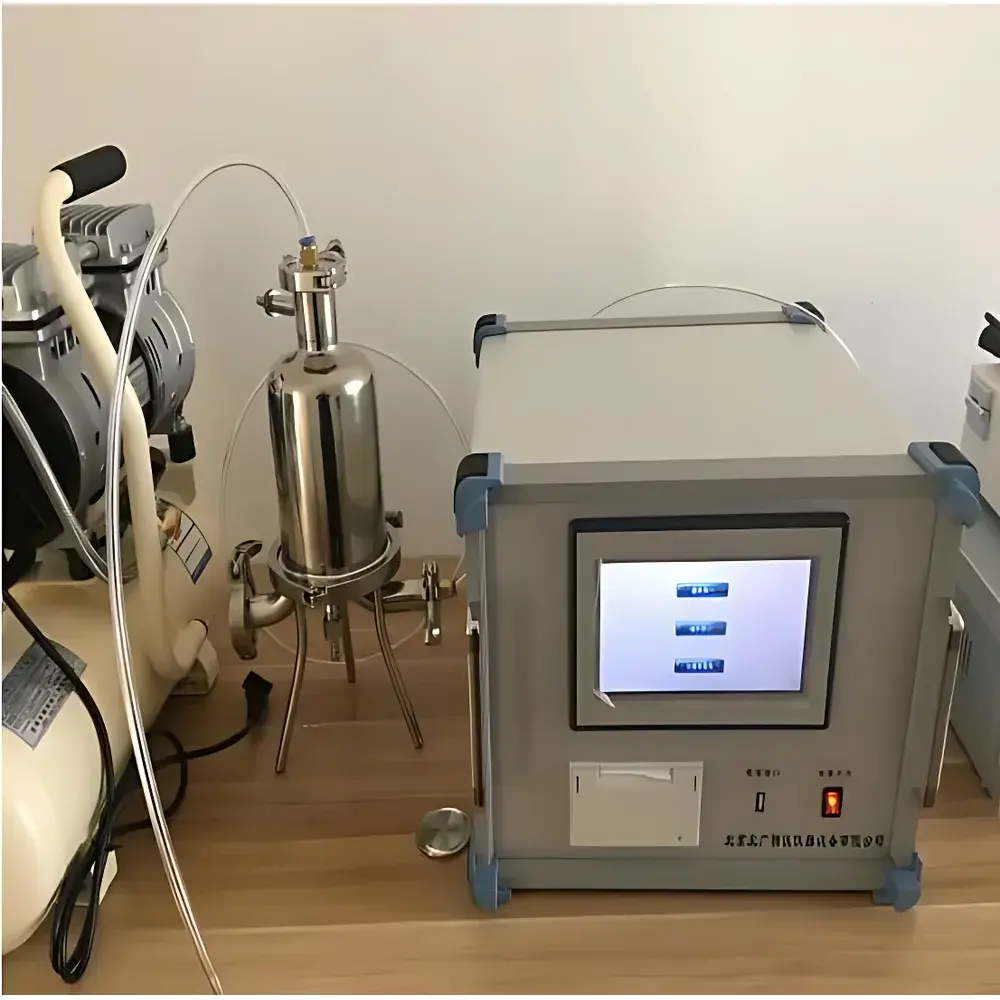
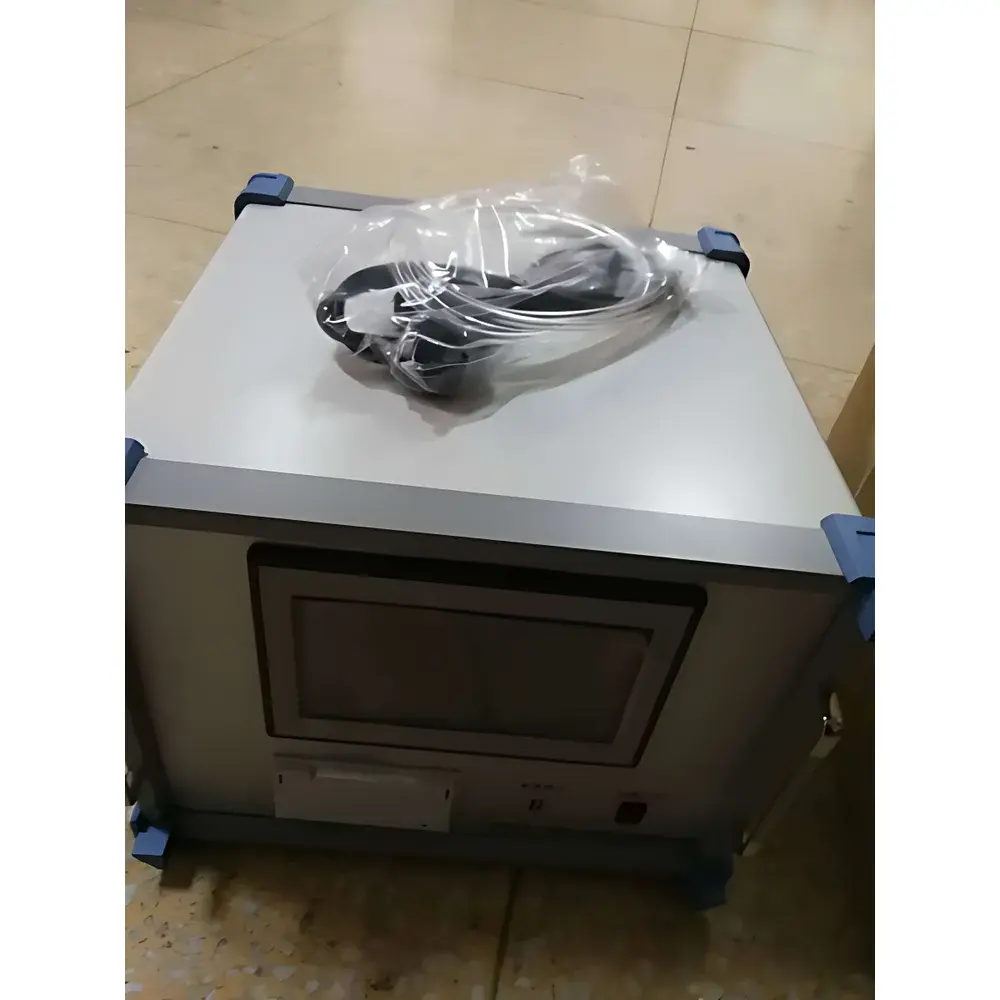
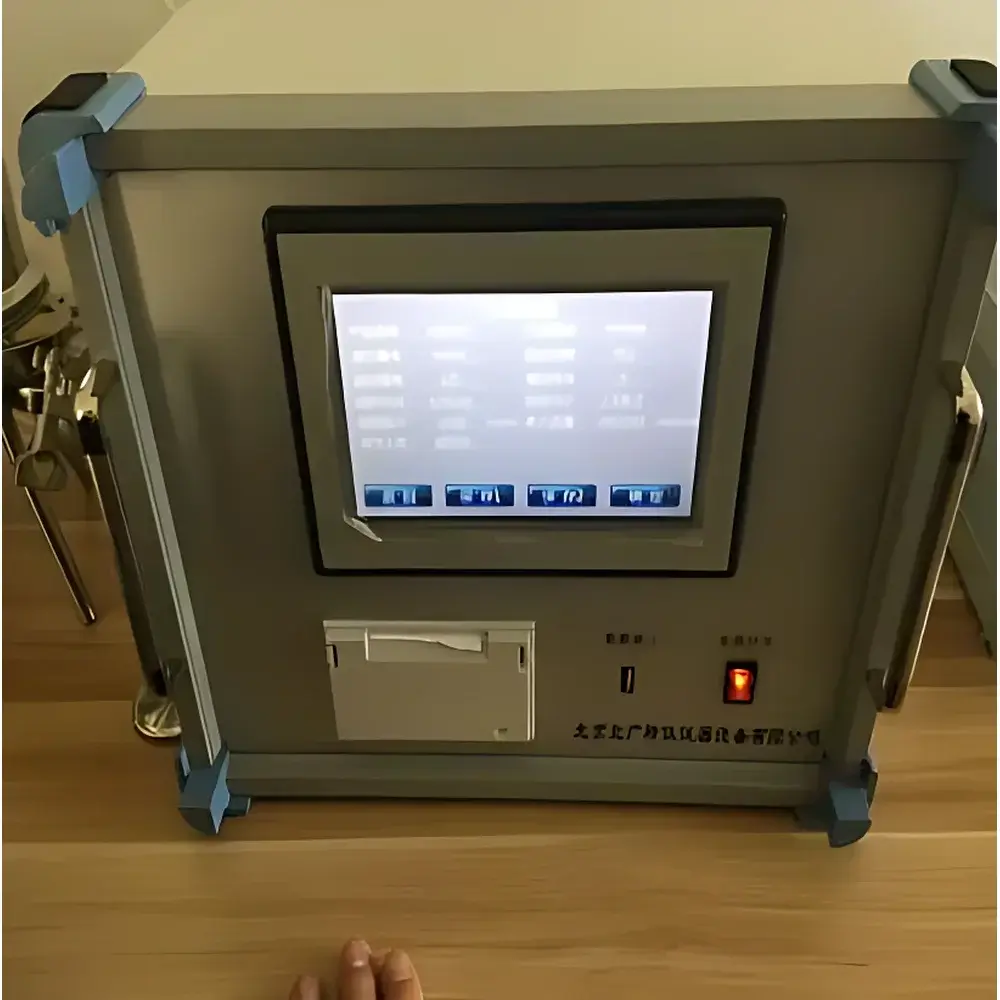
Beiguang Jingyi BQ19 Filter Integrity Tester for Pharmaceutical Sterile Filtration Validation
| Brand | Beiguang Jingyi / All Precision Instrument |
|---|---|
| Origin | Beijing, China |
| Manufacturer Type | Direct Manufacturer |
| Product Category | Domestic (PRC-Made) |
| Model | BQ19 |
| Price | USD 3,500 (approx.) |
| Power Supply | 100–240 V AC, 50/60 Hz, 100 W |
| Max Test Pressure | 6900 mbar |
| Min Inlet Pressure | 3000 mbar |
| Pressure Sensitivity | ±1.0 mbar |
| Bubble Point Accuracy | ±75 mbar |
| Operating Temperature | +5 °C to +35 °C |
| Relative Humidity | 10–80 % RH |
| Test Duration (Rapid Bubble Point) | 9 ±2 min |
| Test Duration (Bubble Point Scan) | 20 ±2 min |
| Data Storage Capacity | 20 test records |
| Display | 73 × 39 mm monochrome LCD |
| Language Support | English, Chinese |
| Compliance | Designed for ASTM F838-22, ISO 13408-2, USP <1207>, EU GMP Annex 1, and FDA 21 CFR Part 11–ready data logging architecture |
Overview
The Beiguang Jingyi BQ19 Filter Integrity Tester is an engineered solution for non-destructive, quantitative integrity verification of hydrophobic and hydrophilic membrane filters used in sterile pharmaceutical manufacturing, bioprocessing, and aseptic filling applications. It operates on two internationally recognized physical principles: the bubble point (BP) method and the diffusion flow (DF) method—both grounded in capillary physics and governed by the Young–Laplace equation. The instrument applies controlled gas pressure across a fully wetted filter membrane; the bubble point is defined as the minimum differential pressure at which bulk gas flow initiates through the largest pore, while diffusion flow quantifies spontaneous gas permeation below the bubble point due to concentration gradients across the membrane. These measurements correlate directly with microbial retention performance validated per ASTM F838-22 and referenced in USP . Unlike destructive challenge tests, the BQ19 enables repeatable, in-situ or post-sterilization (SIP) verification without compromising process continuity or introducing organic solvents such as IPA or DOP—ensuring compliance with environmental, safety, and residue control requirements in GMP environments.
Key Features
- Integrated dual-method testing: simultaneous bubble point and multi-point diffusion flow analysis for comprehensive pore structure assessment
- Water-only wetting protocol: eliminates need for hazardous or volatile wetting agents (e.g., isopropanol), reducing validation burden and operator exposure risk
- Real-time pressure–diffusion curve visualization: graphical display of ΔP vs. flow rate enables immediate identification of membrane heterogeneity, edge channeling, or seal failure
- Automated pass/fail logic with configurable acceptance criteria: supports user-defined bubble point thresholds, slope deviation limits for DF curves, and pressure ramp profiles
- Post-test auto-exit function: terminates pressurization immediately upon confirmed pass condition—minimizing mechanical stress on filter elements and extending cartridge service life
- Multi-level user access control: administrator, supervisor, and operator roles with password-protected parameter editing, audit trail generation, and session logging aligned with 21 CFR Part 11 expectations
- Passive thermal management: sealed external heatsink design eliminates internal fans—preventing particle generation and maintaining ISO Class 5 cleanroom compatibility
Sample Compatibility & Compliance
The BQ19 accommodates standard cylindrical and flat-sheet filter configurations, including pleated polyethersulfone (PES), polyvinylidene fluoride (PVDF), polytetrafluoroethylene (PTFE), and mixed cellulose ester (MCE) membranes. It supports both hydrophobic (e.g., vent filters) and hydrophilic (e.g., liquid sterilizing filters) materials via water-based wetting—enabling direct assessment of hydrophobicity retention after steam-in-place (SIP) cycles. The system meets functional requirements outlined in ISO 13408-2 (sterility assurance), EU GMP Annex 1 (paragraph 8.112), and USP (Package Integrity Evaluation). While not certified to IEC 61010-1, its electrical architecture complies with CE-marked safety standards for laboratory instrumentation. All test data—including timestamps, operator IDs, pressure ramps, and raw diffusion values—are stored internally with tamper-resistant metadata, supporting GLP/GMP traceability and retrospective review.
Software & Data Management
The embedded firmware implements deterministic real-time pressure control with PID-regulated gas flow modulation, ensuring stable ramp rates (0.5–50 mbar/min selectable) and sub-mbar resolution. Each test record includes: batch ID, filter type/specification, wetting fluid selection, nominal pore size, test date/time, operator ID, pressure–flow dataset (CSV-exportable via optional USB interface), and pass/fail status with annotated deviation flags. The monochrome LCD provides dual-screen navigation: one showing live system diagnostics (pressure stability, valve state, ambient temperature), the other rendering dynamic diffusion curves. Built-in print functionality generates audit-ready reports with header/footer fields, calibration status indicators, and signature lines—fully compatible with paper-based QA workflows. Firmware version IV4.0 introduces customizable password policies, session timeout enforcement, and encrypted local storage—addressing key data integrity controls required under FDA guidance for computerized systems.
Applications
- Pre-use, post-sterilization integrity verification of final filters in bioreactor harvest lines and buffer preparation systems
- Validation of hydrophobic vent filters following autoclave or SIP cycles—confirming absence of condensation-induced pore collapse or housing gasket failure
- Quality release testing of pre-filters and sterile-grade cartridges supplied by third-party vendors
- Troubleshooting suspected installation errors (e.g., O-ring misalignment, housing cross-threading) via asymmetric diffusion signatures
- Periodic requalification of filter assemblies during long-term storage or extended hold times
- Supporting regulatory submissions requiring documented correlation between bubble point values and bacterial retention studies per HIMA or PDA TR26
FAQ
Can the BQ19 perform integrity tests on filters still installed in their process housings?
Yes—provided the housing is equipped with dedicated integrity test ports and isolation valves meeting ISO 13408-2 port configuration guidelines. The instrument’s high-pressure capability (up to 6900 mbar) accommodates large-diameter housings with significant dead volume.
Does the water-only method compromise sensitivity for hydrophobic membranes?
No—water intrusion under sub-bubble-point pressure yields reproducible diffusion profiles that correlate linearly with microbial retention data when calibrated against reference filters. Surface tension modifiers are unnecessary due to the instrument’s low-noise transducer array and extended dwell-time algorithms.
How does the BQ19 ensure data integrity for FDA audits?
All test executions generate immutable records with electronic signatures, time-stamped parameter sets, and revision-controlled firmware logs. Optional USB export enables integration into LIMS or ELN platforms with hash-verified file integrity checks.






