
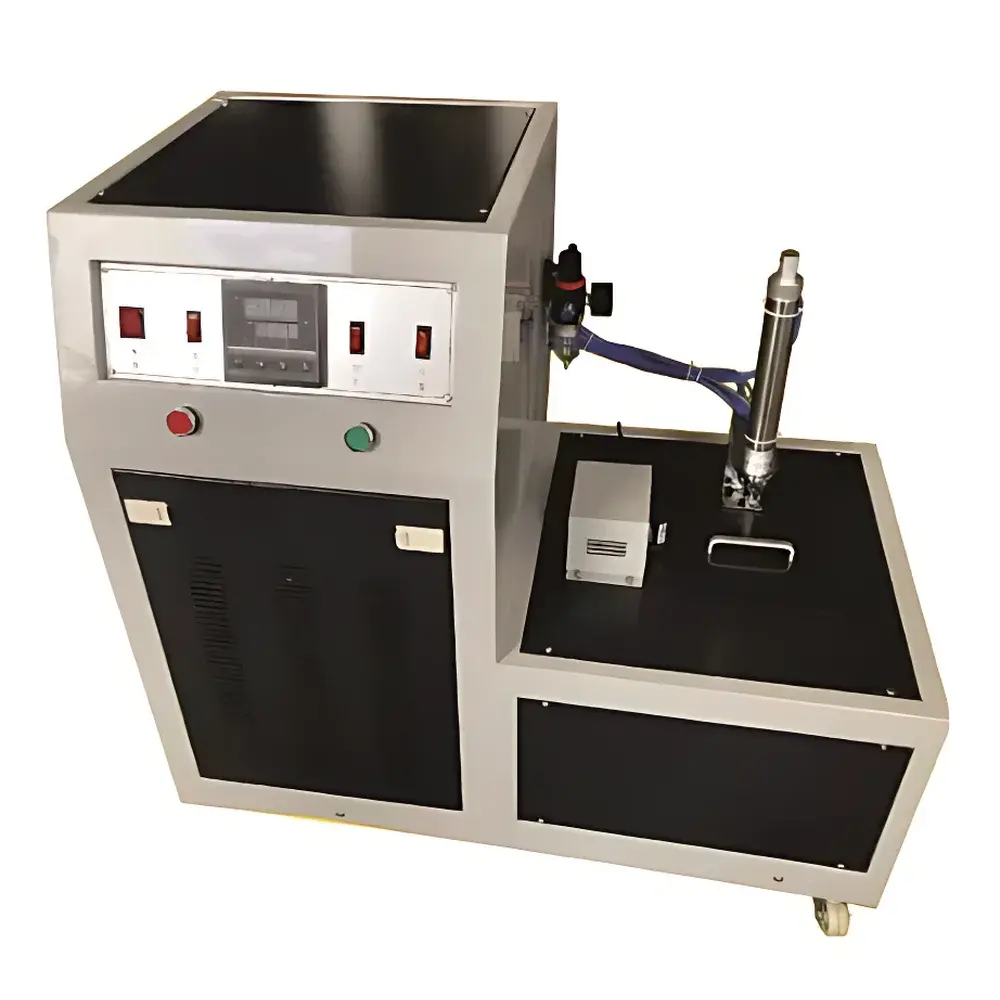
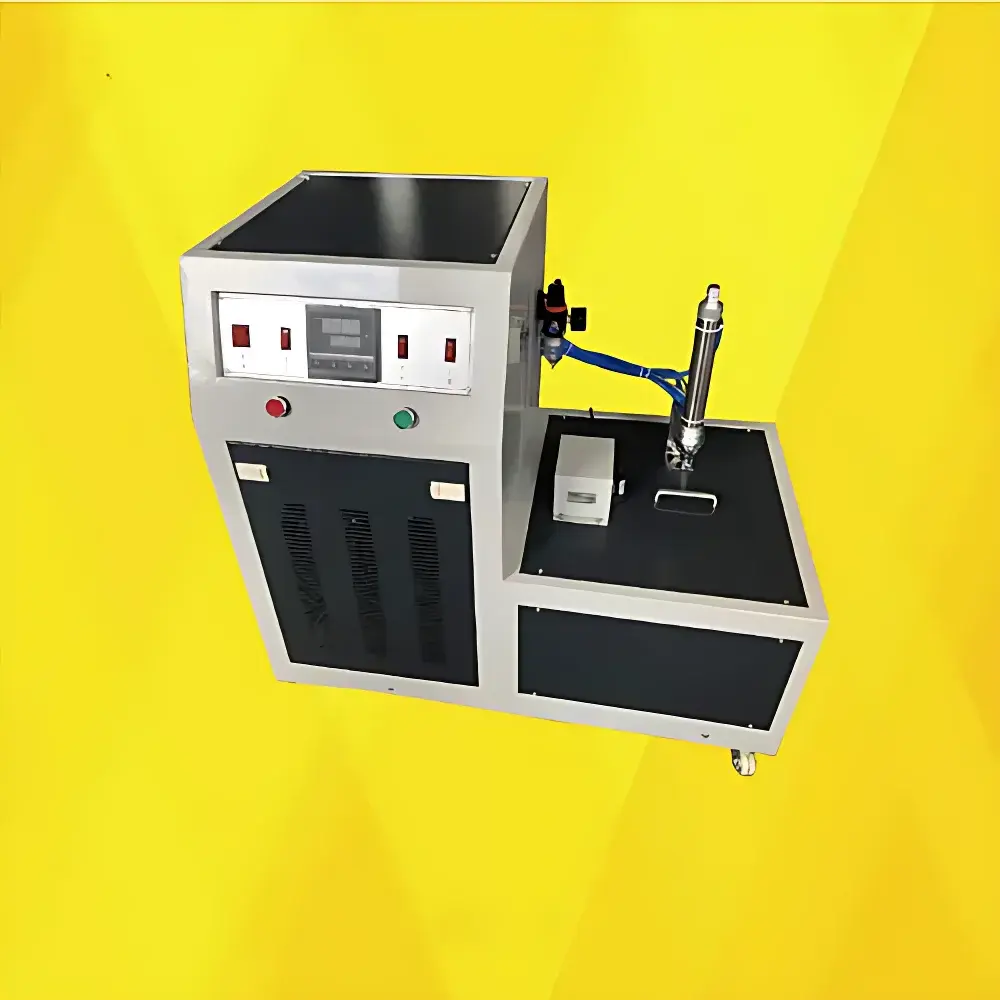
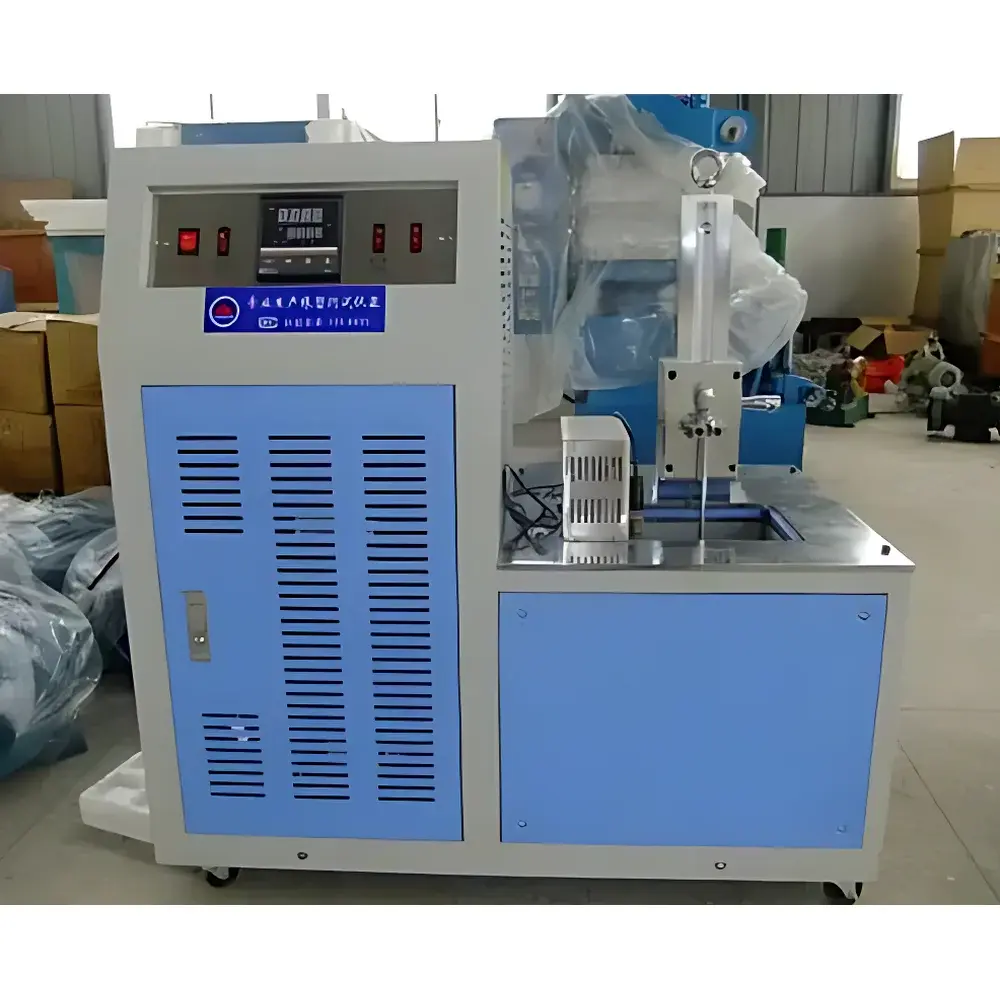
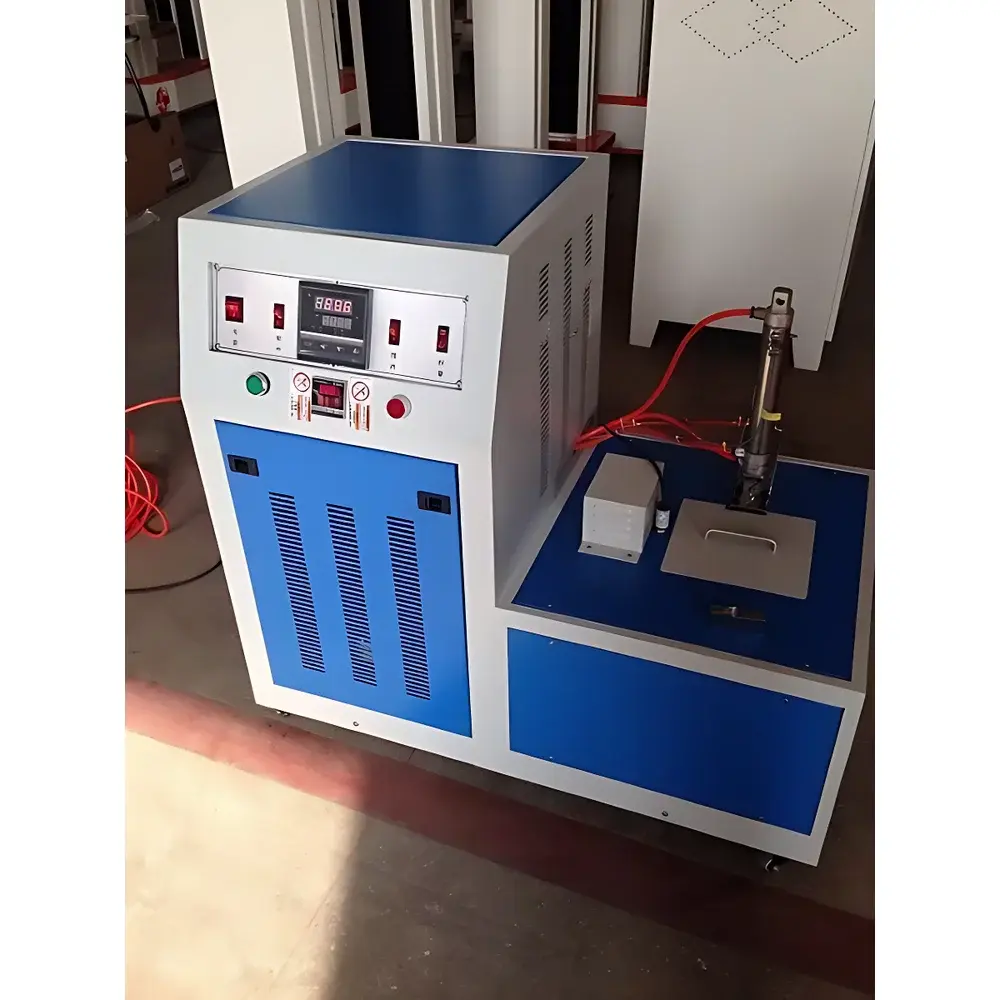
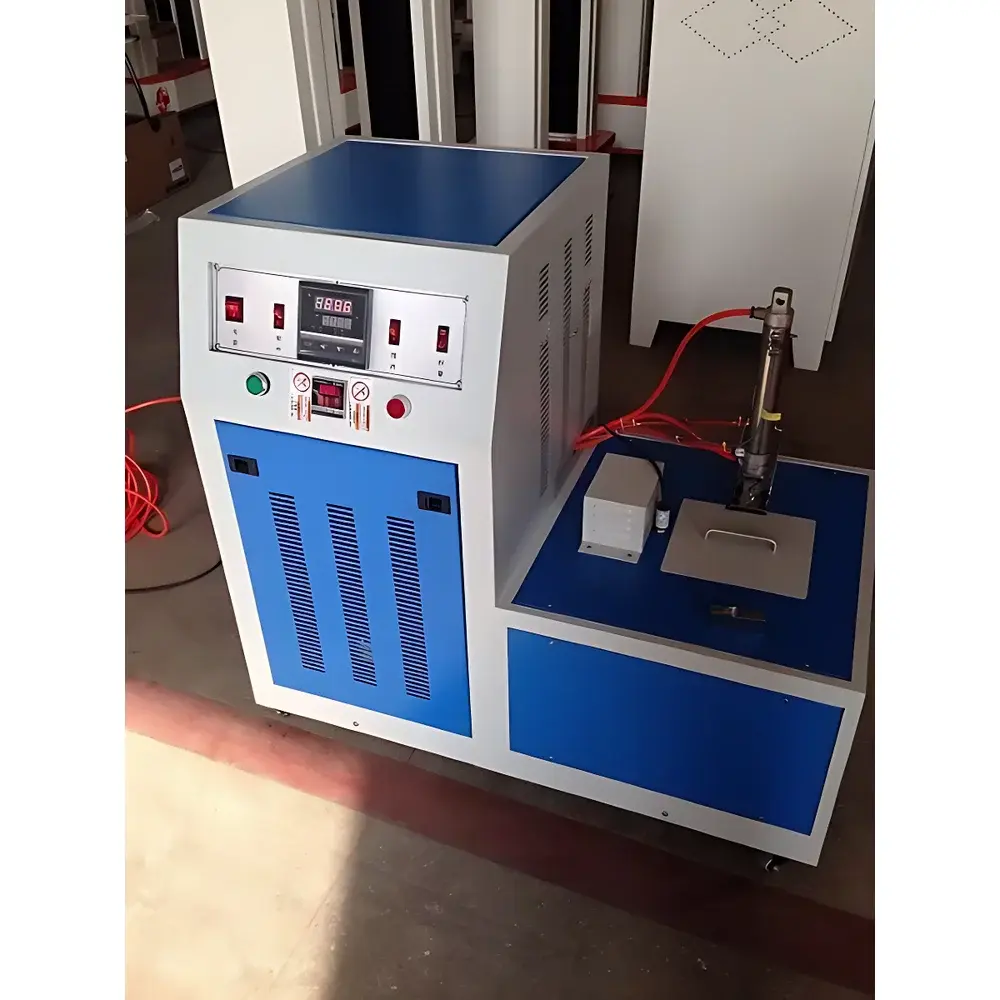
Beiguang Jingyi BWD-Series Low-Temperature Brittleness Tester
| Brand | Beiguang Jingyi / All Precision Instrument |
|---|---|
| Origin | Beijing, China |
| Manufacturer Type | Direct Manufacturer |
| Product Category | Domestic |
| Model | BWD-Series |
| Impact Energy Range | 0 s to 99 min (1 s resolution) |
| Cooling Rate | 2.0 °C/min (average, -40 °C to -80 °C) |
| Temperature Control Range | Ambient (≤25 °C) to -80 °C |
| Temperature Uniformity | ±0.3 °C |
| Specimen Chamber Dimensions | 260 × 170 × 150 mm (L×W×H) |
| Maximum Specimen Capacity | 1 |
| Impact Velocity | 2.0 ± 0.2 m/s |
| Impact Energy per Specimen | ≥3.0 J |
| Impact Head Radius | 1.6 ± 0.1 mm |
| Gap Between Impact Head and Clamp | 6.4 ± 0.3 mm |
| Distance from Impact Centerline to Clamp Edge | 8 ± 0.3 mm (rubber), 3.6 ± 0.1 mm (plastics) |
| Cooling Medium | Industrial ethanol or non-freezing liquid |
| Power Supply | 220–240 V AC, 50 Hz, 1.5 kW |
| Compliance | GB/T 15256–2014 |
Overview
The Beiguang Jingyi BWD-Series Low-Temperature Brittleness Tester is an engineered instrument for determining the brittle transition temperature of elastomers and rigid plastics under standardized impact conditions. It operates on the principle of controlled cryogenic immersion followed by pendulum-type mechanical impact, in accordance with the multi-specimen method defined in GB/T 15256–2014 and aligned with international practices for low-temperature ductile-to-brittle transition assessment. The system employs a compressor-driven direct-refrigeration architecture to achieve stable, uniform cooling from ambient (≤25 °C) down to –80 °C within a thermally insulated test chamber. Temperature is monitored in real time via calibrated thermocouples or RTD sensors, with digital display and control accuracy of ±0.3 °C across the operational range. Unlike ambient-temperature impact testers, this instrument integrates precise thermal conditioning, synchronized timing, and repeatable mechanical impact delivery—enabling quantitative evaluation of material failure thresholds at sub-zero temperatures where polymer chain mobility, crystallinity, and intermolecular forces critically influence fracture behavior.
Key Features
- Compressor-based refrigeration system with optimized heat exchange design, enabling rapid and stable cooling from ambient to –80 °C; cooling rate reaches 2.0 °C/min between –40 °C and –80 °C.
- Integrated cold bath stirrer (8 W motor) ensures homogeneous temperature distribution throughout the ethanol-filled cryogenic well, minimizing radial and axial thermal gradients and improving test reproducibility.
- Digital timer with 1-second resolution (0–99 min range) supports strict adherence to standard immersion durations (e.g., 3.0 ± 0.5 min per specimen).
- Rigid cantilever-style specimen clamp assembly, precision-machined to maintain dimensional stability and prevent deformation during freezing and impact loading.
- Impact mechanism delivers a calibrated drop-weight impact at 2.0 ± 0.2 m/s, with minimum energy per specimen ≥3.0 J—ensuring consistent kinetic input independent of minor variations in drop height or mass.
- LCD-based temperature controller with real-time monitoring, adjustable setpoints, and over-temperature/under-temperature alarms for process integrity.
- Compact footprint (900 × 500 × 800 mm) and sealed electrical enclosure meet laboratory safety requirements; grounding and voltage stabilization safeguards protect against compressor cycling faults.
Sample Compatibility & Compliance
The BWD-Series accommodates standardized specimens per GB/T 15256–2014: Type A (20.0 ± 0.25 mm × 2.5 ± 0.1 mm × 2.0 ± 0.1 mm) and Type B (31.75 ± 6.35 mm × 6.35 ± 0.51 mm × 1.91 ± 0.13 mm), suitable for vulcanized rubber, thermoplastic elastomers, and rigid thermoplastics including PVC, ABS, and polycarbonate. Specimens must be free of surface defects, contaminants, or machining-induced stress concentrations. The instrument’s mechanical geometry—including impact head radius (1.6 ± 0.1 mm), clamp-to-impact gap (6.4 ± 0.3 mm), and centerline alignment—is validated against ISO 812 and ASTM D746 equivalents for geometric fidelity. While not certified to ISO/IEC 17025, its design enables traceable calibration using NIST-traceable thermocouples and certified reference materials. Routine verification per GB/T 15256–2014 Annex B ensures ongoing conformance to specified thermal and mechanical tolerances.
Software & Data Management
The BWD-Series operates via embedded firmware without external PC dependency. All critical parameters—including setpoint temperature, actual bath temperature, elapsed immersion time, and impact event confirmation—are logged to internal non-volatile memory with timestamping. Data export is supported via USB interface (optional firmware upgrade), generating CSV files compatible with LIMS and QA documentation systems. The controller supports audit trail functionality: operator ID entry (via numeric keypad), parameter change logging, and alarm history retention for up to 1,000 events—meeting baseline GLP documentation requirements. Though not FDA 21 CFR Part 11-compliant out-of-the-box, the system architecture permits integration with validated third-party data acquisition software for regulated environments requiring electronic signatures and access controls.
Applications
This tester serves quality control laboratories in rubber compounding, automotive sealing systems, aerospace elastomer qualification, and medical device polymer validation. It is routinely used to verify batch-to-batch consistency of low-temperature performance in O-rings, gaskets, cable jackets, and cryogenic seals. In R&D settings, it supports formulation screening—e.g., evaluating plasticizer efficacy in nitrile rubber or the impact of nanofiller dispersion on polyurethane brittle point. For metals research, while not designed for metallic specimens per se, its thermal control module is occasionally adapted for preliminary screening of polymer-coated alloys or composite laminates where interfacial delamination onset correlates with matrix brittleness. Results inform material selection for arctic-grade components, LNG infrastructure seals, and cold-climate outdoor equipment—where service temperatures may approach or fall below the measured brittle point.
FAQ
What standards does the BWD-Series comply with?
It is designed and verified to meet the dimensional, thermal, and mechanical requirements of GB/T 15256–2014 (Chinese National Standard for “Determination of Low-Temperature Brittleness of Vulcanized Rubber — Multi-Specimen Method”). Its geometry and timing functions are functionally equivalent to ISO 812 and ASTM D746 for comparative testing.
Can the instrument test metallic specimens?
No. The BWD-Series is specifically configured for polymeric materials per GB/T 15256–2014. Metallic specimens require higher impact energies, different clamp geometries, and alternative fracture criteria (e.g., Charpy or Izod methods per ASTM E23), which fall outside this instrument’s mechanical and thermal design envelope.
Why is ethanol specified as the cooling medium?
Ethanol provides optimal viscosity, thermal conductivity, and freezing-point depression (-114 °C) for stable operation down to -80 °C. Alternatives such as methanol or propylene glycol mixtures may be used only if validated for thermal homogeneity and compatibility with stainless-steel wetted parts.
How often should calibration verification be performed?
Per GB/T 15256–2014 Annex B, temperature sensor accuracy should be verified before each test series using a calibrated reference thermometer traceable to national standards. Mechanical dimensions (impact gap, head radius) require annual metrological inspection using certified gauge blocks and radius templates.
Is remote monitoring or network connectivity available?
Standard configuration includes local LCD display and manual controls only. Ethernet or Wi-Fi modules are not integrated; however, optional RS-485 or Modbus RTU interfaces can be added for PLC-level integration into centralized lab automation systems.



