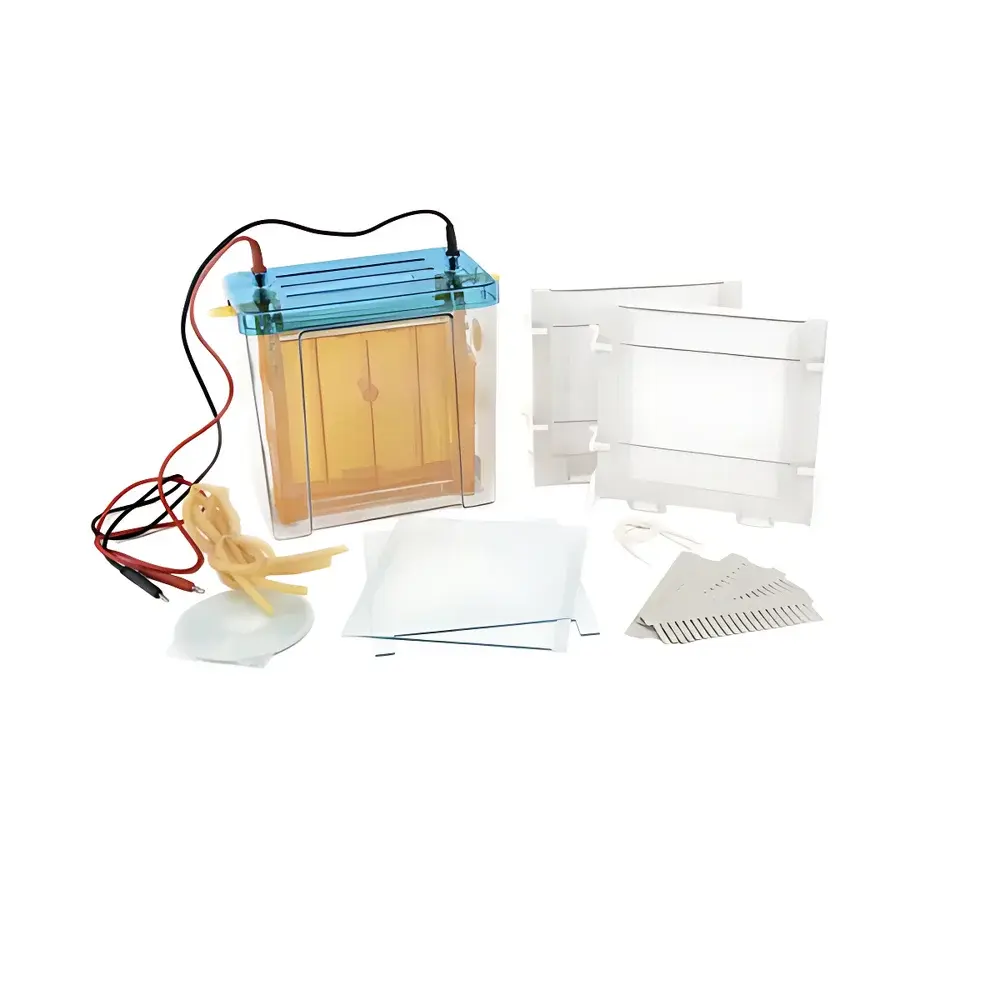
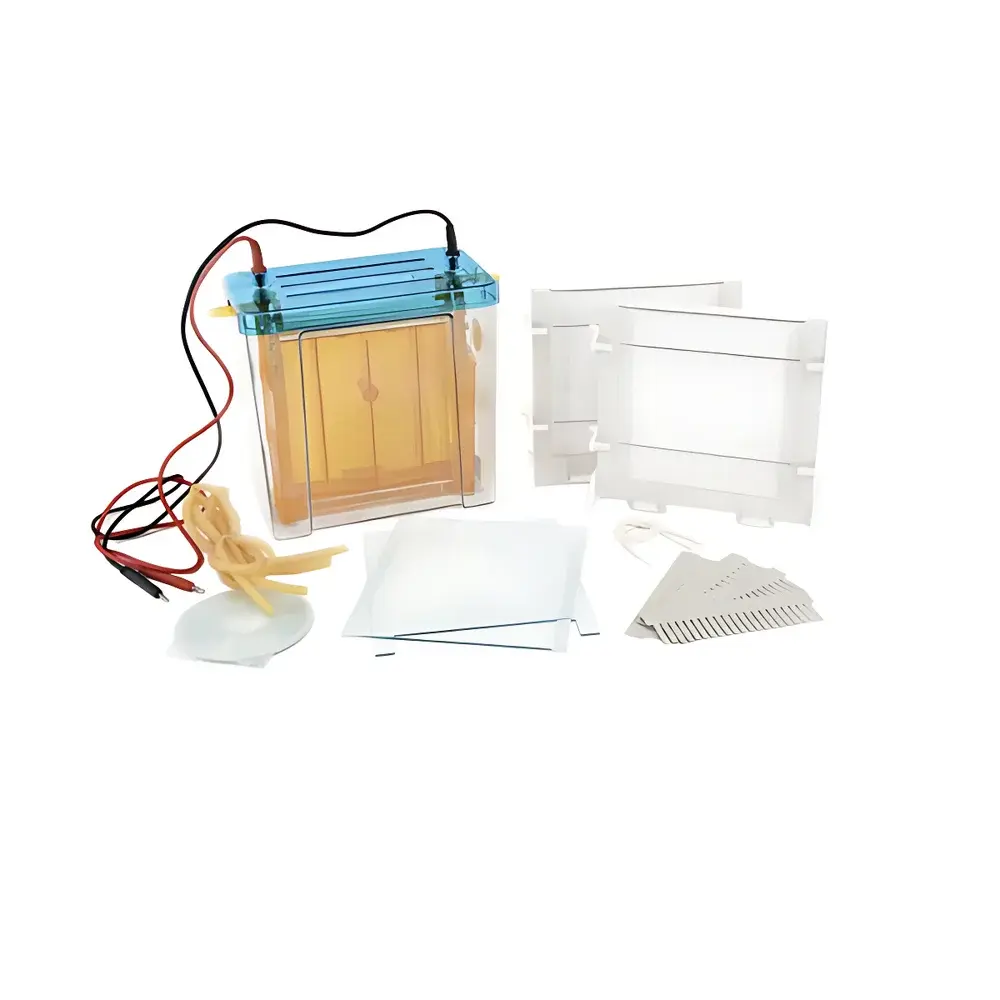
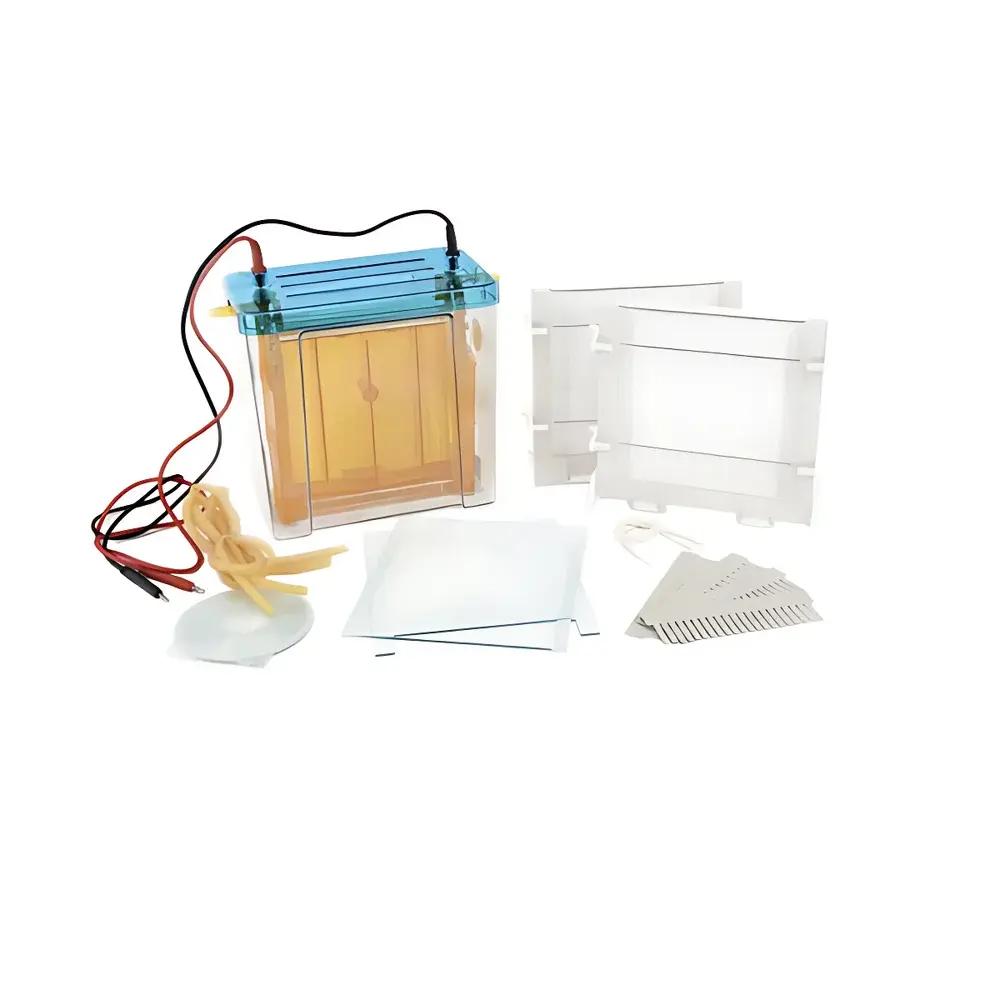
Beijing Liuyi DYCZ-24F Dual Vertical Electrophoresis Apparatus (Large Format)
| Brand | Beijing Liuyi / LY |
|---|---|
| Origin | Beijing, China |
| Manufacturer Type | Authorized Distributor |
| Product Category | Domestic |
| Model | DYCZ-24F |
| Instrument Type | Protein Electrophoresis Apparatus |
| Main Unit | Electrophoresis System with Integrated Tank |
| Gel Plate Dimensions | 200 × 175 mm |
| Overall Dimensions (L × W × H) | 300 × 160 × 300 mm |
| Buffer Capacity | 3500 mL |
| Sample Comb Options | 16- and 21-well, 1.0 mm thick (optional 1.5 mm) |
| Weight | 4 kg |
Overview
The Beijing Liuyi DYCZ-24F Dual Vertical Electrophoresis Apparatus is a robust, laboratory-grade vertical electrophoresis system engineered for high-resolution separation of proteins in SDS-PAGE and second-dimension electrophoresis of two-dimensional (2D) gels. Designed around the fundamental principle of electrophoretic mobility under controlled electric field gradients, the DYCZ-24F supports consistent protein migration through polyacrylamide gels while maintaining thermal stability critical for reproducible band resolution. Its dual-gel configuration enables parallel processing of two independent 200 × 175 mm gels—ideal for comparative proteomic analysis, replicate runs, or method validation workflows. The unit operates within standard constant-voltage or constant-current power supply regimes (not included), and integrates seamlessly with external temperature control systems such as the WD-9412A constant-temperature circulating cooler to mitigate Joule heating during extended high-voltage runs.
Key Features
- Polymer construction: High-transparency, impact-resistant polycarbonate body injection-molded for optical clarity and long-term chemical resistance to common electrophoresis buffers (e.g., Tris-Glycine, Tris-Tricine).
- Dual-gel capability: Simultaneous casting and electrophoresis of two full-size gels (200 × 175 mm) using precision-aligned glass plates and leak-proof sealing architecture.
- Thermal management interface: Dedicated inlet/outlet ports compatible with external recirculating chillers (e.g., WD-9412A) to maintain gel temperature within ±1 °C during prolonged separations.
- Safety-engineered design: Automatic circuit interruption upon lid removal; mechanical limit stops ensure precise alignment of upper/lower buffer chambers and prevent over-compression of gel cassettes.
- Modular comb system: Standard inclusion of both 16-well and 21-well sample combs (1.0 mm thickness); optional 1.5 mm combs available for higher loading capacity without compromising resolution.
- Enhanced electrical integrity: High-flexibility, insulated copper leads rated for continuous operation at up to 600 V DC, minimizing resistive losses and ensuring uniform field distribution across both gels.
Sample Compatibility & Compliance
The DYCZ-24F accommodates standard vertical polyacrylamide gel formats used in analytical and preparative protein electrophoresis, including discontinuous Laemmli systems, gradient gels, and native PAGE. It supports common gel thicknesses (1.0 mm and 1.5 mm) and is compatible with commercially available pre-cast gel cassettes when adapted via optional spacers. While the apparatus itself does not carry CE or UL certification, its mechanical and electrical design conforms to IEC 61010-1 safety requirements for laboratory equipment. When operated under GLP or GMP-aligned protocols, users may implement audit-ready documentation practices—including logbook entries for voltage/time parameters, buffer lot traceability, and gel batch records—to support regulatory submissions per FDA 21 CFR Part 11 where electronic records are employed.
Software & Data Management
The DYCZ-24F is a hardware-only electrophoresis platform and does not include embedded firmware or onboard data acquisition. However, it is fully interoperable with third-party imaging and densitometry software suites (e.g., ImageLab, AlphaView SA, Quantity One) following post-electrophoresis staining and scanning. The included CD-ROM contains bilingual (Chinese/English) operating instructions, dimensional schematics, maintenance guidelines, and compatibility notes for common power supplies and cooling units. For laboratories implementing LIMS integration, instrument usage logs and run metadata can be manually entered or imported via CSV templates aligned with ISO/IEC 17025 documentation frameworks.
Applications
- SDS-PAGE analysis of purified proteins, cell lysates, and immunoprecipitated complexes.
- Second-dimension electrophoresis in 2D-PAGE workflows following isoelectric focusing (IEF) on immobilized pH gradient (IPG) strips.
- Method development and optimization studies requiring side-by-side gel comparison under identical buffer and voltage conditions.
- Teaching laboratories conducting undergraduate and graduate-level protein biochemistry experiments with emphasis on reproducibility and safety compliance.
- Quality control testing of recombinant proteins and biosimilars where visual band integrity and relative mobility (Rf) consistency are critical acceptance criteria.
FAQ
What power supply is required for the DYCZ-24F?
The apparatus is compatible with standard DC power supplies delivering up to 600 V and 500 mA; typical operating ranges are 100–200 V for SDS-PAGE and 500–600 V for rapid high-resolution runs.
Can the DYCZ-24F be used for native PAGE?
Yes—its low-conductivity chamber design and non-corrosive polycarbonate housing support native electrophoresis in Tris-Glycine or Bis-Tris buffers without metal ion leaching.
Is the system compliant with ISO 13485 for medical device manufacturing environments?
While the DYCZ-24F is not certified to ISO 13485, its documented maintenance schedule, material traceability (glass, silicone, PE components), and calibration-free mechanical repeatability support qualification under internal QMS protocols.
How is buffer leakage prevented during extended runs?
Leak resistance is achieved through dual-seal geometry: primary silicone gasket compression between upper/lower tanks and secondary edge sealing via integrated PE soft sheets and precision-machined glass plate recesses.
What is the recommended cleaning protocol after use?
Rinse all components thoroughly with deionized water, followed by 70% ethanol; avoid alkaline detergents or ultrasonic cleaning of polycarbonate parts to prevent stress cracking.
Related Products