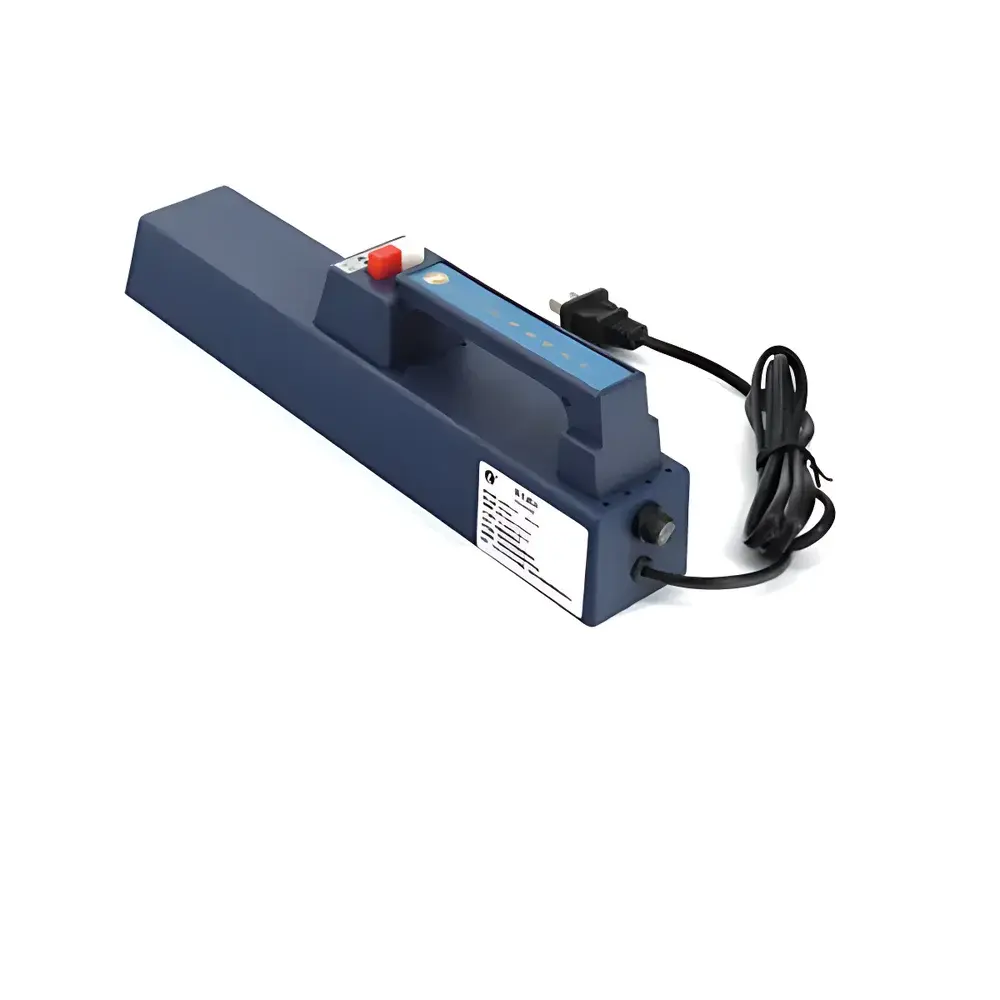
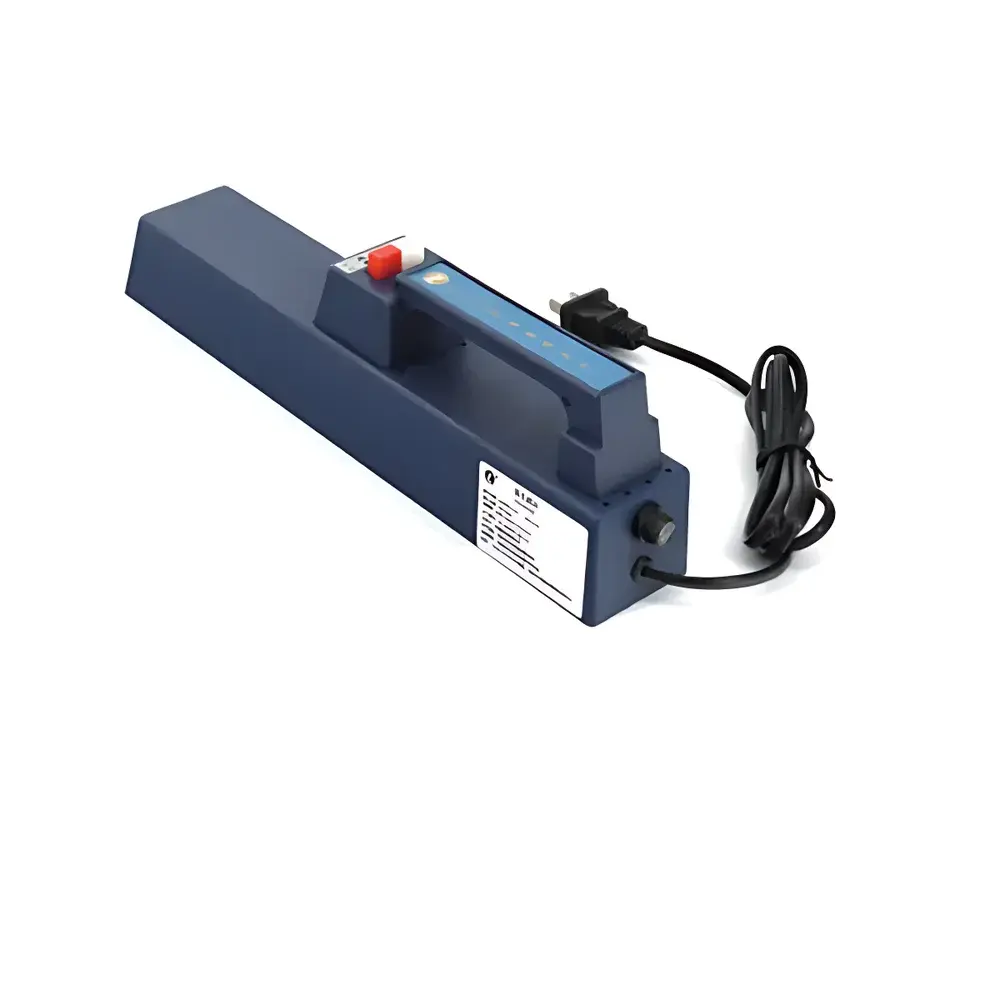
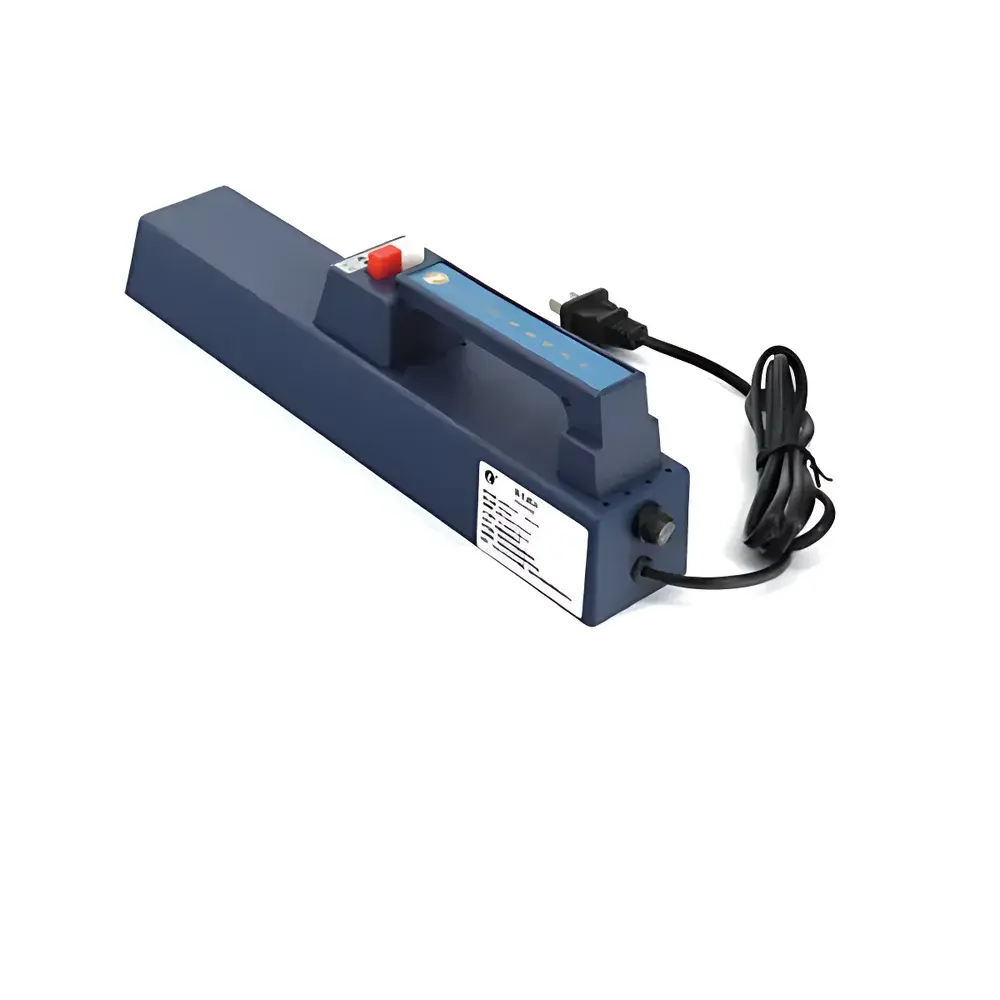
Beijing Liuyi WD-9403E Portable UV Lamp (254 nm / 365 nm)
| Brand | Beijing Liuyi / LY |
|---|---|
| Origin | Beijing, China |
| Model | 130-0350 |
| UV Wavelengths | 254 nm and 365 nm |
| Transilluminator Area | 178 mm × 50 mm |
| UV Lamp Power | 6 W per wavelength |
| Dimensions (W × D × H) | 340 mm × 54 mm × 90 mm |
| Fuse | 1 A (included) |
Overview
The Beijing Liuyi WD-9403E Portable UV Lamp (Model 130-0350) is a compact, hand-held transilluminator engineered for rapid, on-site fluorescence visualization in molecular biology, forensic analysis, quality control, and field-based diagnostics. Unlike broad-spectrum UV sources, this device integrates two discrete, narrow-band ultraviolet LEDs—optimized at 254 nm and 365 nm—to deliver targeted excitation of common fluorophores used in nucleic acid staining (e.g., ethidium bromide, SYBR Safe, GelRed) and forensic trace detection (e.g., bodily fluids, latent residues). Its solid-state LED architecture eliminates mercury vapor hazards, enables instant on/off operation, and ensures stable output without warm-up delay or spectral drift. The 6 W total optical power (3 W per channel) is calibrated to balance sufficient irradiance for reliable band visualization with low thermal load—critical for preserving gel integrity during prolonged inspection. Designed for battery-independent operation via standard AC input, it meets the ergonomic and safety requirements of routine lab workflows as well as mobile deployment in regulatory inspections or clinical point-of-need settings.
Key Features
- Dual-wavelength UV excitation: Independent 254 nm (high-energy DNA/RNA absorption) and 365 nm (lower-energy, eye-safer fluorescence induction) channels with mechanical wavelength selection.
- Compact transilluminator geometry: 178 mm × 50 mm active UV emission area—optimized for standard mini-gels (e.g., 7 × 10 cm), blotting membranes, and TLC plates.
- LED-based solid-state illumination: No ozone generation, no mercury content, >10,000-hour rated lifetime, minimal heat dissipation (<35 °C surface temperature under continuous use).
- Rugged portable chassis: ABS+PC housing rated IP54 for dust and splash resistance; integrated handle and non-slip rubber feet for stable tabletop or handheld orientation.
- Integrated safety controls: Automatic UV shutoff upon lid opening (mechanical interlock), recessed lamp housing to minimize direct line-of-sight exposure, and compliance with IEC 62471 Photobiological Safety classification (Risk Group 2 for 254 nm, Risk Group 1 for 365 nm).
Sample Compatibility & Compliance
The WD-9403E supports visualization of ethidium bromide-, SYBR-series-, and acridine orange-stained nucleic acids in agarose and polyacrylamide gels; fluorescently labeled proteins on nitrocellulose or PVDF membranes; and UV-active contaminants including urea crystals, quinine sulfate residues, and oxidized lignin derivatives. It is routinely employed in laboratories operating under GLP and ISO/IEC 17025 frameworks for method verification of nucleic acid quantification protocols. While not certified for UVC germicidal applications (200–280 nm), its 254 nm output aligns with ASTM E3087–17 guidelines for UV-based fluorescence validation in forensic serology. Device labeling and user documentation conform to GB/T 20977–2007 (Chinese national standard for UV equipment safety) and include multilingual hazard pictograms per GHS Annex 1.
Software & Data Management
As a standalone optical instrument, the WD-9403E does not incorporate embedded firmware, wireless connectivity, or digital imaging capability. It functions as a dedicated excitation source compatible with external CCD-based gel documentation systems (e.g., Bio-Rad ChemiDoc, Azure Biosystems cSeries) and smartphone-based capture setups using UV-blocking filters (e.g., Baader UV/IR Cut). All operational parameters—including wavelength selection, power state, and fuse status—are manually controlled via front-panel toggle switches. Audit-ready usage logs may be maintained externally in LIMS environments via timestamped entry of instrument ID (130-0350), calibration date, and operator initials—supporting traceability requirements under FDA 21 CFR Part 11 when integrated into validated QC workflows.
Applications
- Gel documentation: Real-time observation of DNA/RNA bands during electrophoresis runs; post-staining visualization without gel destaining steps.
- Forensic screening: Detection of latent biological fluids (semen, saliva, urine) on fabrics and surfaces using natural autofluorescence or chemical enhancement (e.g., luminol-UV synergy).
- Pharmaceutical QC: Verification of fluorescent tag integrity in conjugated antibodies; identification of counterfeit tablets exhibiting anomalous UV reflectance patterns.
- Mycology & botany: Rapid assessment of fungal melanin content or chlorophyll degradation products in plant tissue sections.
- Maintenance inspection: Leak detection in HVAC systems (fluorescent dye tracing), adhesive curing verification, and polymer crosslinking homogeneity assessment.
FAQ
Is the WD-9403E suitable for UV sterilization?
No. This device emits at 254 nm and 365 nm, but its optical power density (≤0.5 mW/cm² at 25 mm working distance) falls below the minimum threshold (≥1 mW/cm² for ≥30 seconds) required for microbial inactivation per ISO 15714:2019.
Can it be used with ethidium bromide-stained gels under standard lab hoods?
Yes—its low radiant heat output allows safe use inside laminar flow cabinets or fume hoods without triggering airflow disruption or thermal distortion of gels.
What is the recommended replacement interval for the 1 A fuse (P/N 325-0108)?
Fuse replacement is event-driven only; no scheduled interval is defined. Always verify correct fuse rating before installation and inspect for visible filament breakage or discoloration after overcurrent events.
Does the unit include UV protective eyewear?
No. Users must supply ANSI Z87.1-compliant polycarbonate goggles with UV400 filtration (OD ≥3 at 254 nm) separately, as mandated by OSHA 1910.133(a)(2) for occupational UV exposure.
Is calibration traceable to NIST standards?
Radiometric calibration is not provided ex-factory. For quantitative intensity validation, users may employ a NIST-traceable UV radiometer (e.g., International Light ILT2400) with calibrated SED240 sensor head prior to critical applications.