
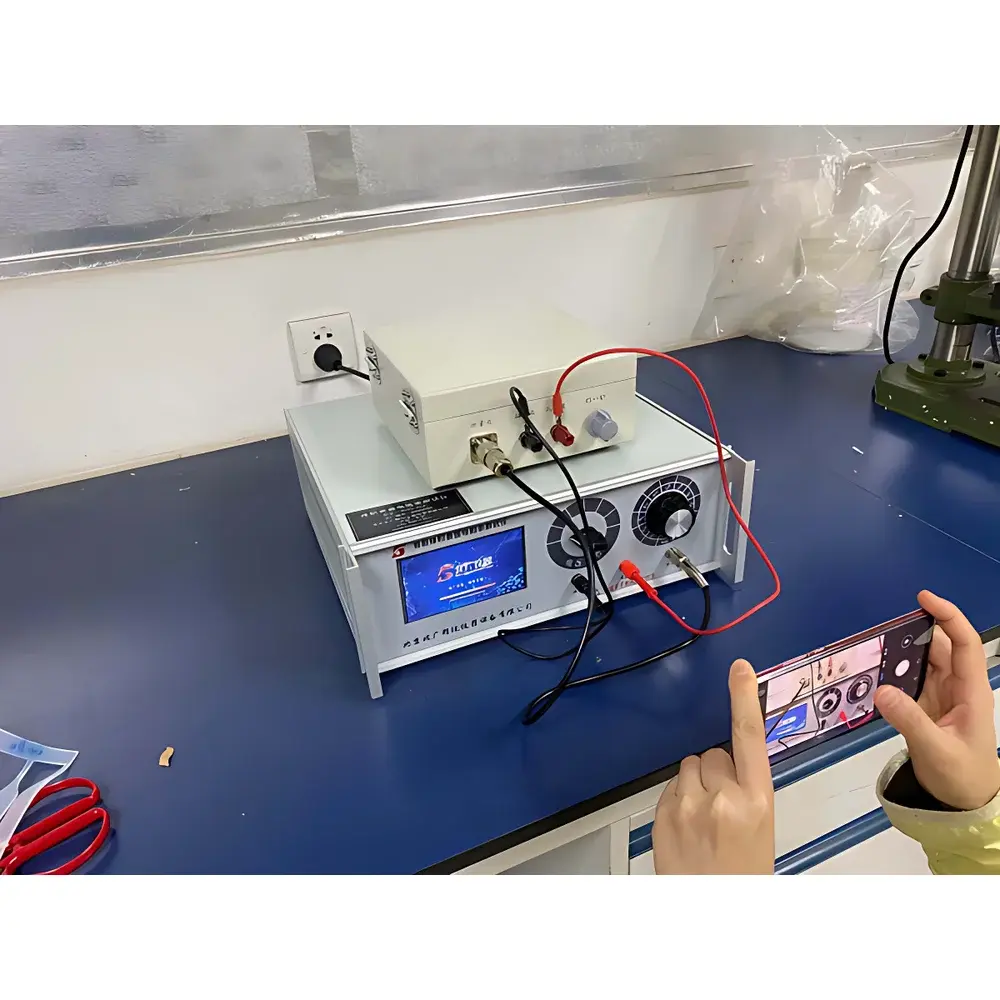
Beijing North Guang Precision Instrument BEST-212 Volume and Surface Resistivity Tester for Solid Insulating Materials
| Brand | Beijing North Guang Precision Instrument |
|---|---|
| Origin | Beijing, China |
| Manufacturer Type | Direct Manufacturer |
| Product Category | Domestic (PRC-Made) |
| Model | BEST-212 |
| Price | USD 1,700 (approx.) |
| Resistance Range | 1×10⁴ Ω to 1×10¹⁸ Ω |
| Current Range | 2×10⁻⁴ A to 1×10⁻¹⁶ A |
| Test Voltages | 100 V, 250 V, 500 V, 1000 V |
| Accuracy | ±1% (typical) |
| Dimensions | 285 mm × 245 mm × 120 mm |
| Weight | ~2.5 kg |
| Power Supply | AC 220 V, 50 Hz, ~5 W |
Overview
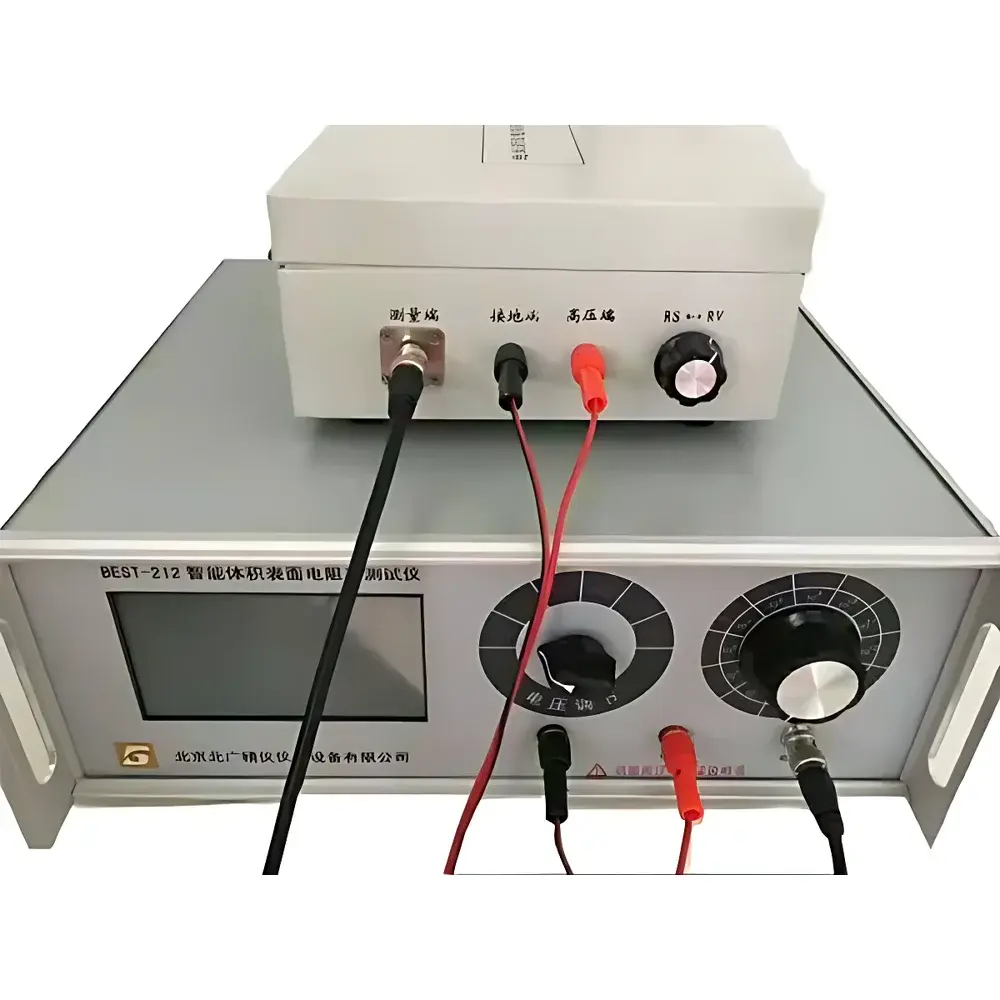
The Beijing North Guang Precision Instrument BEST-212 Volume and Surface Resistivity Tester is a precision benchtop instrument engineered for the quantitative evaluation of electrical resistivity in solid insulating materials—primarily polymers, elastomers, composites, ceramics, and thin films. It operates on the principle of direct-current (DC) high-resistance measurement using the guarded three-electrode method, compliant with standardized electrode configurations defined in ASTM D257, IEC 60093, and GB/T 1410–2006. The system applies a stable, user-selectable DC voltage across a specimen while measuring the resulting leakage current through a calibrated electrometer circuit. Volume resistivity (ρv, in Ω·m) and surface resistivity (ρs, in Ω/sq) are calculated in real time using geometric correction factors derived from electrode geometry and sample thickness. Designed for laboratory-grade reproducibility, the BEST-212 integrates guarded input stages, low-noise amplification, and electromagnetic shielding to minimize stray currents and environmental interference—critical for measurements exceeding 1015 Ω.
Key Features
- Guarded three-electrode configuration (unguarded electrode, guard ring, and guarded electrode) enabling independent volume and surface resistivity determination per ASTM D257 and GB/T 1410
- Four selectable test voltages: 100 V, 250 V, 500 V, and 1000 V—fully adjustable to meet material-specific standard requirements (e.g., 500 V for vulcanized rubber per GB/T 1692–2008)
- Wide resistance measurement range: 1×10⁴ Ω to 1×10¹⁸ Ω with resolution down to 0.01×10⁴ Ω and basic accuracy of ±1% at mid-scale
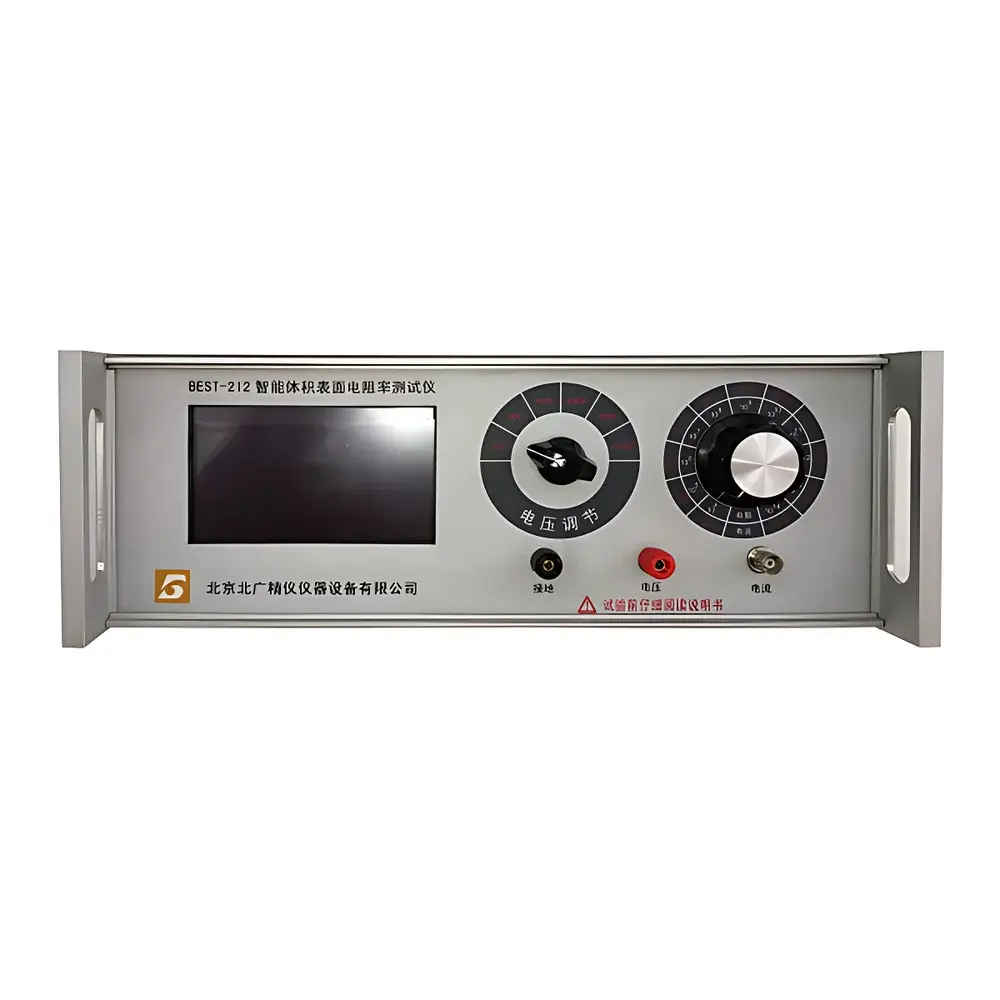
- Dual 3½-digit LED displays for simultaneous readout of resistance value and current magnitude
- Integrated shielded test enclosure (included) to suppress electrostatic coupling and ensure stable high-impedance measurements
- Manual range stepping with auto-hold functionality; measurement stabilization timed per standard-defined polarization period (e.g., 60 s per GB/T 1410)
- Low-power design (≤5 W) with thermal-stable internal references, minimizing drift during extended testing sessions
Sample Compatibility & Compliance
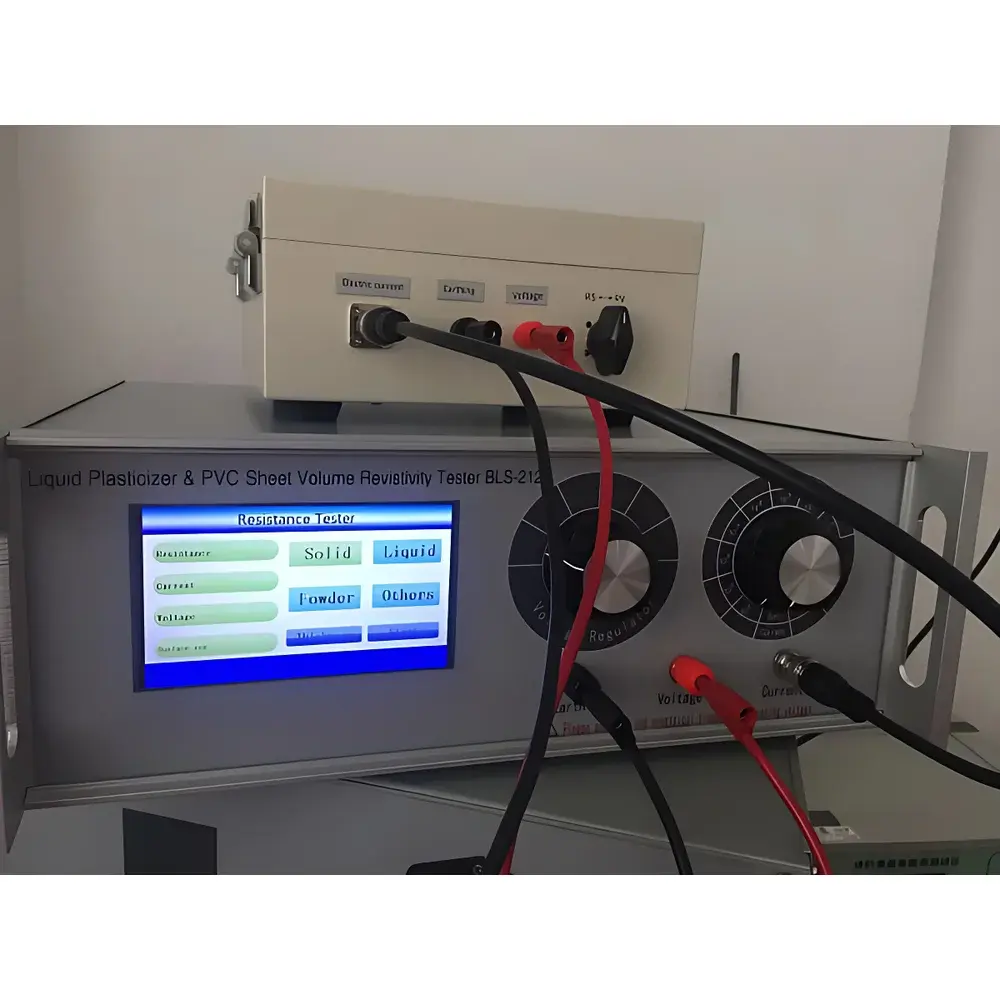
The BEST-212 supports standardized testing of rigid and flexible solid dielectrics—including thermoplastics (e.g., PE, PP, PET), thermosets (epoxy, phenolic), elastomers (silicone, EPDM), laminates, coated substrates, and ceramic tiles—using either circular or rectangular electrode fixtures. Optional electrode kits extend capability to liquids (e.g., plasticizers, solvents) and powders via custom cell assemblies. All operational procedures align with internationally recognized standards: ASTM D257–99 (Standard Test Methods for DC Resistance or Conductance of Insulating Materials), IEC 60093 (Methods of Test for Volume Resistivity and Surface Resistivity of Solid Electrical Insulating Materials), and multiple Chinese national standards including GB/T 1410–2006, GB/T 2439–2001, GB/T 10581–2006, GB/T 12703.4–2010, and GB/T 10064–2006. The instrument’s architecture supports GLP-compliant documentation when paired with external logging systems; however, it does not include FDA 21 CFR Part 11–compliant audit trail or electronic signature functionality.
Software & Data Management
The BEST-212 operates as a standalone hardware platform without embedded firmware-based data storage or USB/RS-232 connectivity. Measurement values are displayed in real time on dual LED indicators and must be manually recorded or captured via external digital logging equipment. While no proprietary software is supplied, the instrument’s analog output signals (optional upon request) can interface with third-party DAQ systems or programmable logic controllers for automated data acquisition. For regulated environments requiring traceability, users are advised to implement procedural controls—including operator ID logging, calibration certificate referencing, and manual entry into LIMS or Excel-based test records—consistent with ISO/IEC 17025 documentation practices.
Applications
This tester serves quality control laboratories in polymer compounding, automotive component manufacturing, electronics packaging, aerospace composites, and cleanroom flooring validation. Typical use cases include: verification of antistatic additives in polyolefin films; resistivity screening of ESD-safe plastics for semiconductor handling trays; compliance testing of insulating gaskets in high-voltage enclosures; evaluation of humidity-dependent resistivity shifts in hygroscopic resins; and R&D-level characterization of conductive fillers (e.g., carbon black, graphene) in thermoplastic matrices. Its robustness and adherence to multi-standard electrode geometry make it suitable for both routine QC release testing and comparative material development studies under controlled temperature/humidity conditions (23±2°C / 65±5% RH per GB/T 2941).
FAQ
What standards does the BEST-212 support for volume and surface resistivity testing?
It fully complies with ASTM D257–99, IEC 60093, GB/T 1410–2006, GB/T 1692–2008, GB/T 2439–2001, and other referenced national standards for solid insulators.
Can the instrument measure liquid or powder samples?
Yes—when used with optional liquid cells or powder compaction fixtures, though these accessories are not included in the standard configuration.
Is the instrument suitable for GMP/GLP-regulated environments?
It provides metrologically sound measurements but lacks built-in electronic audit trails, user access control, or 21 CFR Part 11 compliance; supplementary procedural documentation is required for regulatory submissions.
How is zero calibration performed?
Zero adjustment is executed with the “Rx” terminals open-circuited and the instrument disconnected from the shielded enclosure—ensuring baseline offset compensation before each test session.
Why is a shielded enclosure mandatory for high-resistance measurements?
Electrostatic interference and surface leakage paths become dominant above 10¹² Ω; the included Faraday cage eliminates ambient noise and ensures measurement fidelity per IEC 60093 Clause 6.2.



