
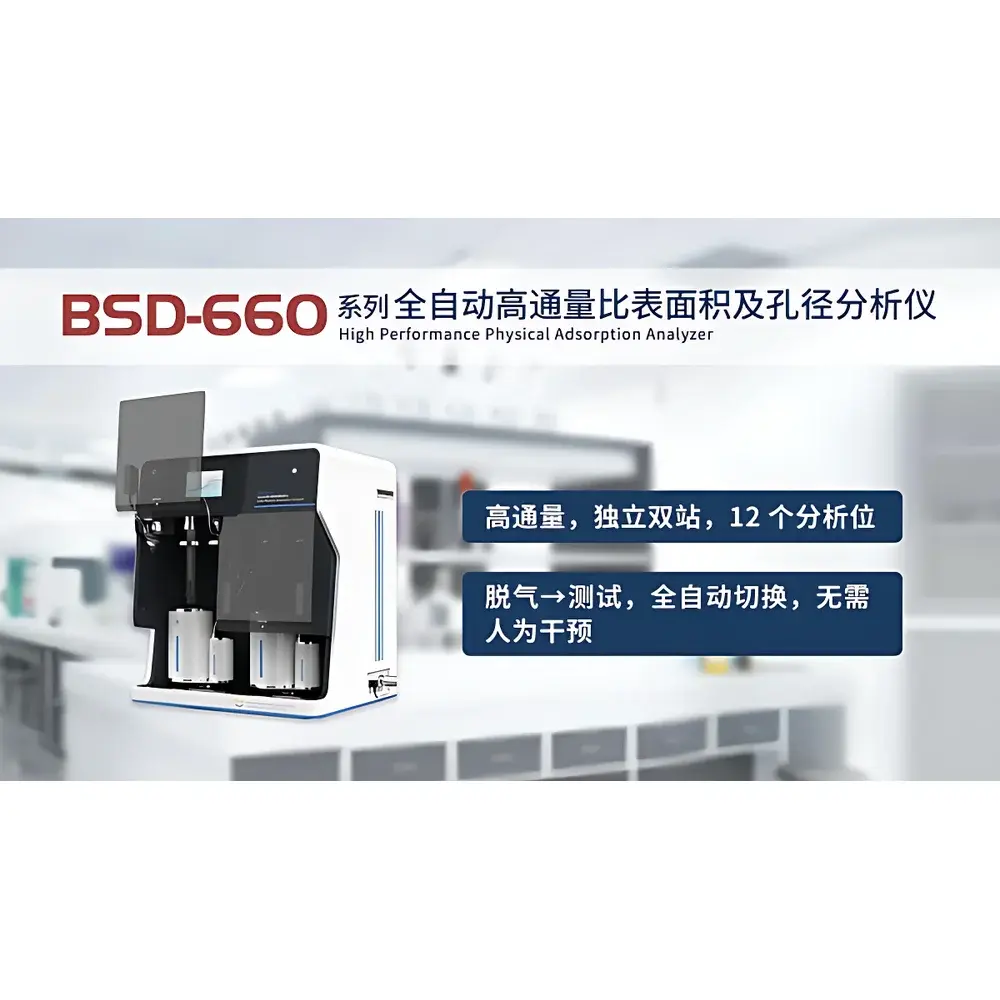
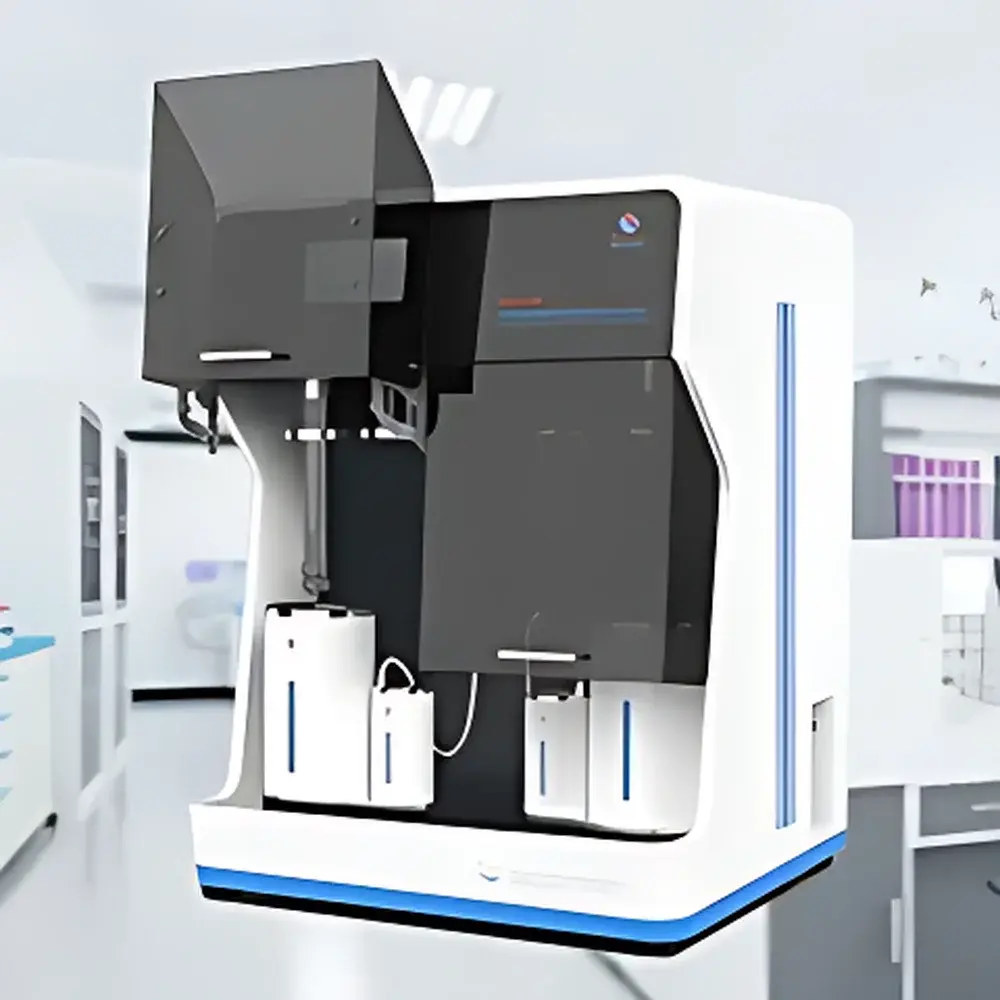
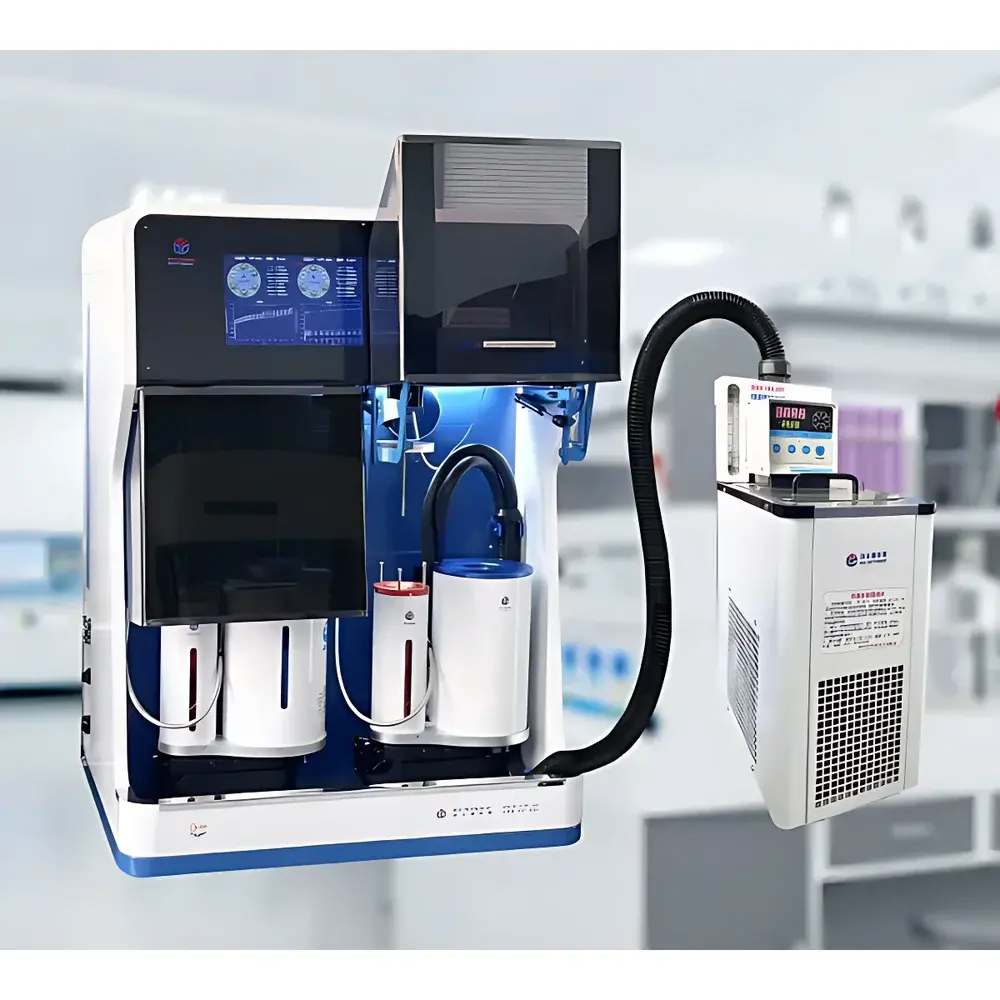
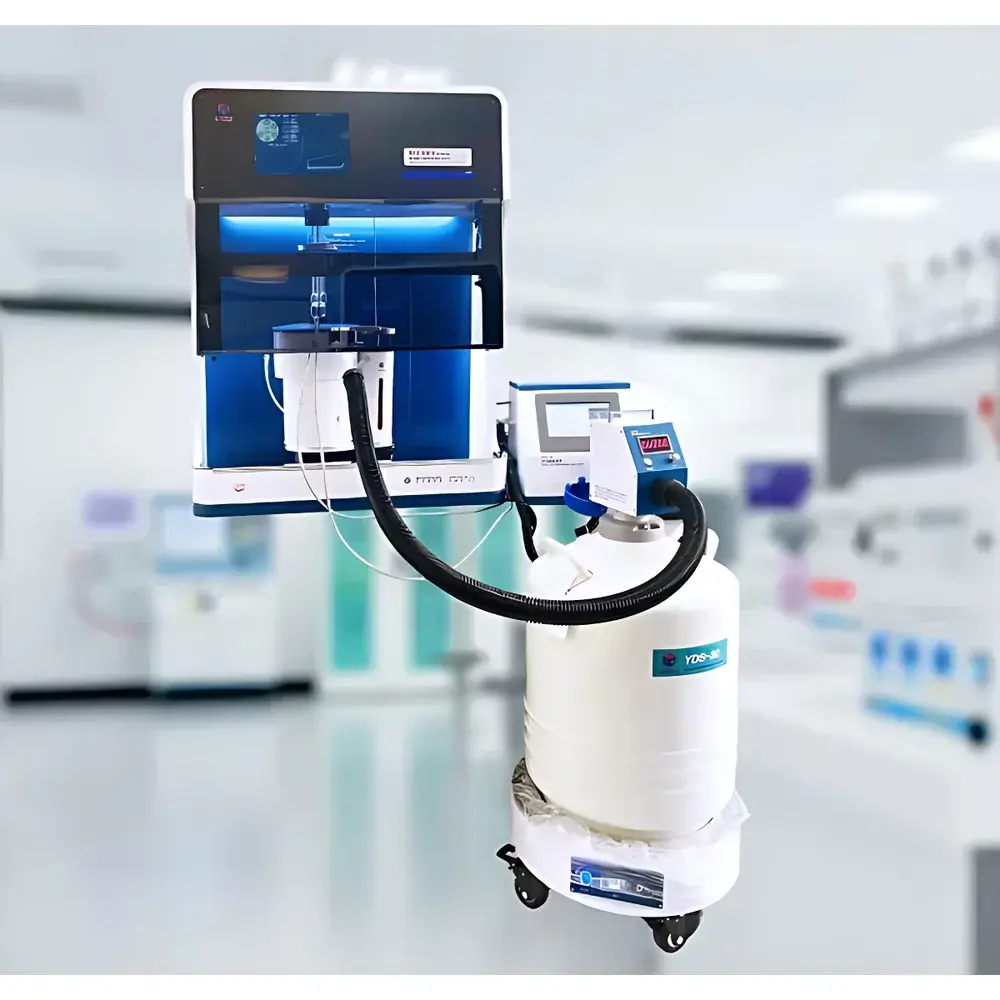
Beishide BSD-660A6B6M Automated High-Performance Specific Surface Area and Pore Size Analyzer
| Key | Brand: Beishide Instrument |
|---|---|
| Origin | Beijing, China |
| Manufacturer Type | Manufacturer |
| Instrument Type | Specific Surface Area and Pore Size Analyzer |
| Principle | Static Volumetric Gas Adsorption |
| Analysis Stations | 6 Mesopore Stations + 6 Micropore Stations |
| Surface Area Range | ≥0.0005 m²/g |
| Pore Diameter Range | 0.35–500 nm |
| Vacuum Level | ≤10⁻² Pa (standard), optional molecular pump for ≤10⁻⁸ Pa |
| Repeatability | ≤1% RSD |
Overview
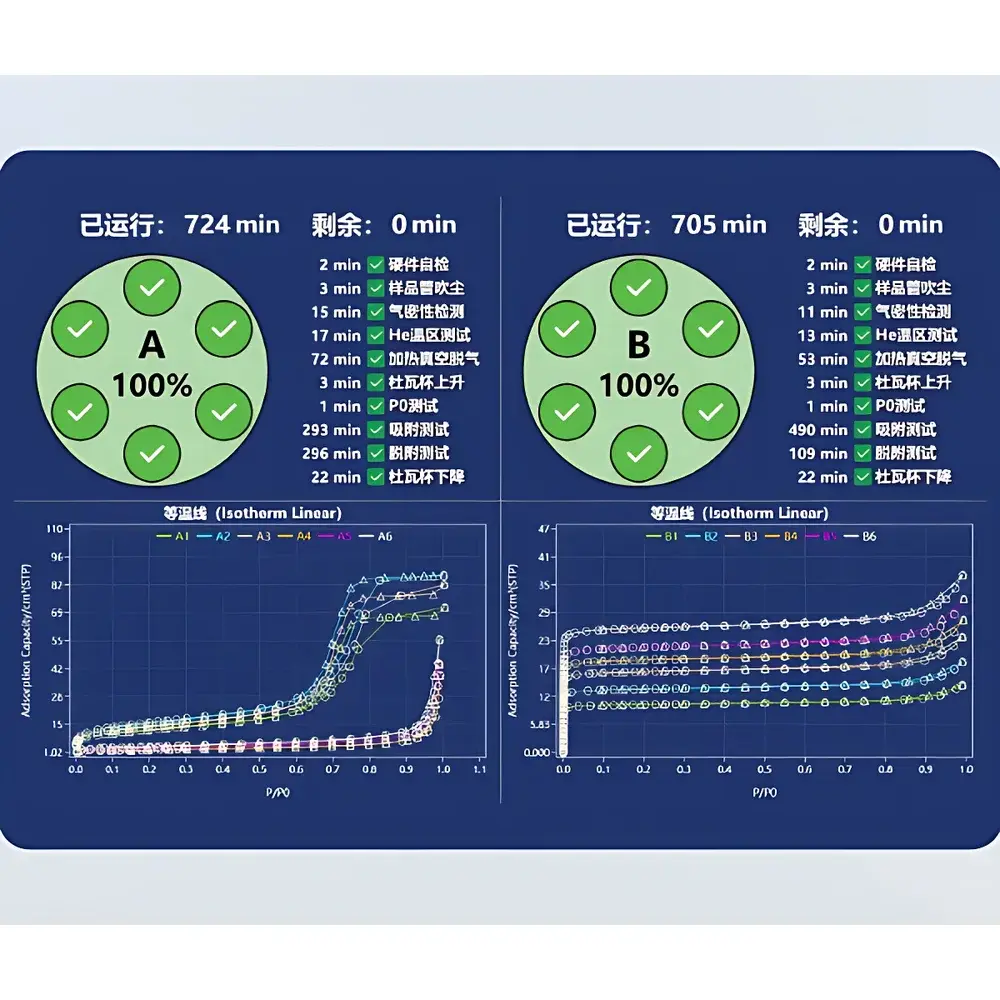
The Beishide BSD-660A6B6M is an automated high-performance specific surface area and pore size analyzer engineered for precision gas adsorption analysis across microporous, mesoporous, and macroporous materials. It operates on the static volumetric principle—measuring equilibrium gas uptake at controlled pressures to derive Brunauer–Emmett–Teller (BET) surface area, t-plot and DFT/NLDFT-based pore size distribution, total pore volume, and micropore volume. Designed for rigorous laboratory environments, the instrument supports dual-mode operation: simultaneous high-throughput analysis of up to six mesoporous samples and six microporous samples in a single run—enabling parallel characterization without cross-contamination or manual intervention. Its architecture integrates vacuum integrity, thermal stability, and pressure control at engineering levels required for ISO 9277:2010, ASTM D3663, and GB/T 19587–2017 compliance.
Key Features
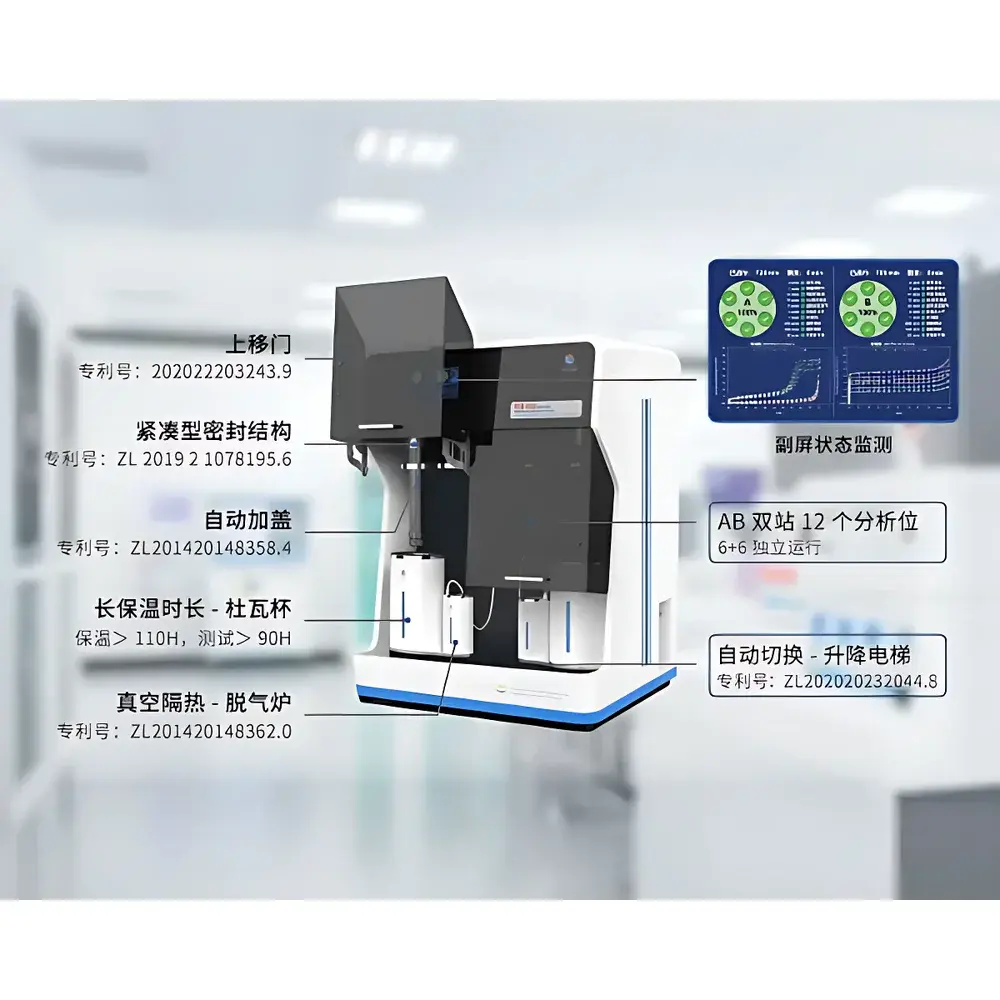
- True automation: Fully integrated sample handling from degassing to adsorption measurement—no manual transfer of sample tubes or furnace units.
- Patented “pressure-controlled heating” (ZL202020230457.2): Dynamically modulates furnace elevation and temperature ramping based on real-time pressure feedback to prevent sample loss during degassing of fragile microporous powders.
- Dual-molecular-pump configuration option: Achieves ultimate vacuum ≤10⁻⁸ Pa for ultra-low-pressure micropore analysis (e.g., CO₂ at 273 K or Ar at 87 K).
- Helium-free dead-volume calibration protocol: Measures helium void volume first, then initiates vacuum degassing—eliminating residual helium interference in low-pressure adsorption isotherms.
- Thermally stabilized gas manifold: Entire internal pneumatic path maintained at 40 °C ±0.01 °C to minimize thermal transients and ensure adsorption equilibrium reproducibility.
- Automated cyclic testing mode: Supports repeated adsorption–desorption cycles under user-defined conditions for evaluating material stability, regeneration performance, or long-term sorption kinetics.
- Motorized liquid nitrogen delivery: Electric turbo-cryopump enables contactless, contamination-free LN₂ replenishment with variable-speed control and positional flexibility.
Sample Compatibility & Compliance
The BSD-660A6B6M accommodates diverse solid-state materials including metal–organic frameworks (MOFs), covalent organic frameworks (COFs), activated carbons, zeolites, silica gels, battery cathode/anode powders (e.g., NMC, LFP, SiOₓ), catalysts, pharmaceutical excipients, and ceramic precursors. It supports non-corrosive gases (N₂, Ar, CO₂, O₂, Kr), combustible gases (H₂, CH₄, C₂H₆), and—in optional configurations—corrosive gases (NH₃, SO₂) and vapors (H₂O, ethanol). All measurements conform to internationally recognized standards: ISO 15901-1/2/3 (gas adsorption for pore size distribution), USP , and FDA 21 CFR Part 11-ready audit trails when paired with validated software modules. System validation includes as-received certified reference materials (e.g., NIST SRM 1891a) and documented IQ/OQ protocols.
Software & Data Management
The proprietary BDSorb™ software provides full instrument control, real-time isotherm visualization, multi-model data fitting (BET, Langmuir, t-plot, BJH, DFT/NLDFT kernel libraries), and automated report generation compliant with GLP/GMP documentation requirements. It features built-in uncertainty propagation per ISO/IEC 17025, customizable pass/fail criteria, electronic signatures, and time-stamped audit logs. An open API enables bidirectional integration with LIMS platforms via HL7 or RESTful endpoints. Raw isotherm data export is supported in ASTM E2947-compliant CSV and XML formats, including metadata on temperature stability, pressure calibration history, and degassing parameters.
Applications
This analyzer serves core R&D and QC functions across advanced material development: optimizing MOF synthesis for gas storage; quantifying pore collapse in battery electrode cycling; validating catalyst support integrity after sulfidation; assessing pharmaceutical powder flowability via surface energy mapping; characterizing membrane selectivity through micropore uniformity metrics; and supporting regulatory filings for inhalable drug carriers per ICH Q5C. Its high reproducibility (<1% RSD on BET area) and traceable calibration make it suitable for inter-laboratory round-robin studies and method transfer between central and satellite labs.
FAQ
What gases can be used for analysis?
Standard configurations support N₂, Ar, CO₂, O₂, Kr, H₂, CH₄, and C₂H₆. Optional hardware modules enable NH₃, SO₂, and vapor-phase analytes.
How does the system ensure accurate micropore analysis below 1 nm?
Through ultra-high vacuum (≤10⁻⁸ Pa), helium-free dead-volume calibration, cryogenic temperature stabilization (±0.05 K), and DFT kernel libraries validated against IUPAC reference datasets.
Is the instrument compatible with regulated quality systems?
Yes—software supports 21 CFR Part 11 compliance with role-based access, electronic signatures, and immutable audit trails. Full validation documentation (IQ/OQ/PQ) is available upon request.
Can the system perform sequential multi-gas analysis on the same sample?
Yes—automated gas switching valves and independent pressure sensors allow programmed sequential isotherms (e.g., N₂ → CO₂ → Ar) without breaking vacuum or removing the sample.
What maintenance intervals are recommended for long-term operational reliability?
Molecular pumps require oil replacement every 6,000 operating hours; pressure transducers are factory-calibrated annually; and the entire gas manifold undergoes leak-check verification quarterly per ISO 14644-3 protocols.



