
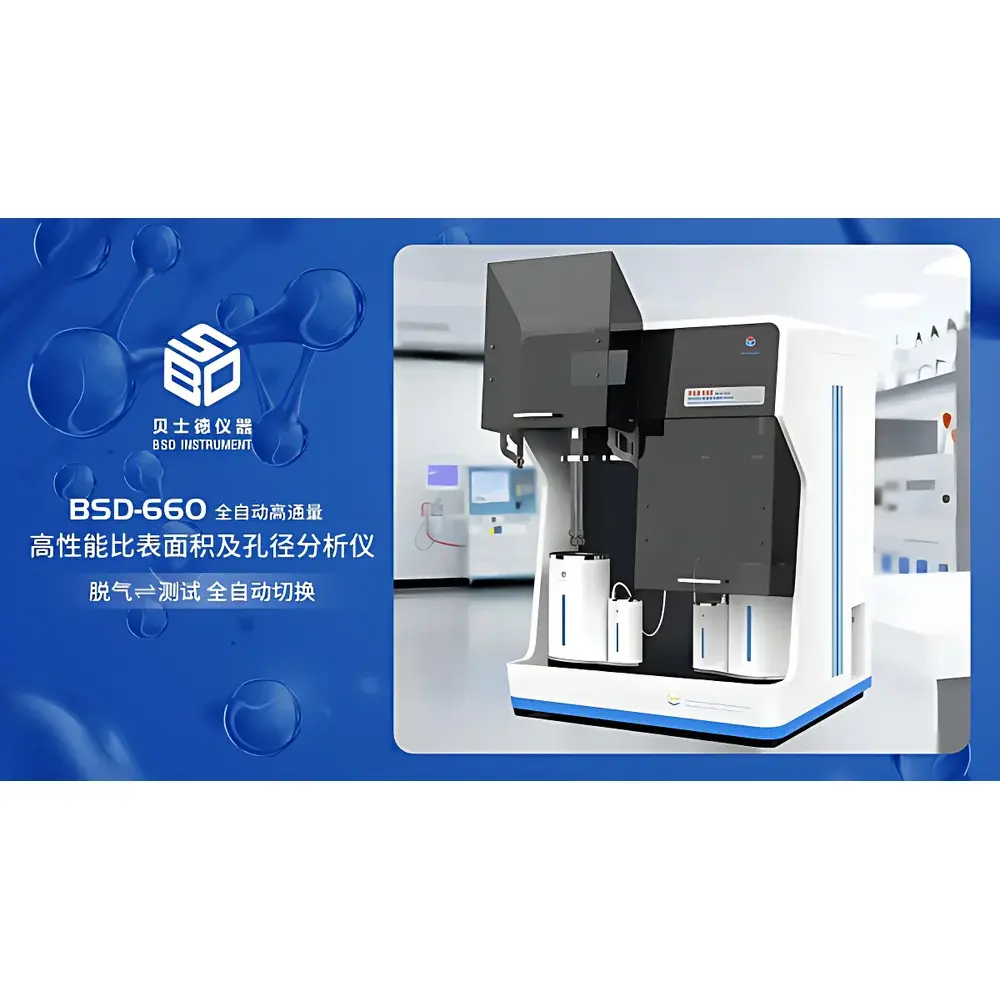
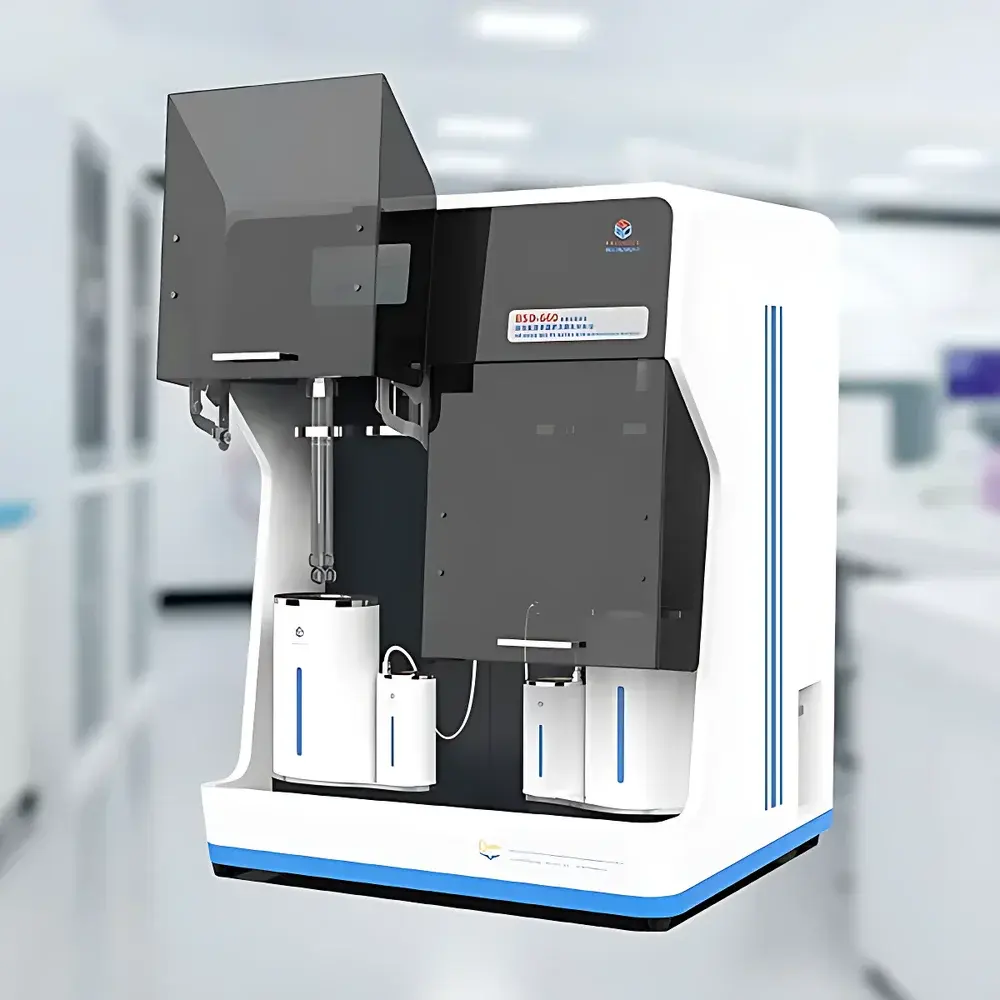
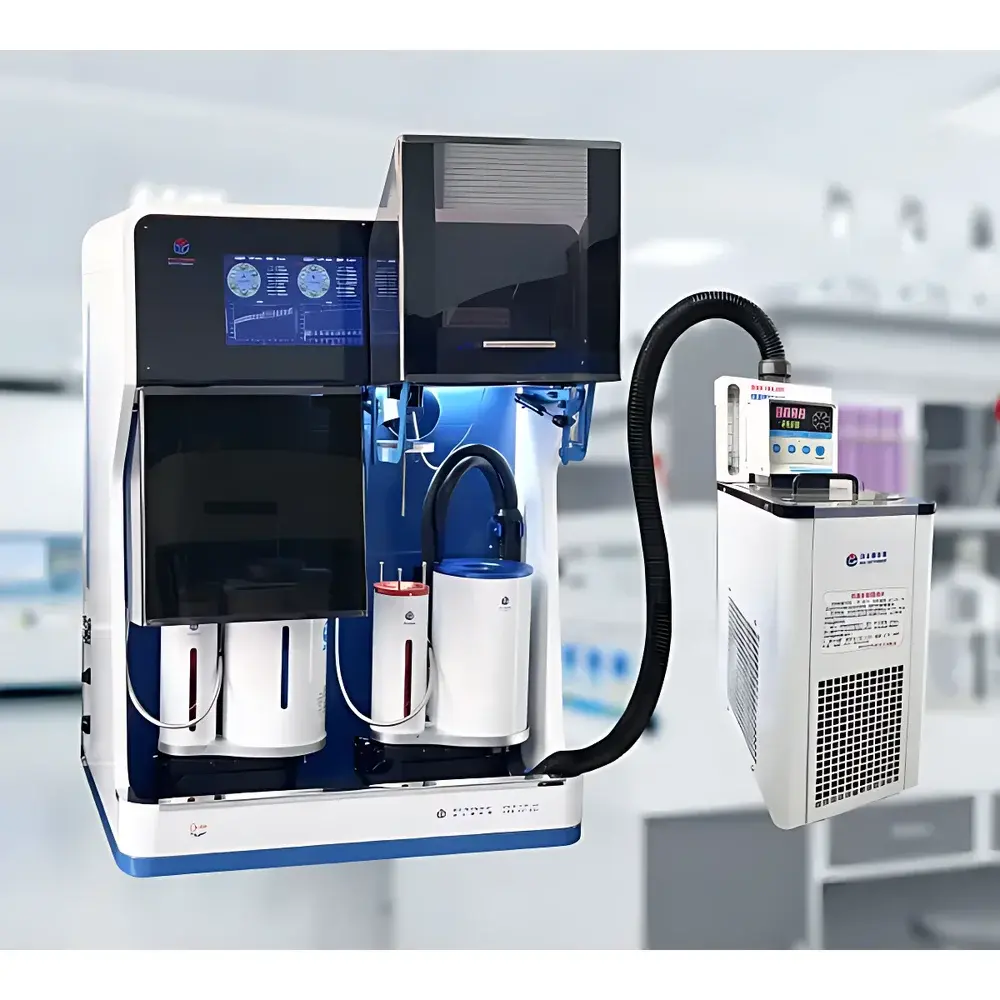
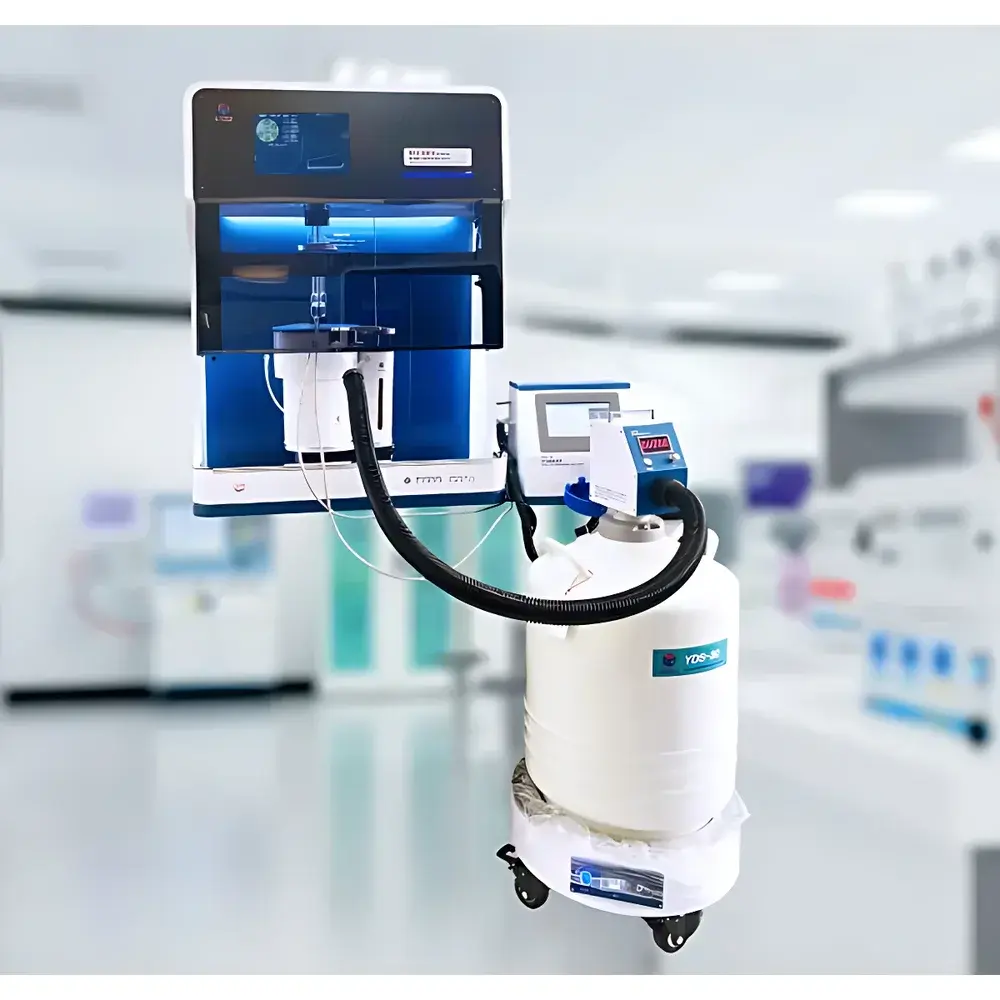
Beishide BSD-660A6M Specific Surface Area and Pore Size Analyzer
| Brand | Beishide Instrument |
|---|---|
| Origin | Beijing, China |
| Manufacturer Type | Manufacturer |
| Product Category | Domestic |
| Model | BSD-660A6M / B6M |
| Instrument Type | Specific Surface Area and Pore Size Analyzer |
| Principle | Static Volumetric Method |
| Number of Analysis Stations | 3 / 6 / 9 / 12 |
| Pore Size Range | 0.35–500 nm |
| Pressure Range | 0–1000 torr |
| Theoretical Capabilities | Adsorption/desorption isotherm measurement |
| Repeatability | ≤0.5% RSD |
Overview
The Beishide BSD-660A6M Specific Surface Area and Pore Size Analyzer is a high-precision, fully automated static volumetric gas sorption instrument engineered for comprehensive characterization of porous and non-porous solid materials. It operates on the fundamental principles of physical adsorption—measuring equilibrium gas uptake at controlled pressures and temperatures to derive quantitative textural properties including specific surface area, pore volume, and pore size distribution across micro-, meso-, and macroporous regimes. Designed for rigorous laboratory environments, the system complies with internationally recognized standards including ISO 9277:2010 (BET method), ISO 15901-1/2/3 (gas adsorption for pore analysis), ASTM D3663 (BET surface area), and GB/T 19587–2017 (Chinese national standard for BET analysis). Its modular architecture supports scalable throughput via configurable analysis stations (3, 6, 9, or 12), enabling parallel processing without cross-contamination or manual intervention.
Key Features
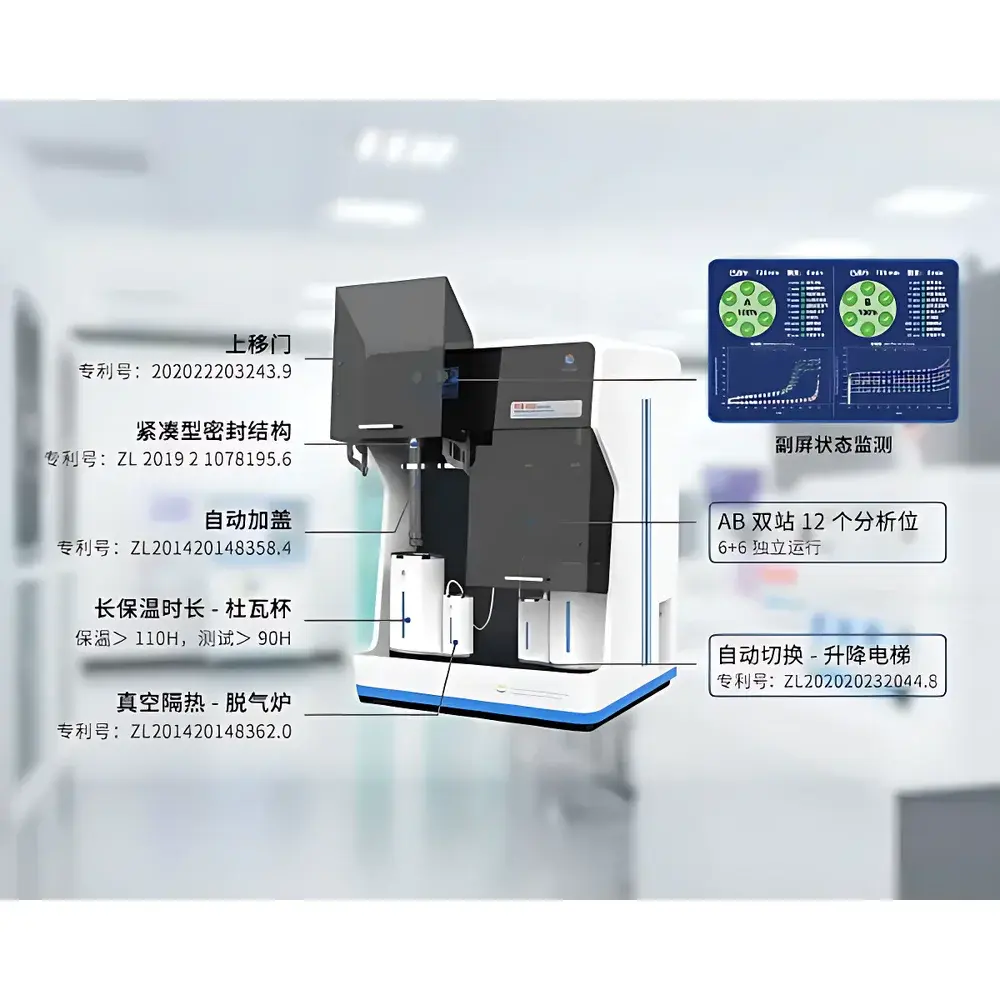
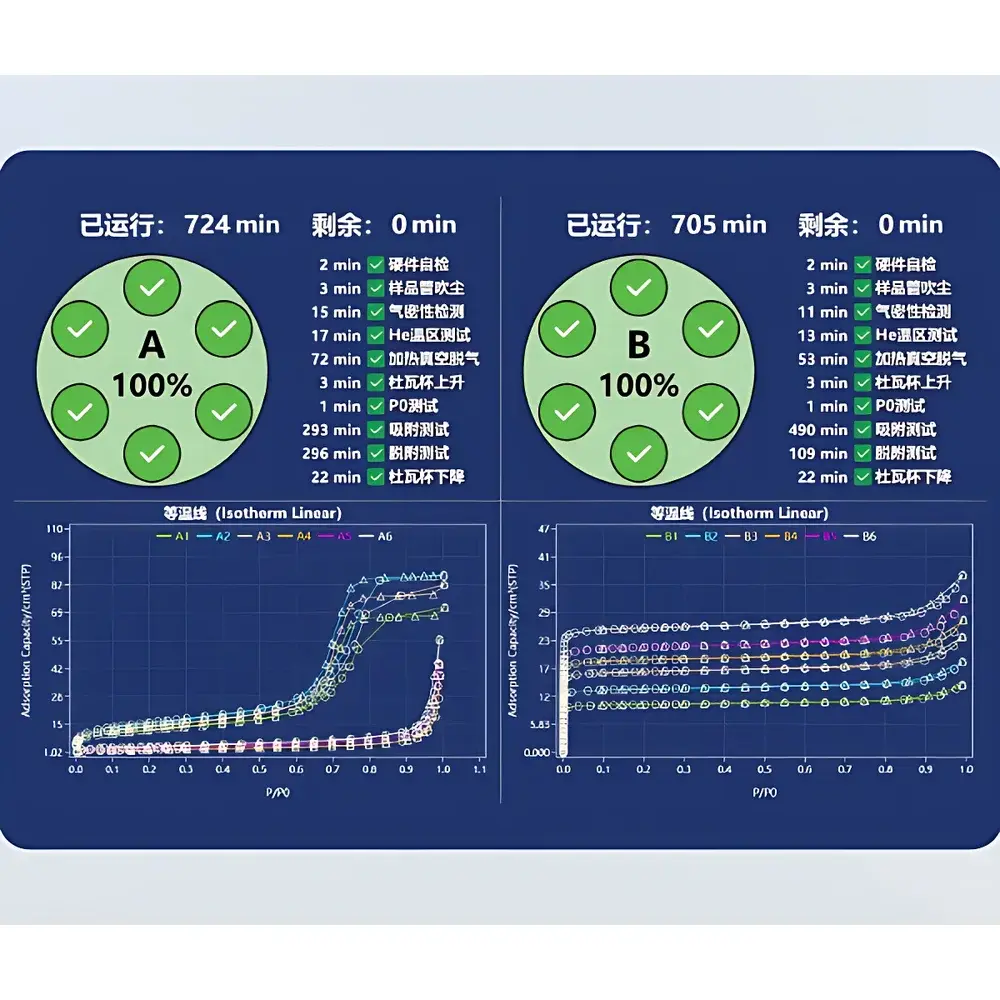
- Fully automated workflow: Integrated vacuum degassing, gas dosing, isotherm acquisition, and data reduction—no sample tube transfer required between degas and analysis phases.
- Patented dual-stage thermal management: “Temperature Zone Auto-Stabilization” (Patent ZL201820401132.9) maintains adsorption chamber thermal uniformity with <0.10% 24-hour drift in equivalent dead volume—critical for sub-nanometer pore resolution.
- Helium-free dead-volume calibration protocol: Sequential helium pycnometry → vacuum thermal degassing → adsorption measurement eliminates helium retention artifacts in micropore analysis, significantly improving accuracy for ultramicroporous frameworks (e.g., MOFs, COFs, zeolites).
- Pressure-controlled ramped degassing (“Pressurized Temperature Ramp”, Patent ZL202020230457.2): Dynamically adjusts furnace position and heating rate based on real-time pressure feedback to suppress sample fluidization and mass loss during high-temperature degassing of fine powders (e.g., battery cathodes, catalysts).
- Full-system thermostatic control: All gas pathways, valves, and manifolds maintained at 40 °C ±0.01 °C to minimize condensation, thermal lag, and vapor-phase interference during low-pressure measurements.
- Motorized liquid nitrogen delivery: Brushless DC turbine pump enables silent, contamination-free, variable-speed LN2 replenishment—eliminating manual pouring and ensuring stable cryogenic bath level during extended isotherms (e.g., 77 K N2, 87 K Ar, or 195 K CO2).
- Multi-gas compatibility: Standard configuration supports N2, Ar, CO, O2, CO2; optional upgrades enable safe operation with flammable gases (H2, CH4, C2H6) and corrosive analytes (NH3, SO2, H2S) via chemically resistant internal surfaces and dedicated purge protocols.
Sample Compatibility & Compliance
The BSD-660A6M accommodates diverse material classes—from dense non-porous solids (metal oxides, hydroxides, battery electrode materials, pharmaceutical excipients) to highly porous architectures (activated carbons, silica gels, hierarchical zeolites, MOFs, COFs, HOFs, and templated mesoporous silicas). Its degassing module supports programmable temperature ramps from ambient to 400 °C with ±0.1 °C stability, compatible with thermal desorption requirements defined in USP , ISO 15901-3, and GB/T 21650.3. Vacuum performance reaches ≤1×10⁻⁹ Pa, satisfying ultra-high-vacuum preconditioning needs for low-surface-area samples (<0.0005 m²/g). All hardware and software modules adhere to GLP/GMP documentation standards, with full audit trail capability (user actions, parameter changes, calibration events) compliant with FDA 21 CFR Part 11 requirements when deployed with validated LIMS integration.
Software & Data Management
Beishide’s proprietary SorptionMaster™ v5.2 software provides intuitive instrument control, real-time isotherm visualization, and standardized data reduction workflows aligned with ISO/GB methodologies. It embeds seven industry-standard models: Langmuir, BET, t-plot, αs-plot, BJH (adsorption/desorption), DH, DR, HK (Original), and DFT kernel libraries (NLDFT, QSDFT). The IASTL (Ideal Adsorbed Solution Theory – Linearized) module enables predictive multi-component adsorption modeling for gas separation applications. Raw data export is supported in ASCII, CSV, and XML formats; an open API allows bidirectional communication with enterprise LIMS platforms (e.g., LabWare, Thermo Fisher SampleManager) for automated result ingestion, metadata tagging, and electronic signature enforcement.
Applications
- Quality control of catalyst supports and battery electrode materials (LiCoO2, NMC, Si-anodes) per GB/T 6609.35 and GB/T 10722.
- Performance validation of adsorbents for carbon capture (CO2 @ 273 K), hydrogen storage (H2 @ 77 K), and volatile organic compound (VOC) removal.
- R&D of metal–organic frameworks (MOFs) and covalent organic frameworks (COFs) requiring sub-0.5 nm pore resolution and absolute micropore volume quantification.
- Regulatory submission support for pharmaceutical solid-state characterization (polymorph screening, excipient surface area) under ICH Q5A and USP .
- Academic research in porous material synthesis, where reproducibility (≤0.5% RSD on certified reference materials such as NIST SRM 1891a) and traceable uncertainty budgets are essential.
FAQ
What gases can be used for analysis on the BSD-660A6M?
Standard configurations support N2, Ar, CO, O2, and CO2. Optional hardware packages extend compatibility to H2, CH4, C2H6, NH3, and SO2 with appropriate safety interlocks and corrosion-resistant components.
How does the system ensure accurate micropore analysis?
Through helium-free dead-volume calibration, ultra-high vacuum (<10−9 Pa), pressure-controlled degassing to prevent sample loss, and implementation of DR, HK (Original), and DFT models validated against IUPAC-recommended reference materials.
Is the instrument compliant with FDA 21 CFR Part 11?
Yes—when operated with SorptionMaster™ v5.2 in validated mode, it provides full electronic audit trails, role-based access control, and digital signature support for regulated environments.
Can the BSD-660A6M perform cyclic adsorption–desorption testing?
Yes—it supports fully automated multi-cycle gas adsorption experiments to assess material stability, regeneration efficiency, and long-term performance decay.
What is the minimum detectable surface area?
The system achieves reliable quantification down to 0.0005 m²/g using high-sensitivity transducers and optimized signal-to-noise acquisition protocols, verified per ISO 9277 Annex B.



