
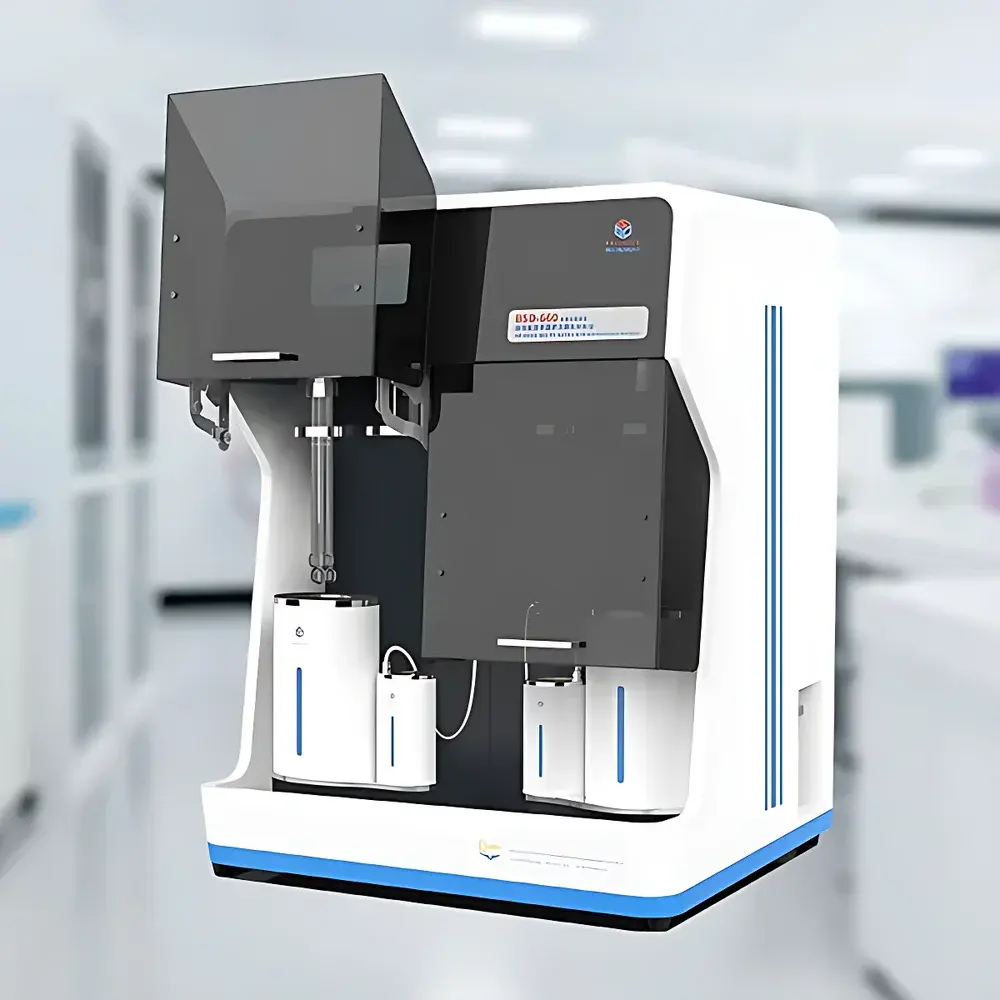
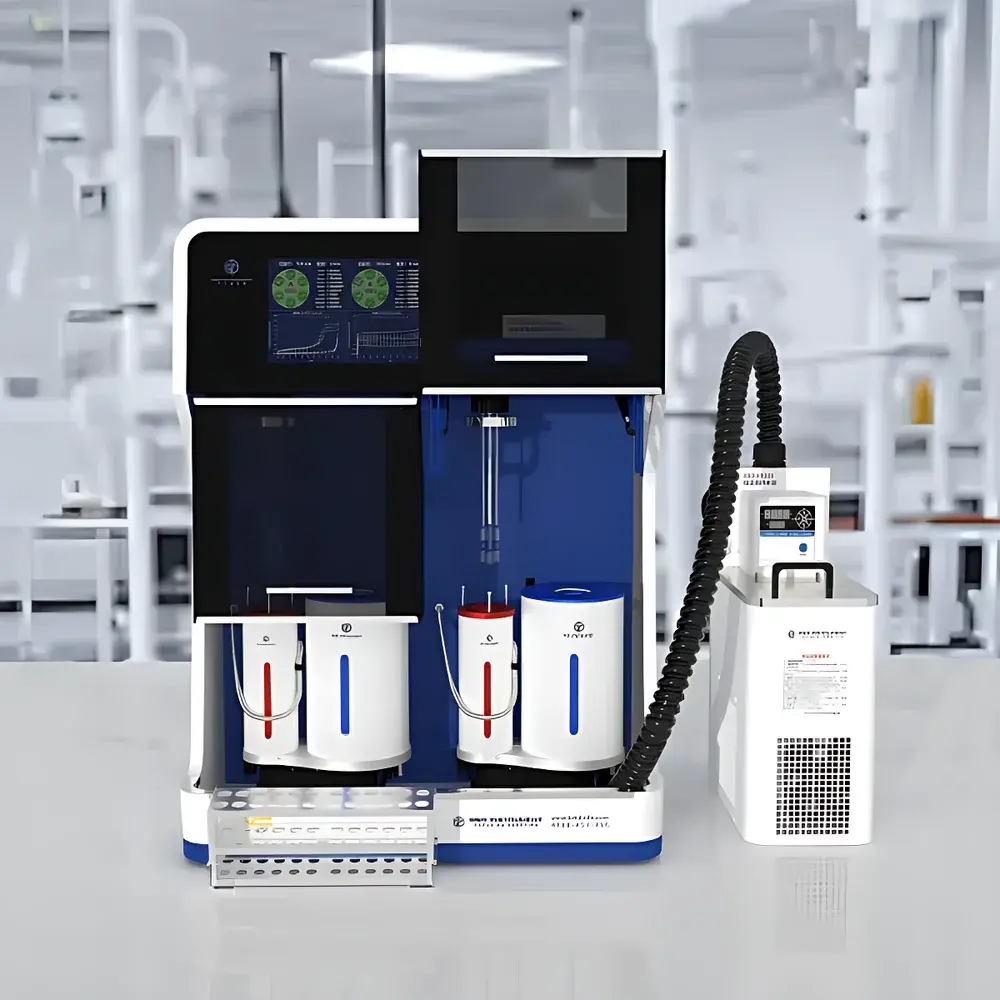
Beishide BSD-660MG High-Performance Gas Adsorption and Micropore Analyzer
| Brand | Beishide Instrument |
|---|---|
| Origin | Beijing, China |
| Manufacturer Type | Direct Manufacturer |
| Instrument Category | Domestic |
| Model | BSD-660MG |
| Instrument Type | Specific Surface Area and Pore Size Analyzer |
| Measurement Principle | Static Volumetric Method |
| Number of Analysis Stations | 3 / 6 / 9 / 12 (configurable) |
| Specific Surface Area Range | ≥0.0005 m²/g |
| Pore Diameter Range | 0.35–500 nm |
| Pressure Range | Ambient pressure (up to 1000 torr) with ultra-low-pressure capability down to P/P₀ = 1×10⁻⁸ |
| Repeatability | Quantitative error <0.5% RSD (BET standard reference material) |
| Vacuum System | Turbo-molecular pump achieving ultimate vacuum ≤1×10⁻⁸ Pa |
| Gas Compatibility | N₂, O₂, Ar, CO, CO₂, H₂, CH₄, C₂H₆ (non-corrosive & flammable gases) |
Overview
The Beishide BSD-660MG is a high-performance static volumetric gas adsorption analyzer engineered for comprehensive characterization of specific surface area, microporosity, mesoporosity, and ultramicroporosity in advanced functional materials. It operates on the fundamental principle of physical adsorption equilibrium measurement under controlled temperature and pressure conditions, adhering strictly to ISO 9277:2022 (Gas adsorption — Determination of specific surface area of powders and porous bodies using the BET method) and ASTM D3663 (Standard Test Method for Surface Area of Catalysts). The instrument employs precise manometric detection across multiple pressure ranges—0–1000 torr, 0–10 torr, 0–1 torr, and 0–0.1 torr—to ensure accurate quantification of adsorbed gas volumes across macro-, meso-, and microporous regimes. Its design integrates rigorous thermal management, automated vacuum conditioning, and helium-free dead-volume calibration protocols to eliminate systematic errors common in micropore analysis—particularly those arising from residual helium contamination during degassing.
Key Features
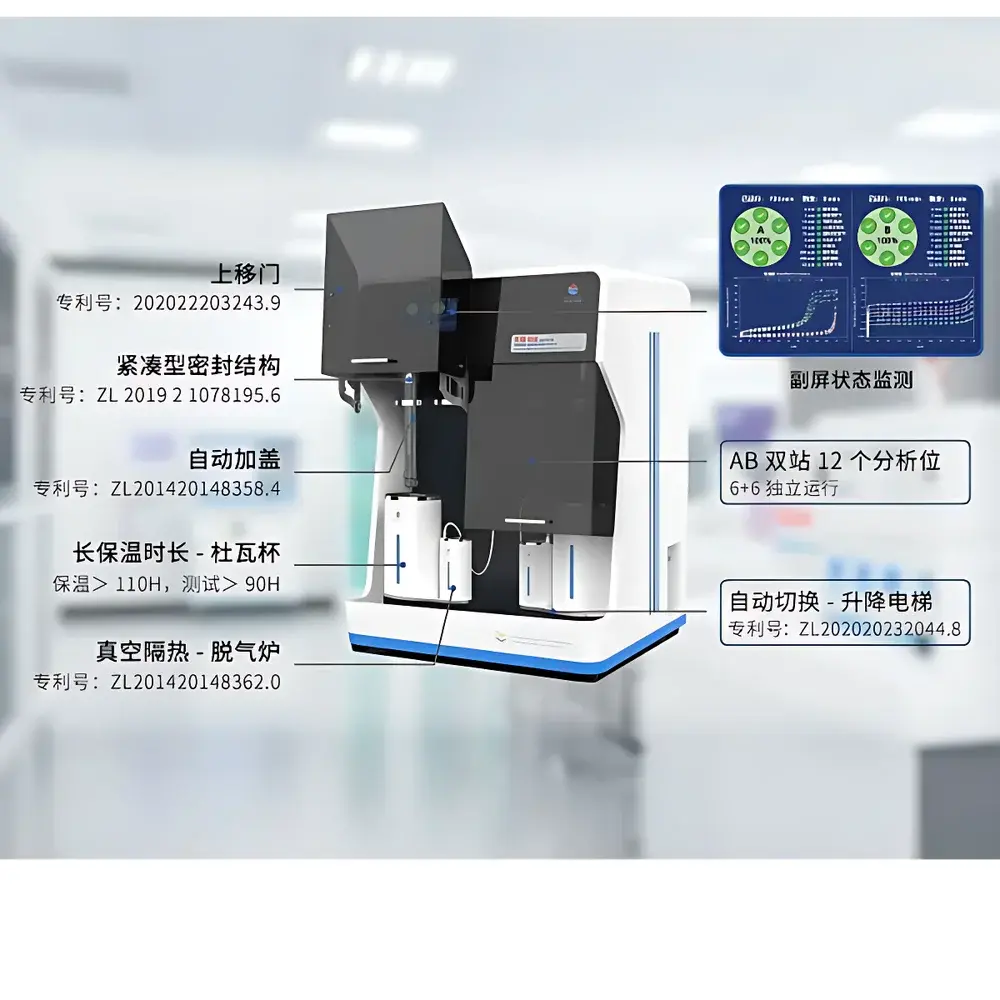
- Modular station architecture supporting 3, 6, 9, or 12 parallel analysis positions—enabling true high-throughput screening without compromising measurement integrity.
- Furnace & Bath Auto-Switch System (FBAS): Patented automated switching between high-temperature degassing furnace and cryogenic bath (e.g., liquid nitrogen or refrigerated coolant), eliminating manual intervention and ensuring optimal thermal history control per sample type (ZL202020232044.8).
- Helium-Free Dead-Volume Calibration Protocol: Sequential helium pycnometry → in-situ molecular-pump degassing → adsorption measurement prevents helium retention in micropores—a known source of systematic overestimation in low-P/P₀ data.
- Pressure-Controlled Degassing (PCD): Dual-parameter regulation of heating ramp rate and vacuum pumping speed based on real-time chamber pressure feedback, preventing sample fluidization, particle loss, and pore collapse during outgassing (ZL202020230457.2).
- Temperature-Zone Servo Stabilization: Active thermal regulation maintains adsorption chamber volume constancy within ±0.10% over 24 h—superior to passive isothermal jackets (±0.25%) or liquid-level sensors (±0.55%)—critical for reproducible low-pressure adsorption isotherms (ZL201820401132.9).
- Integrated Turbo-Molecular Pump System: Achieves ultimate vacuum ≤1×10⁻⁸ Pa, enabling reliable measurement at P/P₀ as low as 1×10⁻⁸—essential for Dubinin–Astakhov and Horvath–Kawazoe micropore modeling.
- Full-Path Constant-Temperature Gas Handling: Entire internal pneumatic circuit maintained at 40.00 ± 0.01 °C to minimize thermal transients and vapor condensation artifacts.
Sample Compatibility & Compliance
The BSD-660MG accommodates diverse material classes including metal–organic frameworks (MOFs), covalent organic frameworks (COFs), hydrogen-bonded organic frameworks (HOFs), activated carbons, zeolites, silica gels, battery cathode/anode materials (e.g., LiCoO₂, Si/C composites), metal oxides, hydroxides, and fine metal powders. It supports non-corrosive gases (N₂, Ar, CO₂, H₂, CH₄) natively; optional corrosion-resistant wetted-path configurations extend compatibility to acidic or halogenated gases (e.g., NH₃, SO₂, Cl₂) under controlled safety protocols. All operational software modules comply with GLP/GMP audit requirements—including full electronic signature support, 21 CFR Part 11–compliant audit trails, and LIMS-integrated result export via standardized API endpoints.
Software & Data Management
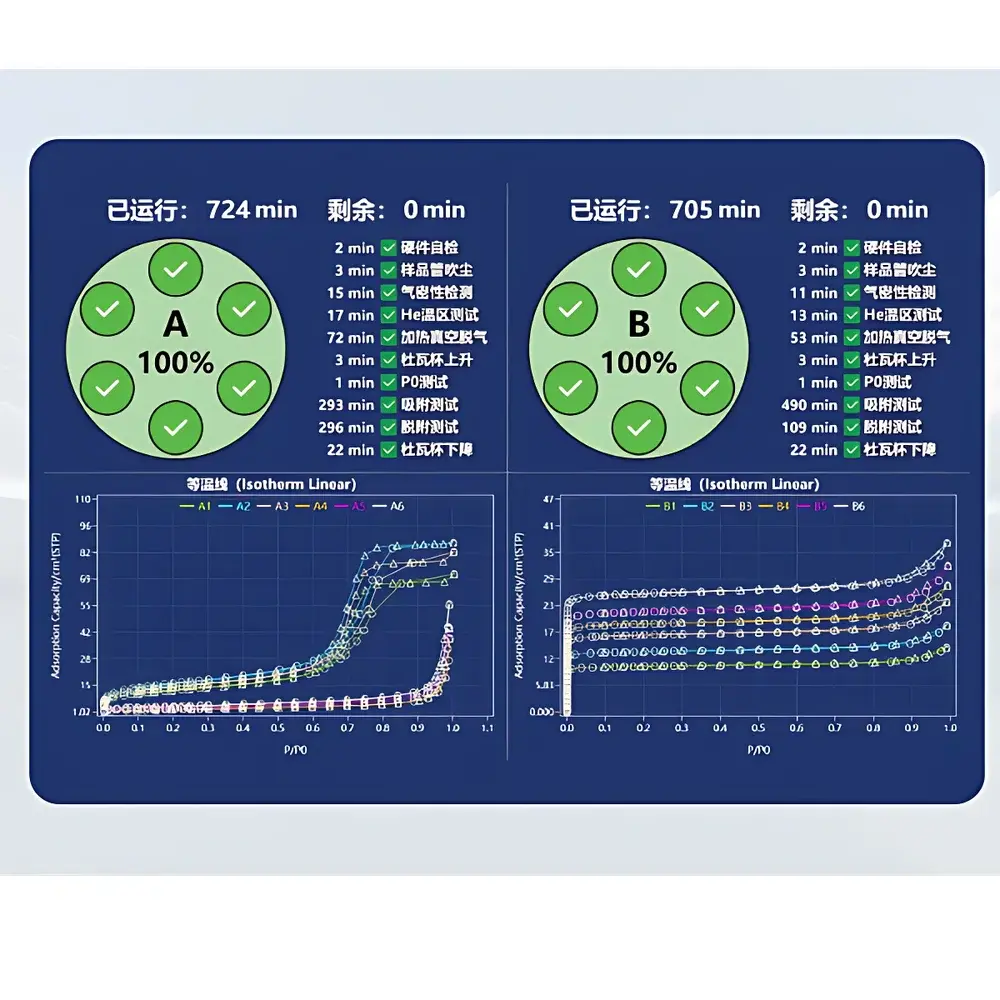
The proprietary Beishide ADS v5.2 software provides fully automated workflow orchestration—from sample loading and degas scheduling to isotherm acquisition, multi-point BET fitting, t-plot, DFT/NLDFT kernel selection (with preloaded carbon, silica, and alumina models), and IUPAC-compliant pore size distribution reporting. Real-time pressure stabilization monitoring, adaptive degas endpoint detection, and automatic outlier rejection during isotherm regression ensure metrological traceability. Raw data files are stored in vendor-neutral HDF5 format with embedded metadata (instrument ID, operator, timestamp, calibration certificate IDs, environmental logs), facilitating long-term archival and third-party reanalysis. Export options include CSV, PDF reports with ISO/ASTM compliance statements, and direct integration with laboratory information management systems (LIMS) via RESTful API.
Applications
This analyzer serves critical quality control and R&D functions across catalyst development (surface acidity/basicity mapping, active site density), energy storage (electrode porosity optimization for Li-ion/Na-ion batteries and supercapacitors), pharmaceutical solid-state characterization (polymorph stability, excipient surface interaction), environmental sorbent validation (CO₂ capture capacity, VOC adsorption kinetics), and nanomaterial certification (ISO/IEC 17025 accredited labs). Its ability to resolve ultramicropores (<0.7 nm) with sub-angstrom resolution makes it particularly suited for evaluating next-generation MOF membranes, hydrogen storage media, and molecular sieving materials where pore geometry dictates selectivity.
FAQ
What gases can be used for analysis on the BSD-660MG?
Standard operation supports N₂, Ar, CO₂, O₂, H₂, CH₄, and C₂H₆. Optional corrosion-resistant hardware enables safe use of NH₃, SO₂, and other reactive gases.
How does the instrument ensure accuracy below P/P₀ = 10⁻⁶?
Through ultra-high vacuum capability (≤1×10⁻⁸ Pa), multi-range pressure transducers, and helium-free dead-volume calibration—eliminating adsorbate-induced baseline drift.
Is the system compliant with regulatory data integrity standards?
Yes: Full 21 CFR Part 11 compliance, ALCOA+ principles adherence, electronic signatures, immutable audit trails, and LIMS-ready data export.
Can the BSD-660MG perform automated cyclic adsorption/desorption testing?
Yes—integrated auto-cycle mode enables programmable multi-cycle adsorption–desorption sequences for stability and fatigue life assessment of sorbent materials.
What is the minimum detectable surface area?
0.0005 m²/g, validated using certified reference materials traceable to NIST SRM 1990 and ISO 9277 Annex B.



