
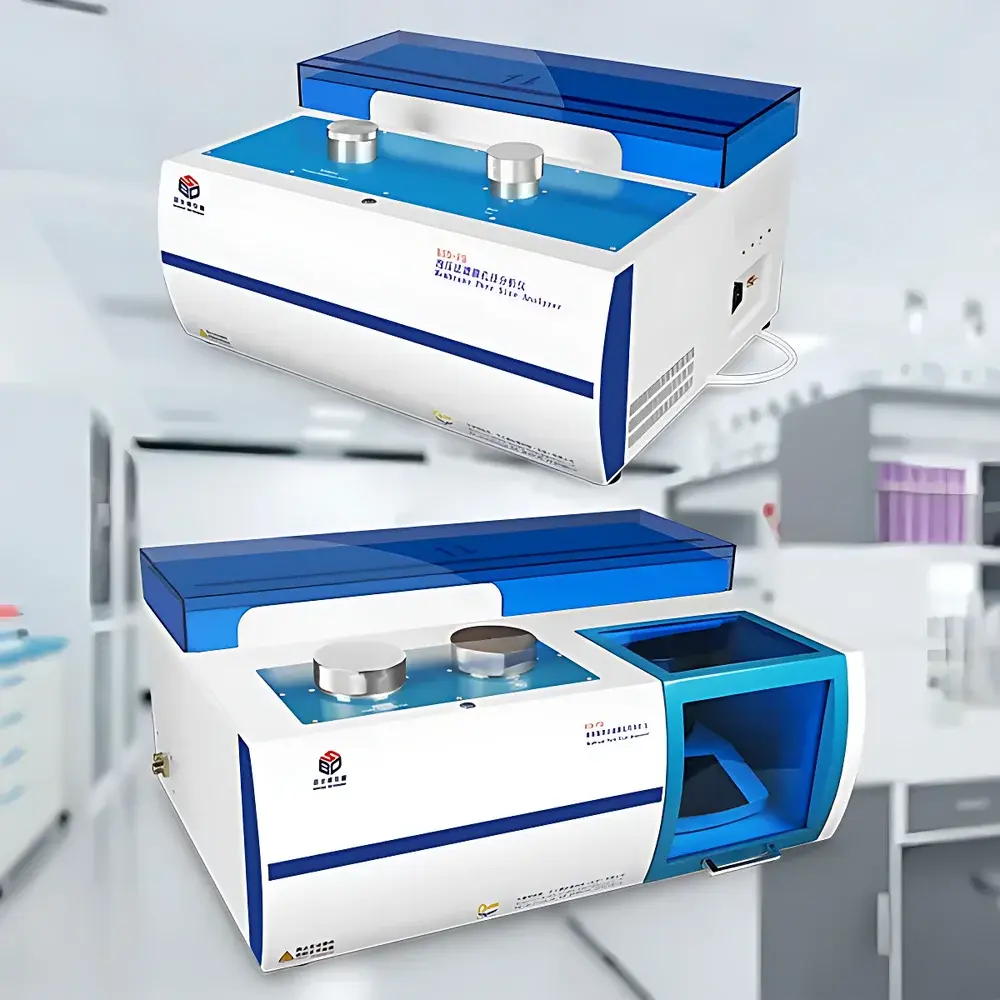
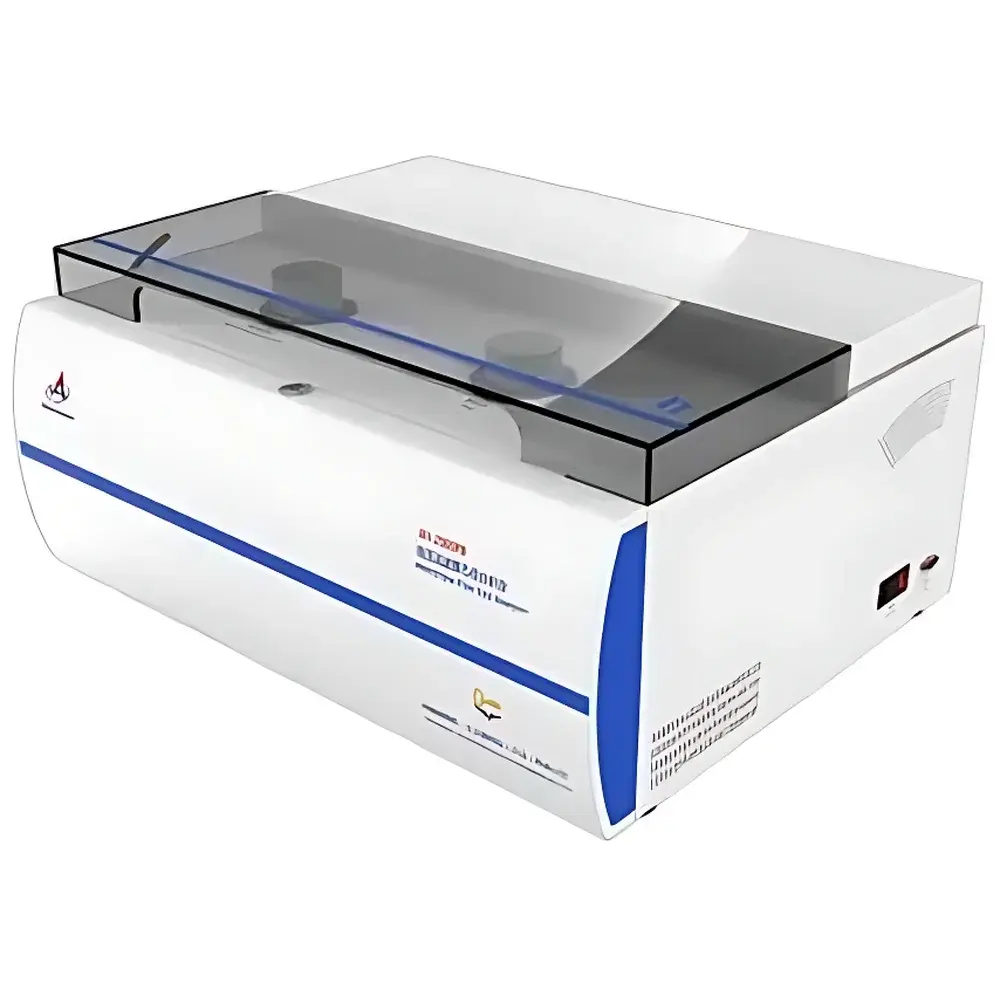
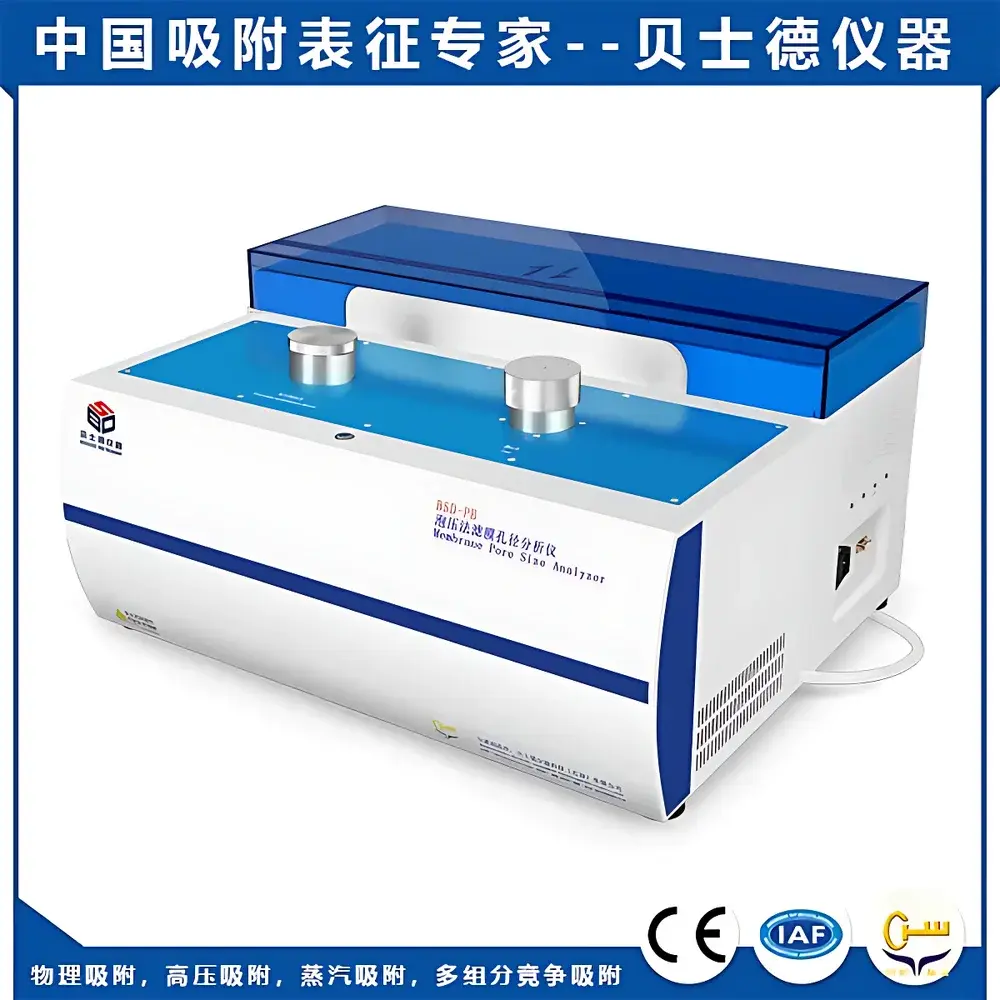
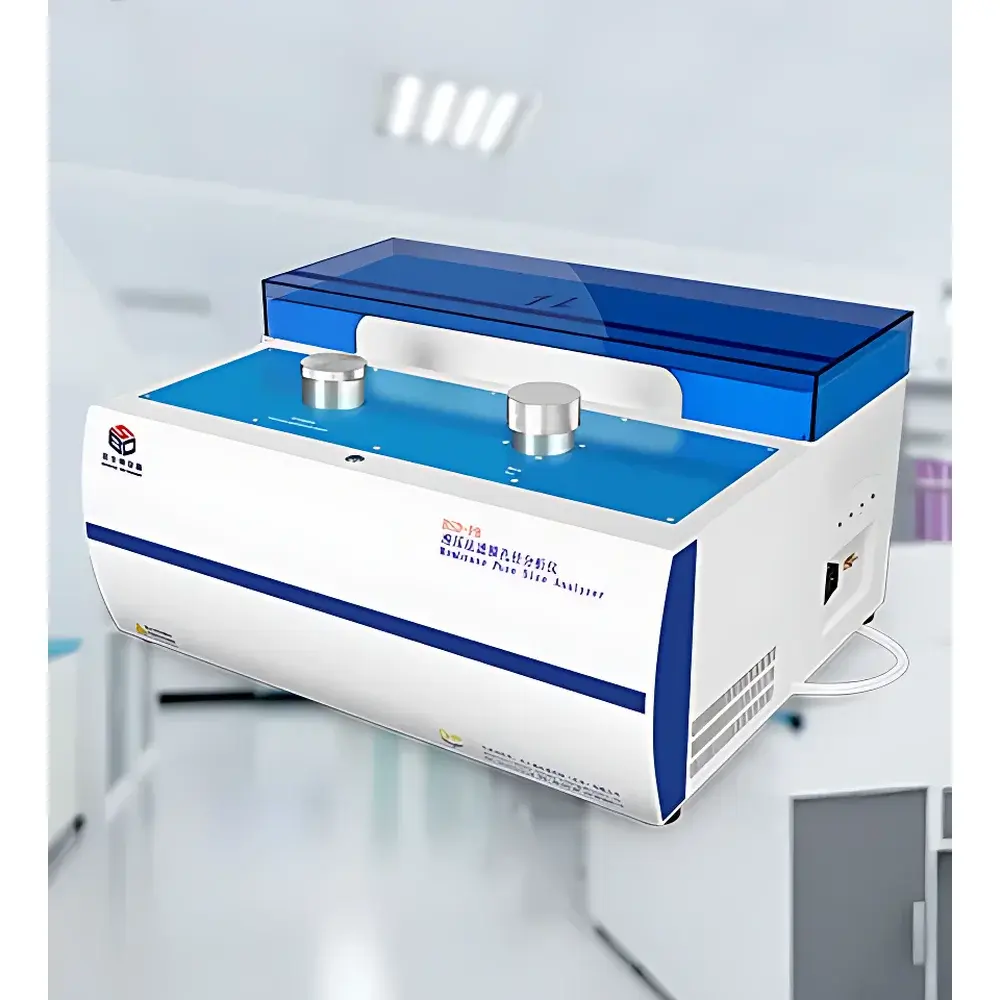
Beishide BSD-PB Capillary Flow Porometer
| Key | Brand: Beishide Instrument |
|---|---|
| Origin | Beijing, China |
| Manufacturer | Yes |
| Type | Domestic |
| Model | BSD-PB |
| Price Range | USD 14,000 – 42,000 |
| Pore Size Range (Gas-Liquid) | 0.02–500 µm |
| Pore Size Range (Liquid-Liquid) | 5–500 nm |
| Vacuum-Assisted Wetting | Integrated automatic system |
| Dual Pressure Sensors | 0–1 bar & 0–40 bar, ±0.05 mbar accuracy |
| Dual Flow Sensors | 0–1 L/min & 0–200 L/min, ±0.1 mL/min accuracy |
| Compliance | GB/T 32361-2015, ASTM F316-03, ASTM D6767-02, ISO 2942, DIN ISO 4003, BS 7591-4, HY/T 051, HY/T 064 |
Overview
The Beishide BSD-PB Capillary Flow Porometer is a fully automated, high-precision instrument engineered for the quantitative characterization of through-pore size distribution, bubble point pressure, and gas/liquid permeability in porous membranes and filtration media. It operates on the fundamental principle of capillary flow porometry—specifically, the gas-liquid displacement (bubble point) method and the liquid-liquid displacement method—both grounded in Washburn’s equation: D = 4γcosθ / ΔP, where pore diameter (D) is inversely proportional to applied differential pressure (ΔP) and directly proportional to the interfacial tension (γ) and wettability (cosθ). This thermodynamically rigorous approach enables traceable, repeatable determination of critical pore metrics—including maximum (bubble point), minimum, mean, and most probable pore diameters—as well as full pore size distribution profiles expressed as differential flow percentage versus pore diameter. The instrument is designed for compliance with international standards governing membrane integrity and pore structure evaluation across industrial, pharmaceutical, and academic laboratories.
Key Features
- Integrated vacuum-assisted wetting system: Patented (ZL 201420148359.9) fully automated vacuum chamber co-located with the main unit, reducing sample wetting time by >50%—especially critical for low-surface-energy or hydrophobic membranes such as PVDF, PTFE, and ePTFE.
- Dual-range, high-fidelity sensing architecture: Two independent pressure transducers (0–1 bar and 0–40 bar, ±0.05 mbar accuracy) and two mass flow sensors (0–1 L/min and 0–200 L/min, ±0.1 mL/min accuracy) enable seamless, auto-switched measurement across low- and high-pressure regimes without manual recalibration.
- Modular, multi-format sample holder: Adaptable fixture design (patented ZL 201420148785.2) accommodates circular flat-sheet membranes (up to Ø100 mm), hollow-fiber modules, tubular ceramics, and irregular geometries—including battery separators and nonwovens—within a single, reconfigurable cell.
- Side-wall gas injection manifold: Internalized gas delivery path along the sample cell wall ensures uniform top-down pressure application, eliminating seal leakage paths common in top-inlet configurations and enhancing long-term pressure integrity beyond 40 bar.
- Corrosion-resistant fluidic path: All-welded 316 stainless steel tubing, metal-to-metal seals, and chemically inert wetted surfaces support use with aggressive wetting liquids (e.g., Porofil®, isopropanol, HFE-7100) and prevent adsorption artifacts during low-flow measurements.
- Real-time voice-guided operation and timestamped audit trail: Onboard speech synthesis provides step-by-step procedural prompts; every valve actuation, sensor reading, and parameter change is logged with millisecond resolution for full GLP/GMP traceability.
Sample Compatibility & Compliance
The BSD-PB supports a broad spectrum of porous materials used in separation, filtration, energy, and biomedical applications—including polymeric microfiltration and ultrafiltration membranes, ceramic monoliths, sintered metal filters, geotextiles, battery separators (Li-ion, solid-state), paper-based diagnostics, concrete cores, and geological rock specimens. Its dual-method capability extends analytical reach: gas-liquid displacement covers 0.02–500 µm (ideal for MF/UF membranes and coarse filters), while liquid-liquid displacement—leveraging lower interfacial tension between immiscible liquids—resolves pores from 5–500 nm (applicable to NF membranes, catalytic supports, and nanoporous anodized alumina). The system conforms to over 20 internationally recognized standards, including ASTM F316-03 (membrane pore sizing), ASTM D6767-02 (geotextile capillary flow), ISO 2942 (hydraulic filter integrity), GB/T 32361-2015 (Chinese national standard for membrane pore testing), and HY/T 051–064 (Chinese marine membrane standards). Data output meets FDA 21 CFR Part 11 requirements for electronic records and signatures when deployed with validated software configurations.
Software & Data Management
The proprietary Beishide Porometer Analysis Suite (v5.2+) delivers ISO-compliant data acquisition, real-time curve visualization, and automated report generation. Raw pressure–flow datasets are acquired at ≥10 Hz sampling rate and processed using numerical differentiation to compute the differential pore distribution function: f(D) = −d[(Fw/Fd) × 100]/dD, where Fw is wet-sample flow and Fd is dry-sample flow. Software modules include bubble point detection algorithms per ASTM F316, mean flow pore diameter calculation, log-normal distribution fitting, and comparative overlay of multiple samples. All reports embed metadata (operator ID, calibration certificate IDs, environmental conditions), digital signatures, and revision-controlled templates compliant with ISO/IEC 17025 laboratory accreditation requirements. Audit logs are exportable in CSV and PDF/A-2 format, supporting retrospective review during regulatory inspections.
Applications
- Quality control of sterile-grade membrane filters in pharmaceutical manufacturing (e.g., validation of 0.22 µm sterilizing filters per USP & EP guidelines).
- Development and benchmarking of next-generation battery separators—quantifying pore throat distribution, tortuosity index, and mechanical stability under compression via burst pressure testing.
- Characterization of ceramic and metal sintered filters for harsh-environment applications (e.g., molten metal filtration, high-temperature gas cleaning).
- Evaluation of textile breathability and liquid barrier performance in PPE and medical gowns using equivalent pore size (EPS) derived from bubble point data.
- Pore network modeling input for computational fluid dynamics (CFD) simulations of filtration efficiency and fouling propensity.
- Research into membrane fouling mechanisms by correlating pre- and post-fouling pore size distributions with flux decline kinetics.
FAQ
What pore size ranges can the BSD-PB measure, and how do the gas-liquid and liquid-liquid methods differ?
The gas-liquid (bubble point) method measures pores from 0.02 to 500 µm; the liquid-liquid method extends sensitivity down to 5 nm by substituting a low-interfacial-tension pair (e.g., water–decane) for gas–liquid, thereby lowering the required displacement pressure.
Is the instrument suitable for testing hydrophobic membranes such as PTFE?
Yes—the integrated vacuum-assisted wetting system ensures complete, reproducible penetration of low-surface-tension wetting liquids (e.g., Porofil®) into hydrophobic matrices, eliminating air trapping artifacts that compromise bubble point accuracy.
Does the BSD-PB support 21 CFR Part 11 compliance for regulated environments?
When operated with validated software configuration, user access controls, electronic signatures, and immutable audit trails, the system satisfies core technical requirements for Part 11 compliance; full validation documentation is available upon request.
Can I test non-standard sample geometries like hollow-fiber bundles or tubular ceramics?
Yes—the modular sample holder accepts custom fixtures; Beishide provides engineering support for designing application-specific cells compatible with ASTM and ISO mounting specifications.
How is calibration traceability maintained?
Pressure and flow sensors are factory-calibrated against NIST-traceable primary standards; calibration certificates with uncertainty budgets are supplied with each instrument and may be renewed annually by accredited third-party providers.



