
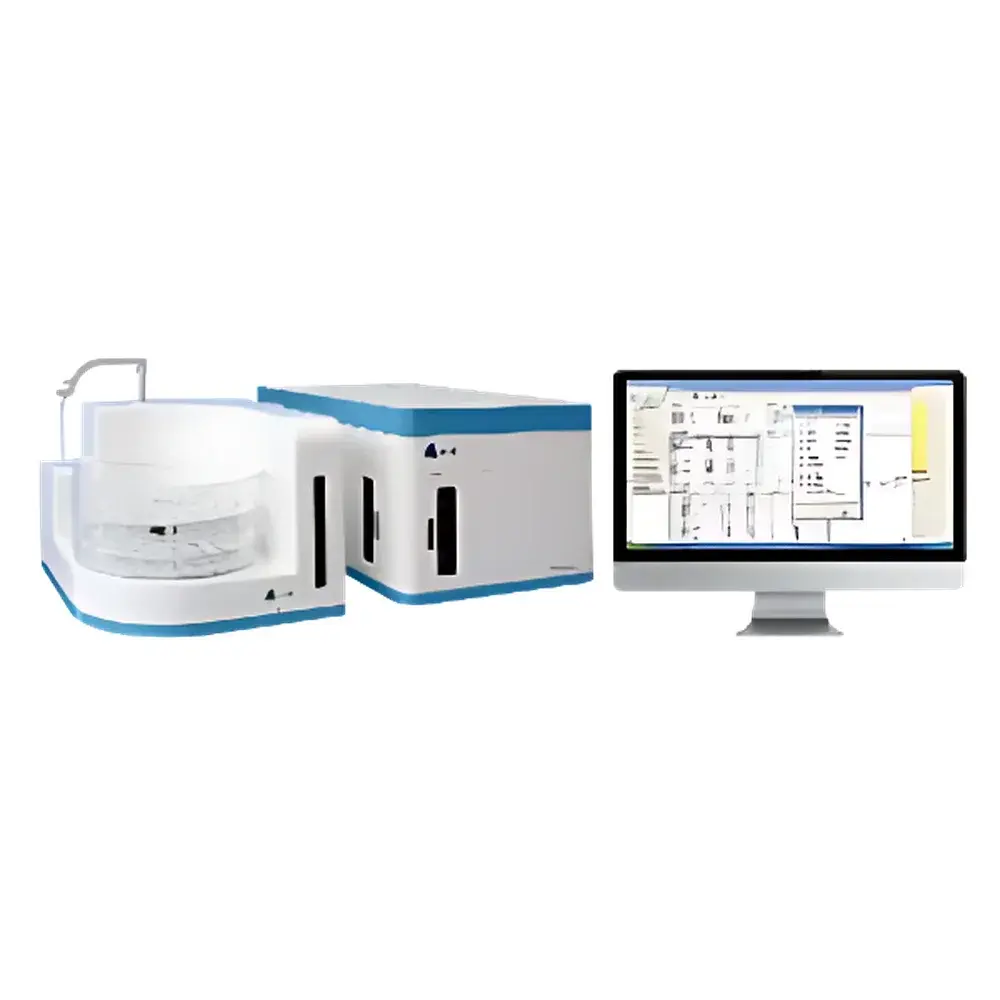
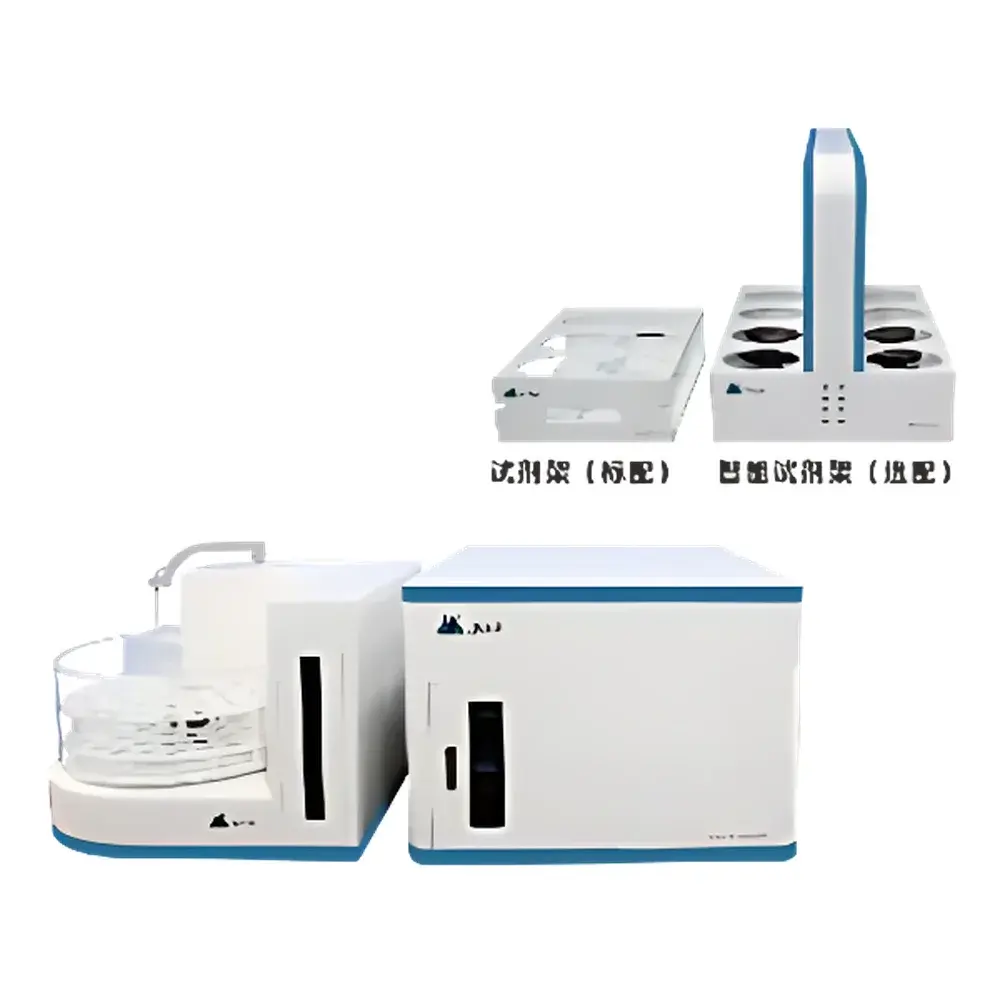
Beiyu Technologies HGMA-450 Gas Phase Molecular Absorption Spectrometer
| Brand | Beiyu Technologies |
|---|---|
| Origin | Shanghai, China |
| Manufacturer Type | Original Equipment Manufacturer (OEM) |
| Product Category | Domestic |
| Model | HGMA-450 |
| Pricing | Available upon request |
Overview
The Beiyu Technologies HGMA-450 Gas Phase Molecular Absorption Spectrometer is a fourth-generation analytical instrument engineered for high-precision, trace-level quantification of nitrogen- and sulfur-containing species in aqueous environmental and industrial samples. It operates on the fundamental principle of gas-phase molecular absorption spectroscopy: analytes—including ammonia nitrogen (NH₃-N), total nitrogen (TN), sulfide (S²⁻), nitrate nitrogen (NO₃⁻-N), nitrite nitrogen (NO₂⁻-N), and Kjeldahl nitrogen—are chemically converted into volatile molecular gases (e.g., NH₃, NO, NO₂, H₂S, SO₂) under controlled reaction conditions. These gaseous species are then swept into an optical cell where their characteristic UV–visible absorption bands are measured at specific wavelengths (e.g., 213.9 nm for NH₃, 279.5 nm for NO, 202.6 nm for H₂S). Unlike conventional liquid-phase spectrophotometry, this gas-phase separation eliminates matrix interferences from turbidity, color, and suspended solids—ensuring superior selectivity, accuracy, and reproducibility in complex sample matrices such as wastewater, surface water, soil extracts, and digested biological tissues.
Key Features
- Integrated precision syringe pump autosampler with ≤0.1% volumetric error at rated stroke—enabling repeatable, low-carryover sample and reagent delivery across extended unattended operation.
- Detection limits consistently below 0.001 mg/L for all primary target analytes (NH₃-N, NO₃⁻-N, NO₂⁻-N, S²⁻, TN, Kjeldahl N), validated per ISO 8467 and ASTM D1426 methodologies.
- On-board programmable dilution module supporting up to 500-fold automatic sample dilution—critical for handling highly concentrated effluents without manual intervention.
- Standardized digital I/O and TCP/IP communication interfaces compliant with IEEE 802.3 and Modbus TCP protocols—designed for direct integration into automated laboratory environments including LIMS, ELN, and无人实验室 (Unmanned Lab) platforms.
- Optional intelligent reagent carousel system featuring RFID-tagged reagent vials, real-time reagent level monitoring, auto-project switching logic, and support for cascaded multi-carousel configurations.
- Ruggedized optical path architecture with temperature-stabilized deuterium and tungsten-halogen light sources, double-beam referencing, and thermoelectrically cooled CCD detector—optimized for long-term baseline stability and minimal drift (<0.002 AU/h).
Sample Compatibility & Compliance
The HGMA-450 accepts liquid samples within pH 2–12 and total suspended solids (TSS) ≤50 mg/L without filtration. It supports standard EPA Methods 353.2 (nitrate/nitrite), 376.2 (ammonia), and 379.1 (sulfide), as well as ISO 11905-1 (total nitrogen), ISO 11905-2 (ammonia nitrogen), and Chinese standard HJ/T 195–2005 and HJ/T 199–2005. Instrument design adheres to IEC 61010-1 safety requirements for laboratory equipment and meets electromagnetic compatibility (EMC) standards per EN 61326-1. Data integrity features—including user-level access control, electronic signatures, and full audit trail logging—support compliance with FDA 21 CFR Part 11 and GLP/GMP documentation requirements.
Software & Data Management
The proprietary HGMA Control Suite v4.2 provides intuitive method development, real-time spectral visualization, multi-point calibration curve generation (linear, quadratic, or cubic), and QC flagging per USP analytical instrument qualification guidelines. All raw absorbance data, method parameters, operator logs, and system diagnostic records are stored in encrypted SQLite databases with configurable backup intervals. Export formats include CSV, PDF analytical reports (with embedded chromatogram-style gas-phase absorption traces), and XML-compatible structured data for downstream statistical analysis (e.g., JMP, R, Python pandas). Software validation documentation (IQ/OQ/PQ protocols) is available upon request for regulated laboratories.
Applications
- Environmental monitoring: Routine analysis of NH₃-N and TN in municipal wastewater influent/effluent, river and lake water quality assessment, and landfill leachate characterization.
- Drinking water safety: Verification of nitrite breakthrough in chloraminated distribution systems and sulfide detection in anaerobic groundwater sources.
- Industrial process control: Online-ready nitrogen speciation in semiconductor rinse waters, pharmaceutical fermentation broths, and fertilizer production streams.
- Regulatory compliance testing: Certified reference material (CRM) verification per ISO Guide 35, proficiency testing participation (e.g., FAPAS, QUASIMEME), and accreditation audits under CNAS-CL01 (equivalent to ISO/IEC 17025).
- Research applications: Kinetic studies of nitrogen transformation pathways in activated sludge systems and sulfur redox speciation in sediment porewaters.
FAQ
What regulatory standards does the HGMA-450 support for environmental testing?
The instrument is pre-configured to execute EPA, ISO, and Chinese HJ-series methods for nitrogen and sulfur species, with built-in calibration templates and QC acceptance criteria aligned with ISO/IEC 17025 method validation requirements.
Can the HGMA-450 be integrated into a fully automated lab workflow?
Yes—it features native Modbus TCP and RS-485 interfaces, plus RESTful API endpoints for remote command execution, status polling, and result retrieval, enabling seamless orchestration via third-party automation middleware.
Is method transfer from older HGMA models straightforward?
All HGMA-450 methods maintain backward compatibility with HGMA-300 and HGMA-350 parameter sets; legacy method files import directly, and hardware abstraction layers ensure consistent signal processing across generations.
Does the system require daily maintenance or frequent lamp replacement?
The dual-source optical architecture extends lamp lifetime to ≥2,000 hours; routine maintenance is limited to monthly cleaning of gas-diffusion membranes and quarterly verification of syringe pump linearity using NIST-traceable standards.





