
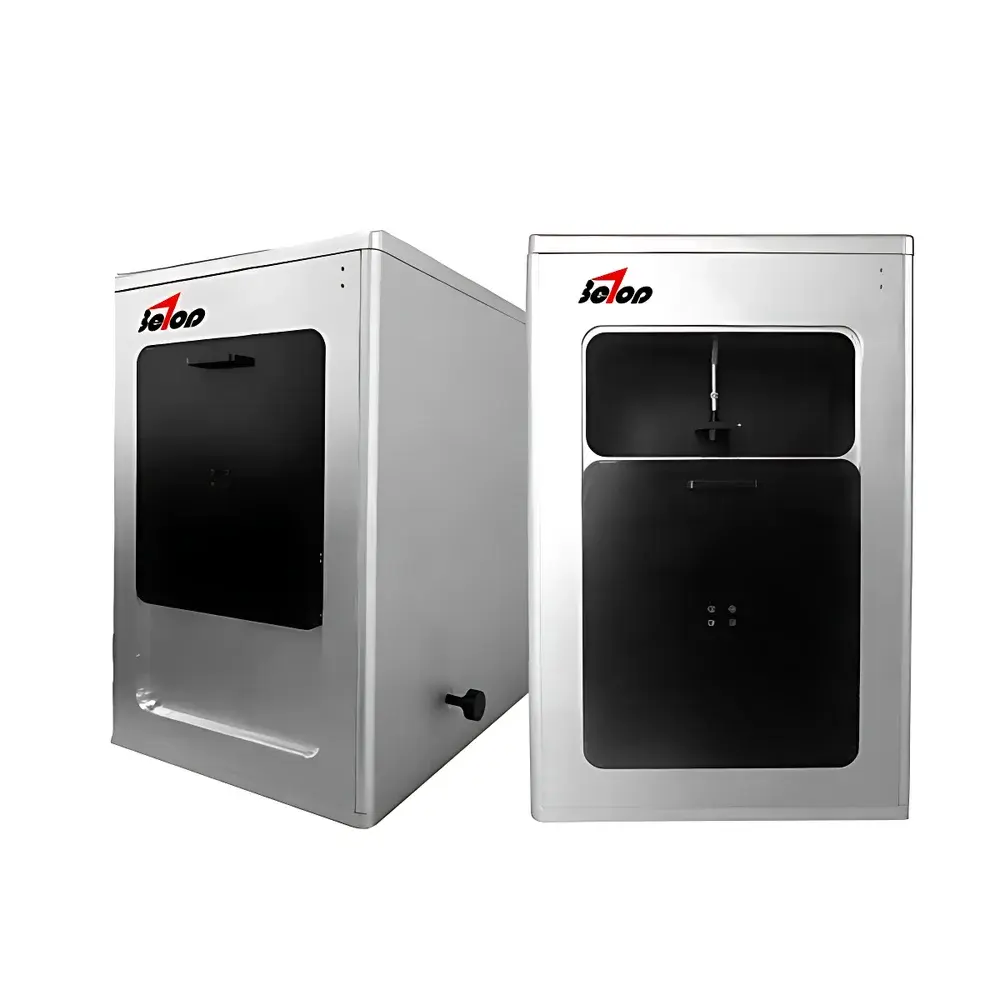
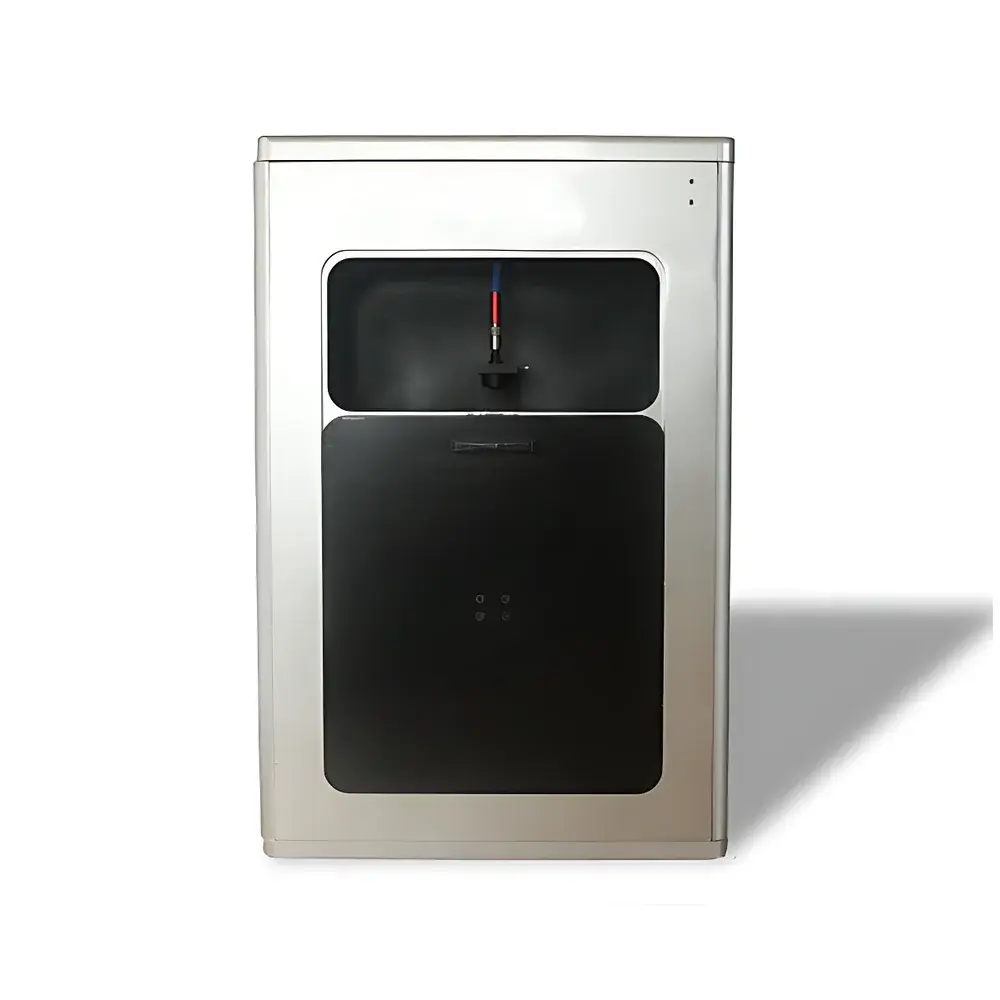
Betop Scientific RT100 Transmittance and Reflectance Spectrophotometer
| Brand | Betop Scientific |
|---|---|
| Origin | Guangdong, China |
| Manufacturer Type | Direct Manufacturer |
| Country of Origin | China |
| Model | RT100 |
| Price Range | USD 14,000 – 28,500 |
| Spectral Range | 200–2500 nm (standard configuration: 380–1050 nm) |
| Sample Stage Dimensions | 195 × 160 mm (W × D) |
| Power Supply | 220 V ±10%, 50 Hz |
| Operating Environment | 10–35 °C, 10–80% RH (non-condensing) |
| Light Source | High-stability halogen lamp (customizable per spectral range and sample type) |
| Integration Sphere | Optional, for diffuse reflectance/transmittance measurement of matte, frosted, or textured surfaces |
| Software | RT100 Control & Analysis Suite with auto-zero, calibration traceability, pass/fail threshold logic, and spectral data export (CSV, XML) |
Overview
The Betop Scientific RT100 Transmittance and Reflectance Spectrophotometer is a dual-mode optical characterization instrument engineered for precise, repeatable quantification of spectral transmittance (T%) and reflectance (R%) across the ultraviolet–visible–near-infrared (UV-Vis-NIR) spectrum. Based on double-beam or single-beam spectrophotometric architecture with selectable reference path routing, the RT100 employs high-stability halogen illumination coupled with a thermoelectrically stabilized CCD or InGaAs linear array detector—depending on configured spectral range—to deliver high signal-to-noise ratio measurements from 200 nm to 2500 nm. Its fully enclosed, light-tight sample chamber minimizes ambient stray light interference, ensuring metrological integrity in non-darkroom laboratory environments. Designed for routine QC/QA and R&D applications in optically demanding industries, the RT100 complies with fundamental photometric principles defined in ISO 9050 (glass optical properties), ASTM E308 (computing colorimetric data from spectral measurements), and CIE Publication No. 15 (colorimetry), enabling traceable, standardized reporting of optical performance metrics.
Key Features
- Configurable optical path: Supports both direct-beam (specular) and integrating sphere–assisted (diffuse + specular) measurement modes for comprehensive surface optical characterization.
- Extended spectral coverage: Standard 380–1050 nm configuration; optional upgrades enable full 200–2500 nm operation using optimized grating, detector, and source combinations.
- Modular sample handling: Large 195 × 160 mm stage accommodates rigid flat substrates (e.g., display cover glass, automotive glazing) and liquid cuvettes (with optional holder).
- Self-calibrating architecture: Onboard dark-current correction, reference standard validation, and user-executable zero/baseline routines ensure long-term measurement stability without external service intervention.
- Regulatory-ready software: RT100 Control & Analysis Suite supports audit-trail logging, user-access levels, electronic signatures, and data export compliant with GLP and FDA 21 CFR Part 11 requirements.
- Automated pass/fail evaluation: Users define up to six wavelength-specific acceptance thresholds (e.g., T₅₅₀ ≥ 91.5%, R₈₅₀ ≤ 2.1%); software outputs binary compliance status alongside full spectral plots.
Sample Compatibility & Compliance
The RT100 accommodates solid, liquid, and semi-rigid samples—including optical glasses, AR/HR-coated filters, polymer films, tempered touch panels, frosted PMMA light-diffusing sheets, and solvent-based coatings. Its optional 60 mm or 150 mm integrating sphere enables accurate measurement of total reflectance and transmittance for non-Lambertian surfaces (e.g., ground glass, textured solar concentrator lenses). Instrument design adheres to IEC 61000-4 electromagnetic compatibility standards and meets mechanical safety requirements per GB/T 29807 (Chinese national standard equivalent to IEC 61010-1). Measurement protocols align with ISO 13468 (transmittance of transparent plastics), ISO 13469 (reflectance of opaque materials), and ASTM D1003 (haze and luminous transmittance of plastic sheeting).
Software & Data Management
The RT100 Control & Analysis Suite runs on Windows OS and provides real-time spectral visualization, multi-curve overlay, derivative analysis, peak integration, and CIE color space conversion (CIE XYZ, L*a*b*, Yxy). All raw spectra are stored with metadata including date/time stamp, operator ID, calibration ID, instrument serial number, and environmental sensor readings (optional integrated temperature/humidity module). Data files conform to ASTM E1318-compliant XML schema for interoperability with LIMS and enterprise QA databases. Software supports scheduled automated measurements, batch processing of sample sets, and PDF report generation with embedded spectral graphs and pass/fail annotations.
Applications
- Optical component manufacturing: Verification of anti-reflective coating performance on camera lenses, microscope objectives, and laser optics.
- Flat-panel display supply chain: Quantitative assessment of transmittance uniformity across OLED cover glass, ITO film resistivity correlation, and IR-cut filter blocking efficiency.
- Automotive glazing R&D: Spectral evaluation of smart-tinting interlayers, UV-shielding laminates, and solar heat gain coefficient (SHGC) proxy metrics.
- Photovoltaic materials: Characterization of encapsulant transmittance loss, textured front-surface scattering profiles, and spectral response matching between cell and cover glass.
- Jewelry and decorative glass: Objective quantification of color shift under varying illuminants (D65, A, F11) and metamerism index calculation.
- Quality control laboratories: Routine release testing of batch-produced optical filters, dichroic mirrors, and architectural low-E glass units per EN 1096 or ISO 10218.
FAQ
What spectral ranges are factory-certified and supported by NIST-traceable calibration standards?
Standard delivery includes 380–1050 nm with factory calibration using NIST-traceable SRM 2036 (transmittance) and SRM 1979 (reflectance). Extended-range configurations (200–2500 nm) require custom calibration kits and are validated per ISO/IEC 17025 procedures.
Can the RT100 measure both absolute and relative reflectance?
Yes—absolute reflectance is measured using a certified PTFE reference standard (≥99% R over 250–2500 nm); relative reflectance is calculated against user-defined reference samples (e.g., uncoated substrate).
Is the integrating sphere removable for direct-beam measurements?
Yes—the sphere mounts via precision kinematic interface and can be detached without tools; beam alignment remains stable within ±0.1° after reinstallation.
Does the software support automated GMP-compliant report generation with digital signature capability?
Yes—RT100 Suite includes configurable electronic signature workflows, audit trail export (CSV), and report templates compliant with Annex 11 and ALCOA+ data integrity principles.
What maintenance intervals are recommended for long-term photometric accuracy?
Detector dark-current verification every 30 days; full system recalibration recommended annually or after 2,000 measurement cycles—both procedures are guided in-app with step-by-step prompts.




